
North Cape–Lofoten–Vesteralen Round Trip 22 June – 4 July 2026 – From Stockholm via Umeå, Muonio, Skipsfjord (North Cape), Melbu (Vesteralen), Sorkjosen, Fauske, Umeå, with an extension in Stockholm
Table of Contents
The Five Highlights of Our North Cape, Lofoten, and Stockholm Tour
Just click to expand and you’ll find a concise overview of everything about the five highlights of our tour.
The Five Highlights
A detailed diary of our round trip
The following chapters provide a detailed account of our round trip in the style of a diary.
Journey and first impressions of Stockholm
The day had finally arrived: our twelve-day round trip to the North Cape, followed by a journey through the Lofoten and Vesterålen archipelagos, was about to begin. In the morning, we flew with Lufthansa from Stuttgart to Stockholm. Even as we approached to land, we were impressed by the countless islands and bodies of water surrounding the Swedish capital – it’s not for nothing that Stockholm is known as the ‘Venice of the North’.
We landed at Arlanda Airport right on time at 12.10 pm. There, we were warmly welcomed by the Hauser travel team – Trensch, Werner and Wansa. With bright sunshine and a pleasant 22 degrees, the conditions were ideal for our first sightseeing tour.
Even before we checked into our hotel, a city tour of Stockholm began at 1 pm. Our tour guide was assisted by a local city guide.
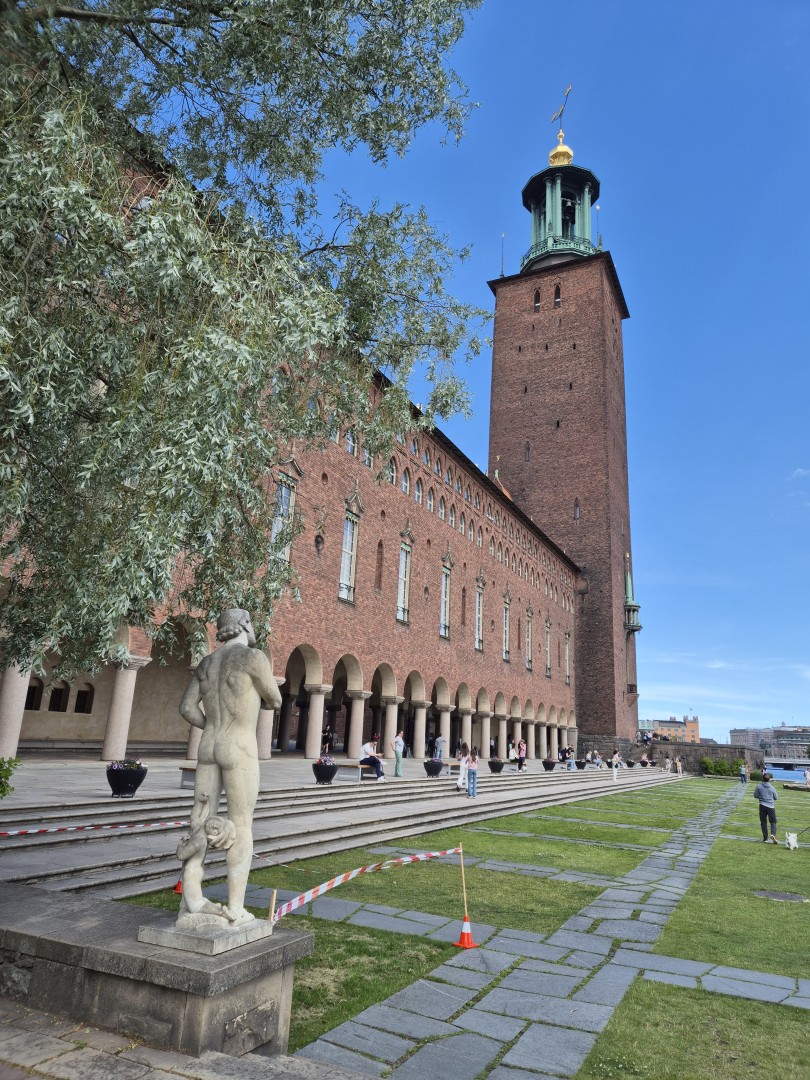
Our first stop took us to the imposing Stadshuset, Stockholm’s famous City Hall. The striking brick building, with its tower standing some 106 metres tall, is one of Sweden’s most famous landmarks. The City Hall is world-famous above all for the festive Nobel Prize banquet, which takes place here every year following the Nobel Prize awards ceremony.
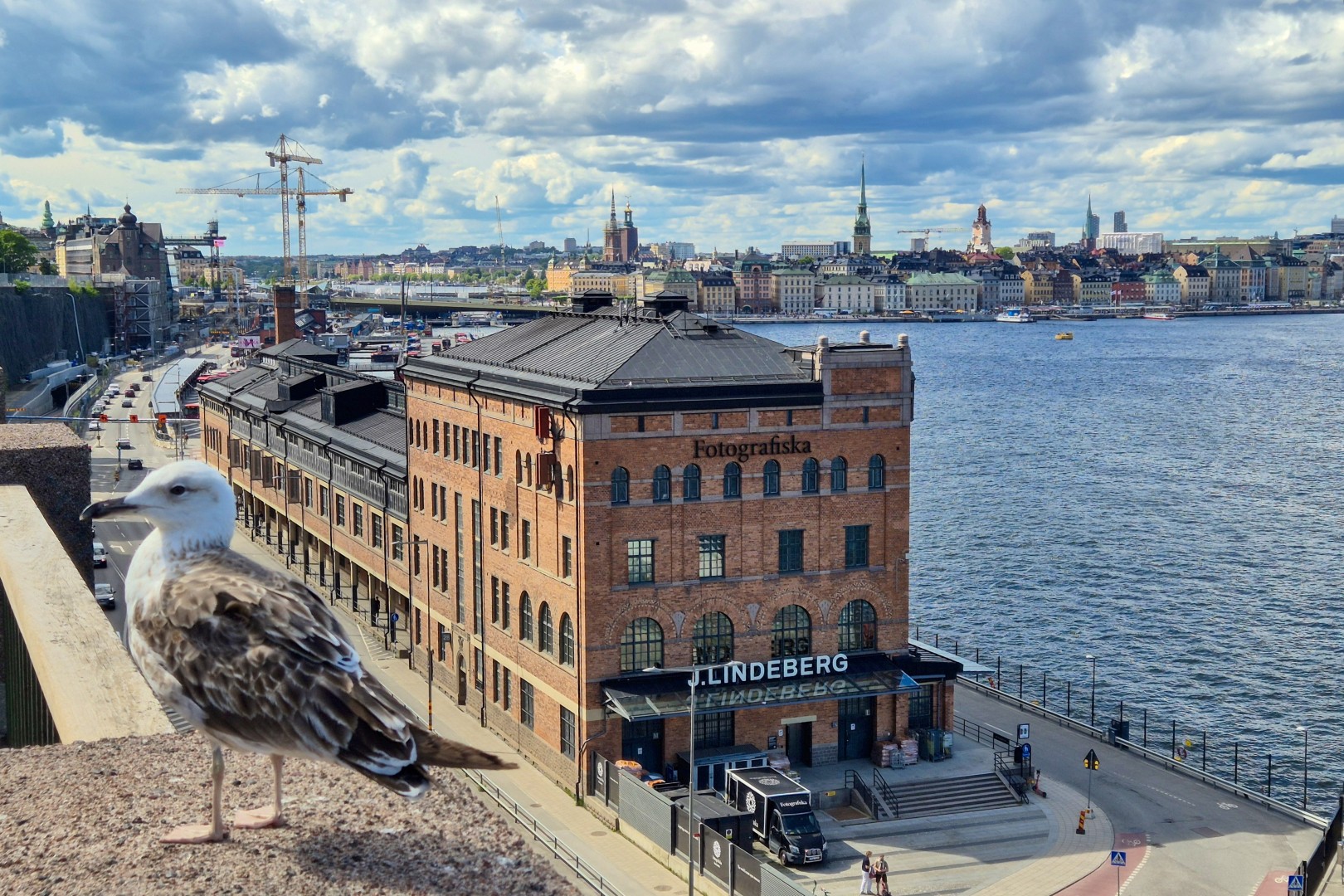
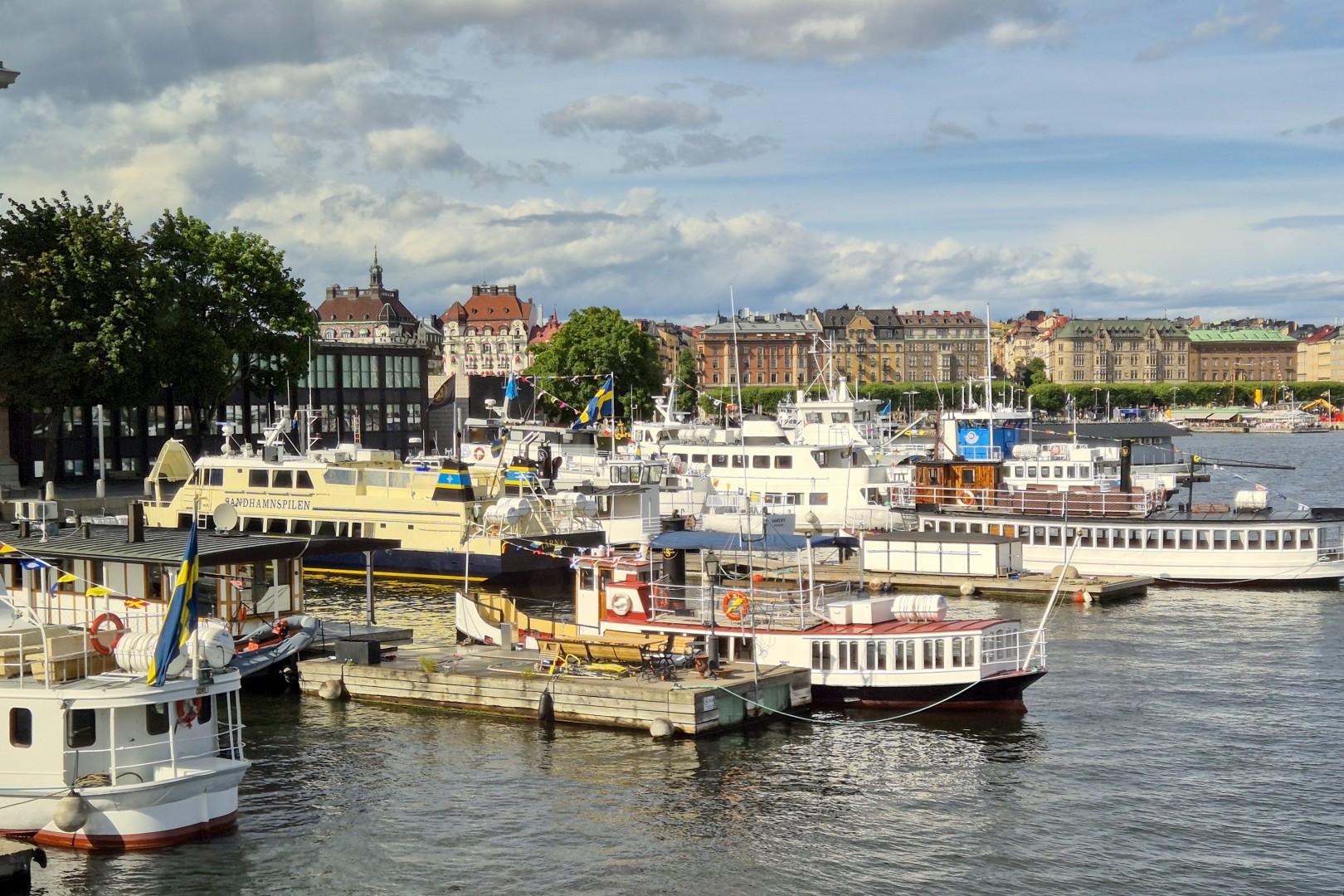
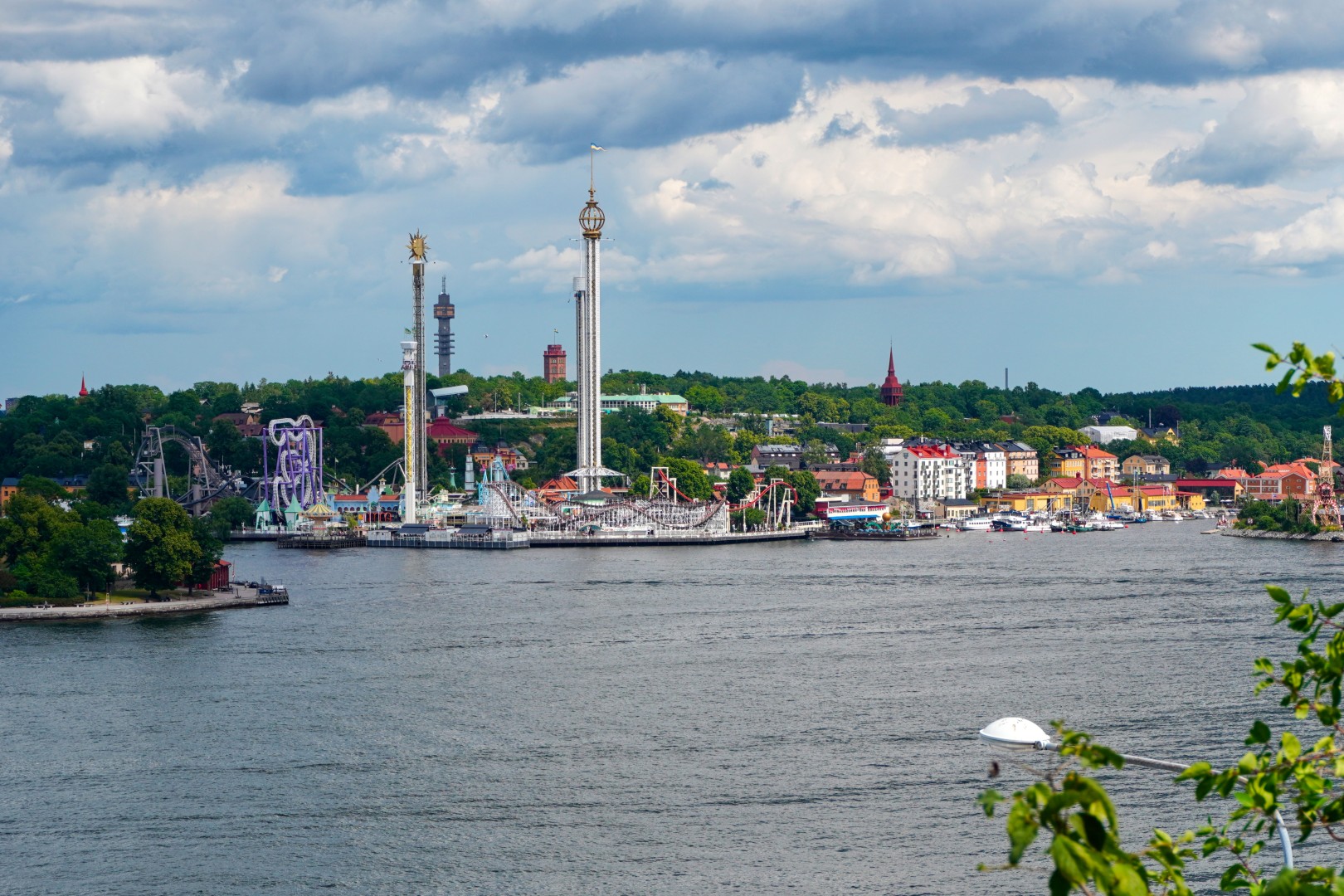
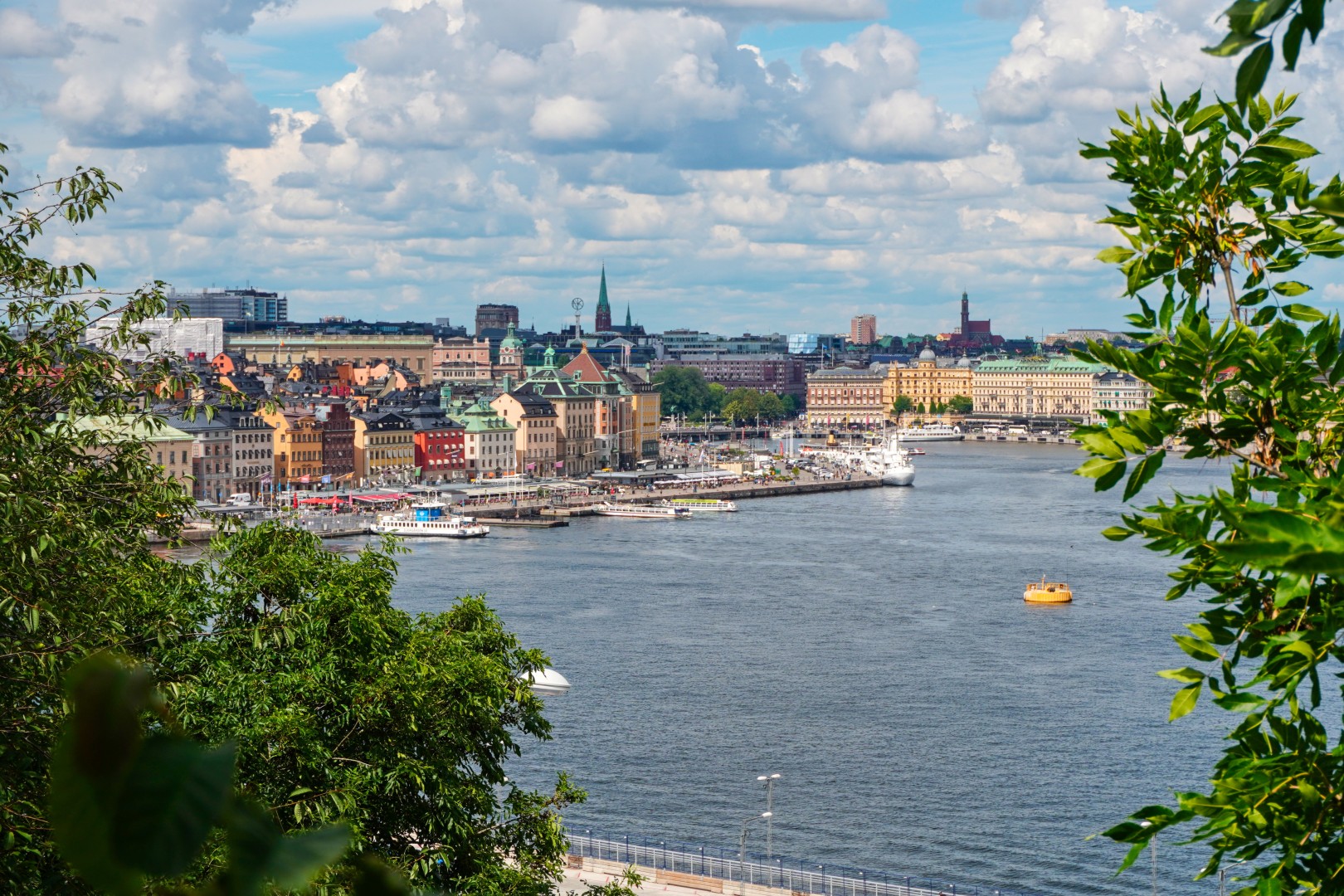
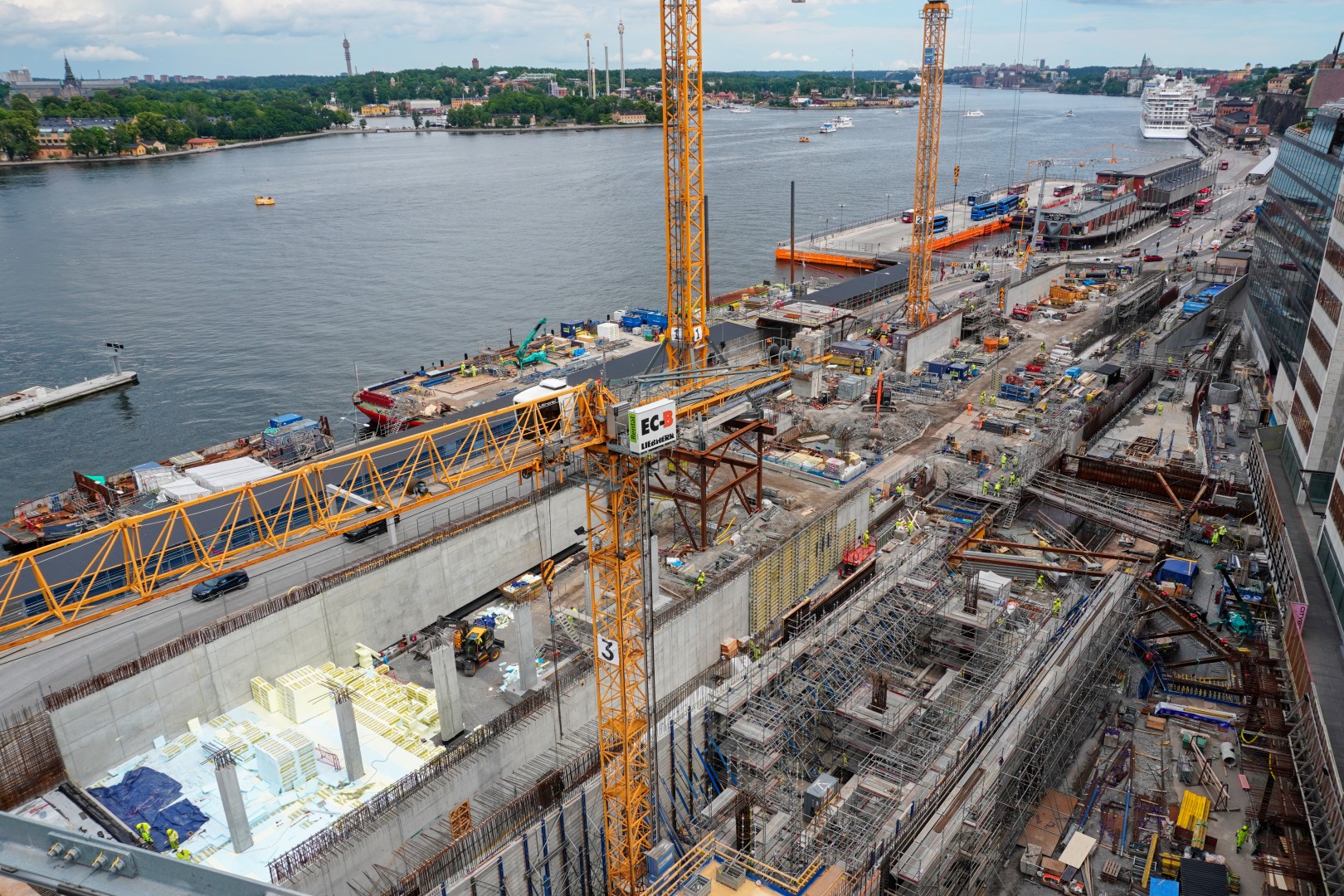
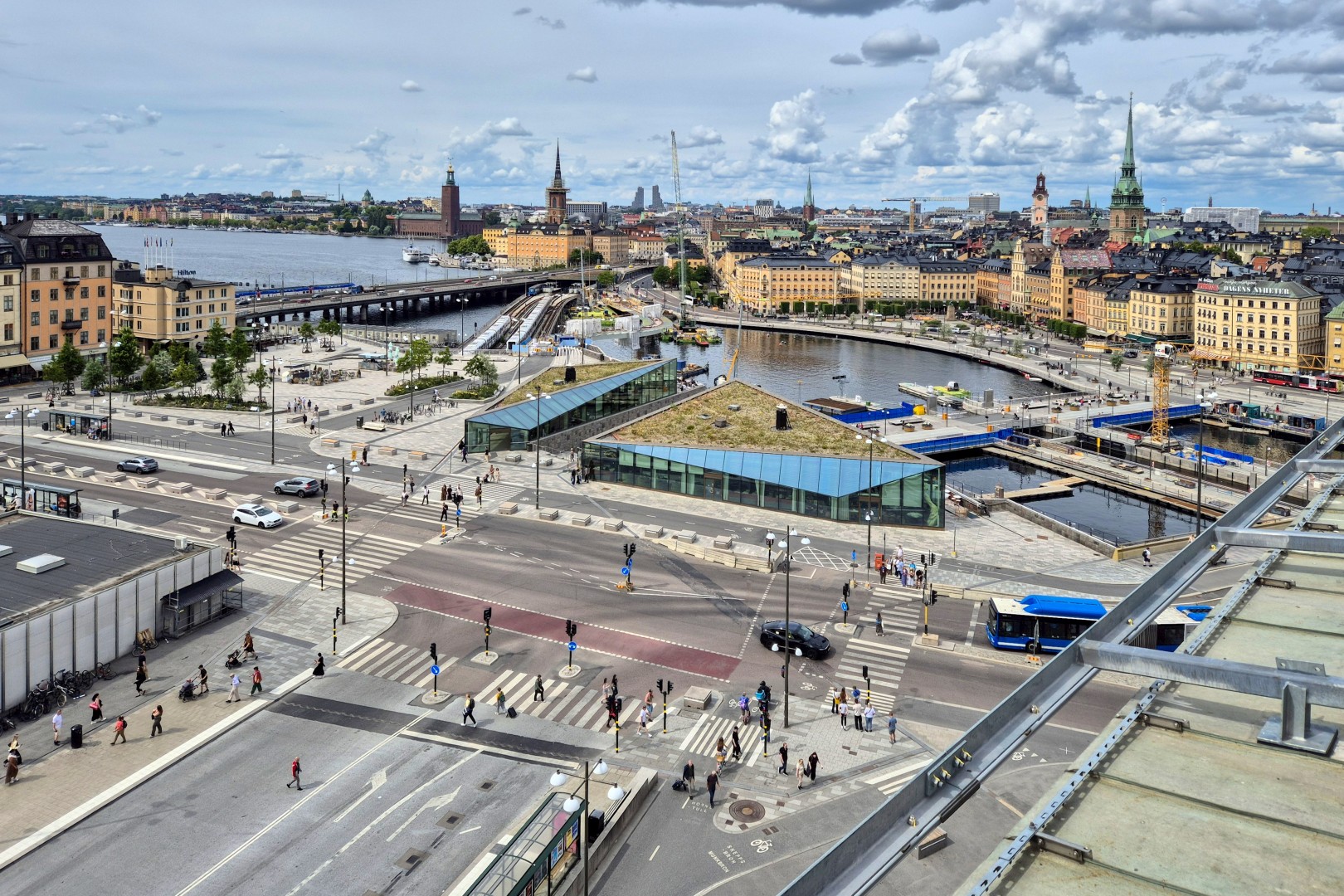
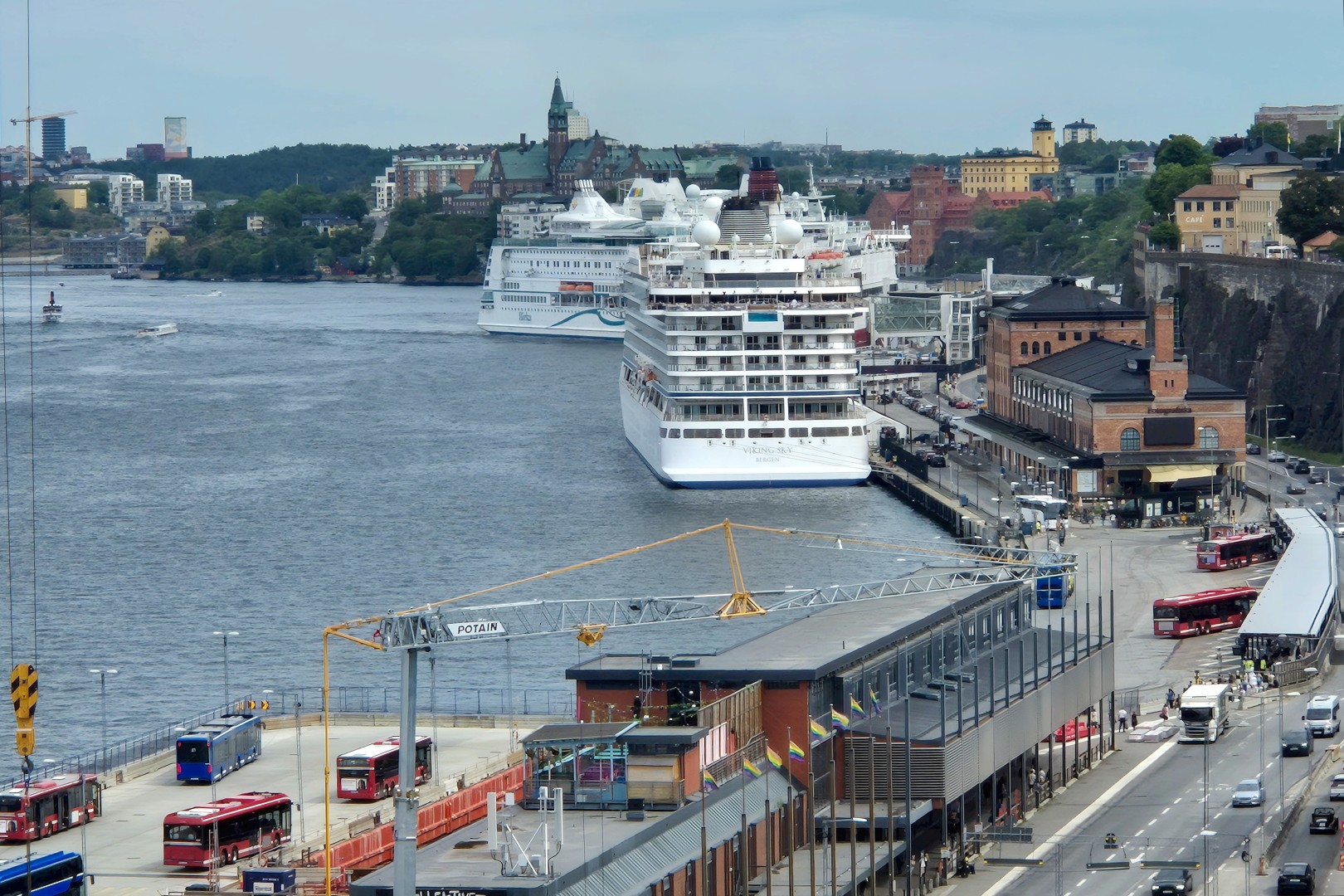
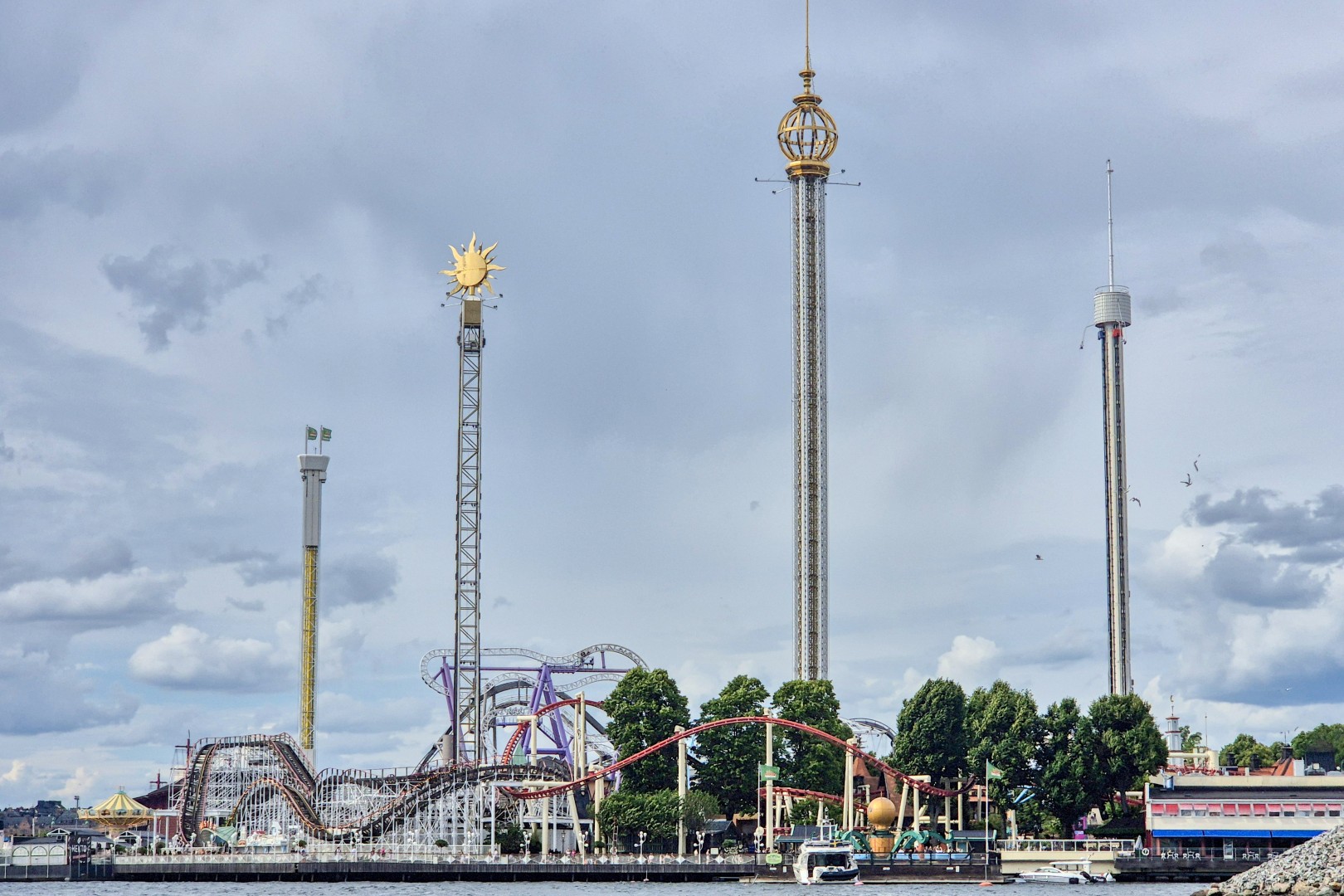
We continued on to the hills of Södermalm. From Stadsgårdsleden, we were treated to one of the most beautiful views of the Swedish capital. Before us lay the Fotografiska Museum, the cruise terminal, the Gröna Lund amusement park, as well as numerous churches and historic buildings. The interplay of water, islands and architecture made this vantage point a real highlight of the city tour.
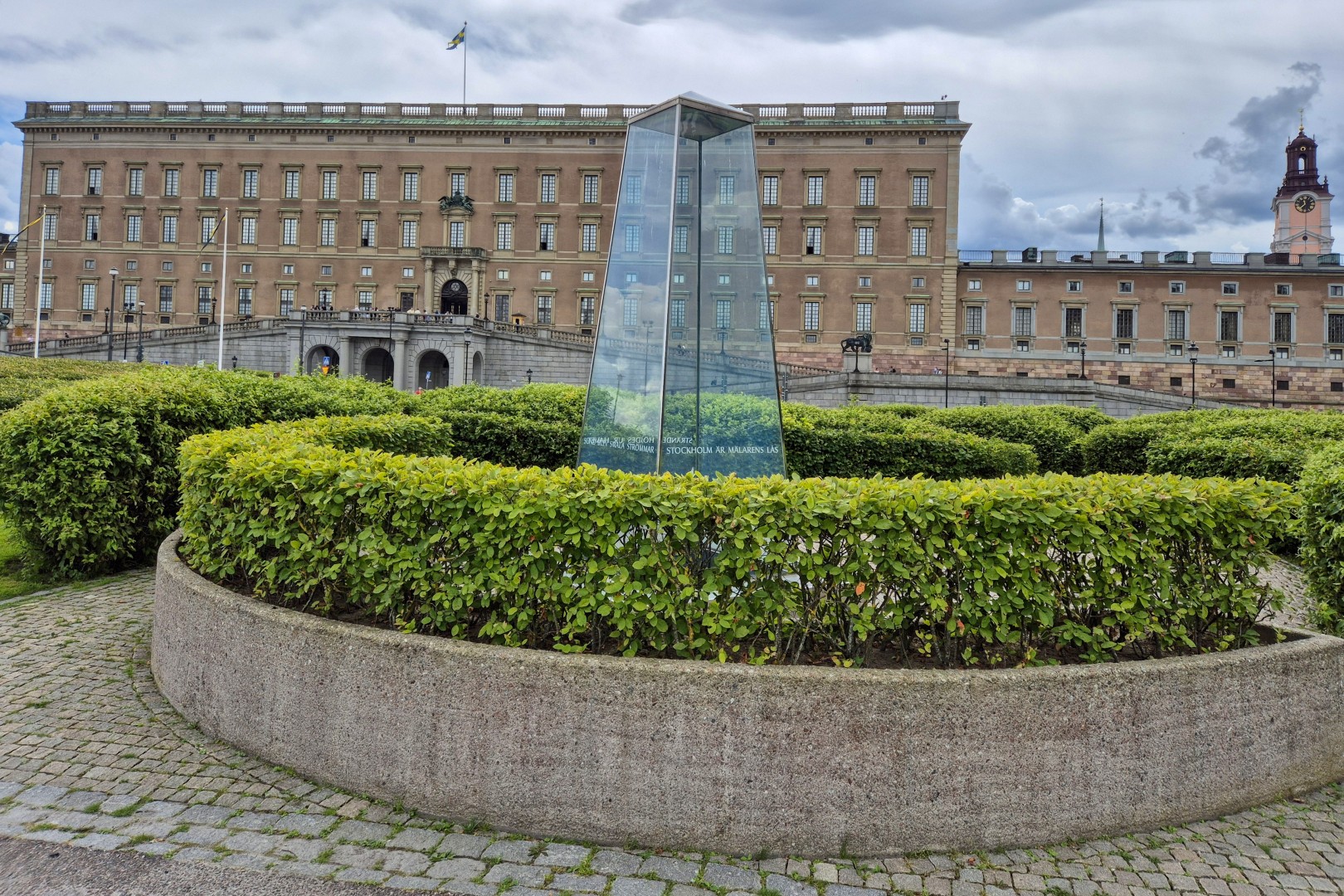
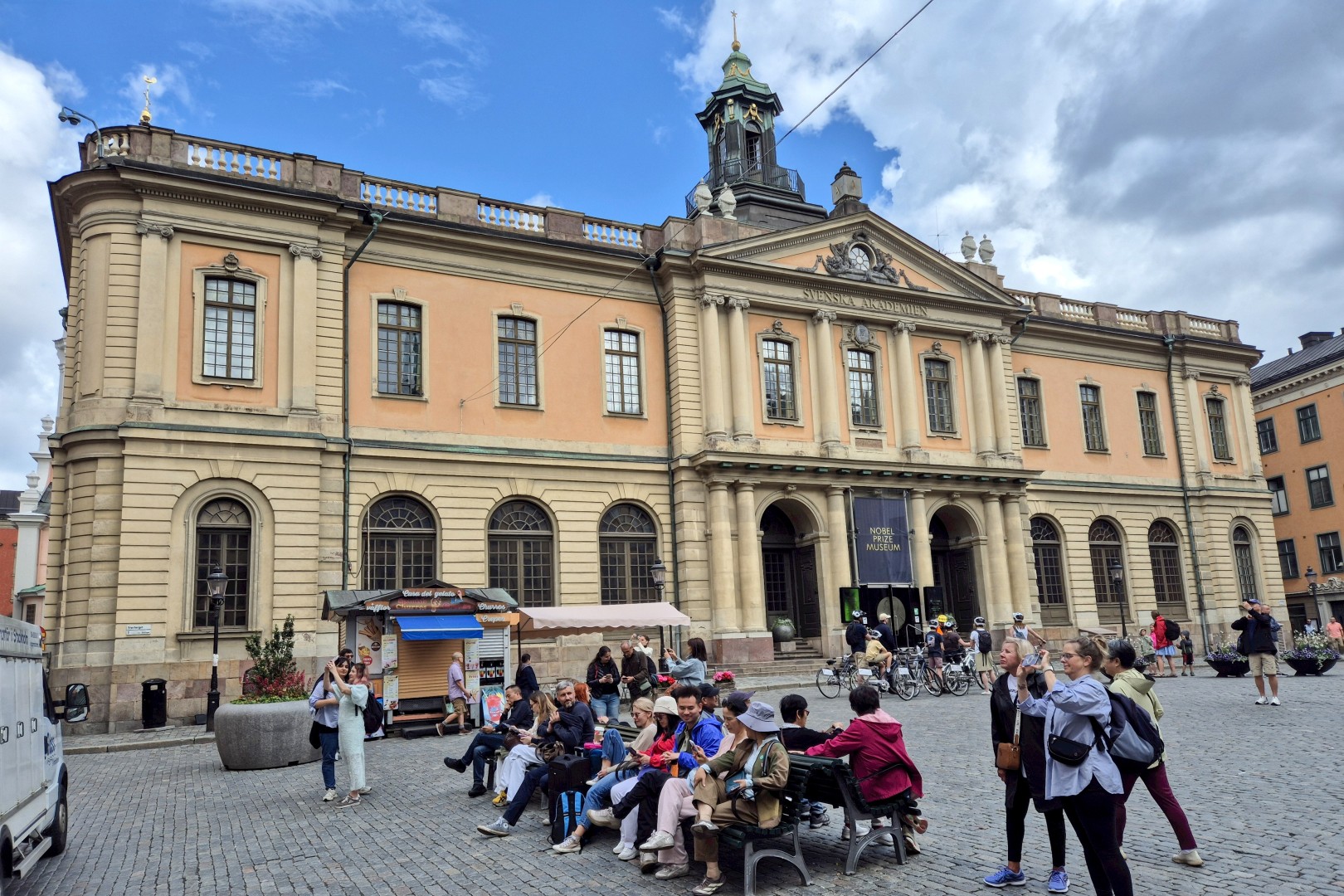
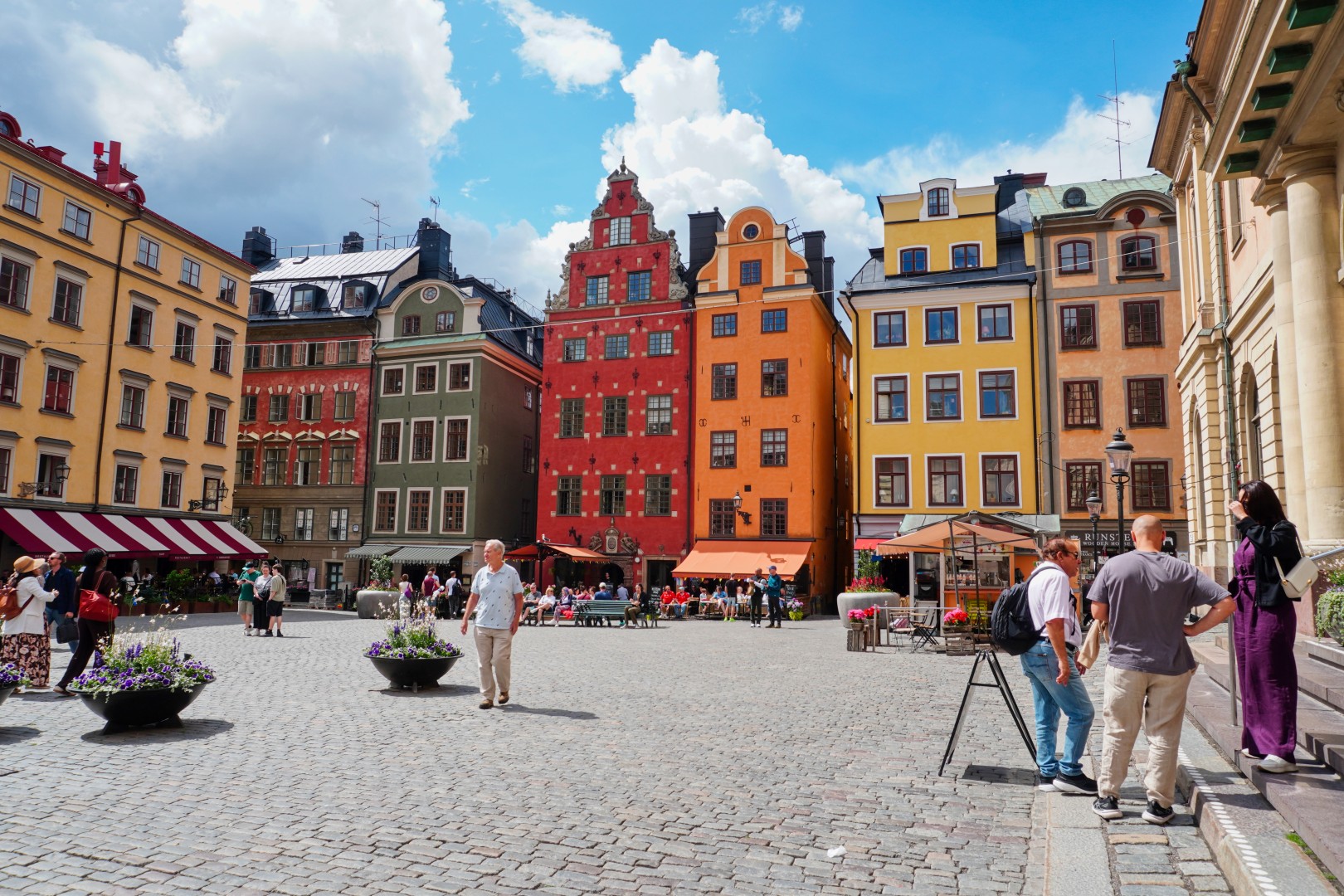
We then reached the Kungliga Slottet, the Royal Palace. From there, we strolled through the narrow streets of the old town, Gamla Stan, to Stortorget, Stockholm’s oldest square. The colourful house facades are among the city’s most famous photo opportunities. The Nobel Prize Museum, which commemorates Alfred Nobel and the history of the Nobel Prizes, is also located right on the square.
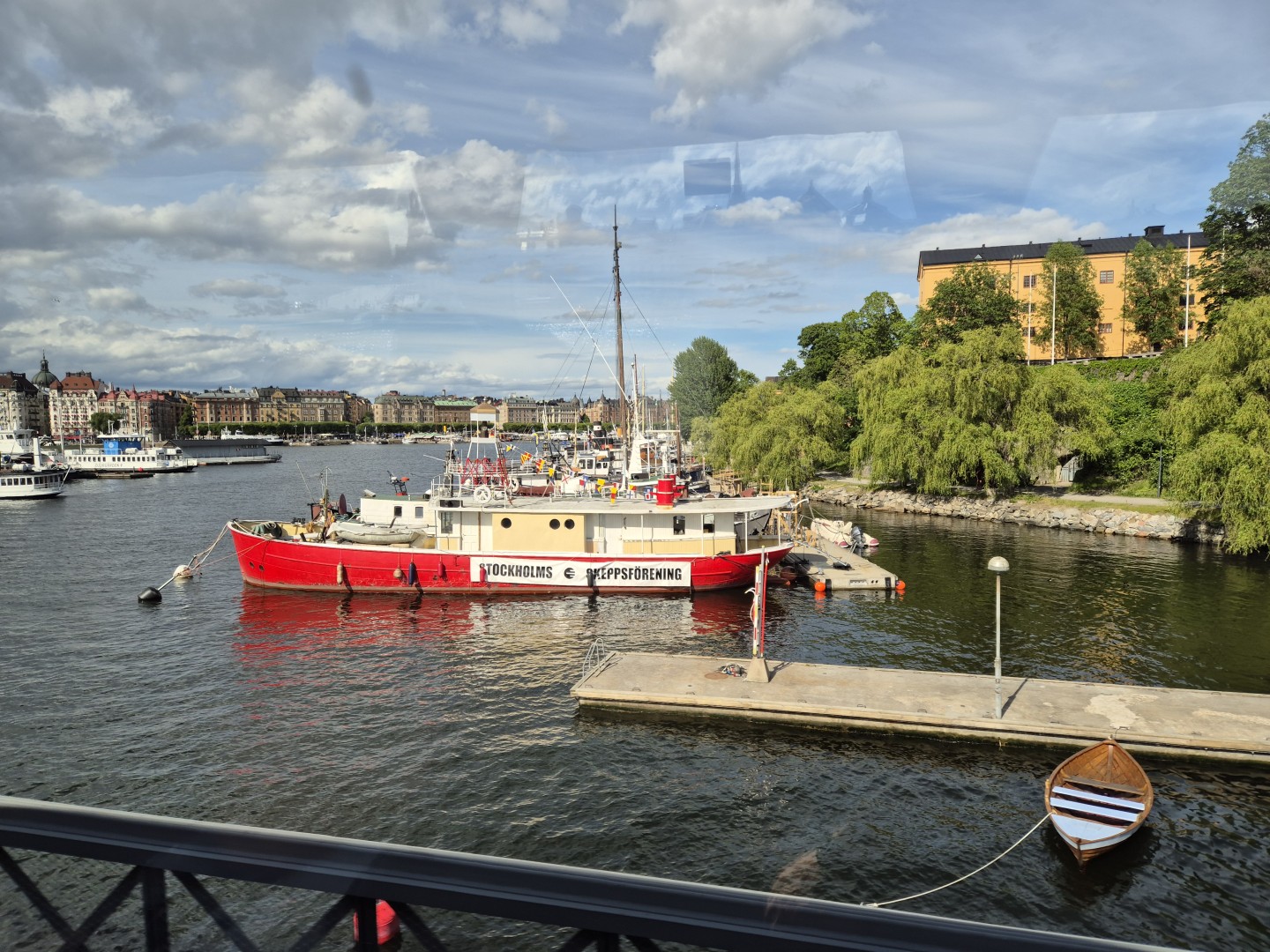
To round off the day, we visited the island of Skeppsholmen. From here, we were once again treated to wonderful views over the old town and Stockholm’s archipelago.
It was a bit of a shame, however, that the commentary from our local tour guide was rather brief. Stockholm, in particular, with its history stretching back over 750 years, would have offered plenty of fascinating stories and background information.
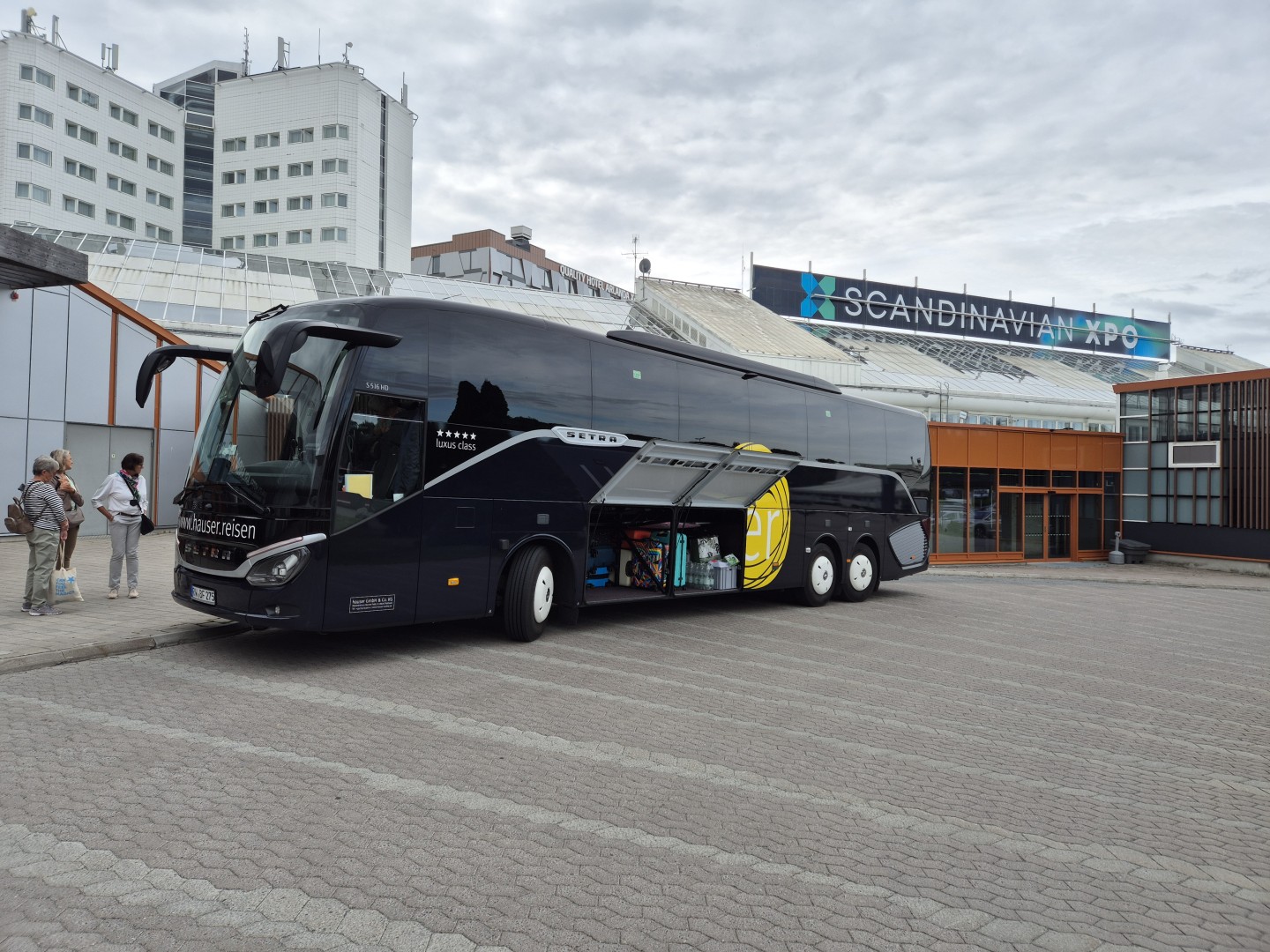
In the early evening, we finally arrived at our hotel, the Quality Hotel XPO Arlanda. After checking in, it was time to relax. We were really looking forward to the days ahead – after all, we still had more than 5,000 kilometres to travel by coach to the North Cape.
610 kilometres north to Umeå
During the night, around 300 litres of diesel had been stolen from our coach. Even the experienced Hauser team were taken by surprise. Nobody would have thought that something like this could happen in Sweden of all places, a country known for being particularly safe.
Fortunately, the problem was quickly resolved, so we were able to set off for Umeå at around 8.30 am.
Ahead of us lay around 610 kilometres on the E4 European route, one of Sweden’s most important north-south links. We soon left Stockholm behind us and passed through the historic university town of Uppsala. The further north we travelled, the lighter the traffic became and the denser the endless forests grew.
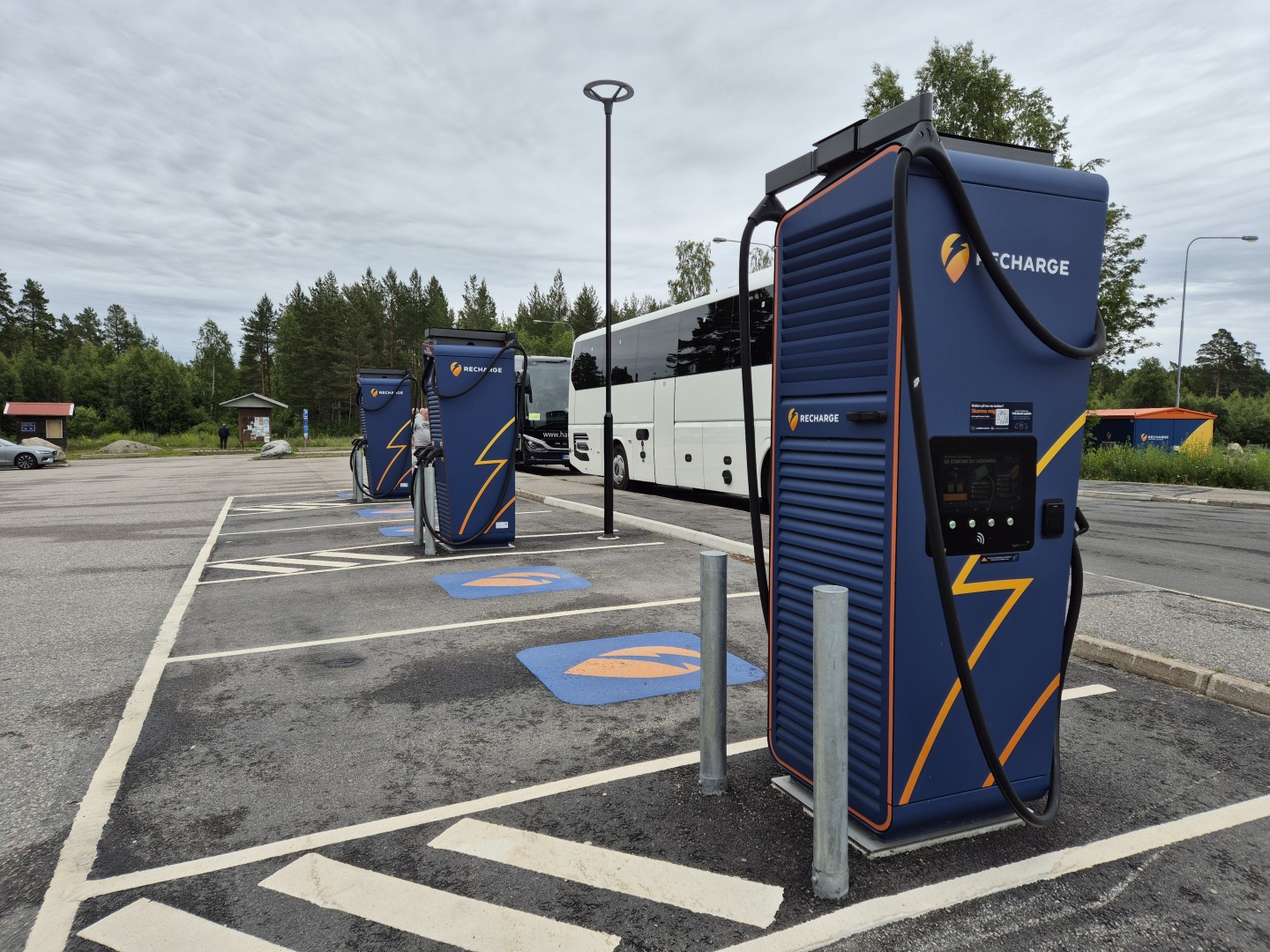
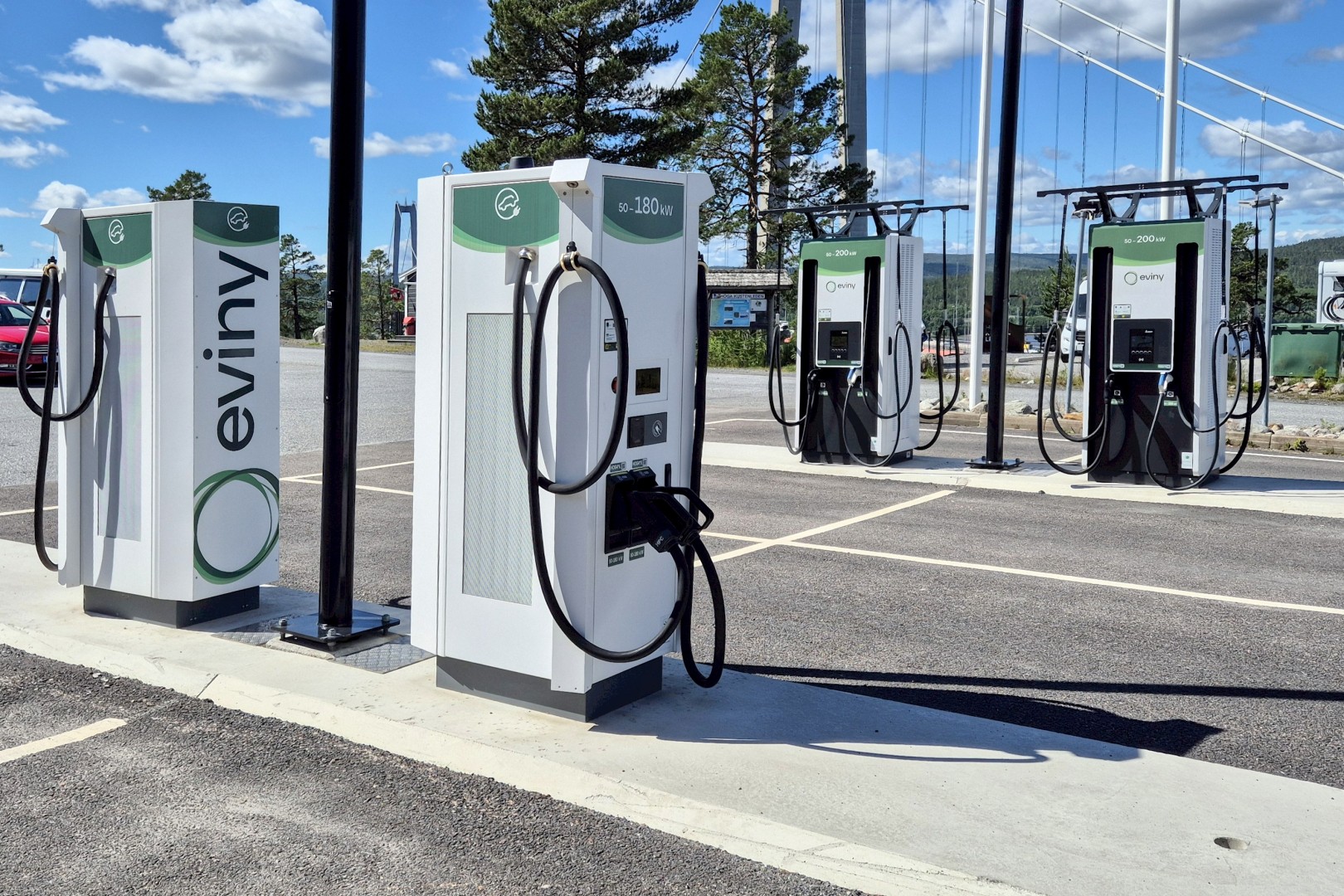
Our first stop took us to Hamränge. There, we were immediately struck by the numerous fast-charging stations for electric vehicles. Sweden seems to be very well prepared for electric mobility; charging parks of this size are still a rare sight in Germany.
We took our next break at the Myre Diner in Njurundabommen. There, we had a surprising encounter. By chance, we met a holidaymaker from Besigheim who had previously attended secondary school in Bietigheim – he’d even had the same form tutor as us, though he was two years ahead of us. Once again, it showed just how small the world can sometimes be.
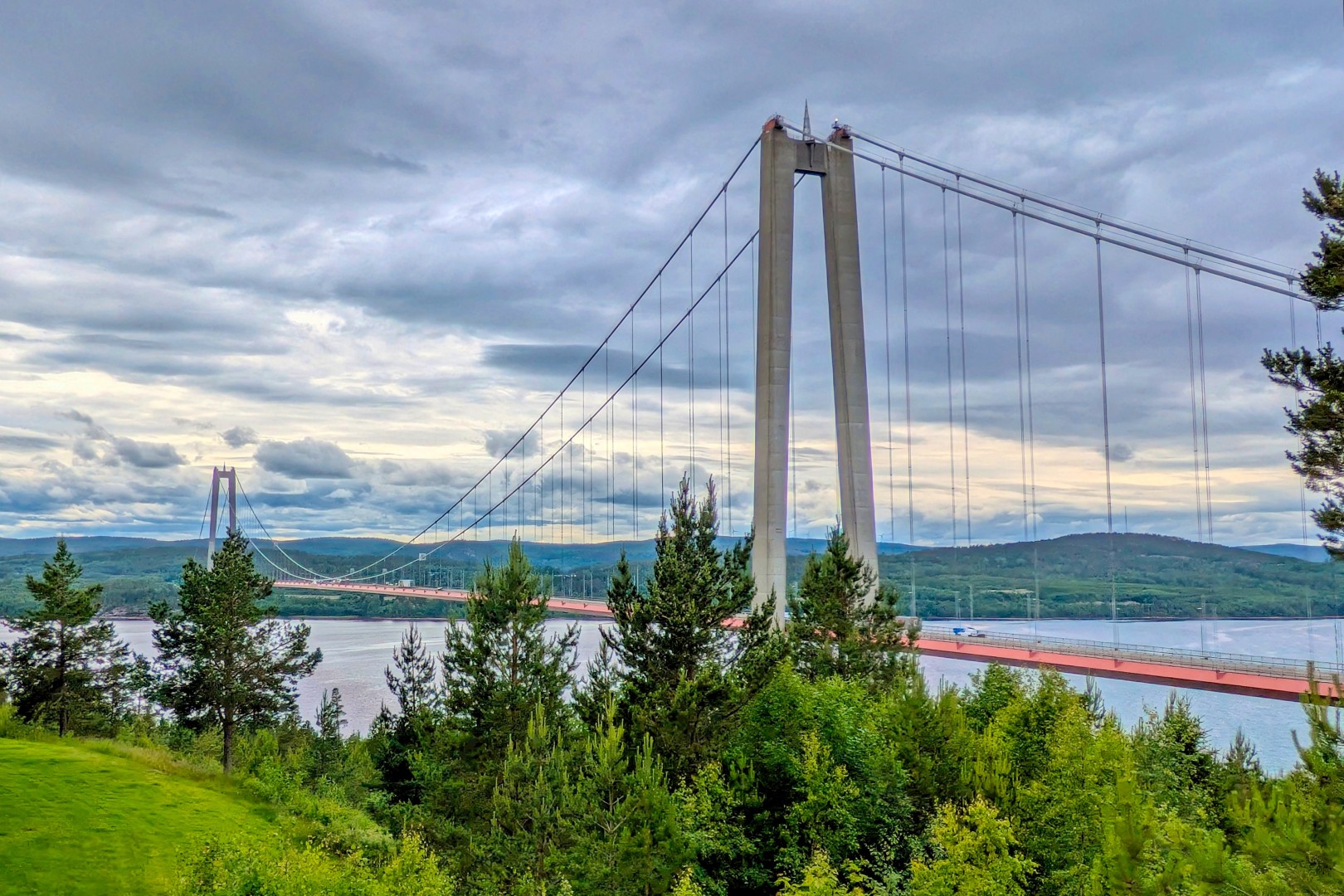
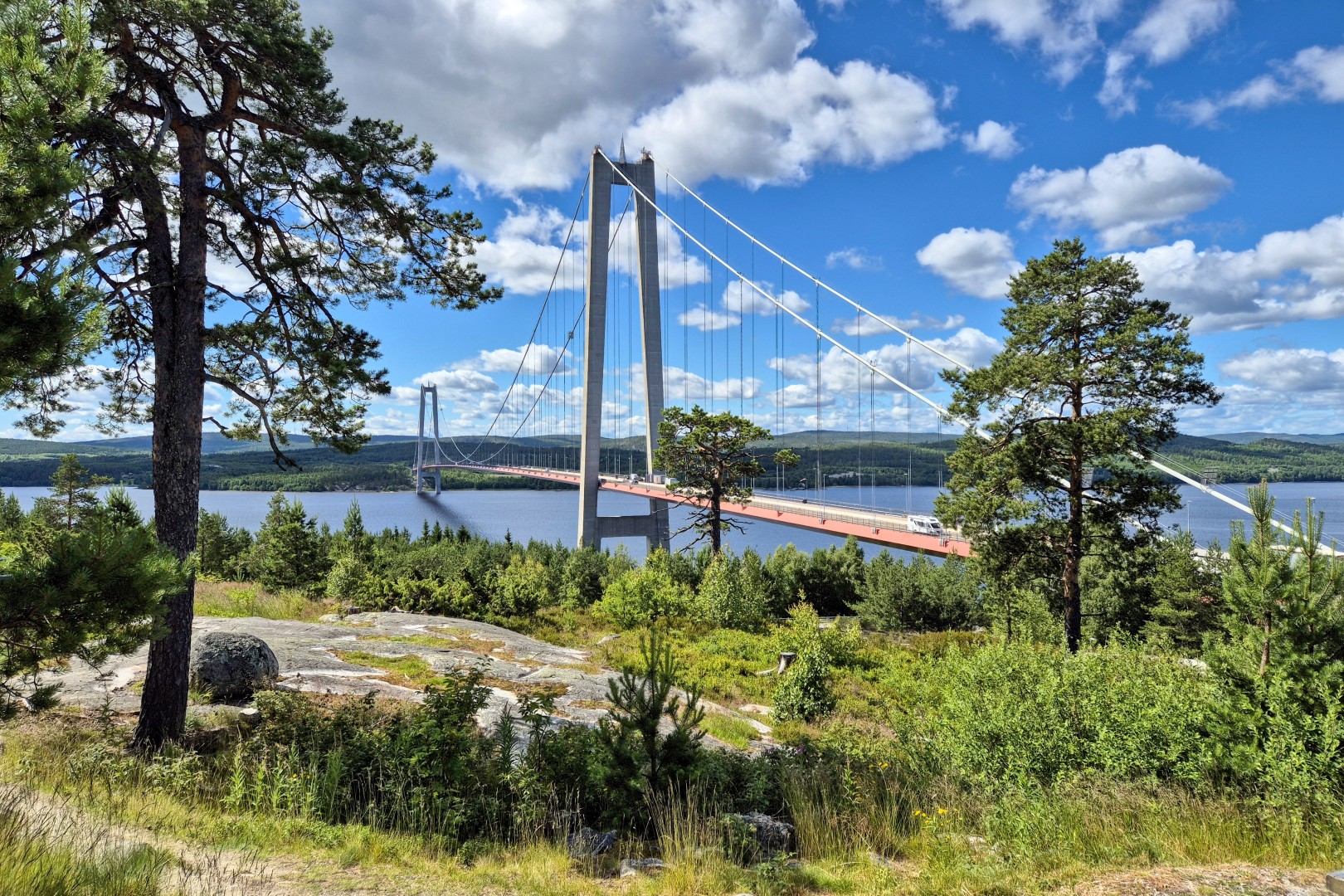
In the afternoon, we reached the Höga Kusten, the ‘High Coast’. From the tourist information centre, there was a magnificent view of the Högakustenbron, one of the longest suspension bridges in Scandinavia. The elegant bridge spans the mighty Ångermanälven and is one of northern Sweden’s most famous structures.
After a lengthy photo stop, we set off on the final leg of our journey – a 200-kilometre stretch – without further stops, all the way to Umeå.
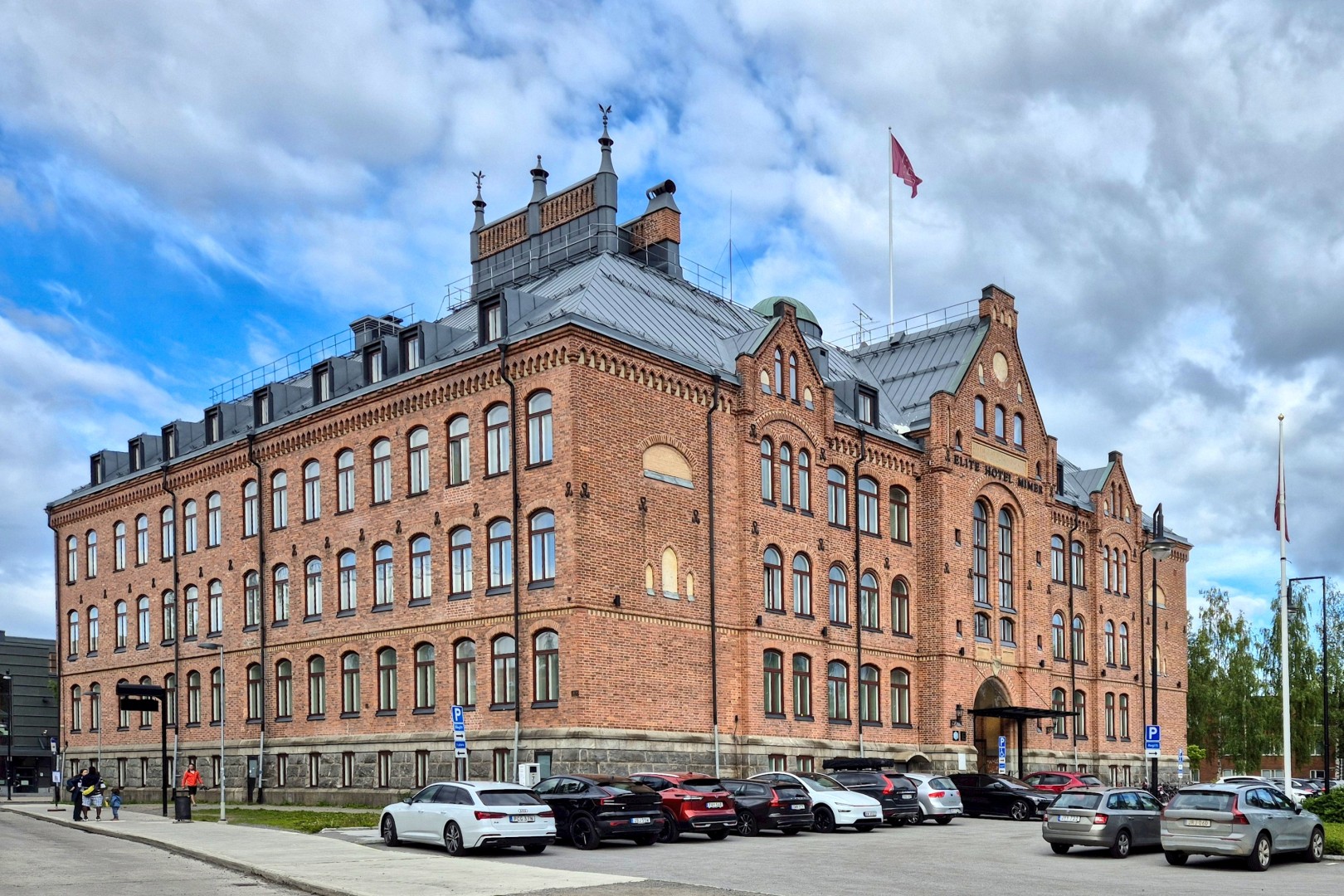
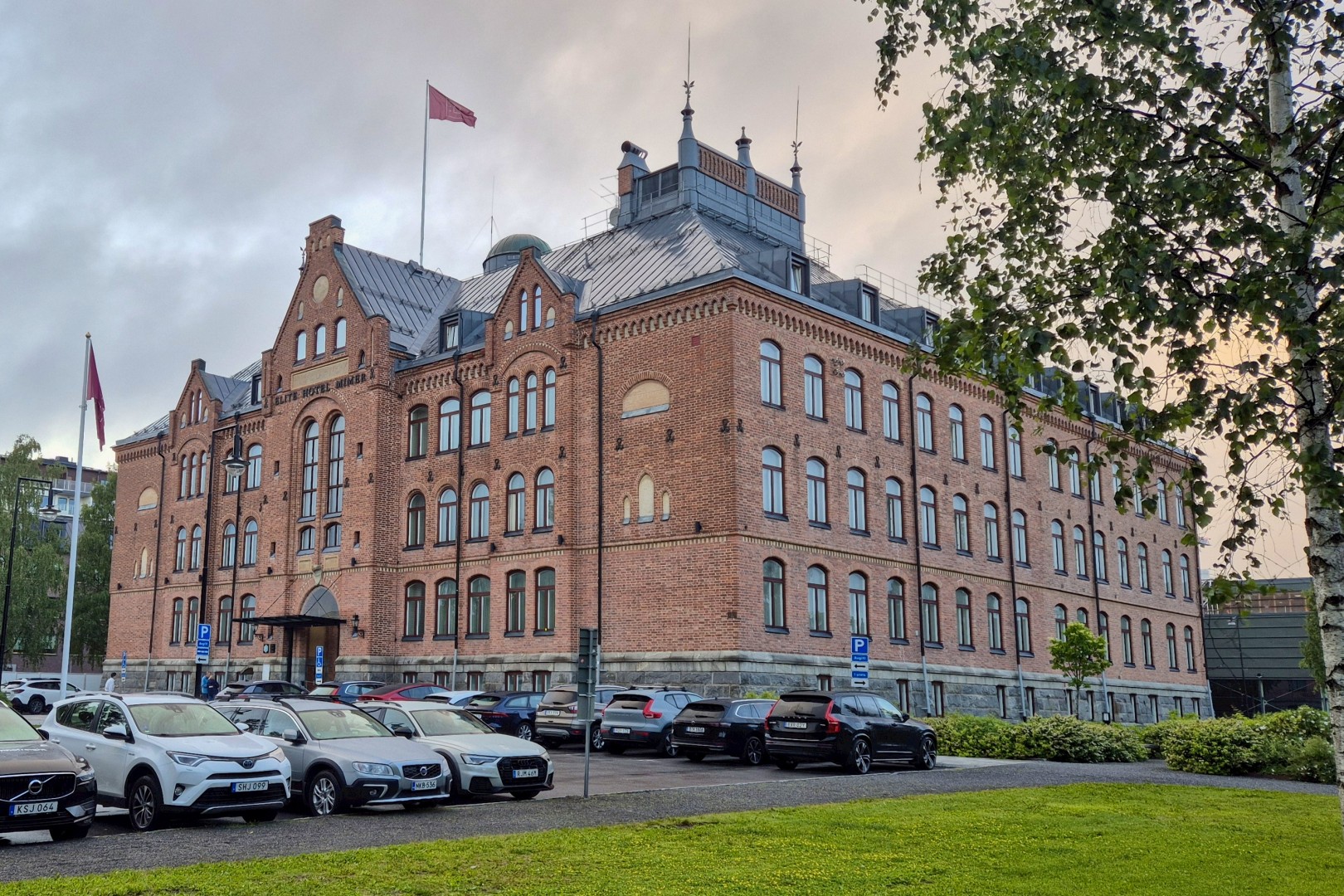
Our hotel, the Elite Hotel Mimer, has an extraordinary history. The building used to be a school and has been converted into a stylish hotel with great attention to detail. Many architectural features still serve as a reminder of its original purpose.
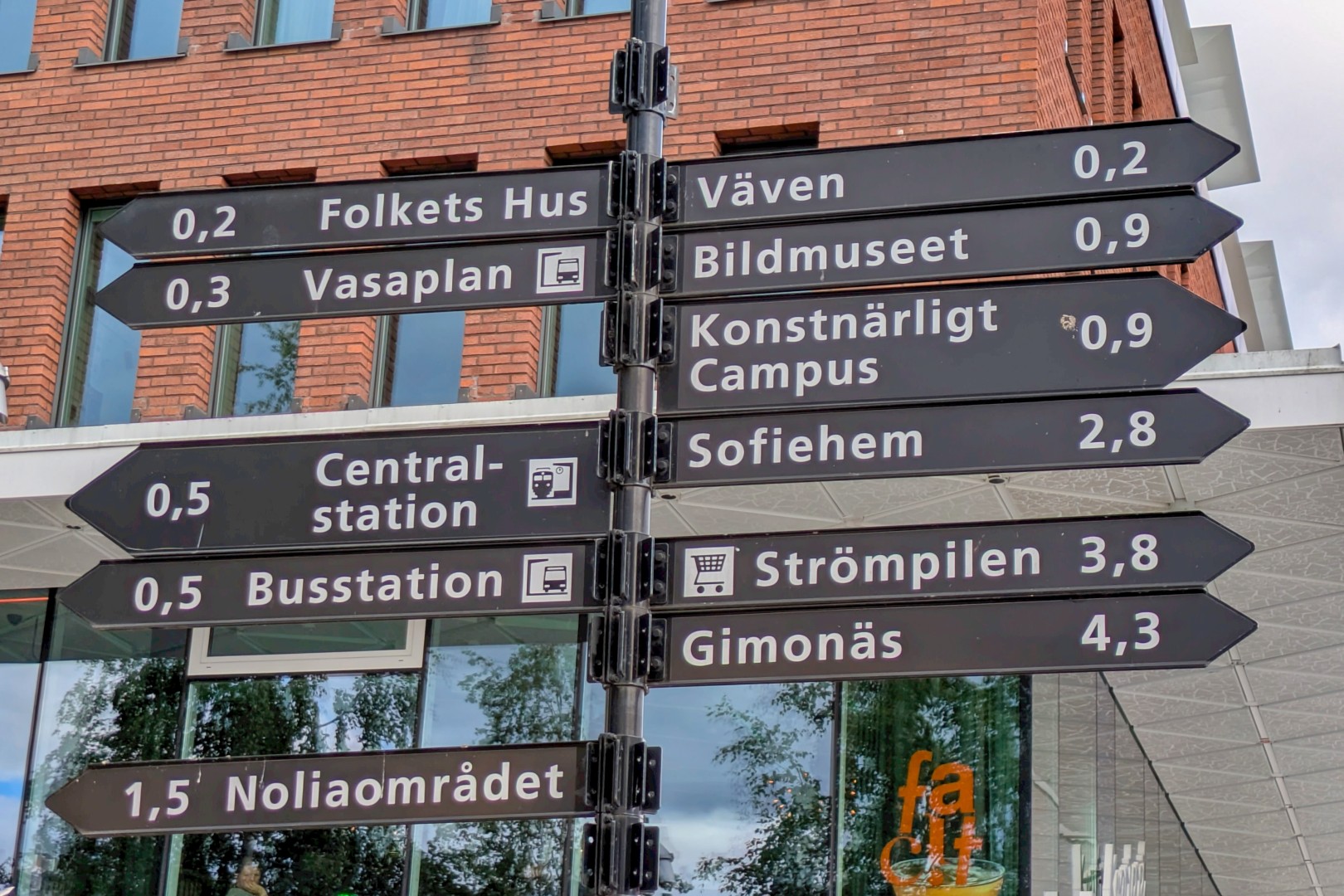
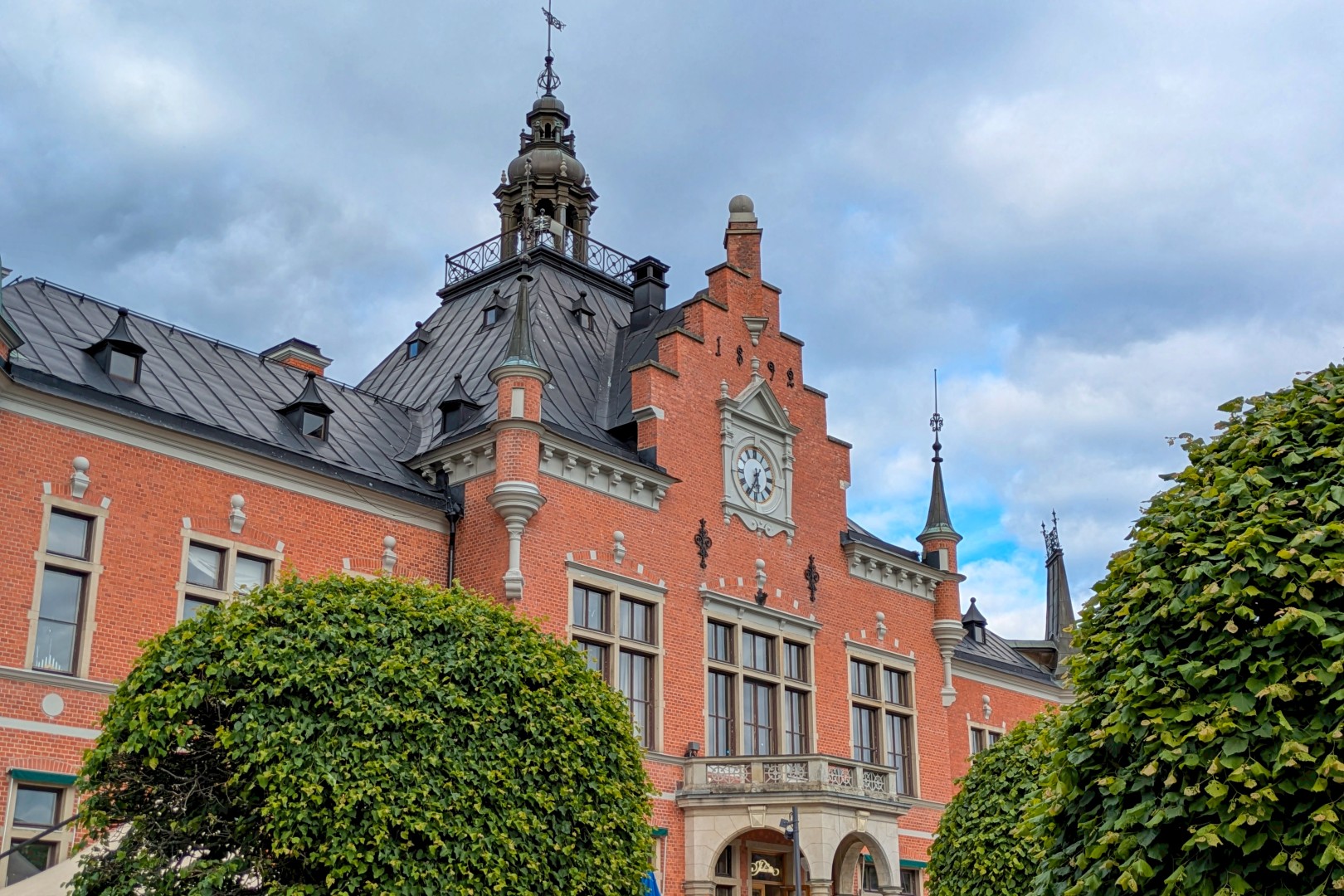
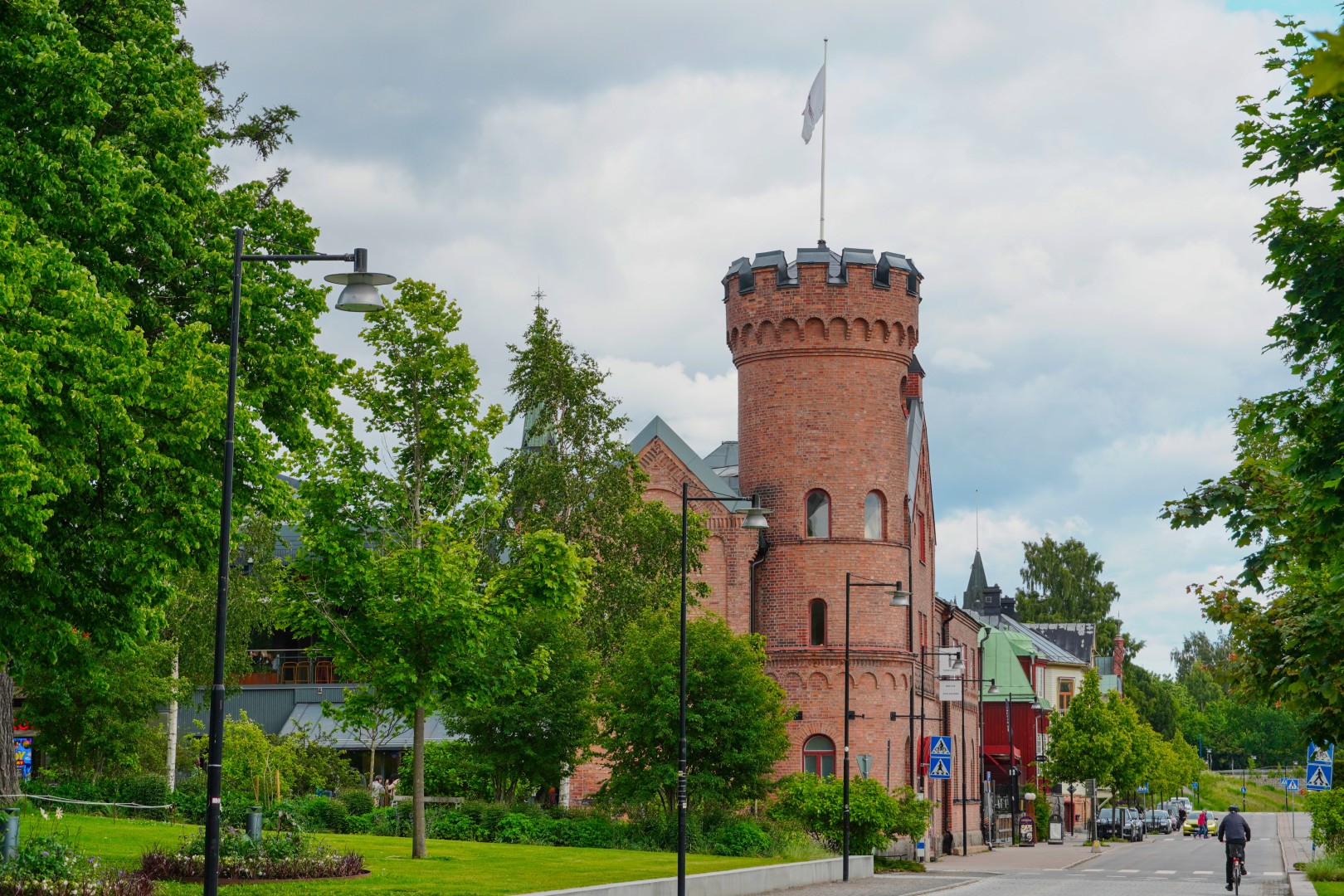
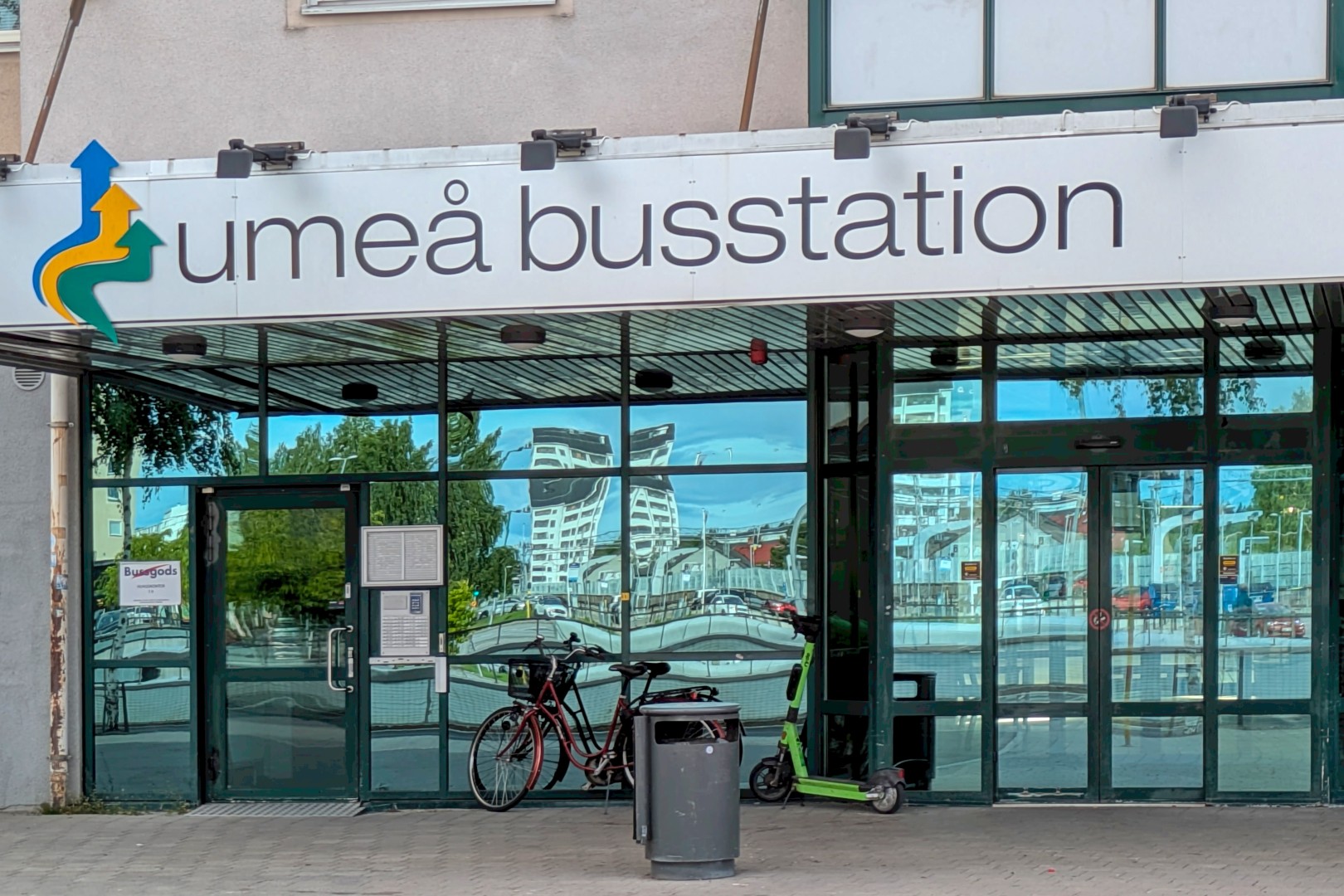
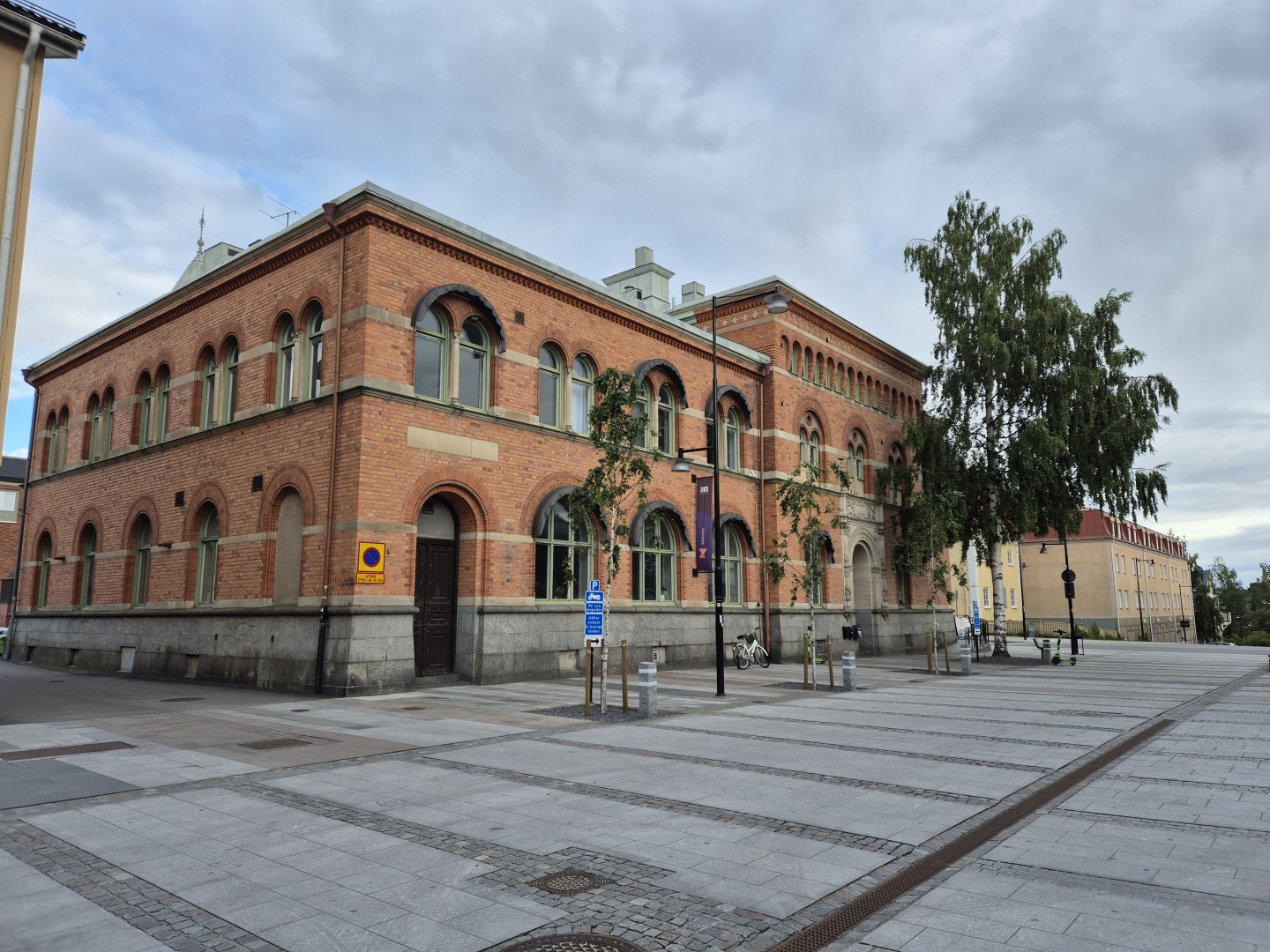
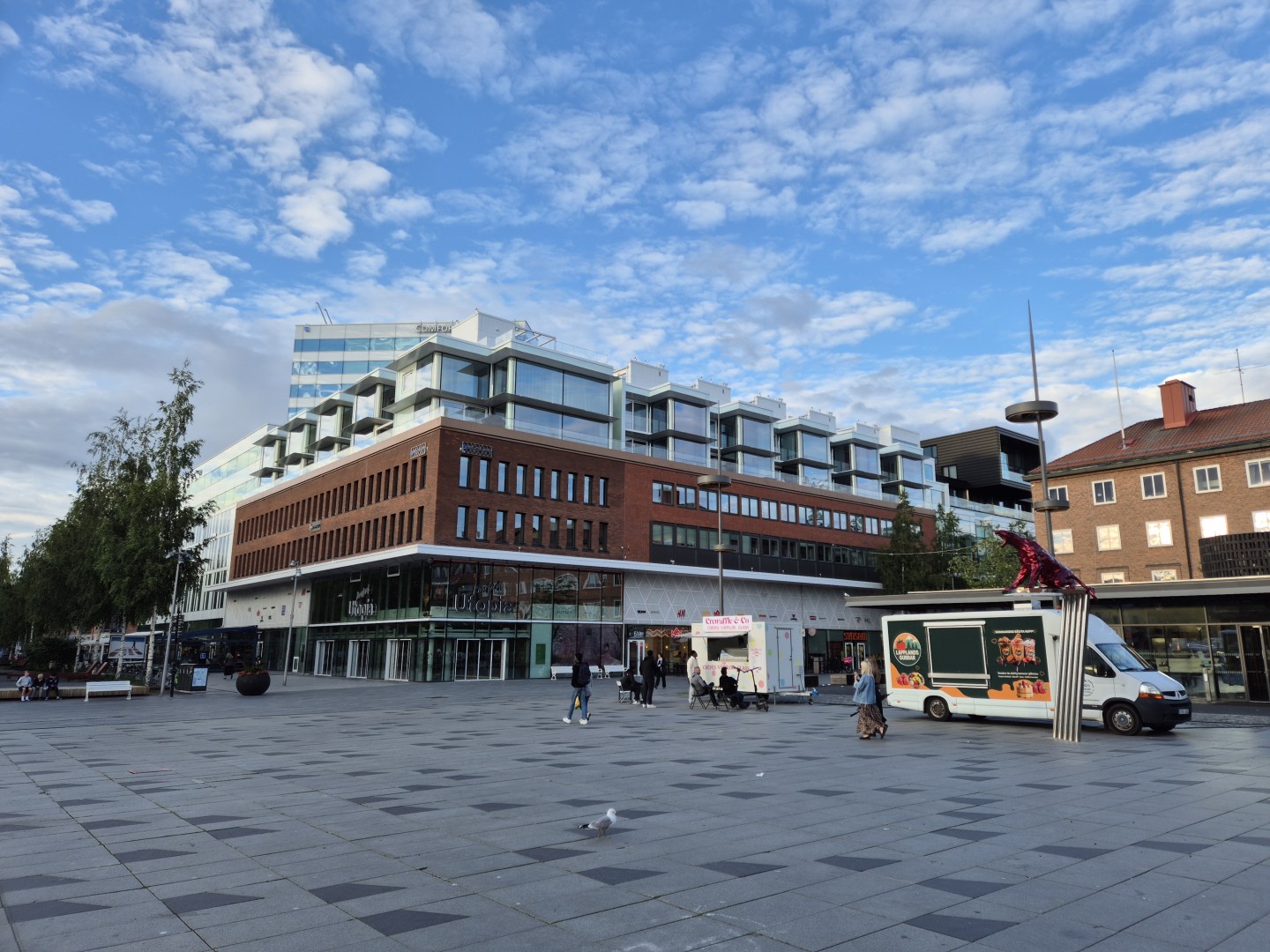
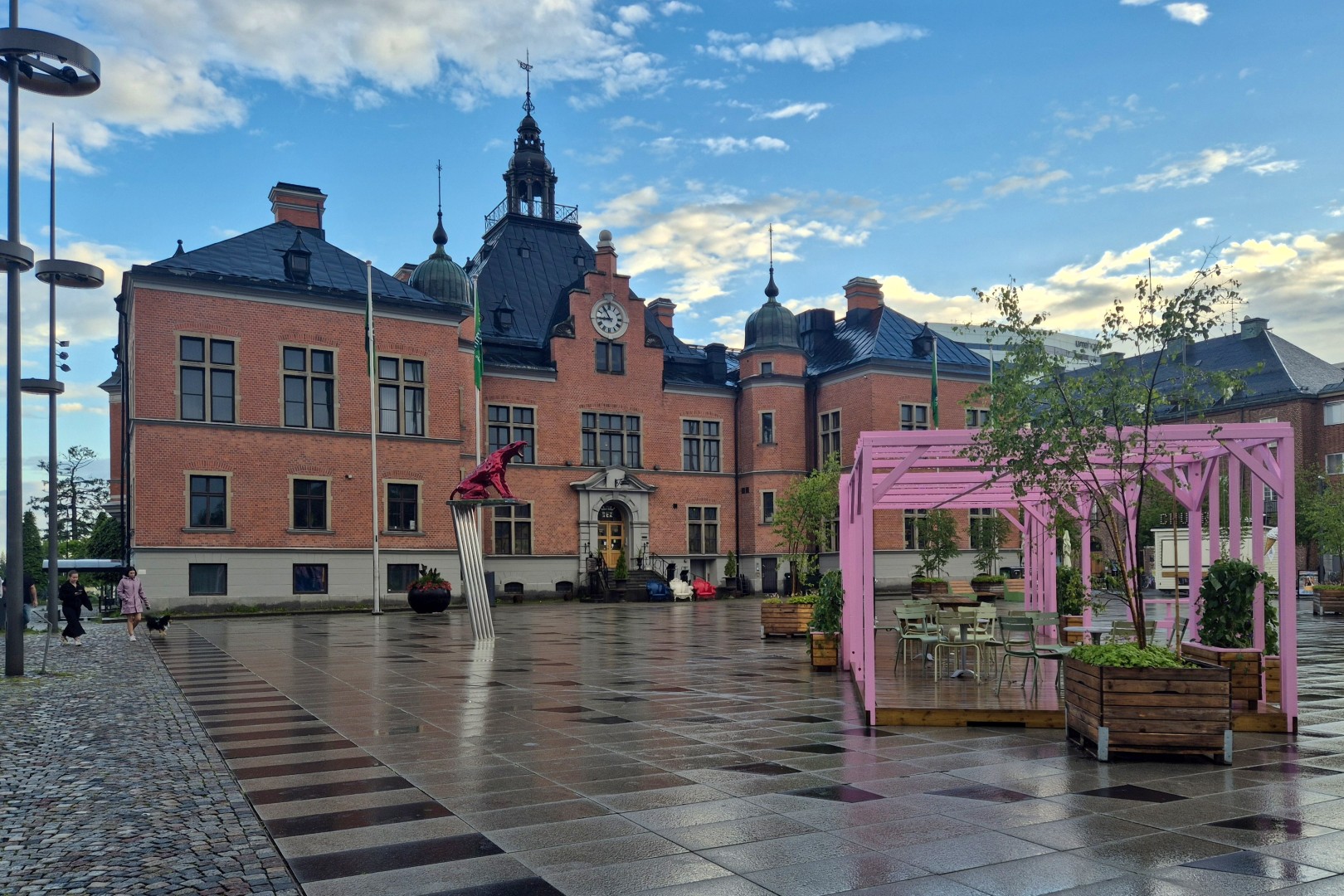
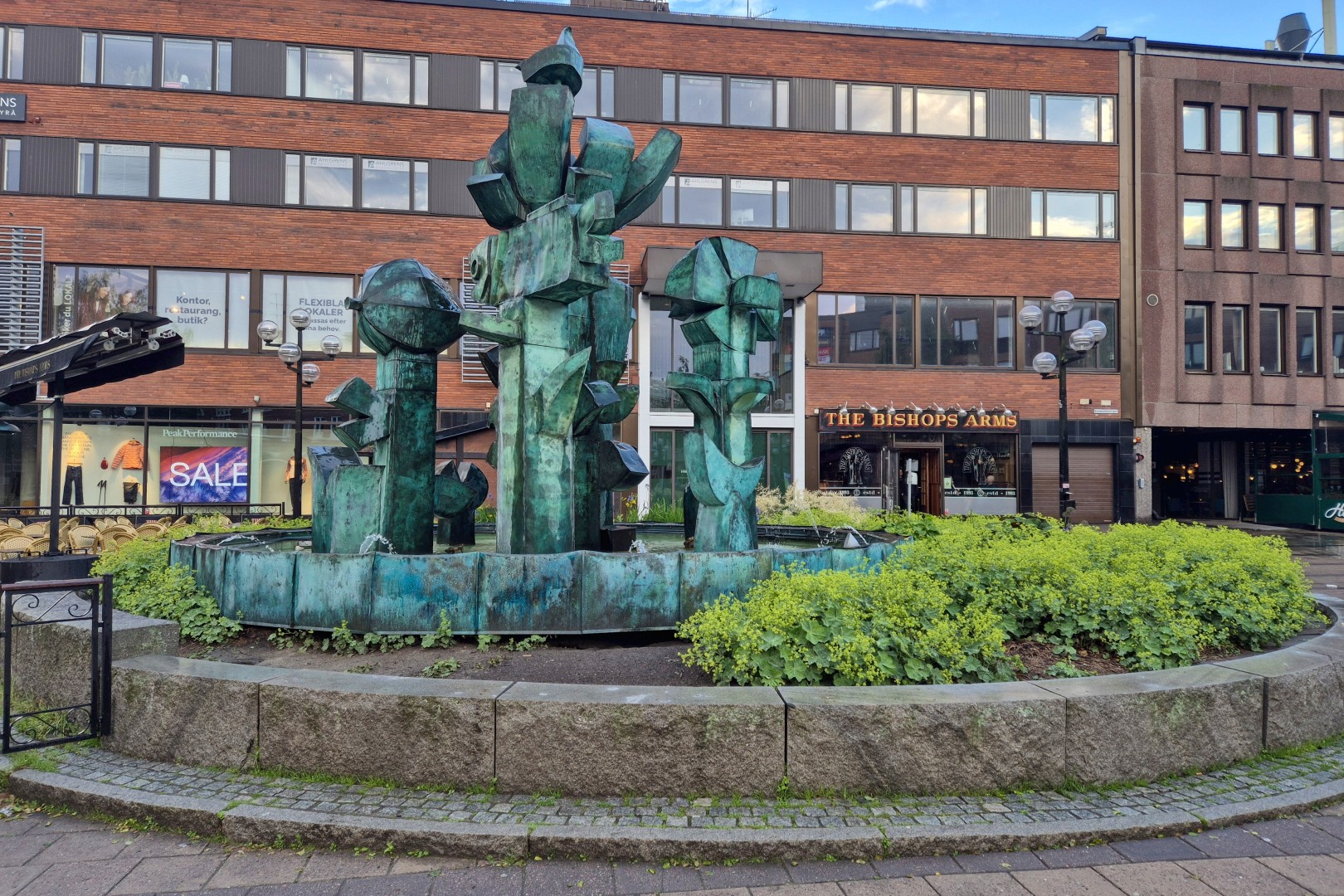
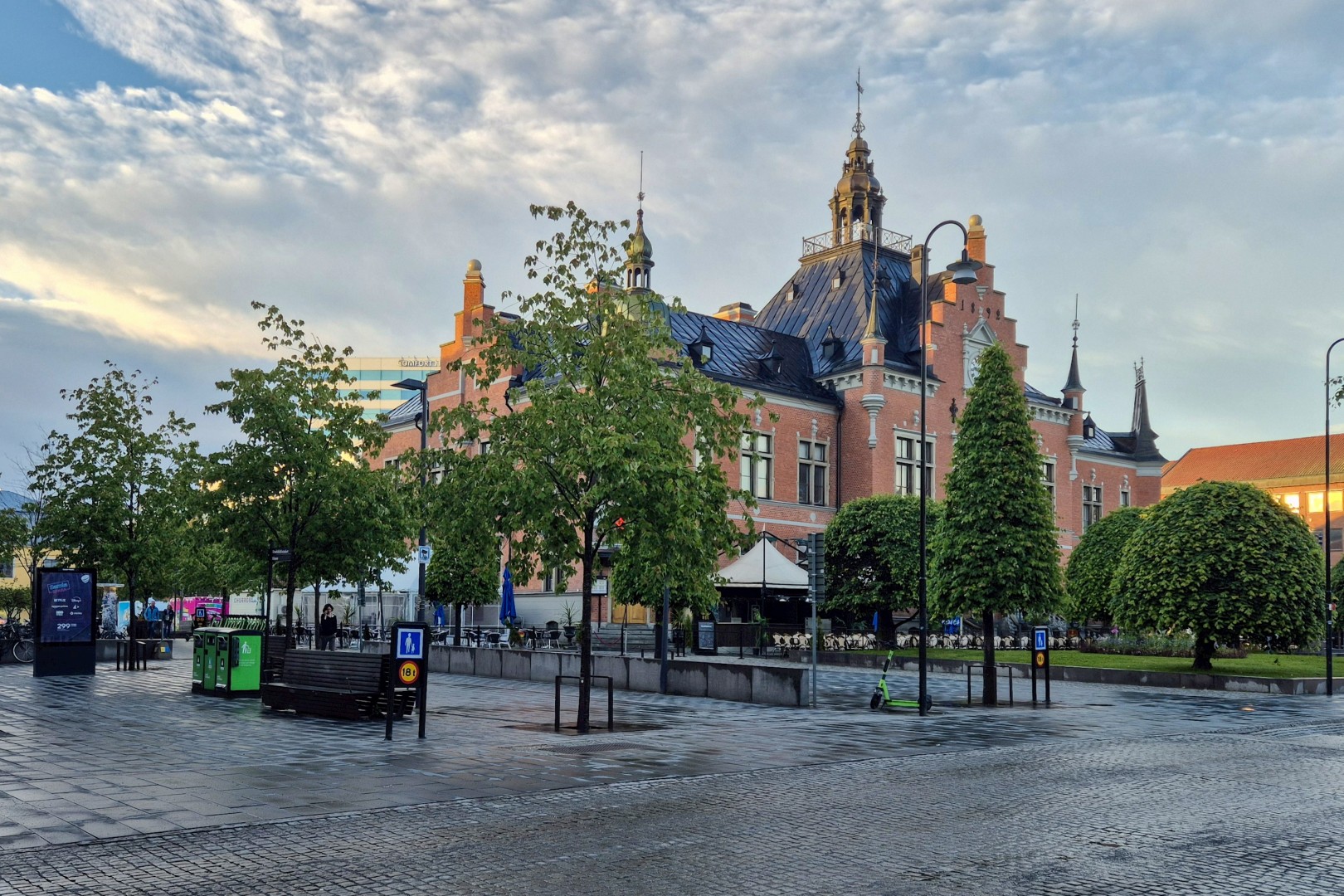
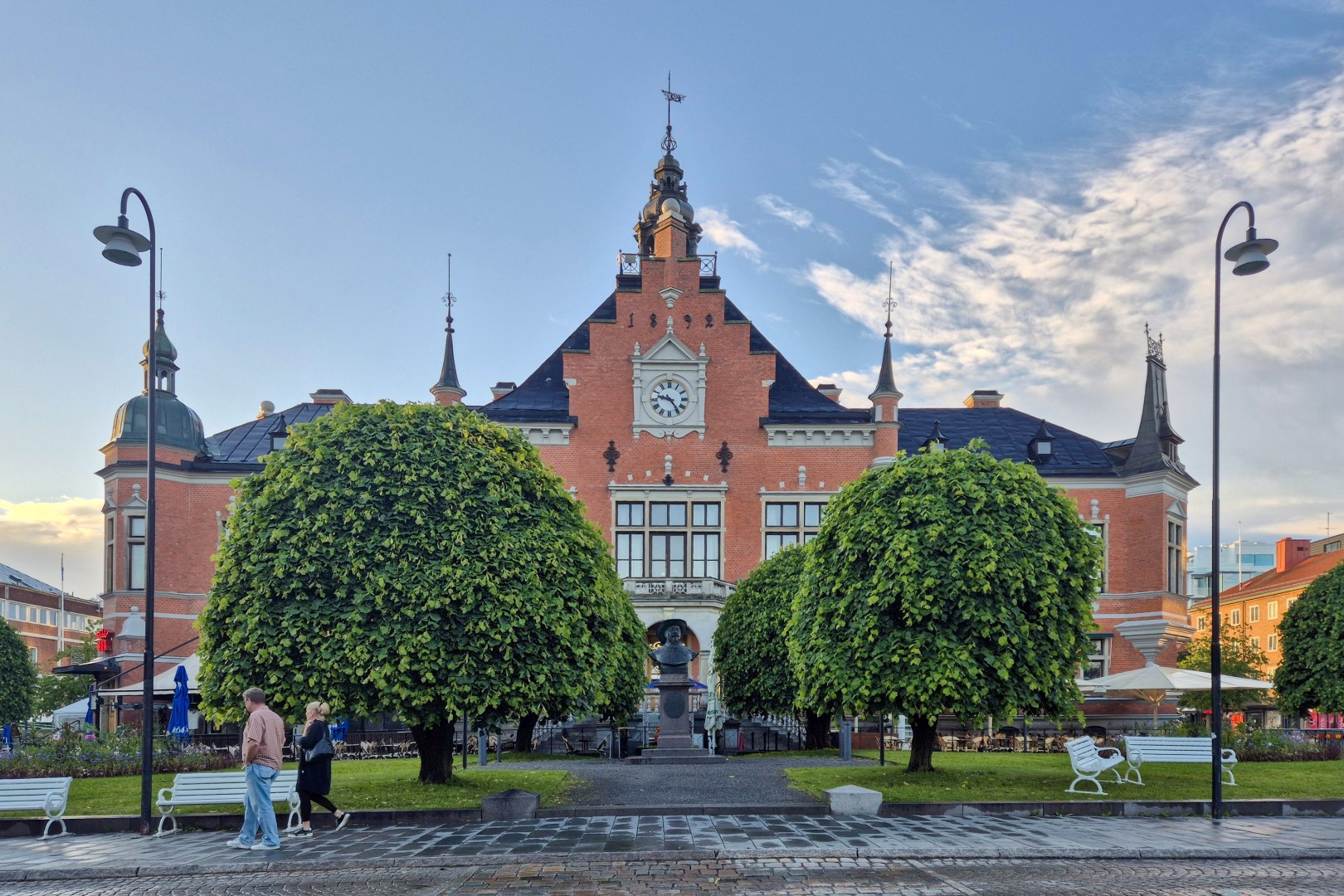
After checking in, we took the opportunity to go for a stroll through Umeå. Although the city has a population of over 130,000 and is regarded as a major university town, it felt surprisingly quiet. Presumably, most of the students had already set off on their summer holidays.
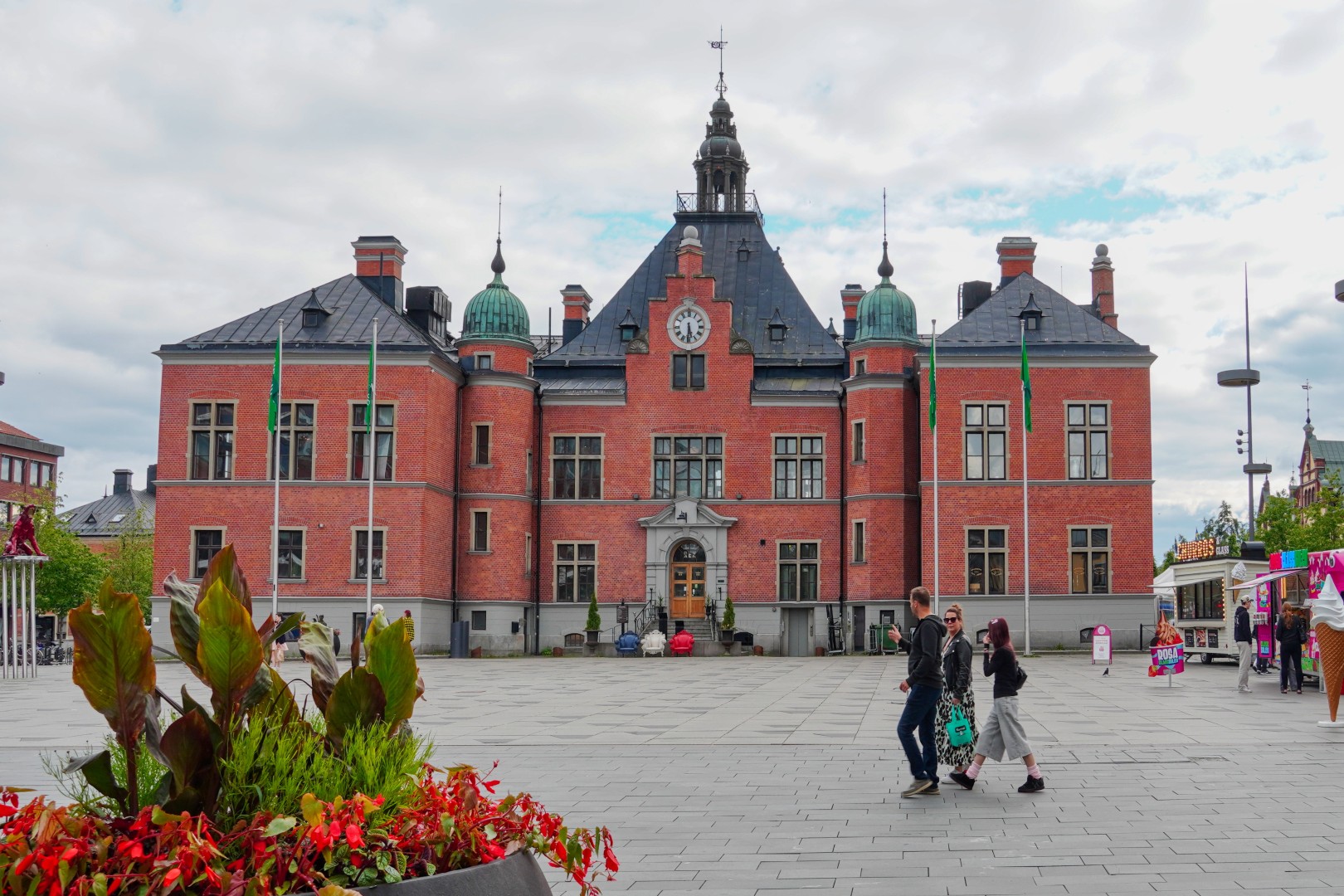
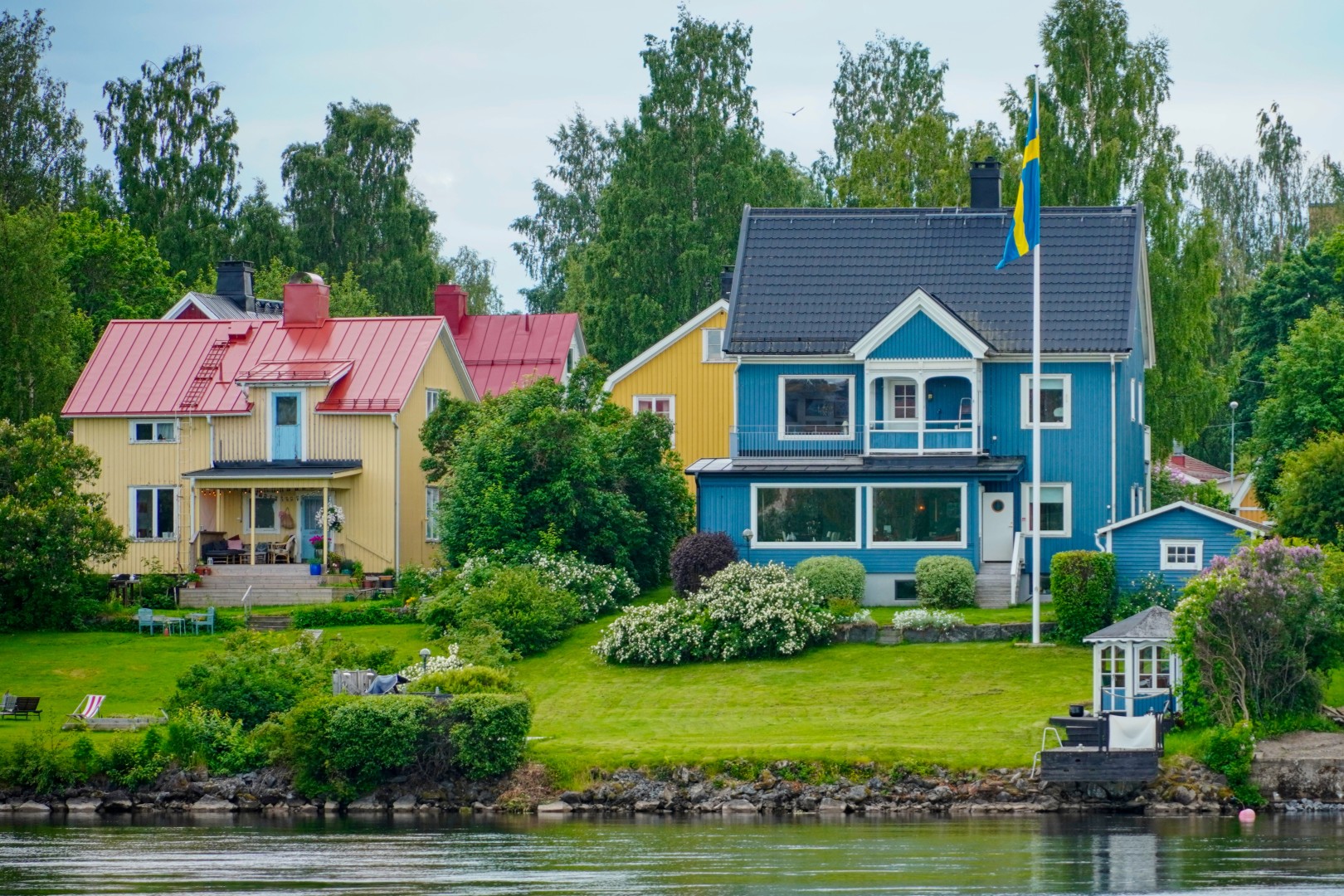
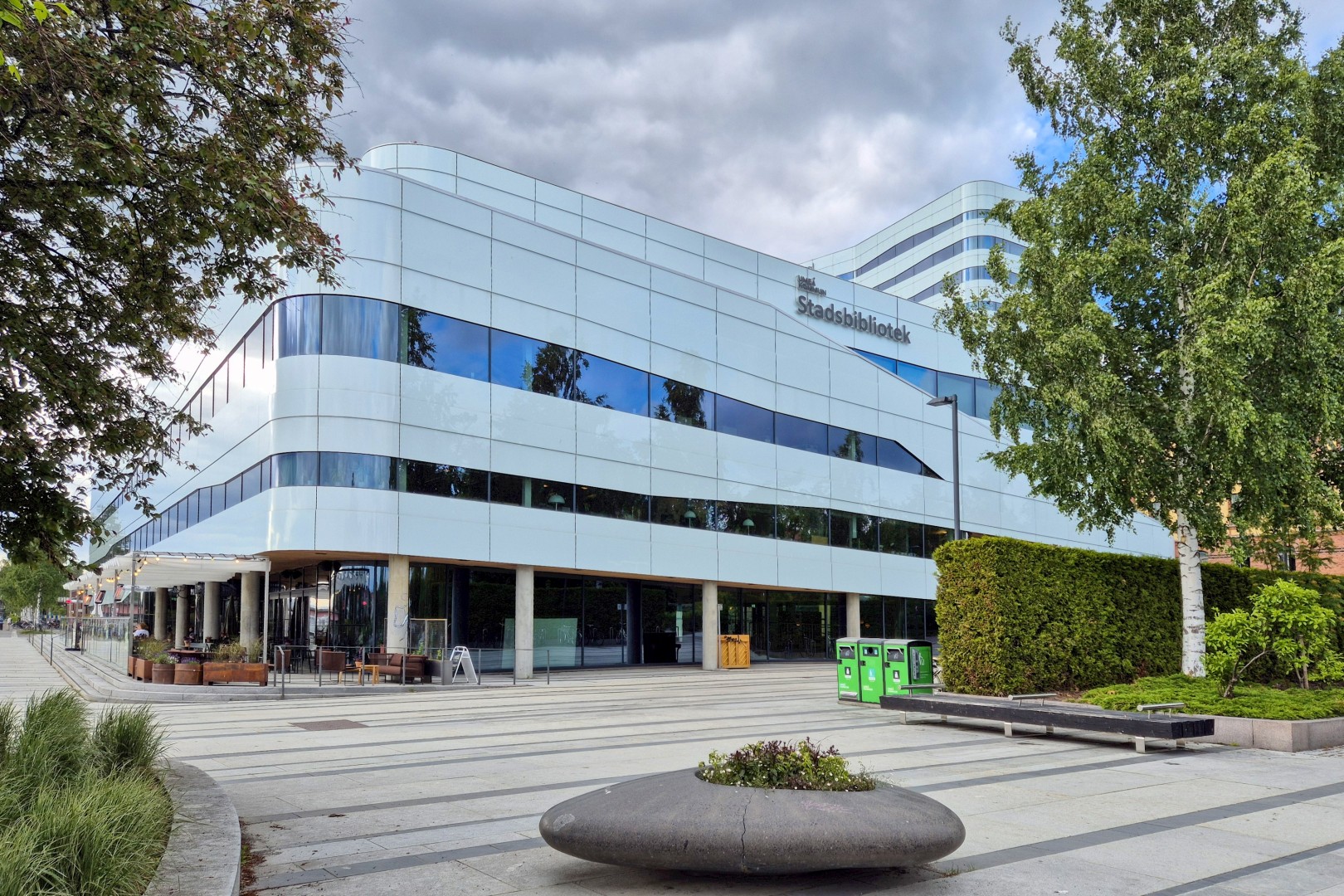
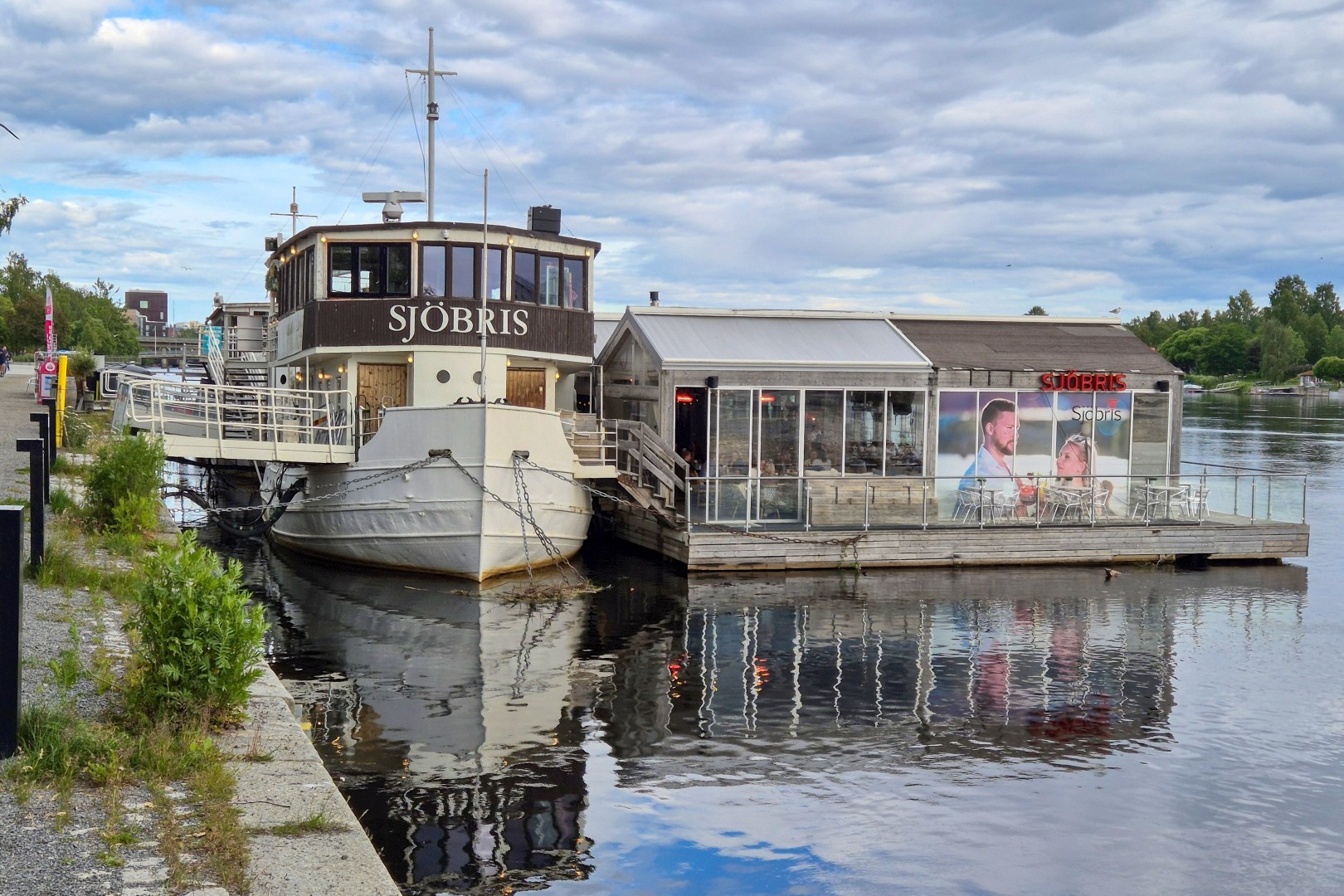
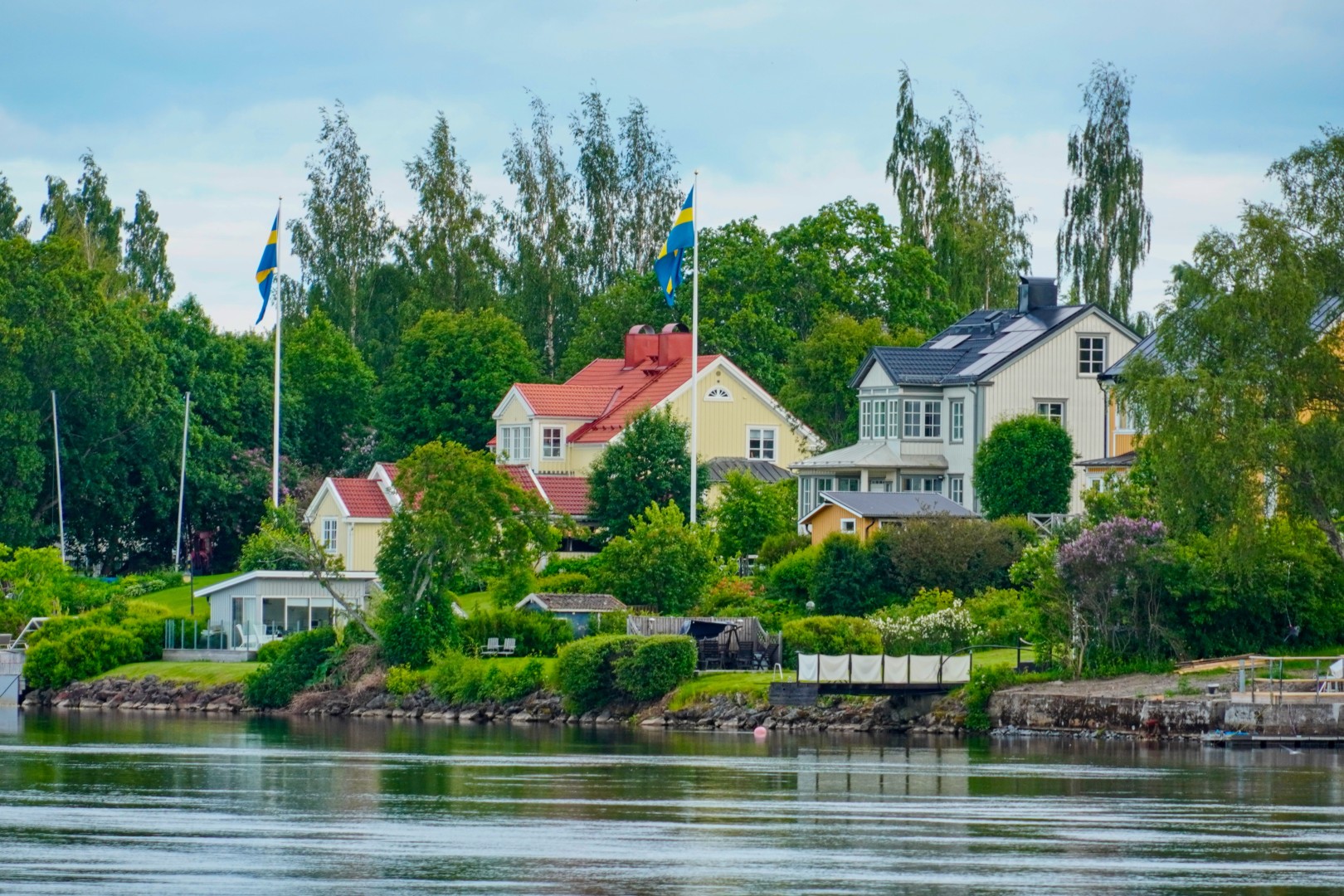
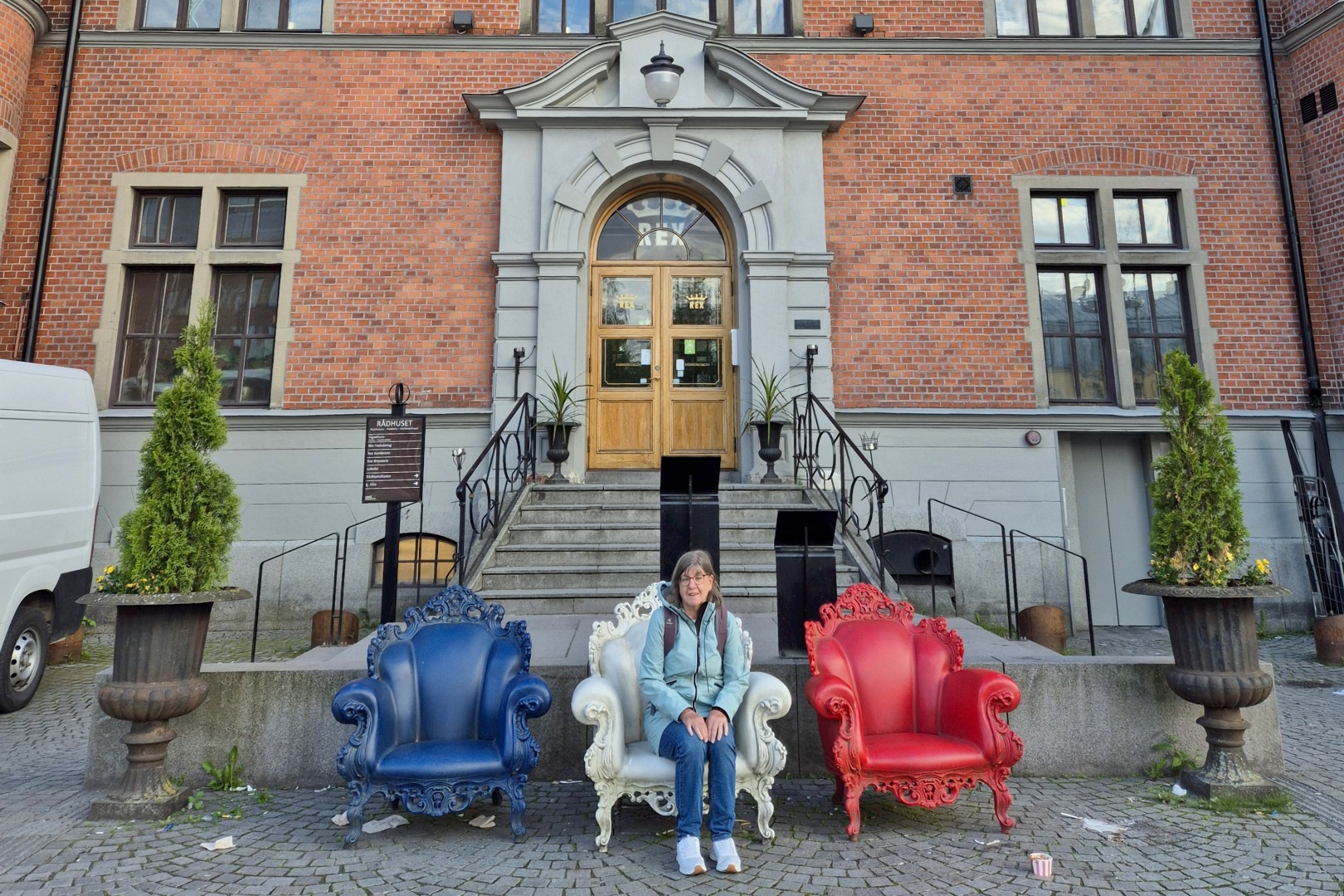
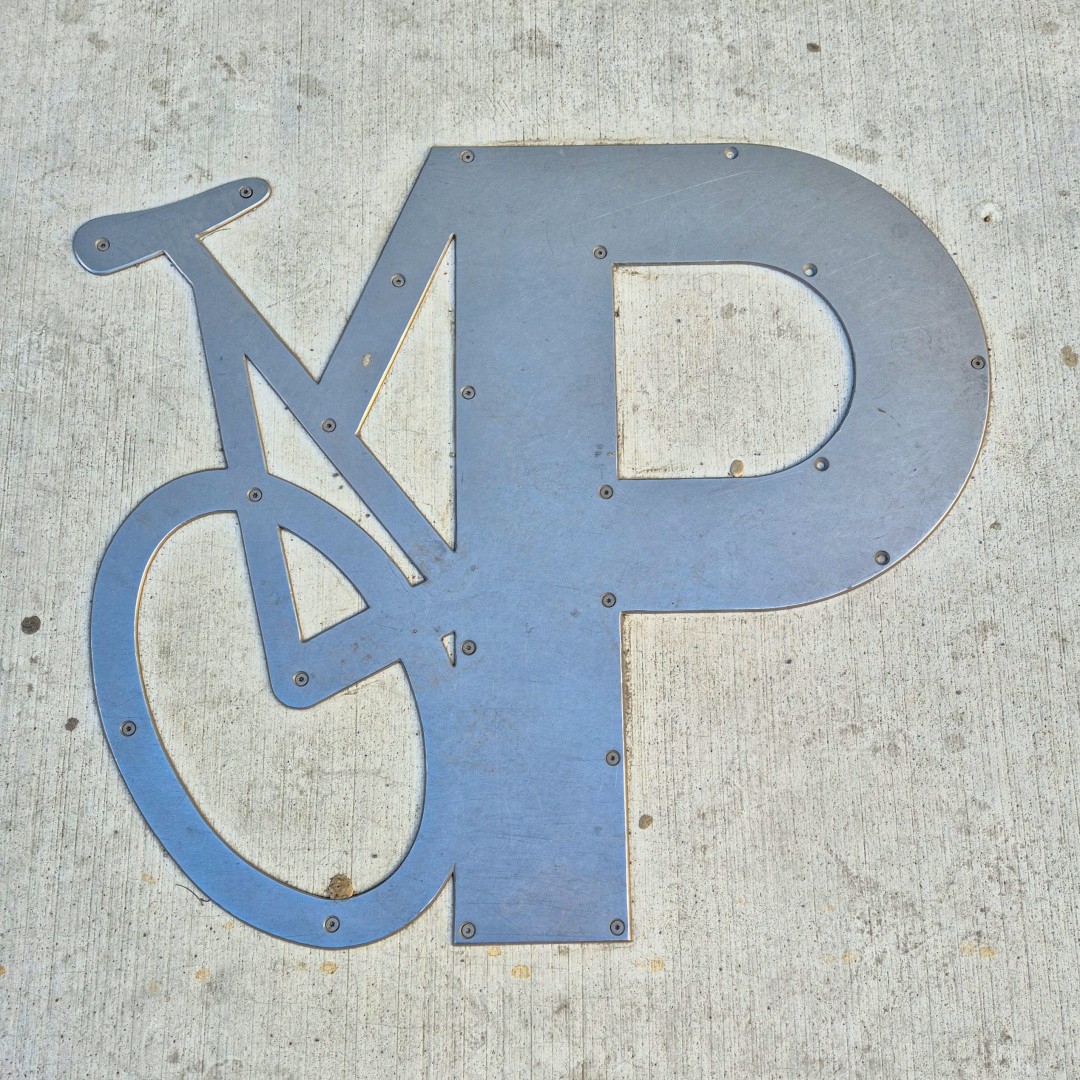
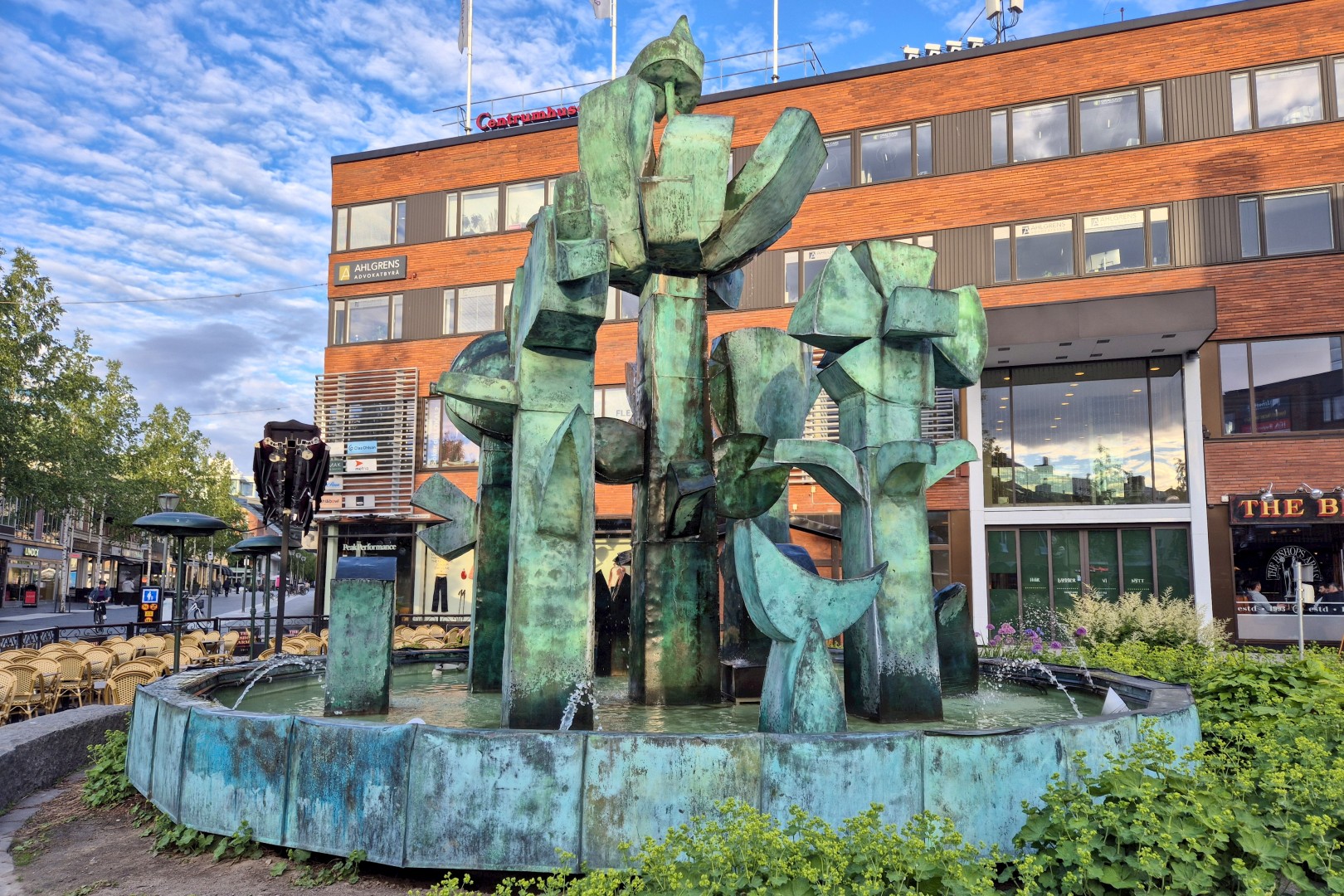
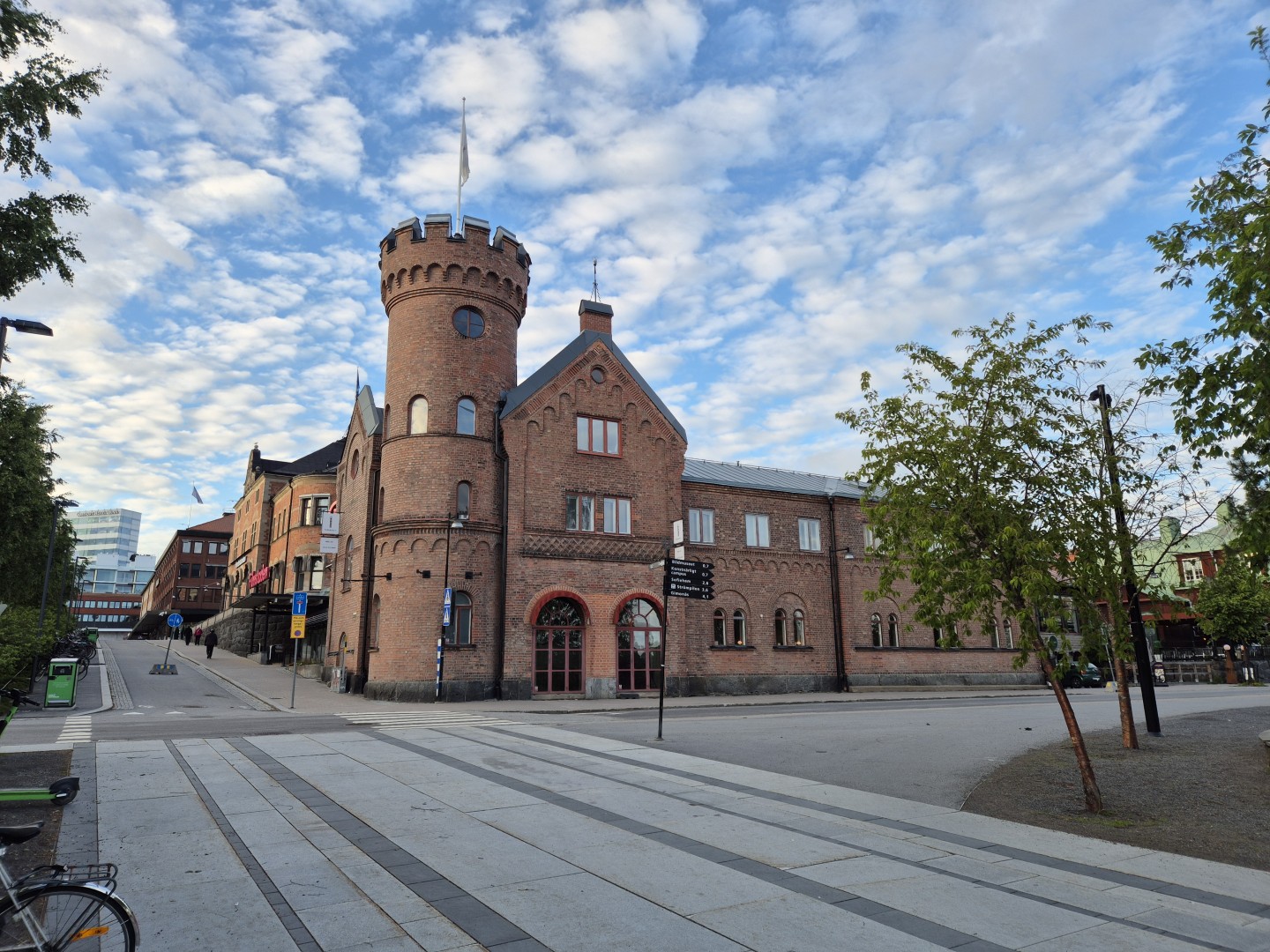
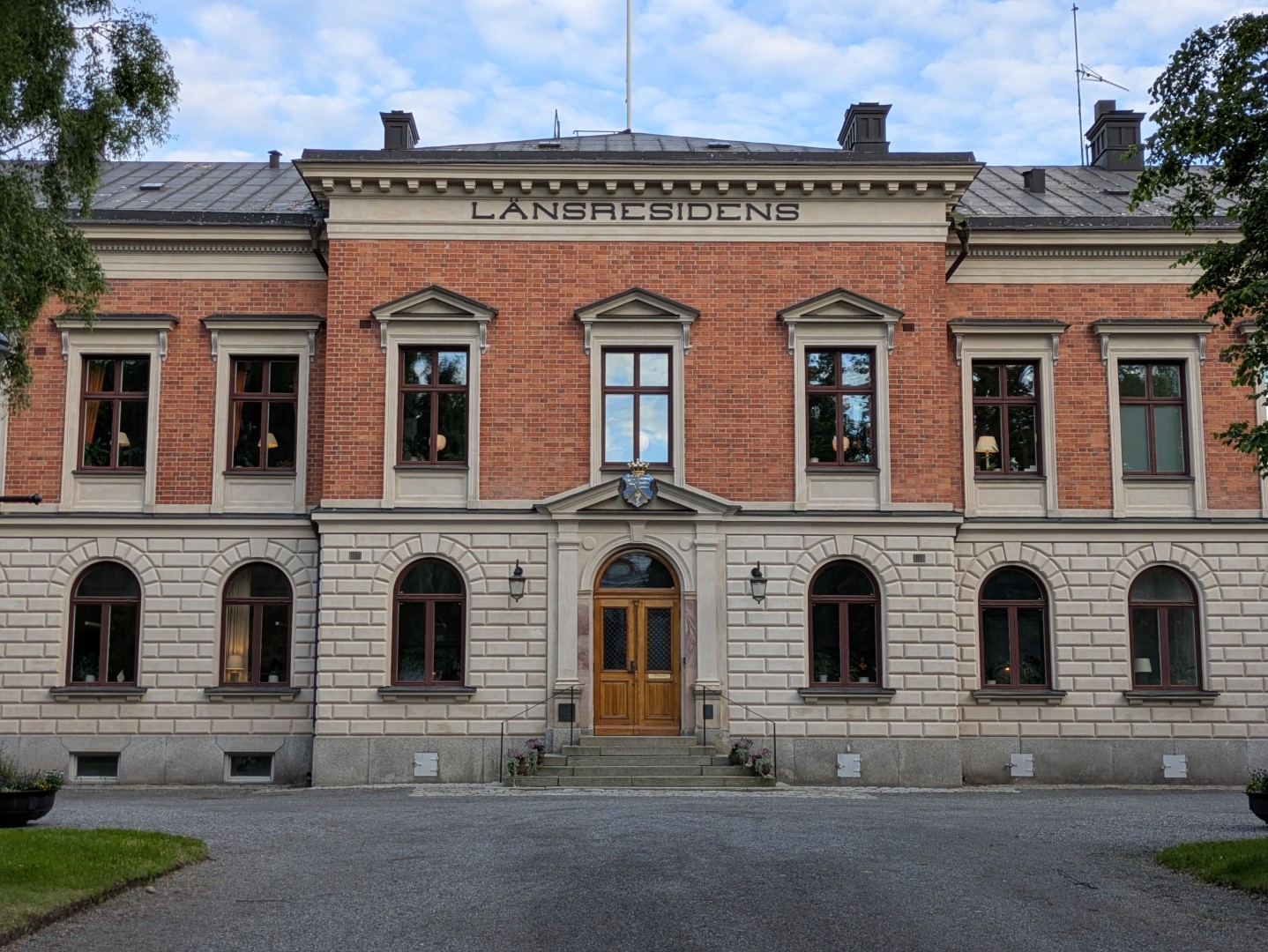
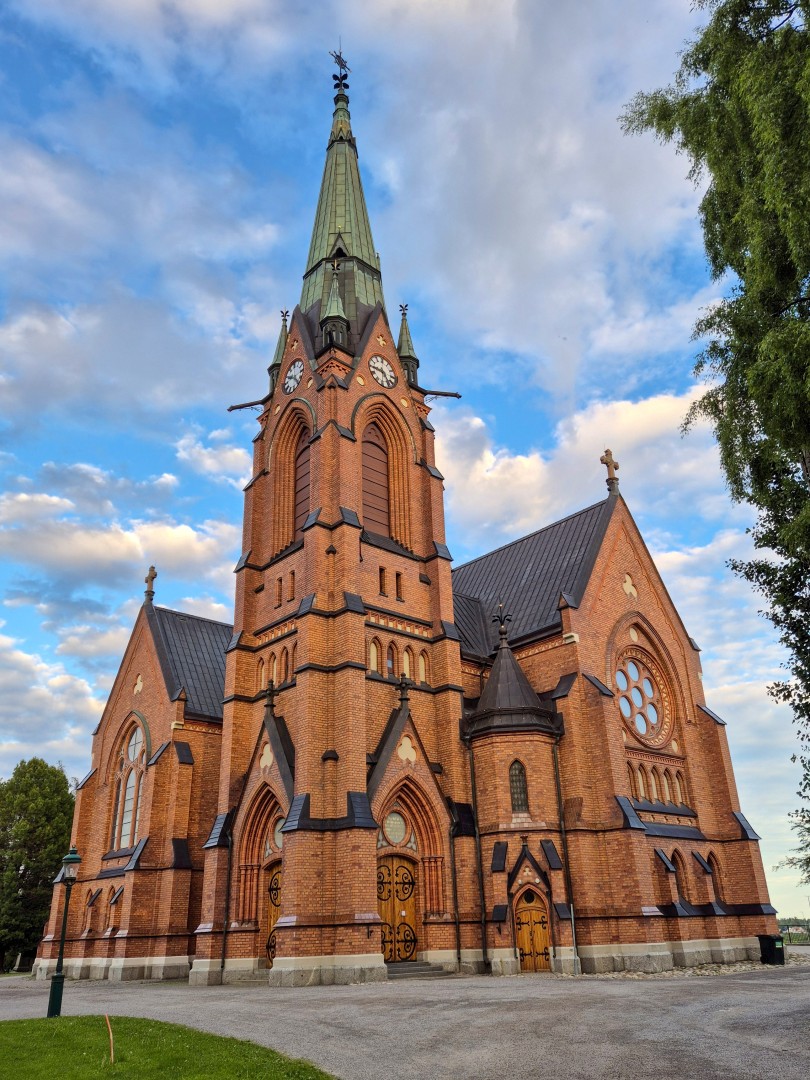
We visited the town hall, the modern city library, Umeå Stadskyrka and the riverside promenade along the River Umeälven. The relaxed atmosphere made the evening stroll particularly pleasant.
After dinner together, we rounded off the day in a cosy manner. The long Nordic summer evenings, with their soft light, already gave us a first glimpse of what was still to come in Lapland.
Across the Arctic Circle to Finnish Lapland
At 7.30 am, it was time once again to load the suitcases and set off. With over 600 kilometres ahead of us, the next long leg of the journey was on the agenda.
The landscape changed progressively. Dense forests, crystal-clear lakes and endless roads now dominated the view. Settlements became increasingly sparse and nature gradually took over.
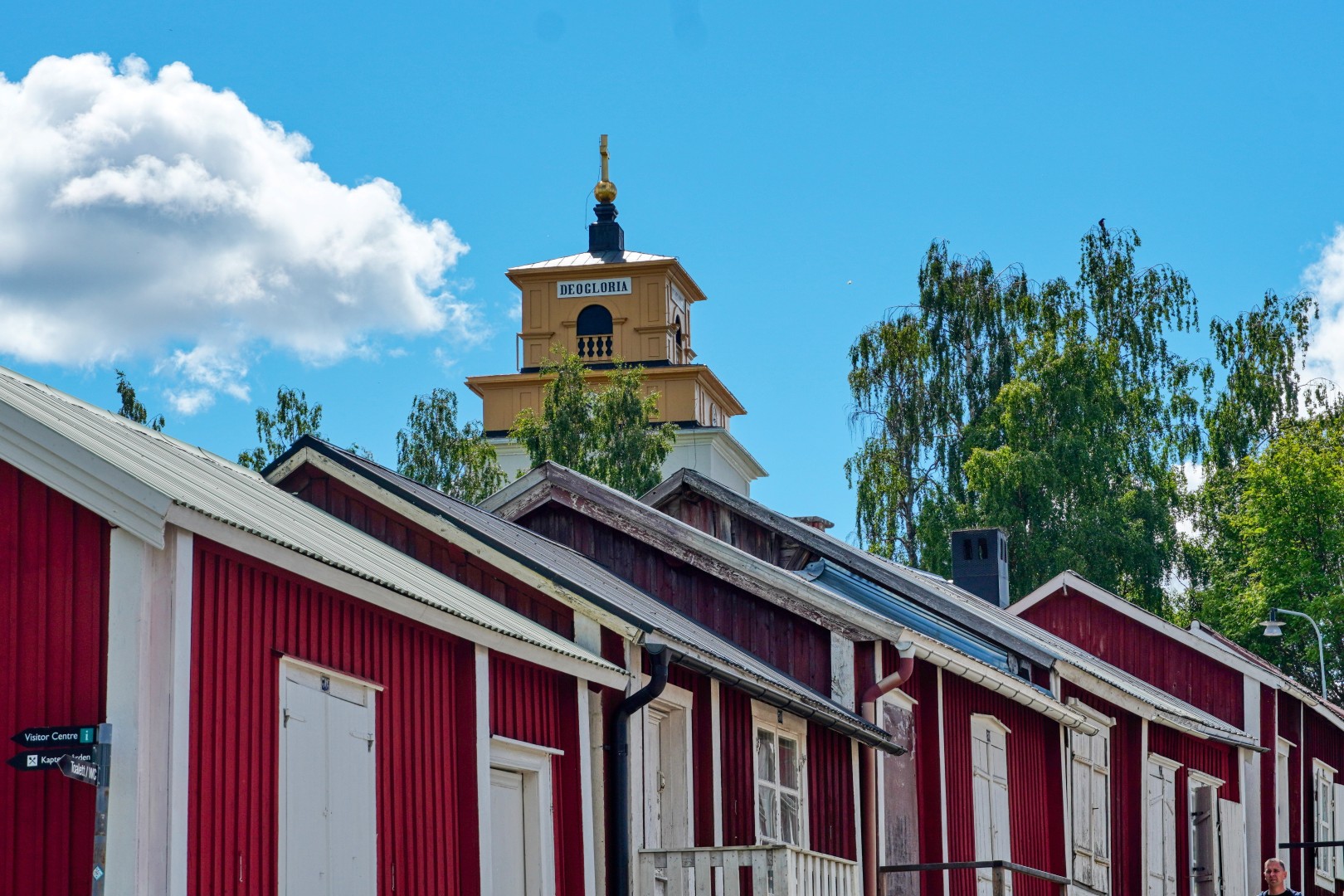
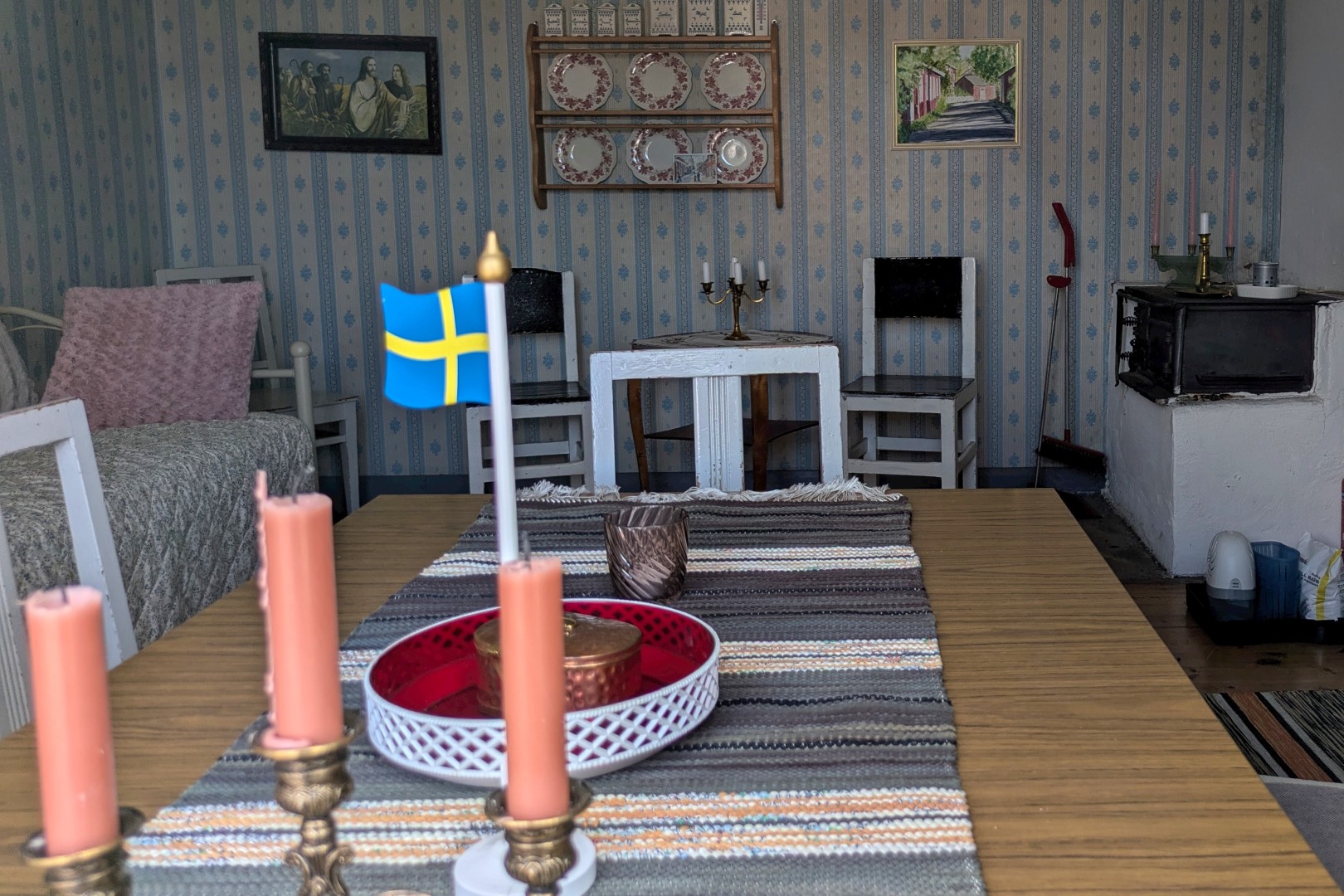
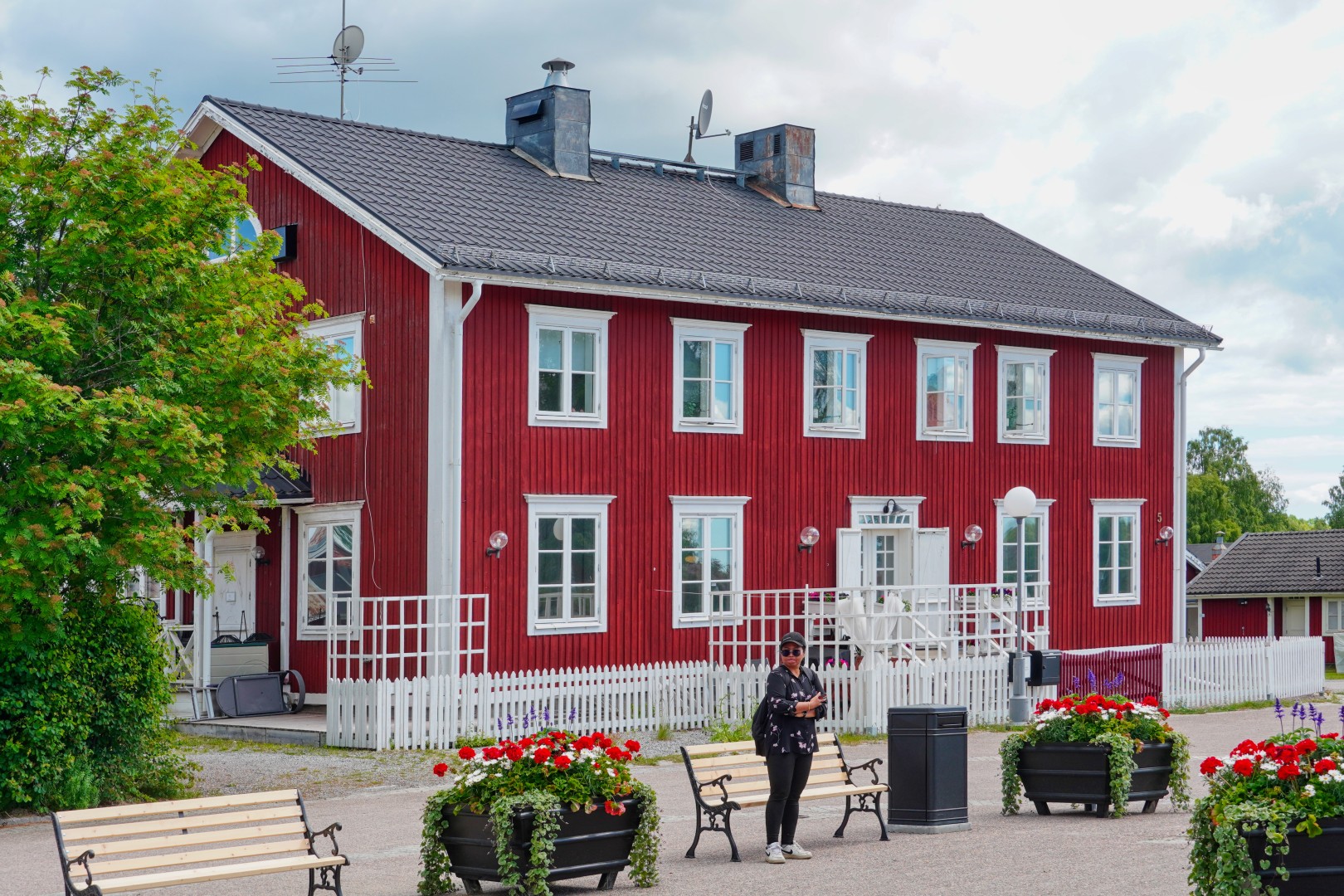
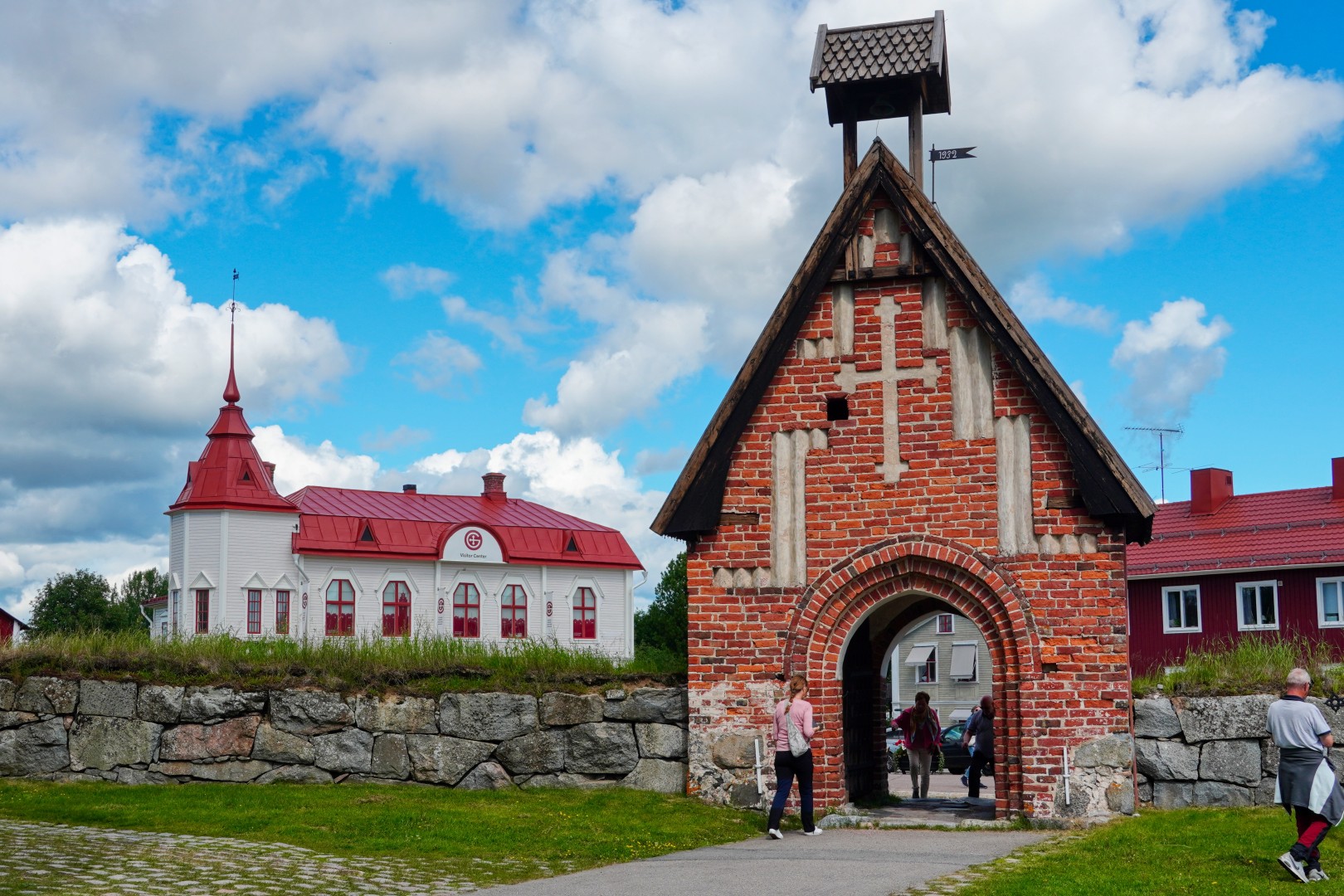
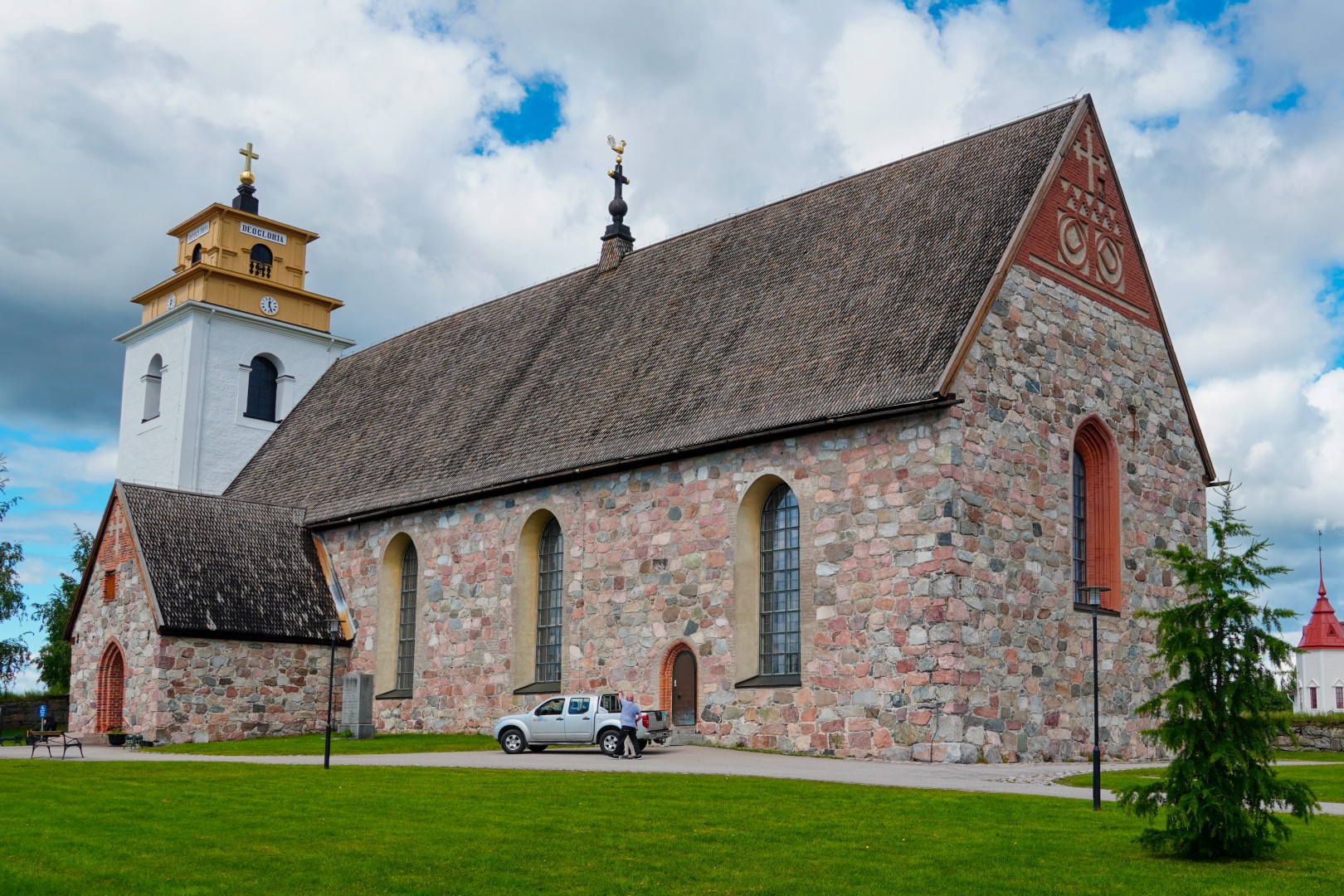
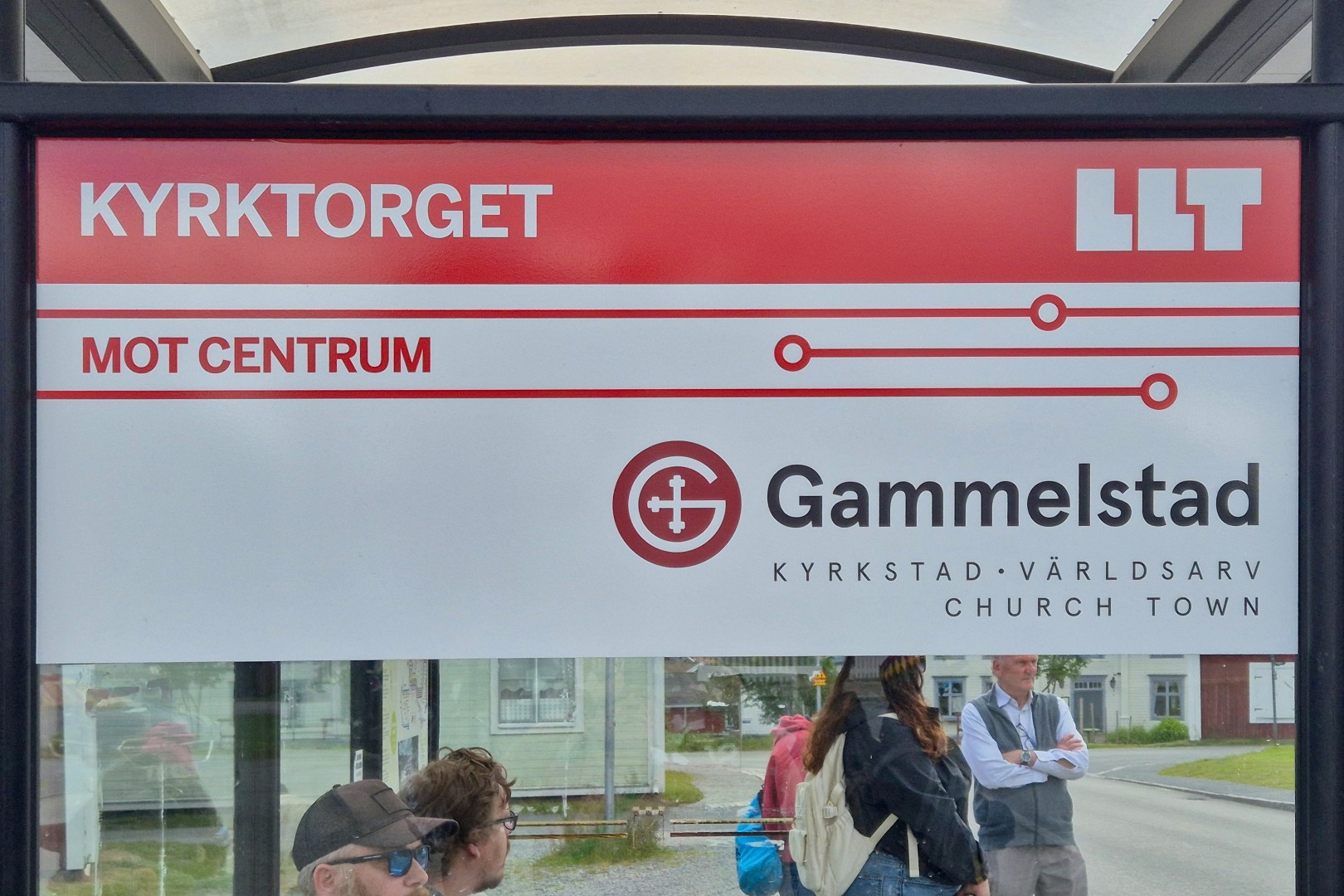
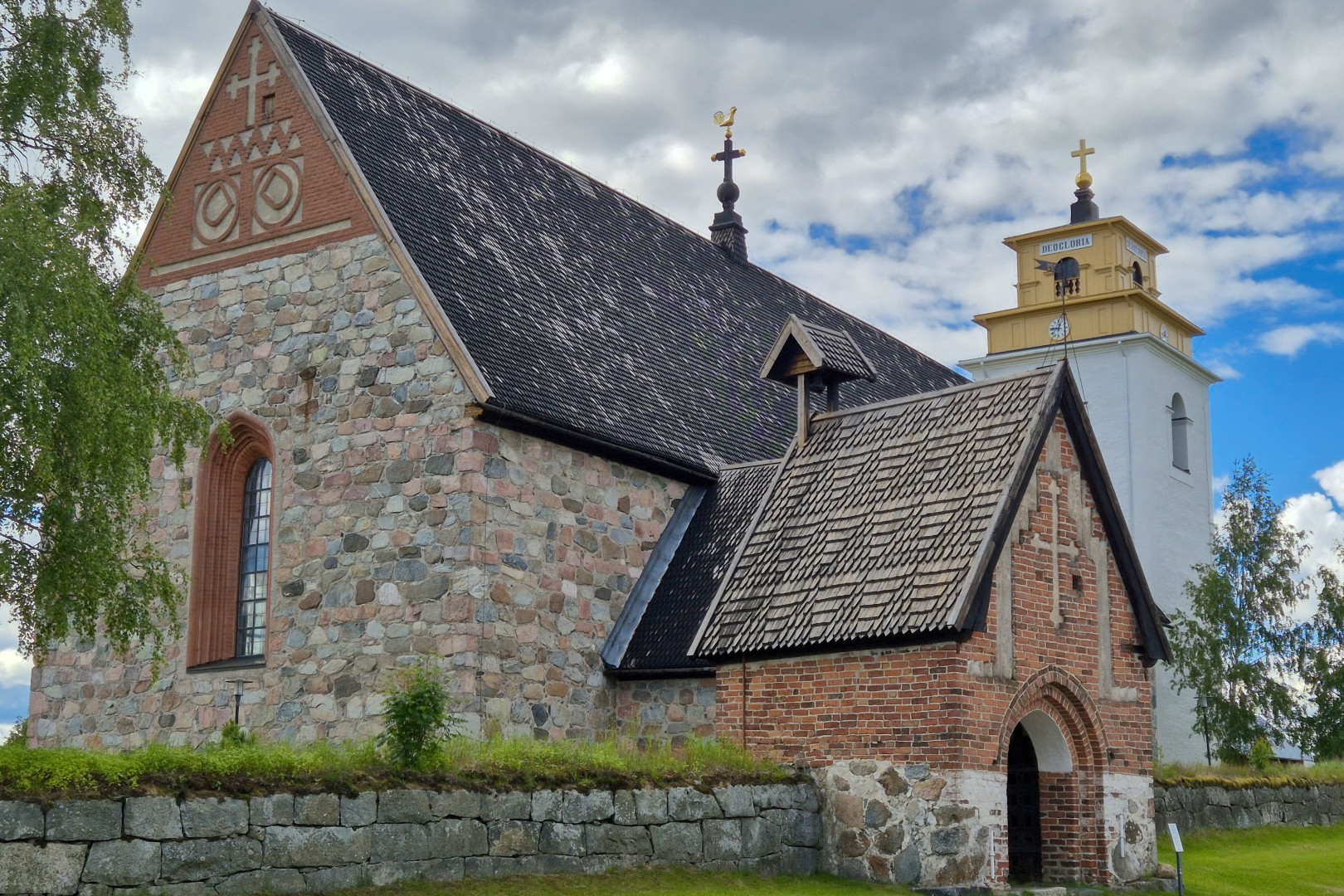
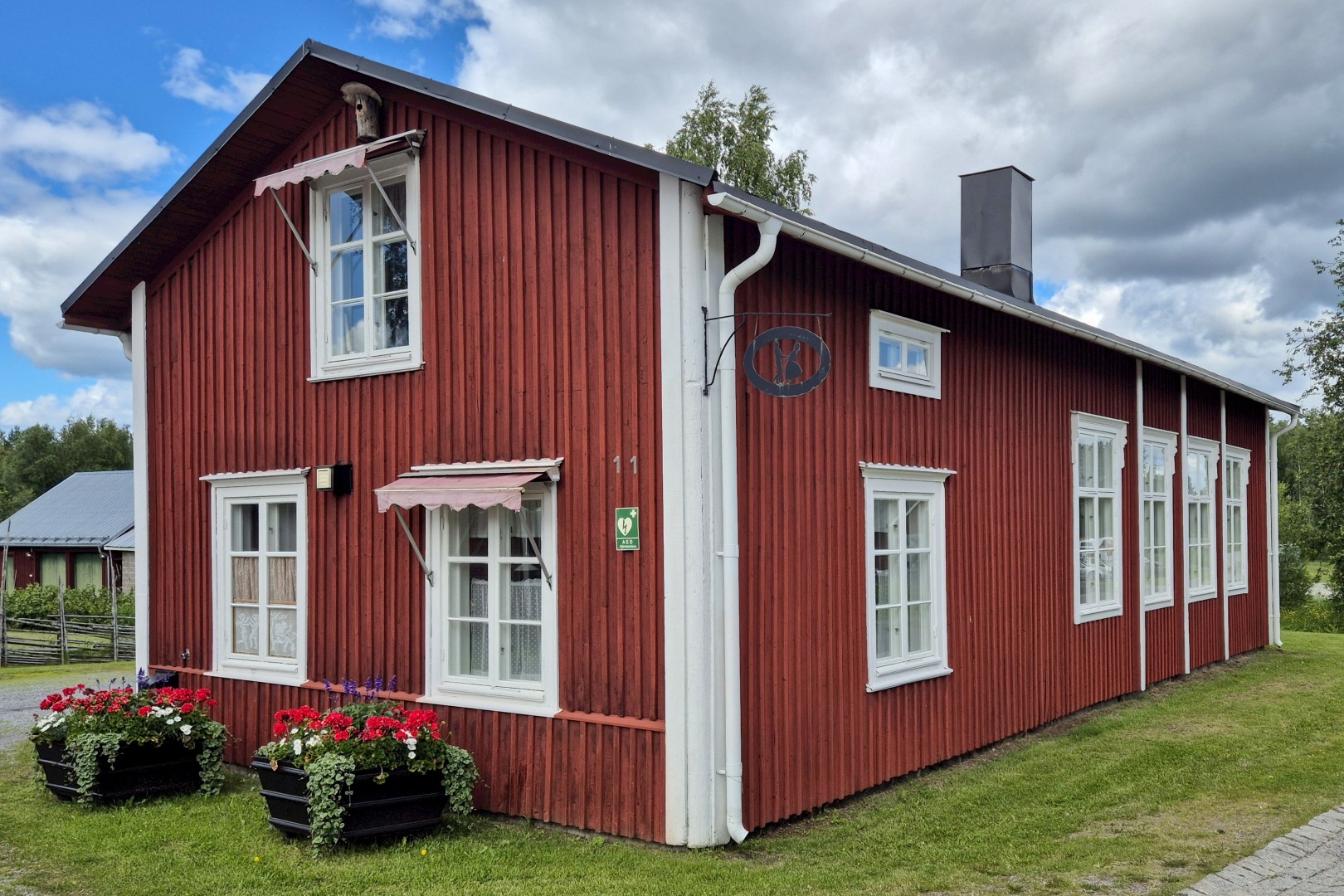
After a short break at Ljusvattnet, we later reached Gammelstad Kyrkstad near Luleå. This historic church town is a UNESCO World Heritage Site and is one of the best-preserved of its kind in the world. More than 400 small red wooden houses are clustered around the medieval church; these once served as accommodation for worshippers travelling from far afield to attend services.
A very special moment awaited us shortly afterwards.
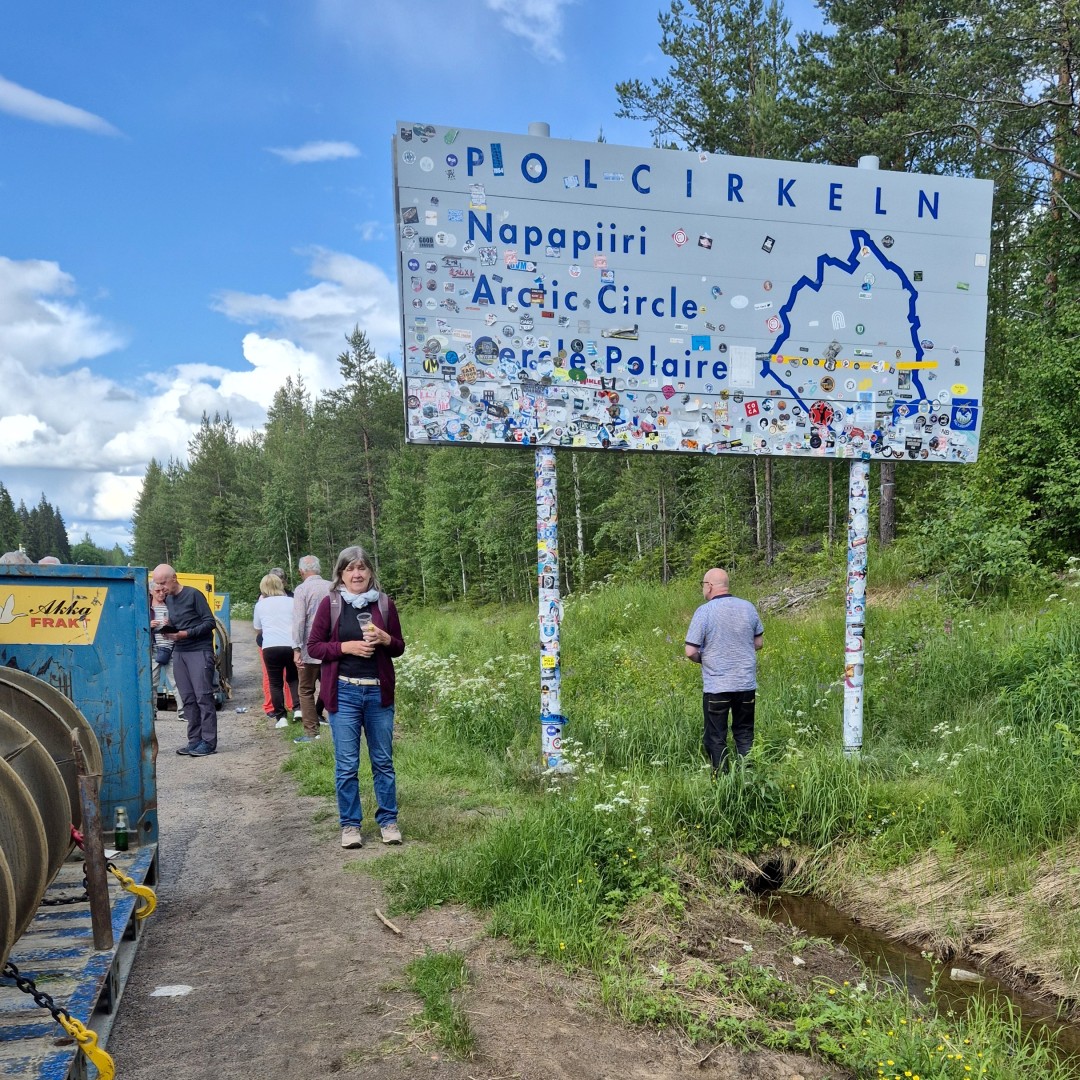
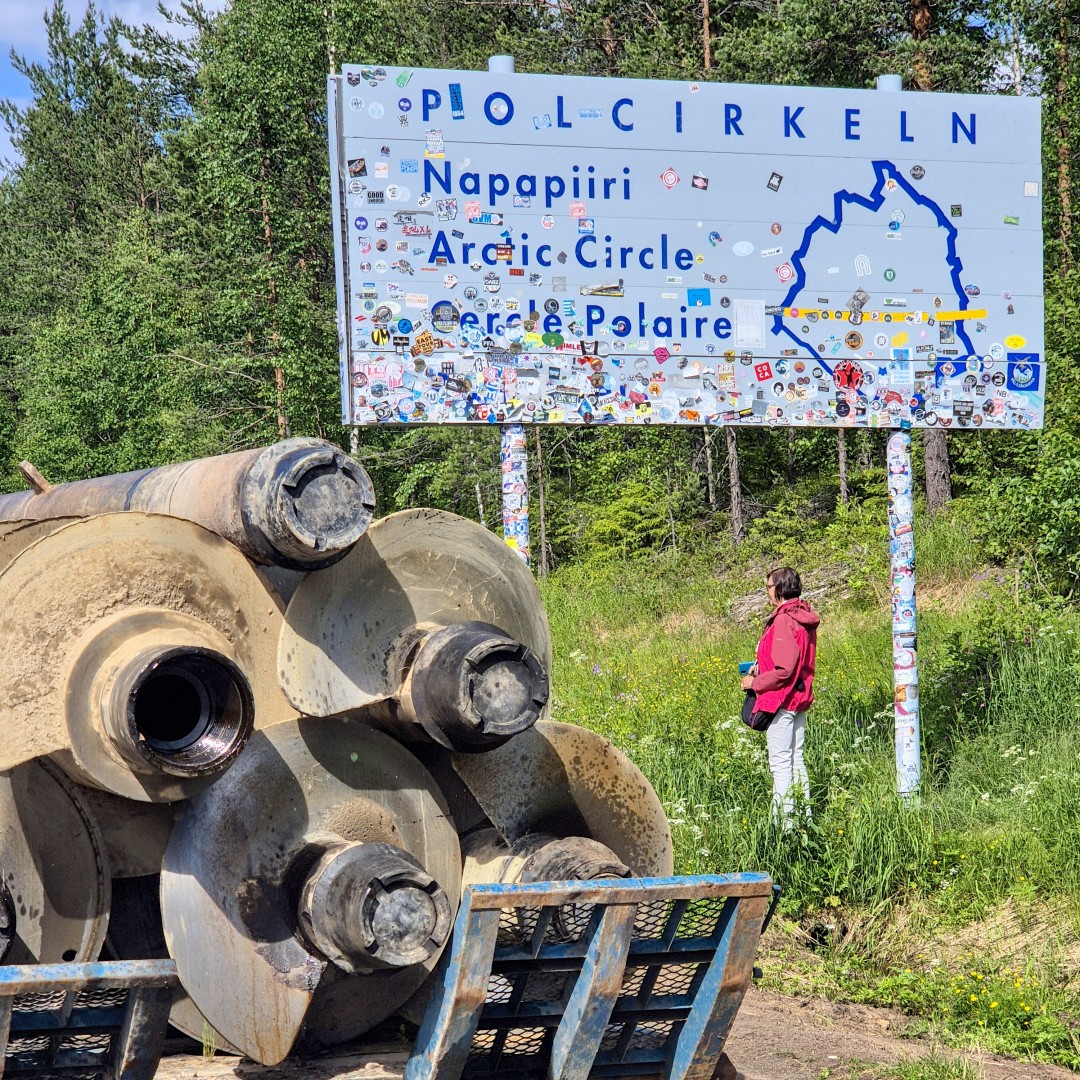
66°33’55” north latitude: we reached the Arctic Circle on Provincial Road 392. Naturally, we couldn’t miss out on the obligatory group photo. We celebrated crossing the Arctic Circle in style with a glass of sparkling wine.
To be honest, though, the actual location didn’t quite live up to our expectations. The famous sign stood in a simple car park, surrounded by large pipes, construction machinery and site huts. It wasn’t exactly romantic. Nevertheless, our joy prevailed – after all, it’s not every day you cross the Arctic Circle.
Shortly afterwards, we crossed the border into Finland. At first, the landscape changed little. Forests, lakes and bogs alternated with impressive regularity. The vastness of Lapland immediately conveyed a sense of freedom and unspoilt nature.
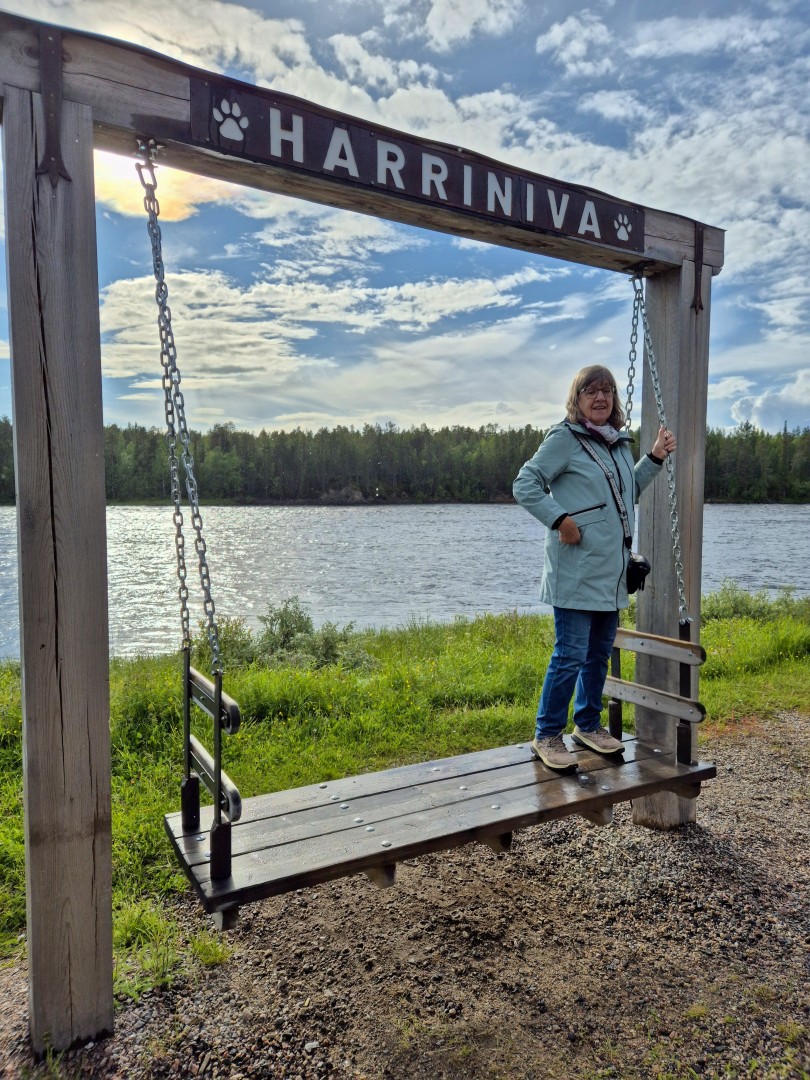
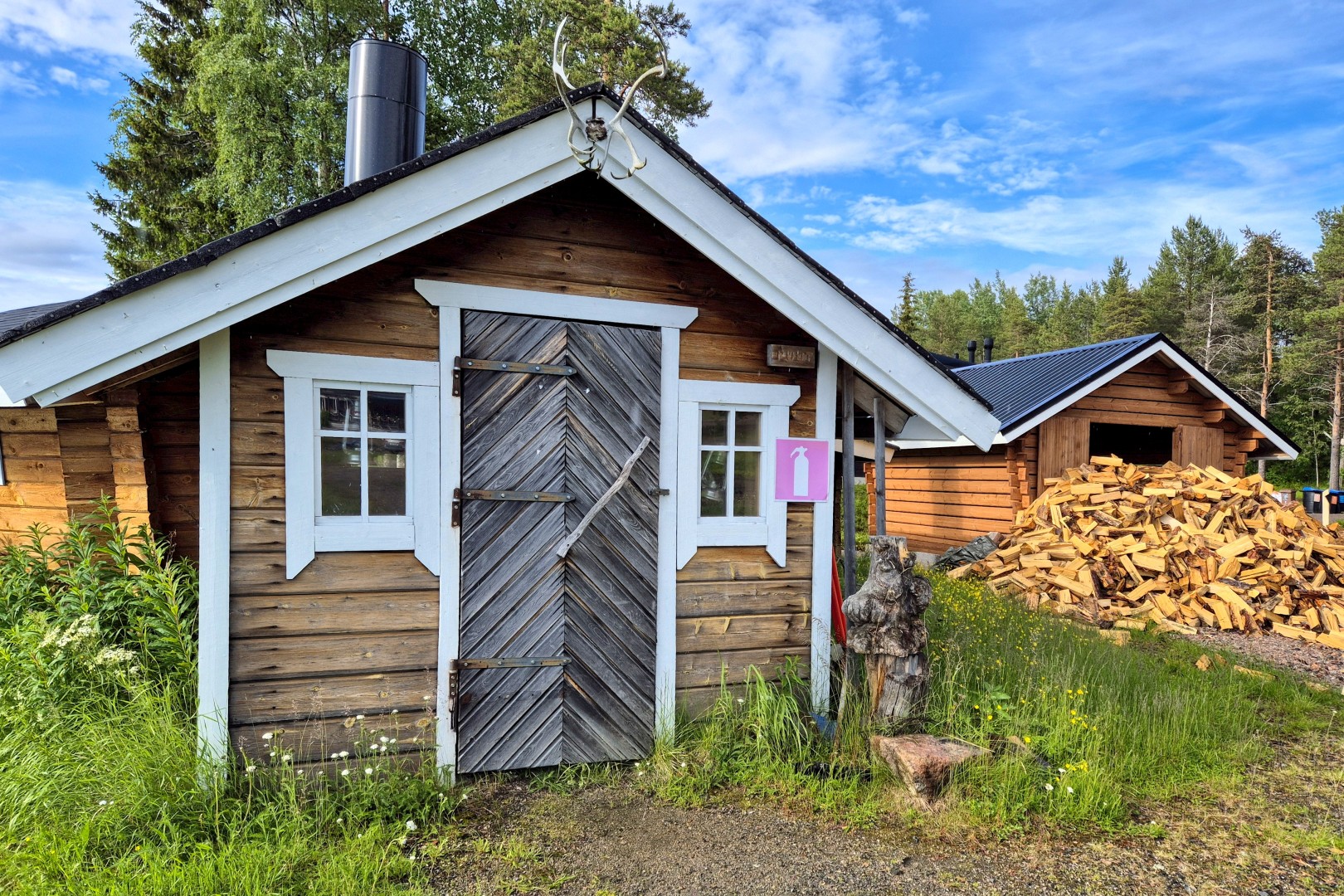
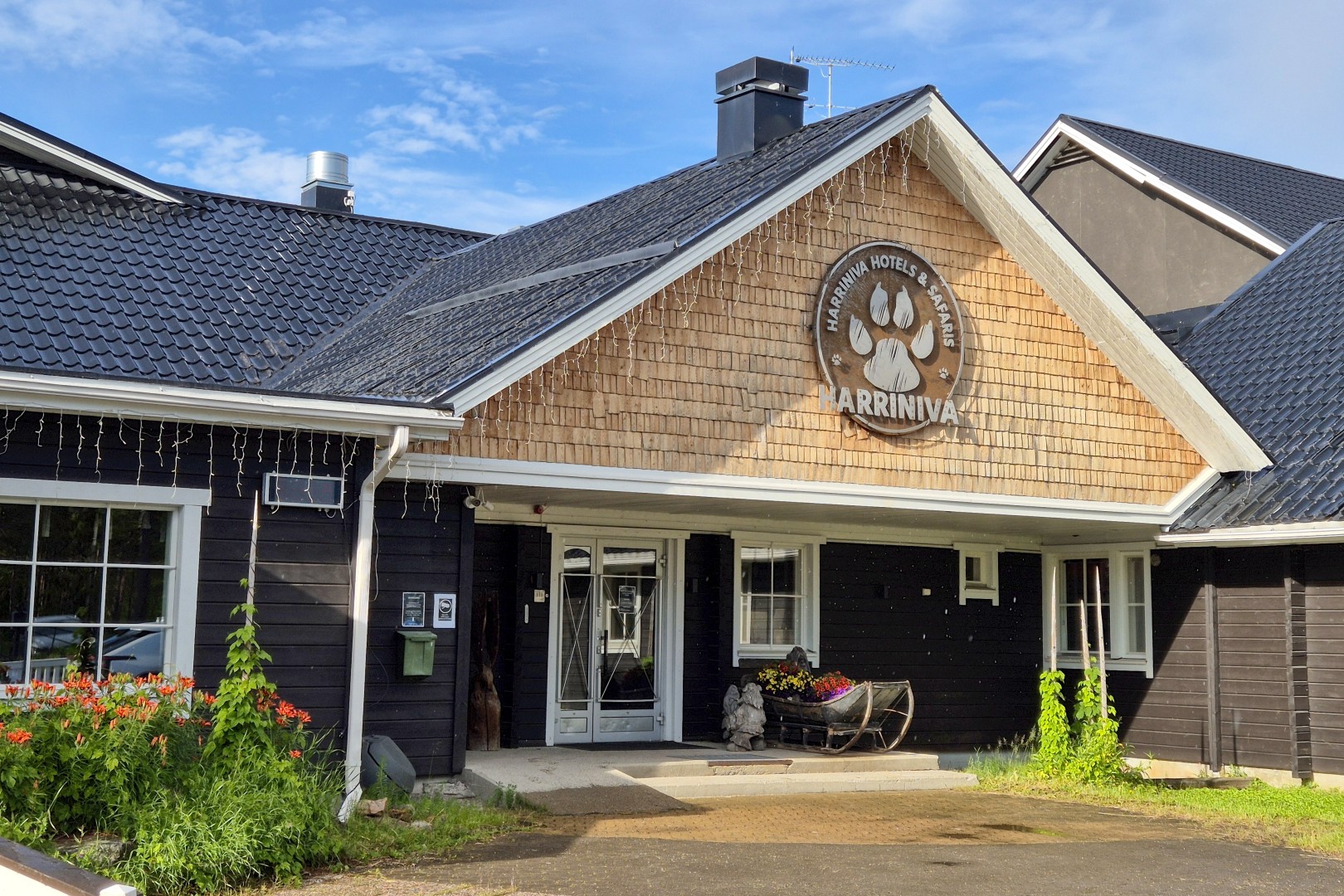
In the early evening, we finally reached Muonio. Situated right by the river, the cosy Harriniva Hotel welcomed us.
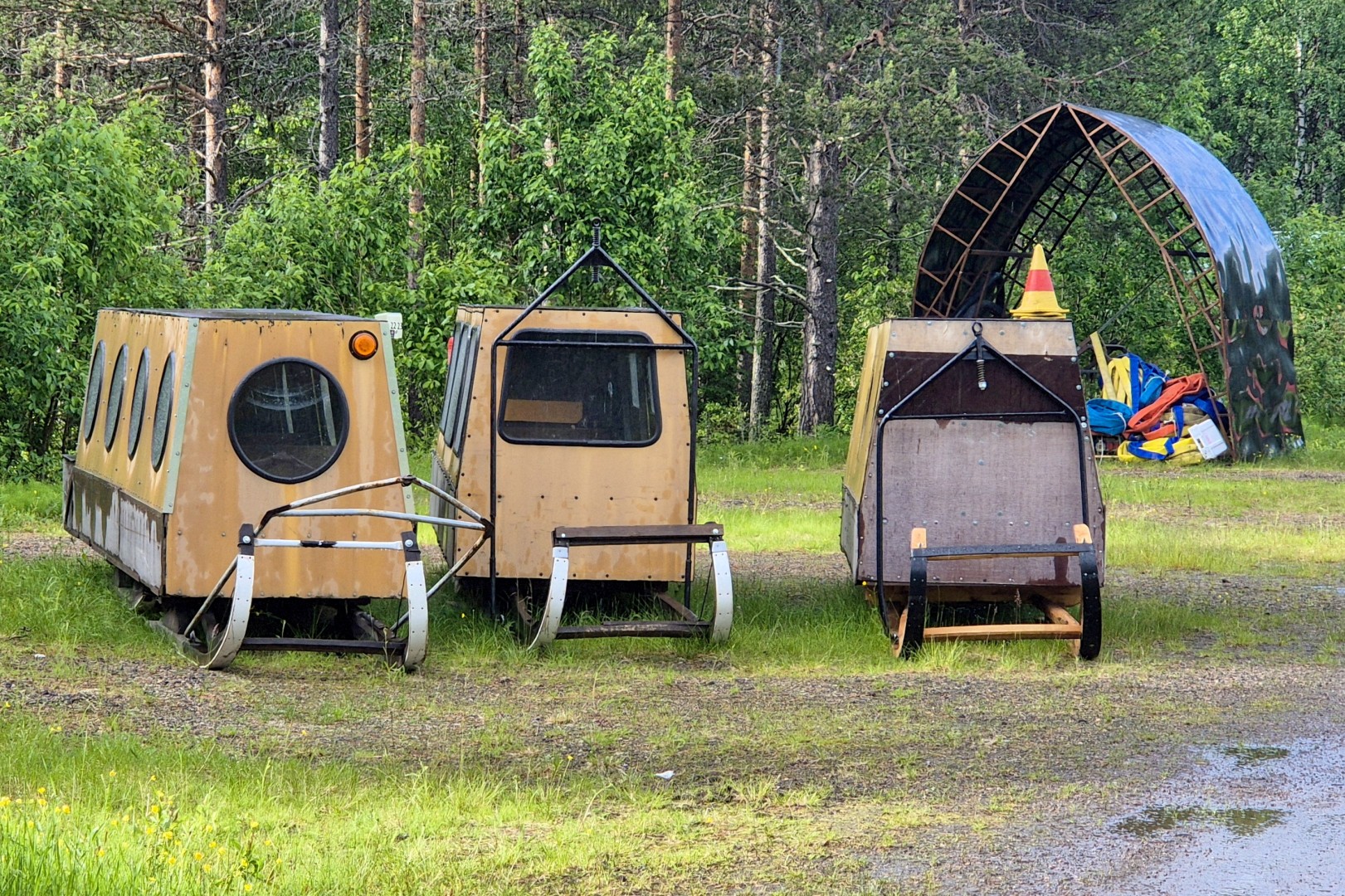
Some of our tour group then decided to visit a husky farm. During an interesting guided tour, we learnt a great deal about the lives of the sled dogs, their training and their role during the long Lapland winters.
The midnight sun was a special experience. Even late in the evening, it hardly got dark at all. The sun was still low on the horizon, bathing the landscape in a warm, golden light. A fascinating natural spectacle that is difficult to describe in Central Europe – you simply have to experience it for yourself.
After dinner, another memorable day of travelling came to an end. With every kilometre, our main destination drew closer: the North Cape – the northernmost point of our journey.
From Muonio to Skipsfjord (Honningsvåg, North Cape) (490 km)
Day 4: Finally at our destination: the North Cape! (25 June 2026)
Today was the day that all the participants on our trip had been looking forward to for months. Our grand destination was finally within reach: the North Cape, one of the northernmost points in Europe accessible by car.
We left our hotel in Muonio early in the morning. Around 490 kilometres lay ahead of us – a journey that could scarcely have been more varied in terms of scenery.
After a brief first stop in Finland, the route took us on to Guovdageaidnu (Kautokeino) in Norway. This small community is regarded as one of the most important centres of Sámi culture. Many members of the indigenous population of northern Scandinavia live here, and their traditions have remained alive to this day.
Once again, the saying proved true: the world is a small place.
During our refuelling stop, we struck up a conversation with a man who had actually attended the same school in Bietigheim. There are coincidences that are hard to believe – and it is precisely these encounters that often make travelling so special.
The further north we drove, the rougher and more unspoilt the landscape became. The tree line disappeared, replaced by tundra, rocks, lakes and countless reindeer. Time and again, the animals crossed the road with complete nonchalance, forcing our coach to brake sharply.
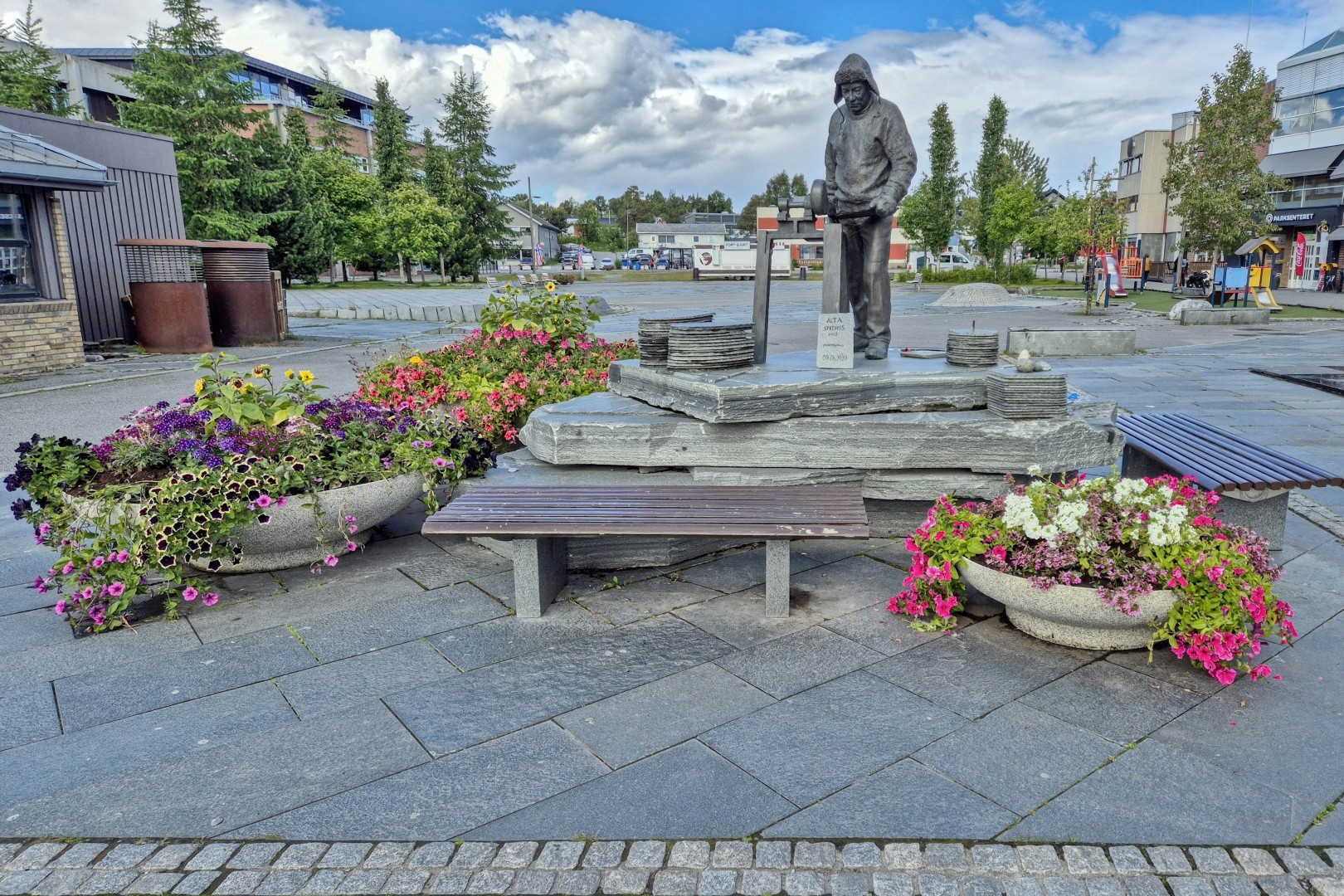
Around midday, we reached Alta, the largest town in the province of Finnmark.
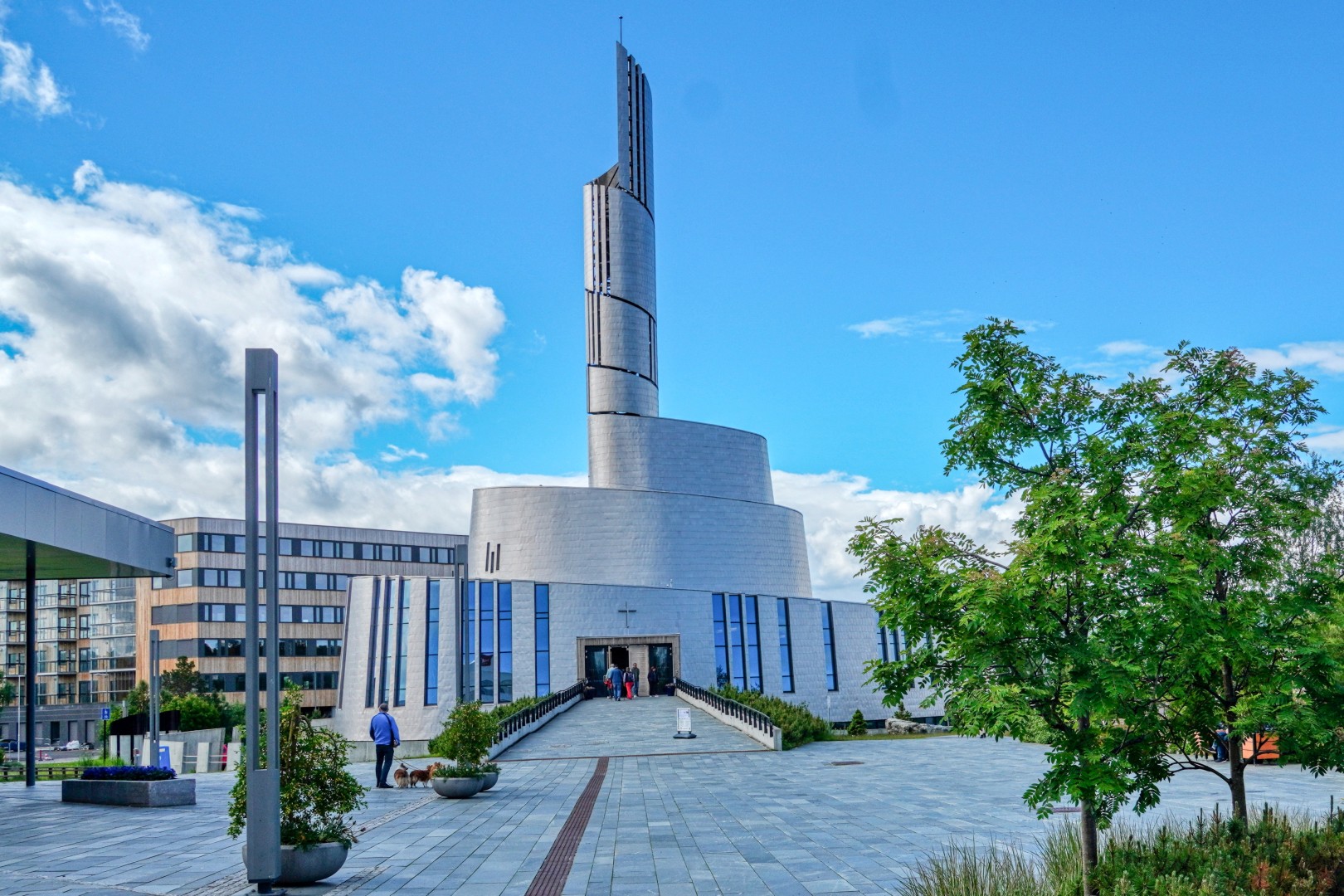
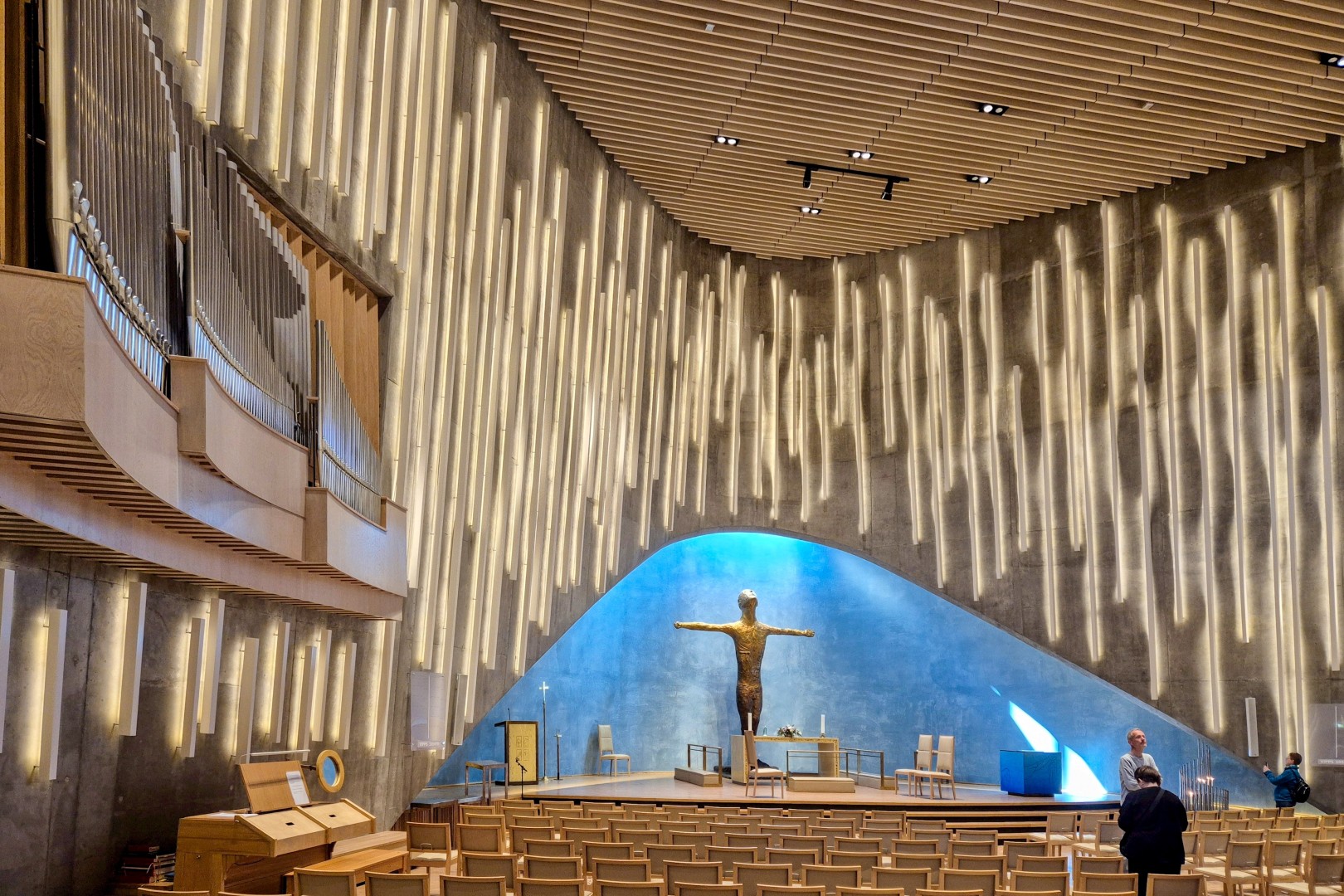
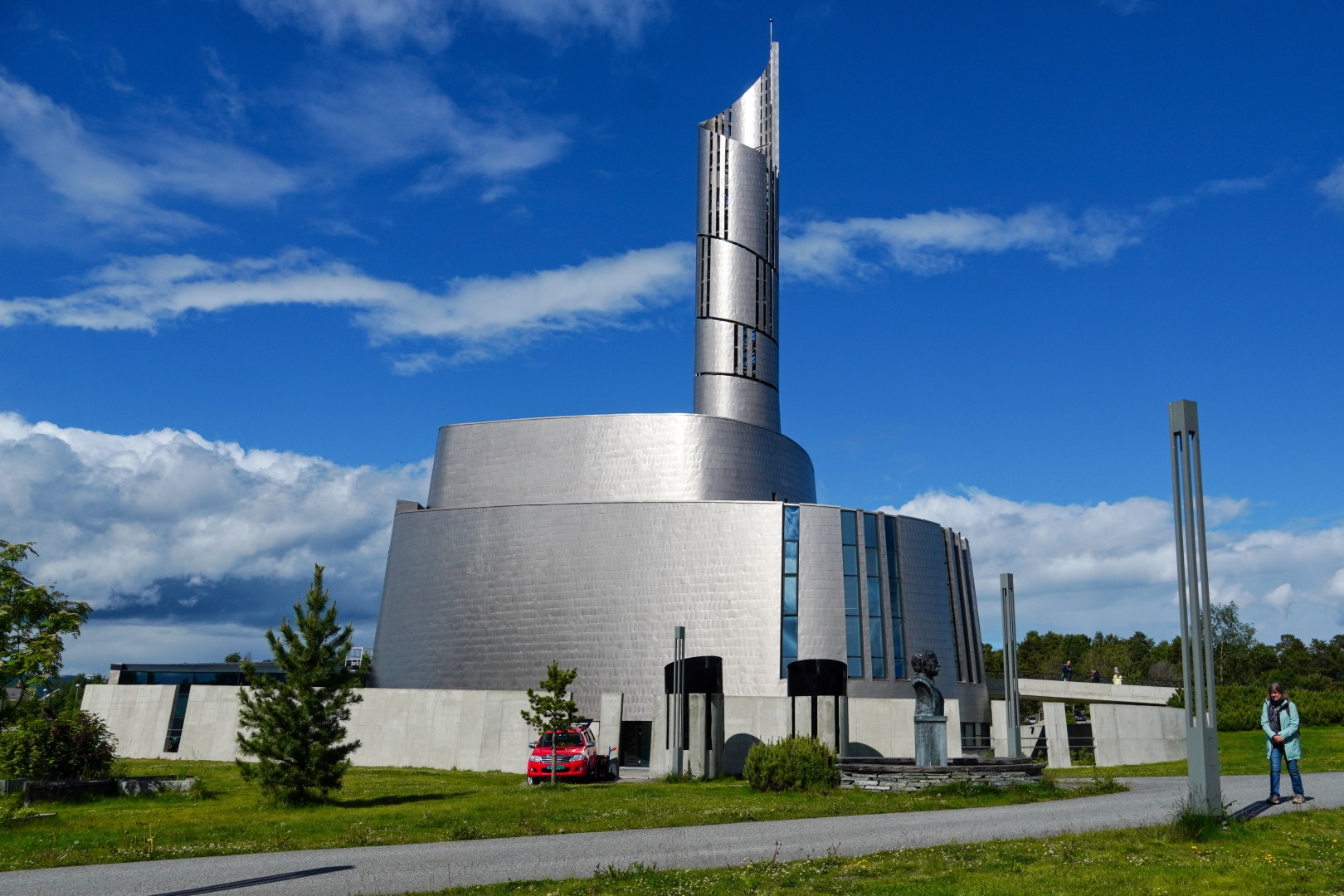
We stopped here for a longer break. We were particularly impressed by the modern Northern Lights Cathedral (Alta Kirke). This extraordinary building, with its spiral-shaped architecture, is one of Norway’s most striking churches and was only opened in 2013. Inside, it impressed with its simple elegance and exceptional use of light.
After a short stroll through the town and a lunch break, we continued our journey.
Our next stop took us to Levdnjá, a small, remote hamlet in the heart of Finnmark’s vast countryside. Here, Norway revealed its tranquil side: endless fjords, rugged mountains and almost untouched nature accompanied us.
Via Russenes, we finally reached the Porsangerfjord. Travelling along the E69 European route, spectacular views of the deep-blue water opened up time and again, framed by bare mountains and a landscape that seemed almost unreal. To top it all off, the sun shone continuously from the sky – the conditions could hardly have been better.
Now the final stretch to the North Cape began.
Passing Honningsvåg, Norway’s northernmost port, we drove through the almost seven-kilometre-long North Cape Tunnel, which connects the mainland with the island of Magerøya. Until the late 1990s, the North Cape could only be reached by ferry. It was only the construction of this impressive undersea tunnel that made a continuous road link possible.
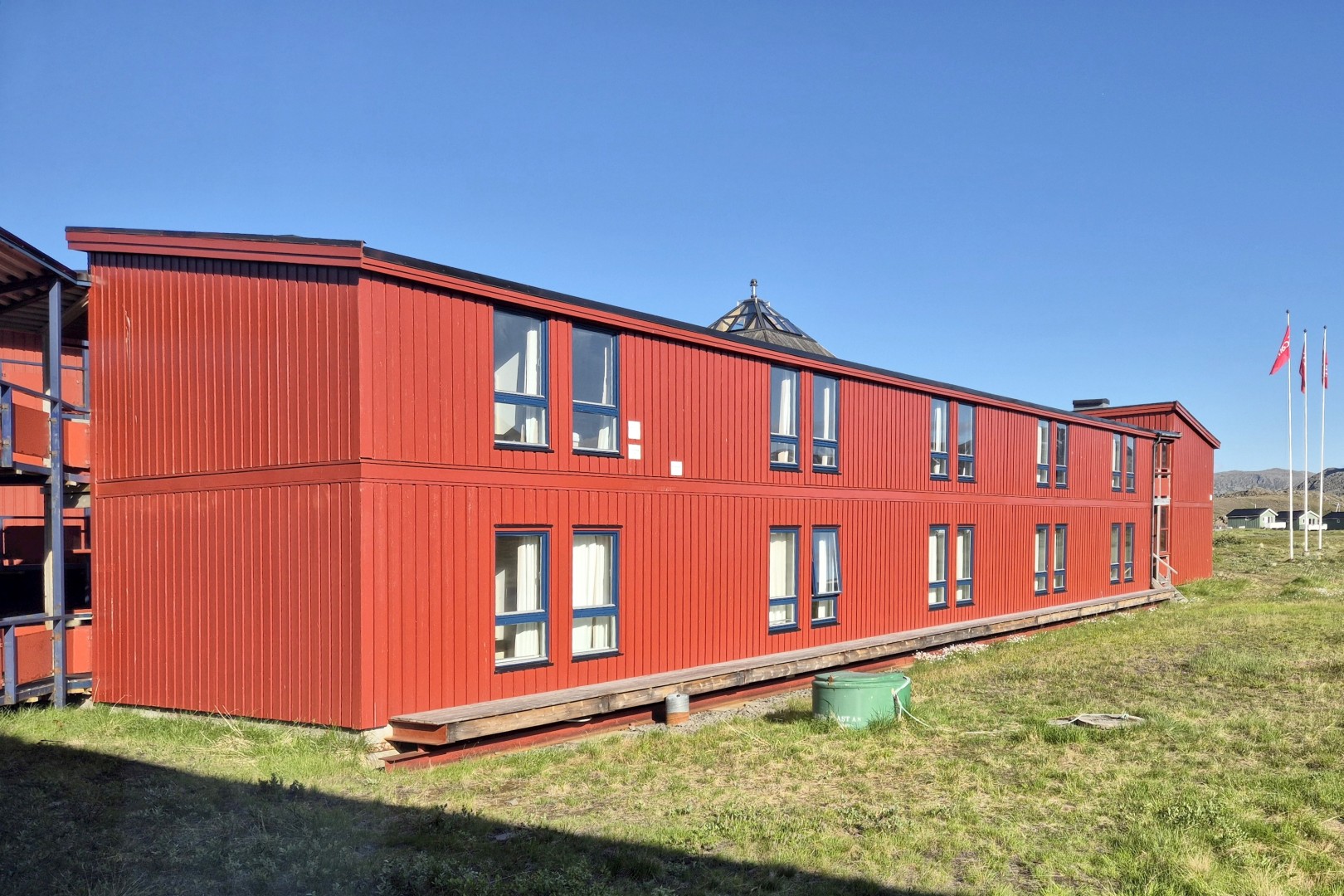
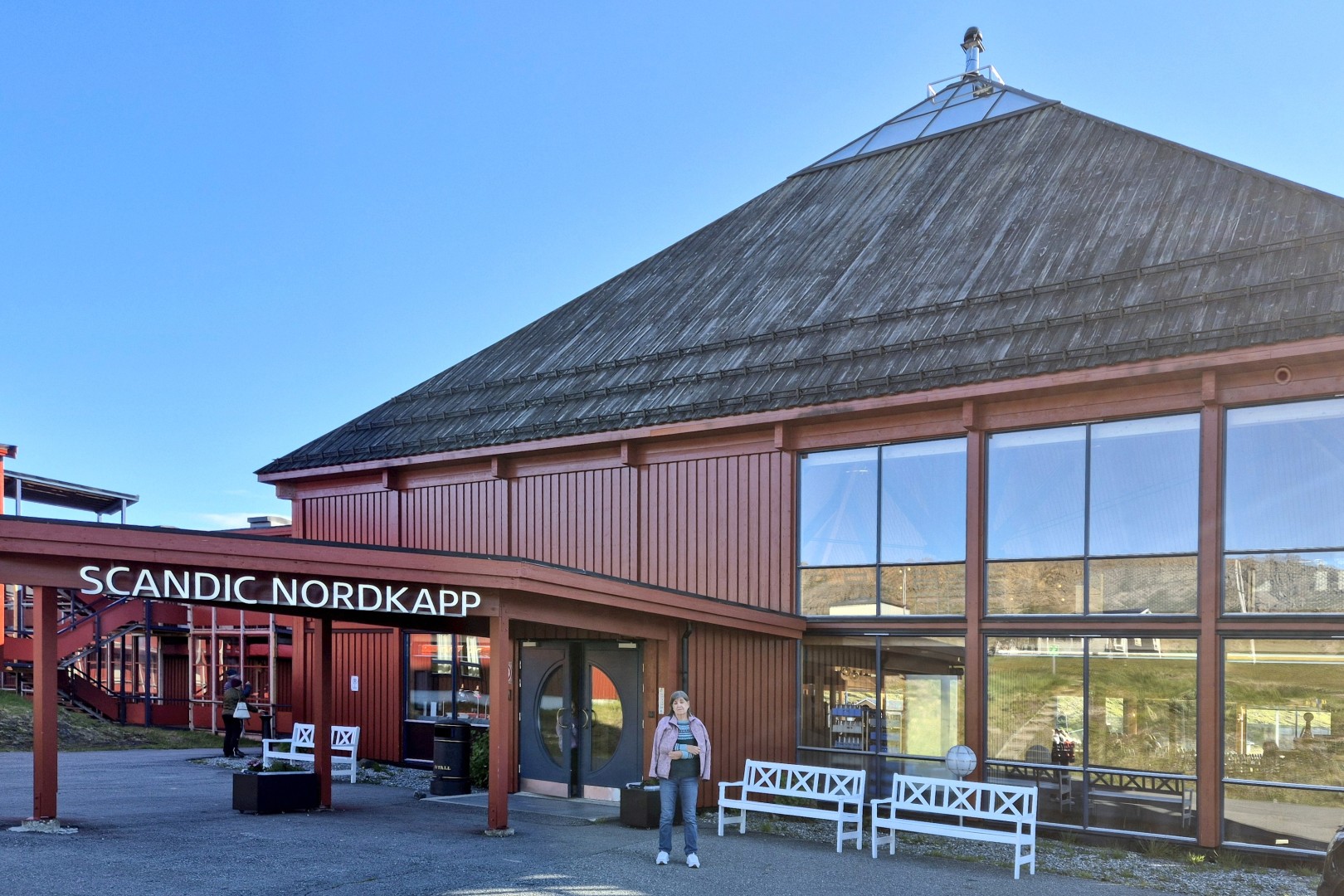
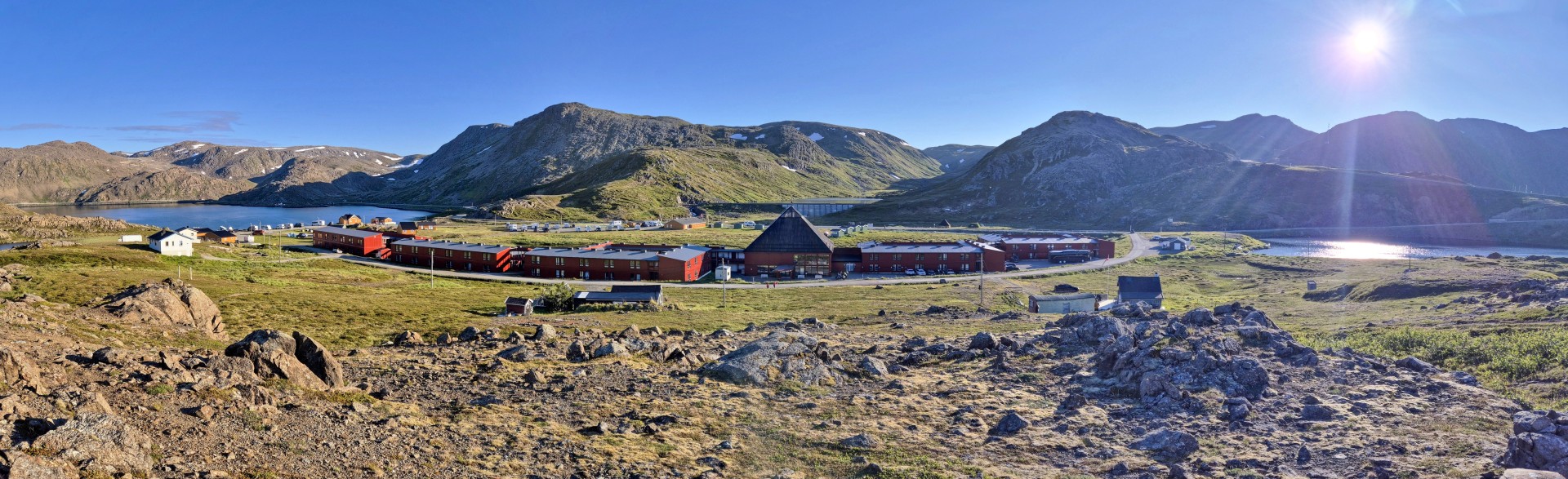
In the early evening, we arrived at our hotel, the Scandic Nordkapp in Skipsfjorden.
An interesting fact: the hotel buildings originally served as athletes’ accommodation during the 1994 Winter Olympics in Lillehammer. After the Games, they were dismantled, transported to the far north and reassembled there – an extraordinary story.
After dinner, there was little time left to rest.
At around 9 pm, the real highlight of our entire trip finally began.
As special regulations apply to the final 26 kilometres to the North Cape, a Norwegian bus driver took over the driving. Different countries, different rules.
The first surprise awaited us whilst we were still on the road.
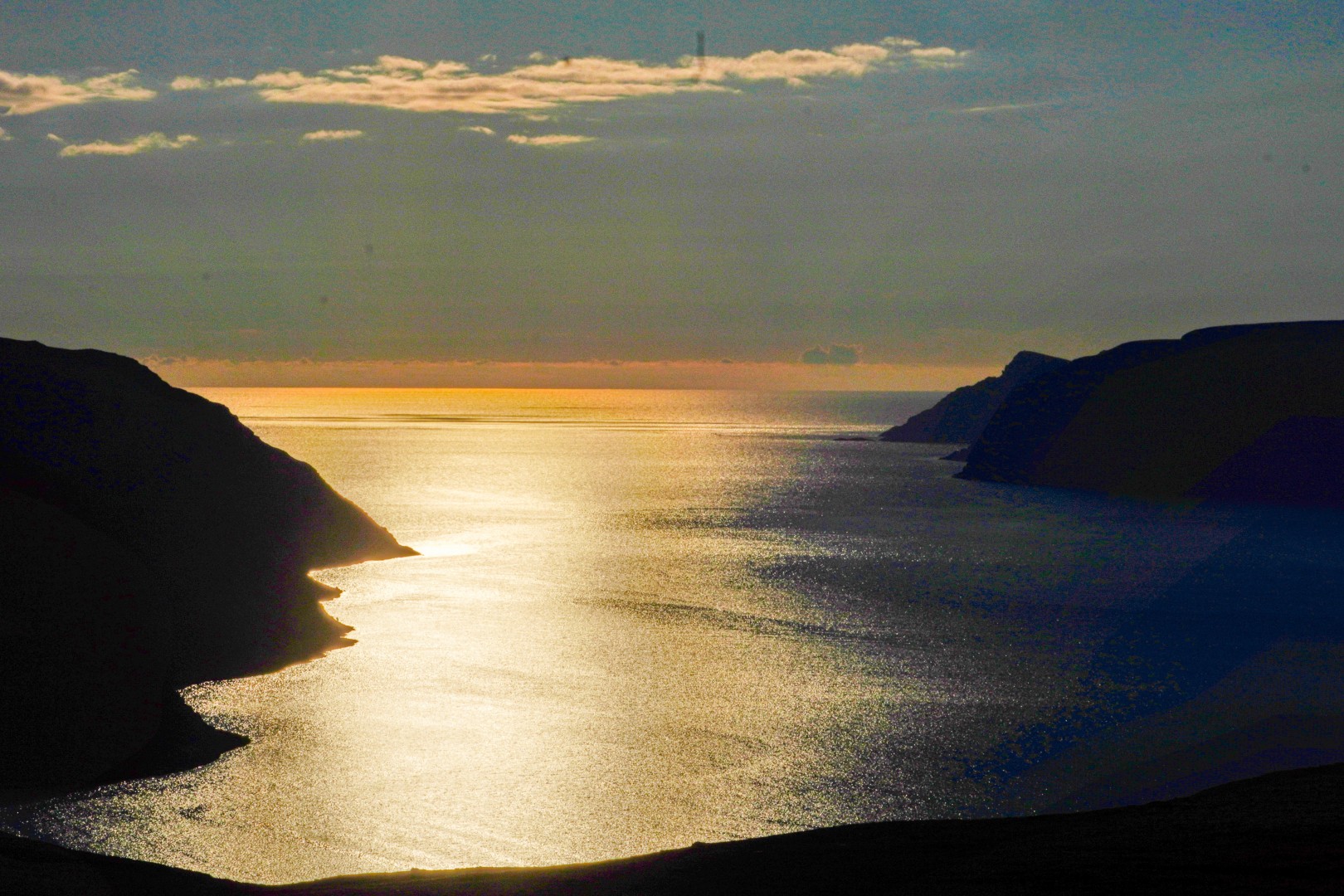
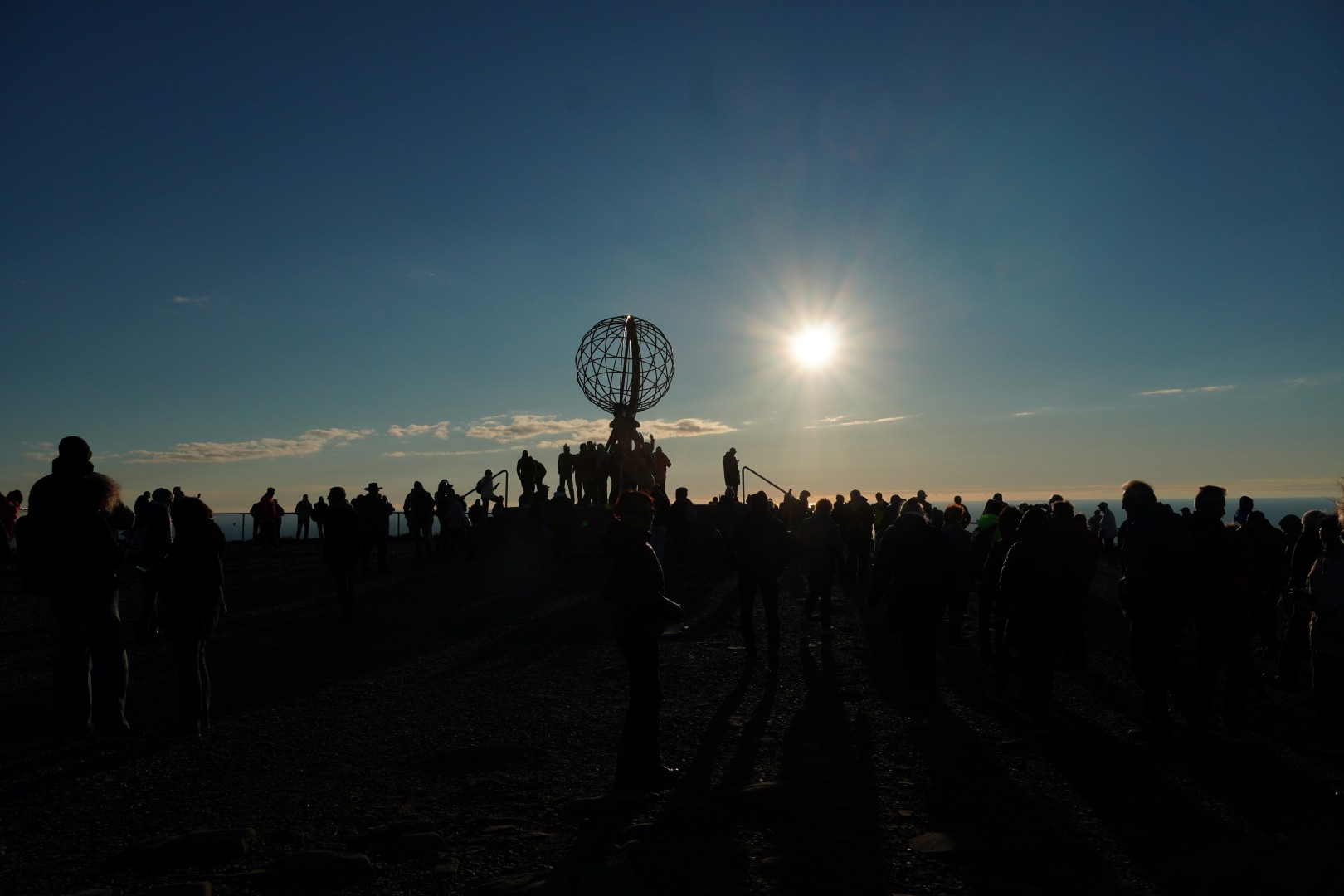
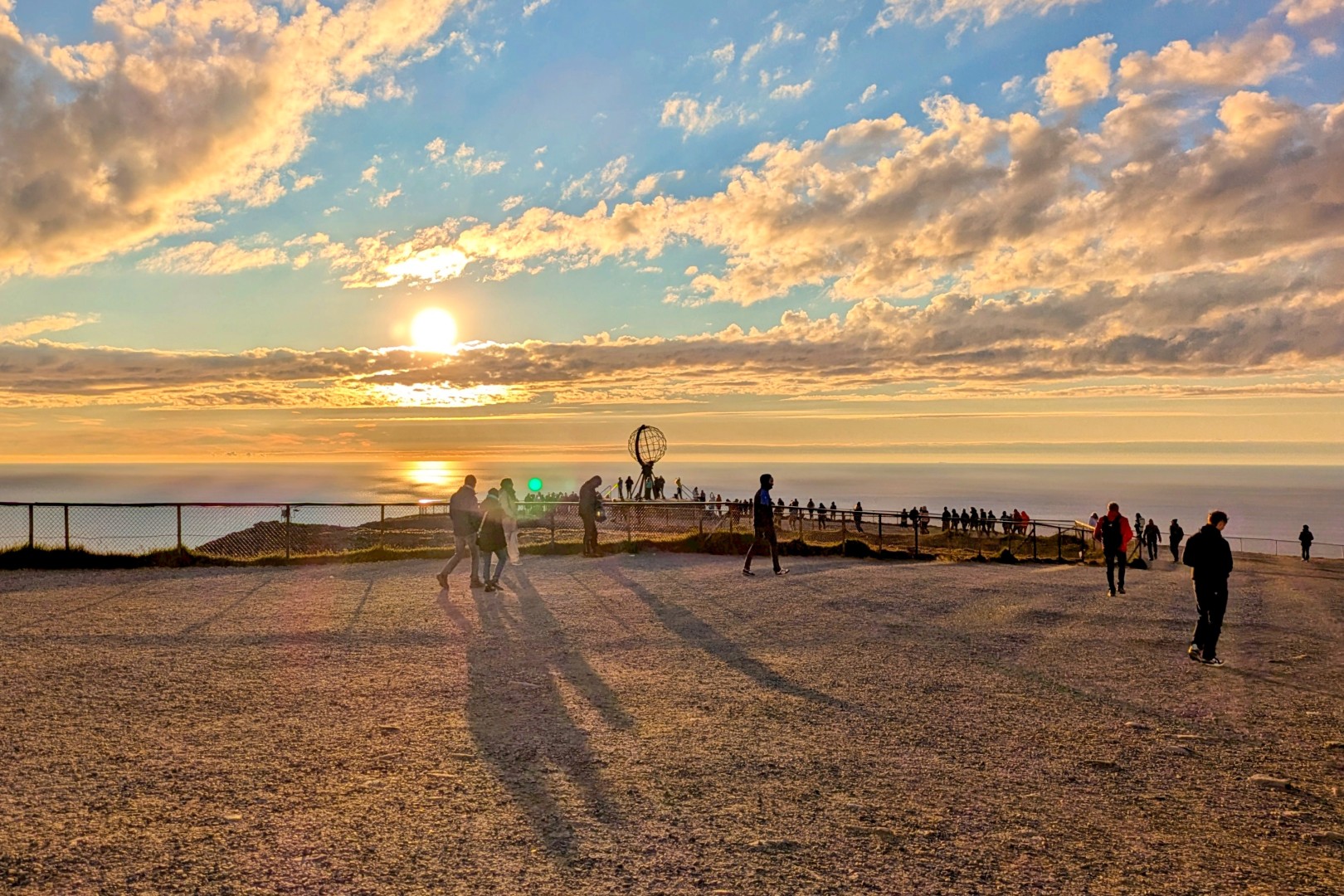
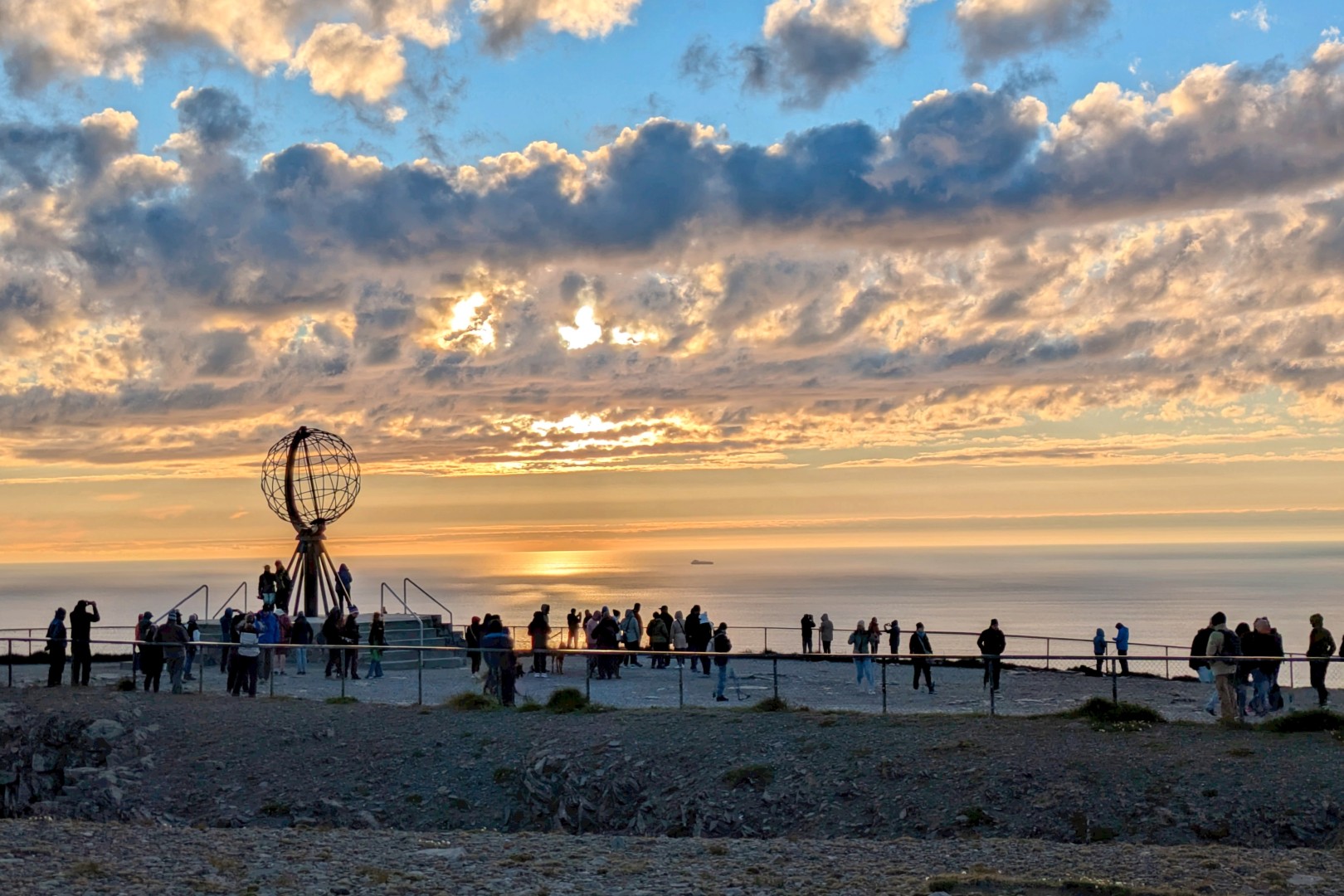
At the Turfjordhøyda viewpoint, we were treated to a fantastic view across the fjord. We could already make out the North Cape in the distance. Although it was now late in the evening, the sun was still high in the sky. Sunset? Not a chance. After all, here above the Arctic Circle, the famous midnight sun reigns in summer.
And then the moment finally arrived.
9.35 pm – arrival at the North Cape.
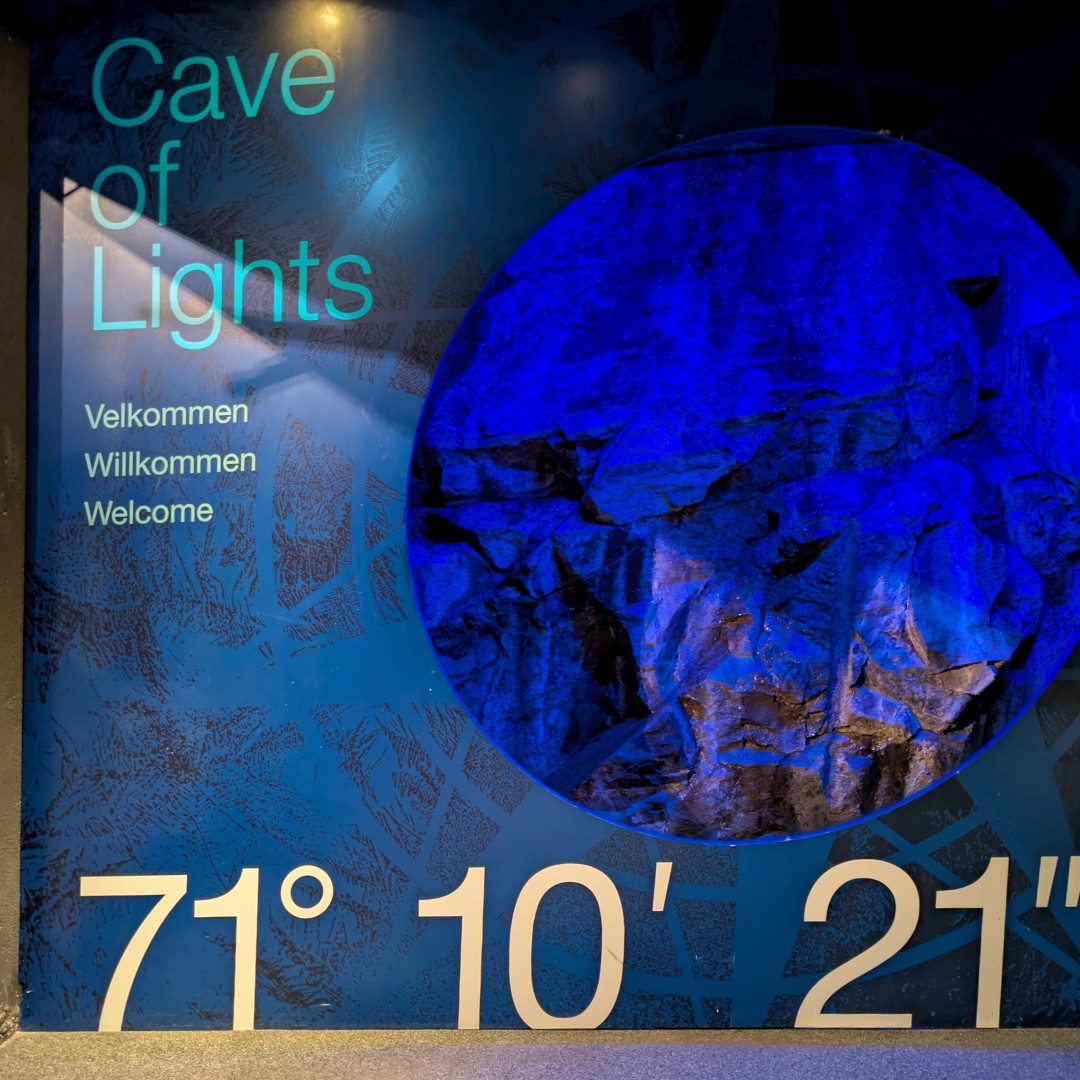
We had reached the famous coordinates 71°10’21” north latitude.
What a moment!
Our tour guide told us that the sky at the North Cape is often overcast and visitors frequently experience fog or rain. We, on the other hand, were incredibly lucky. Bright sunshine, a cloudless sky and almost windless conditions accompanied us throughout our stay.
The weather could hardly have been better.
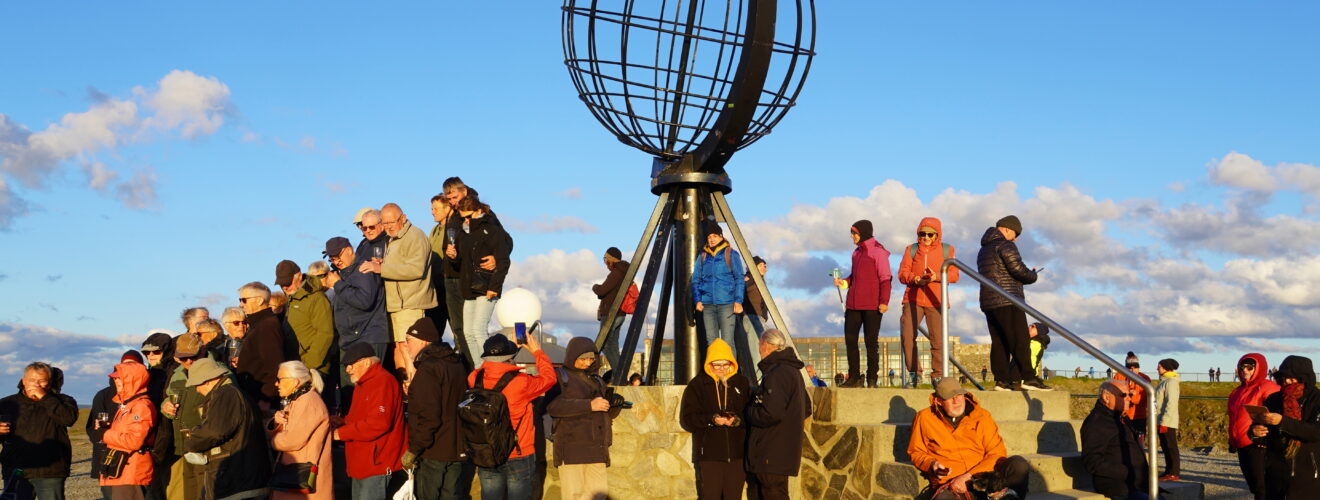
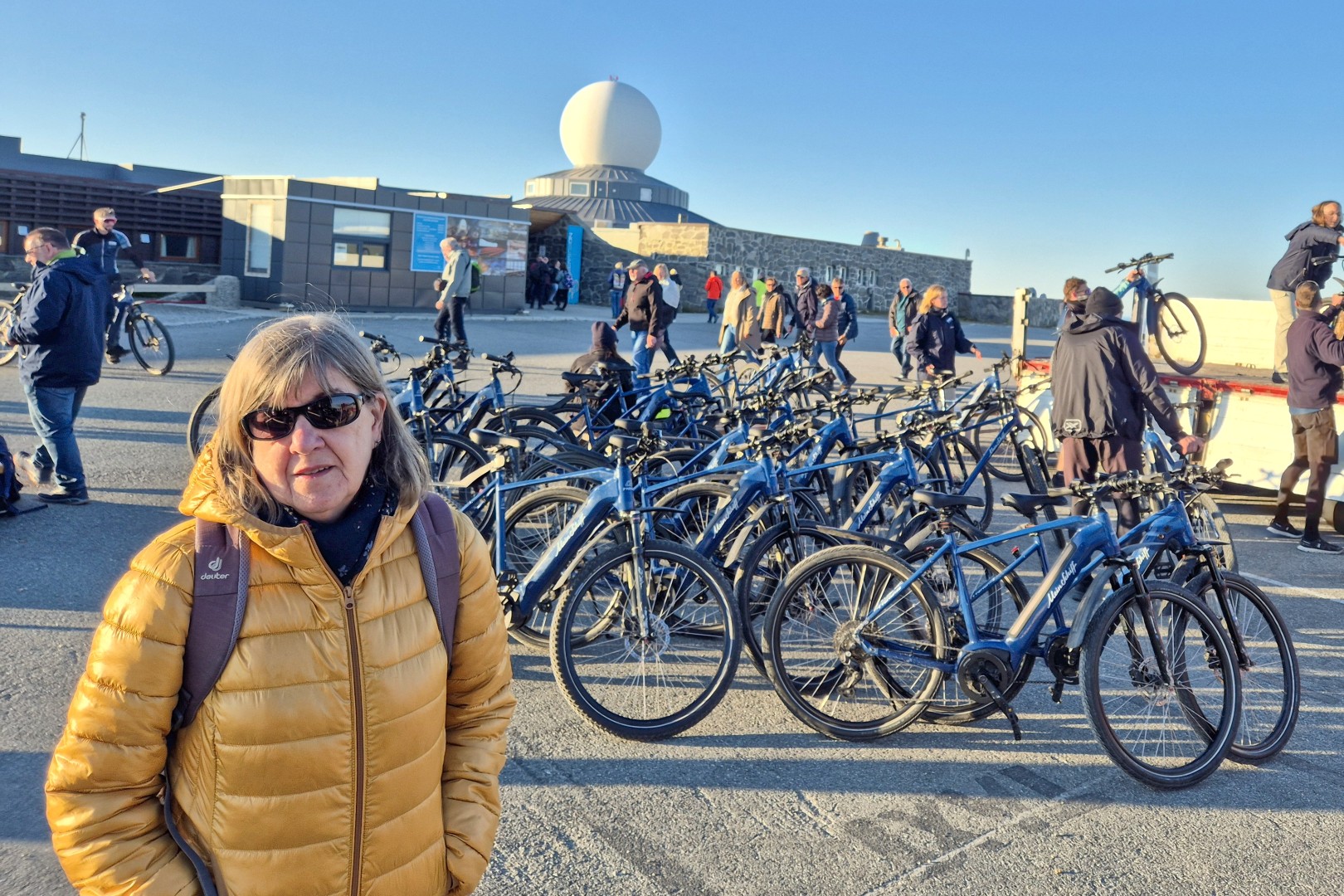
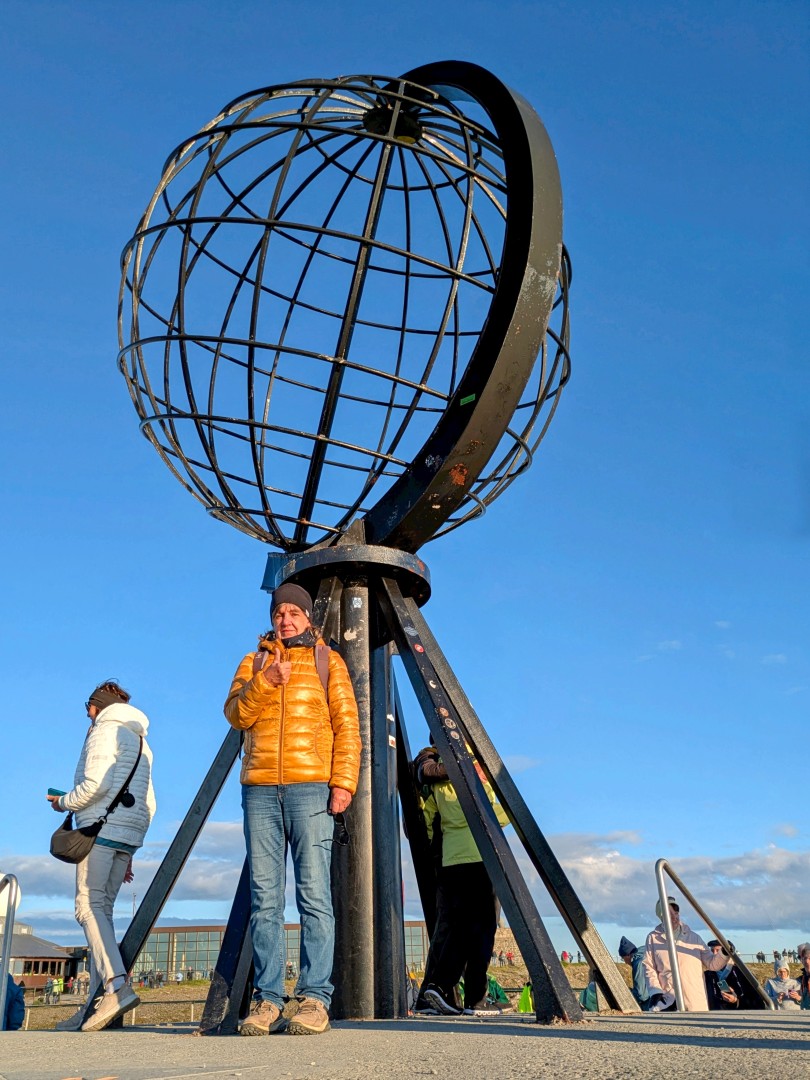
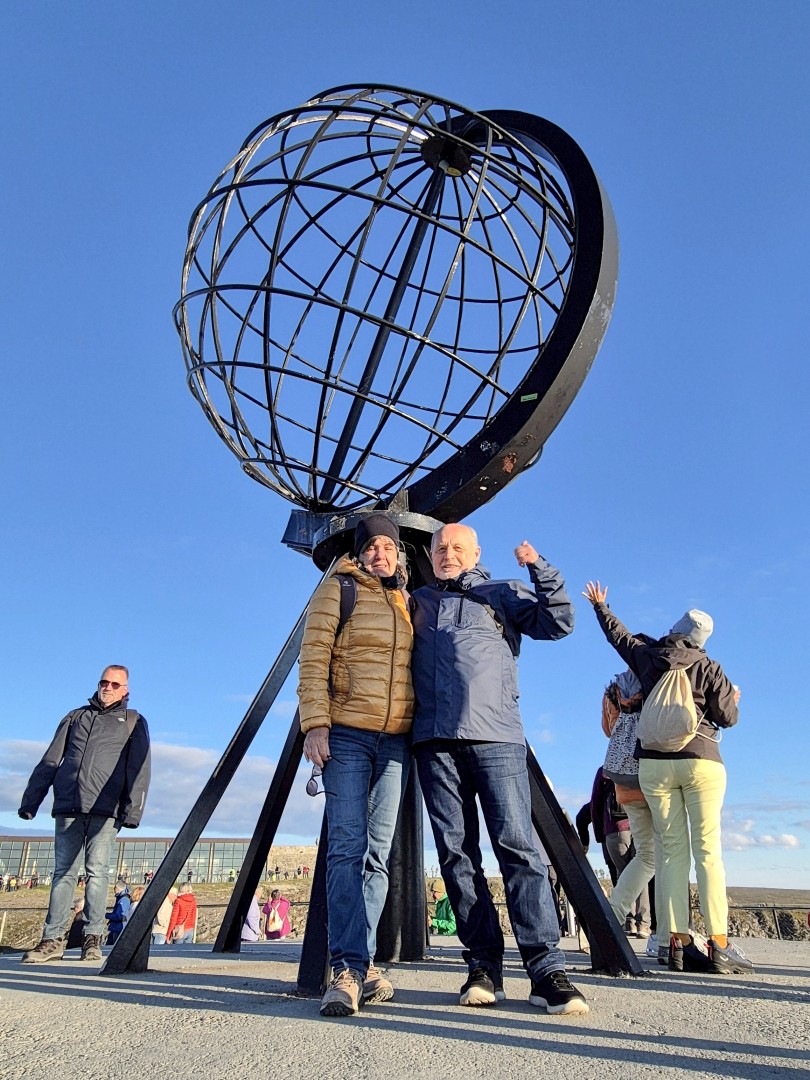
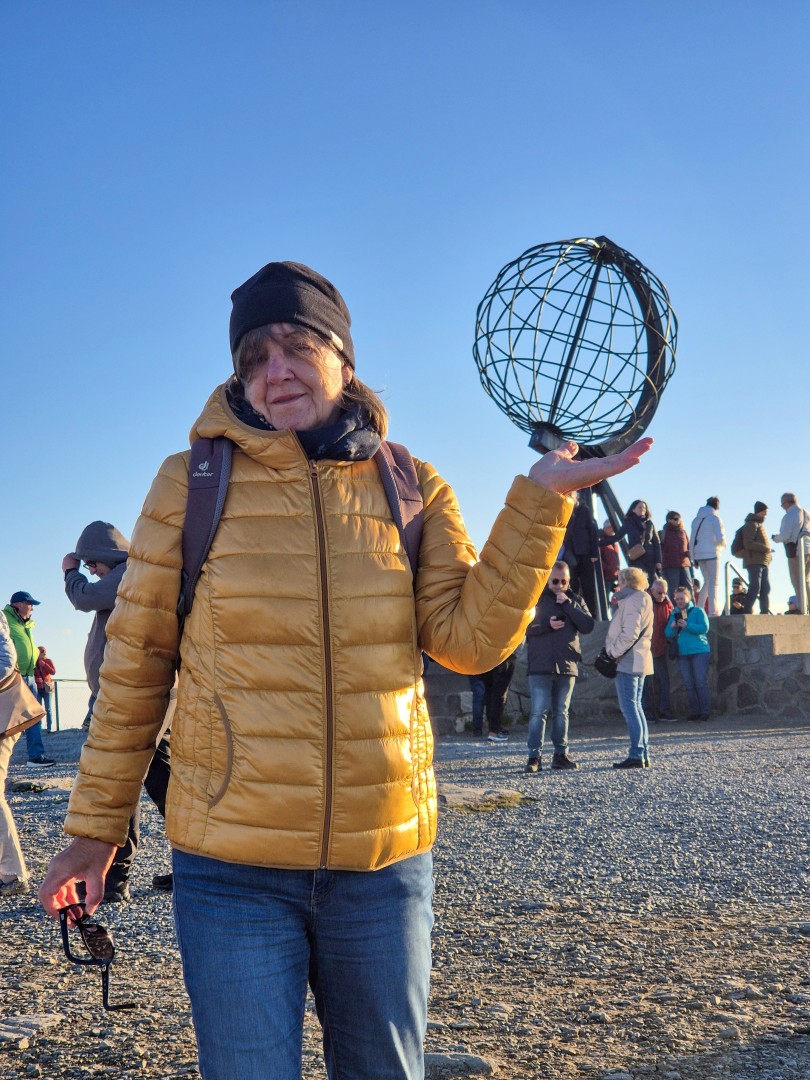
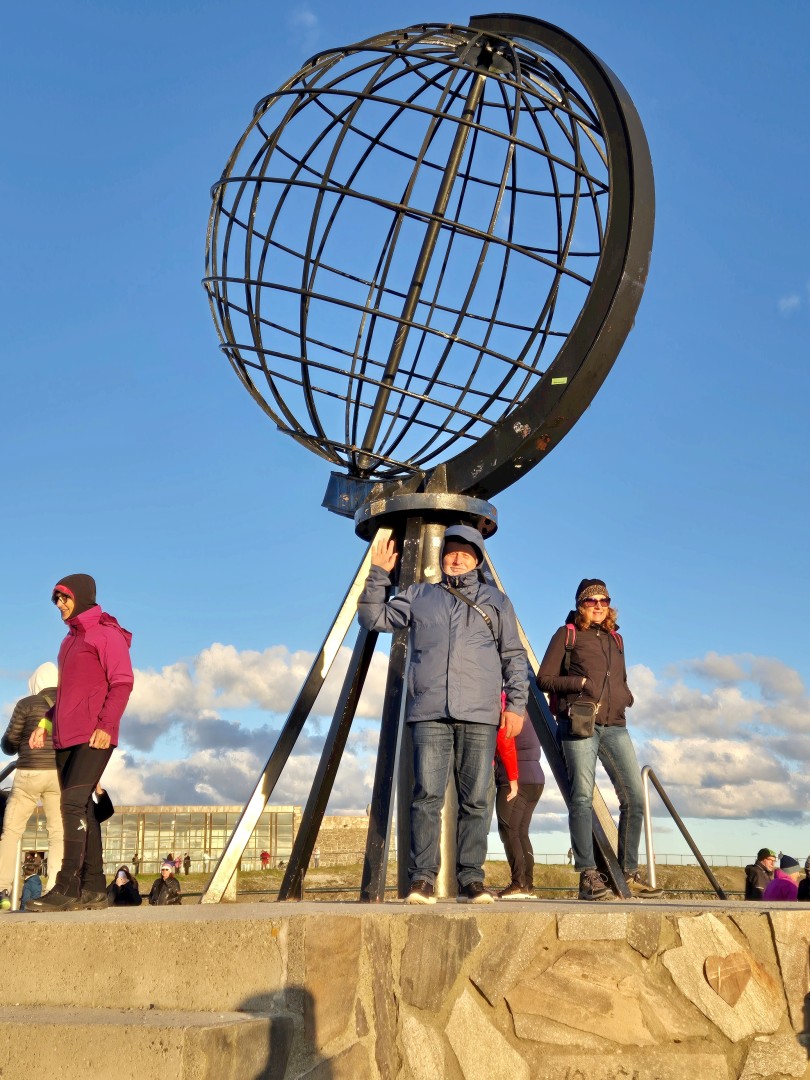
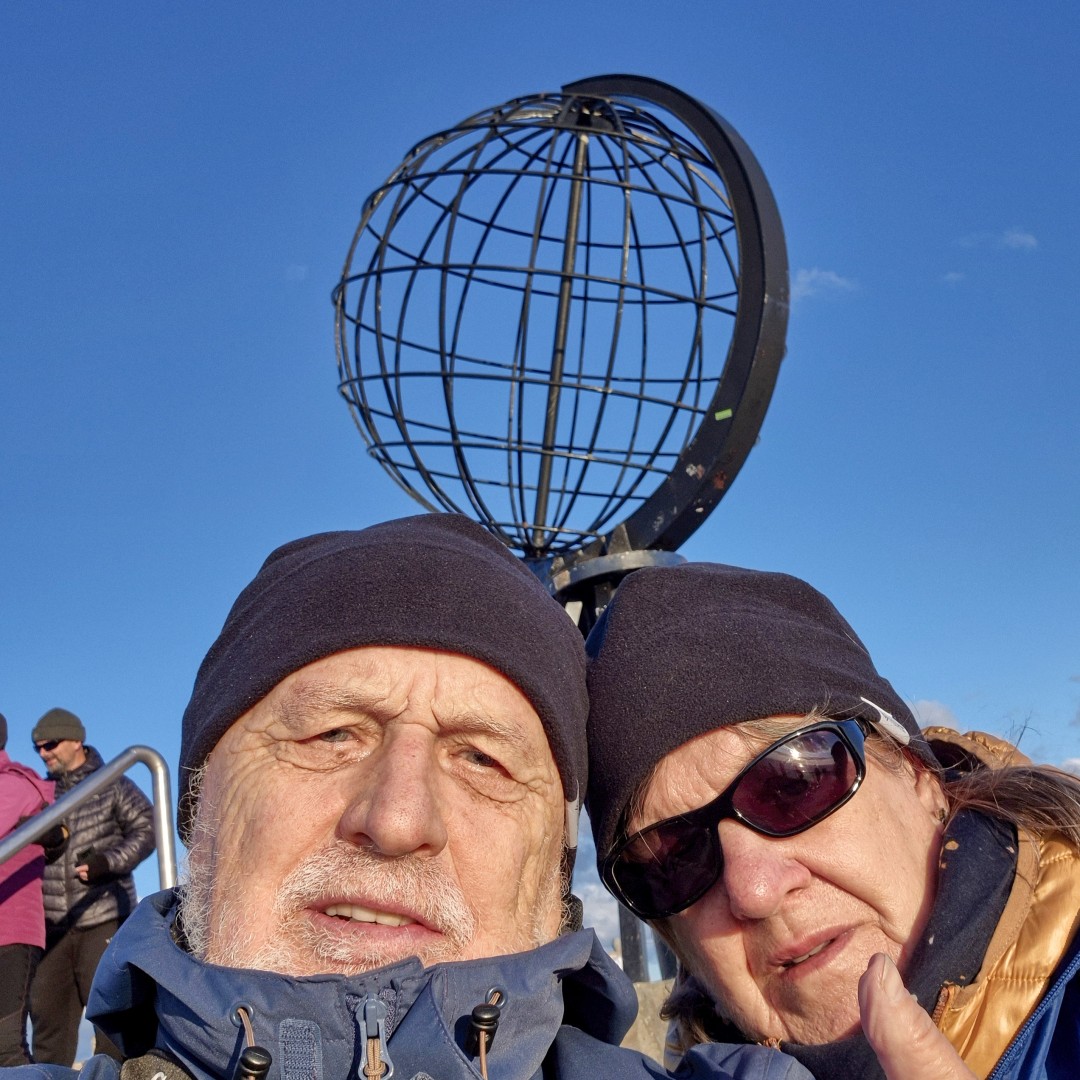
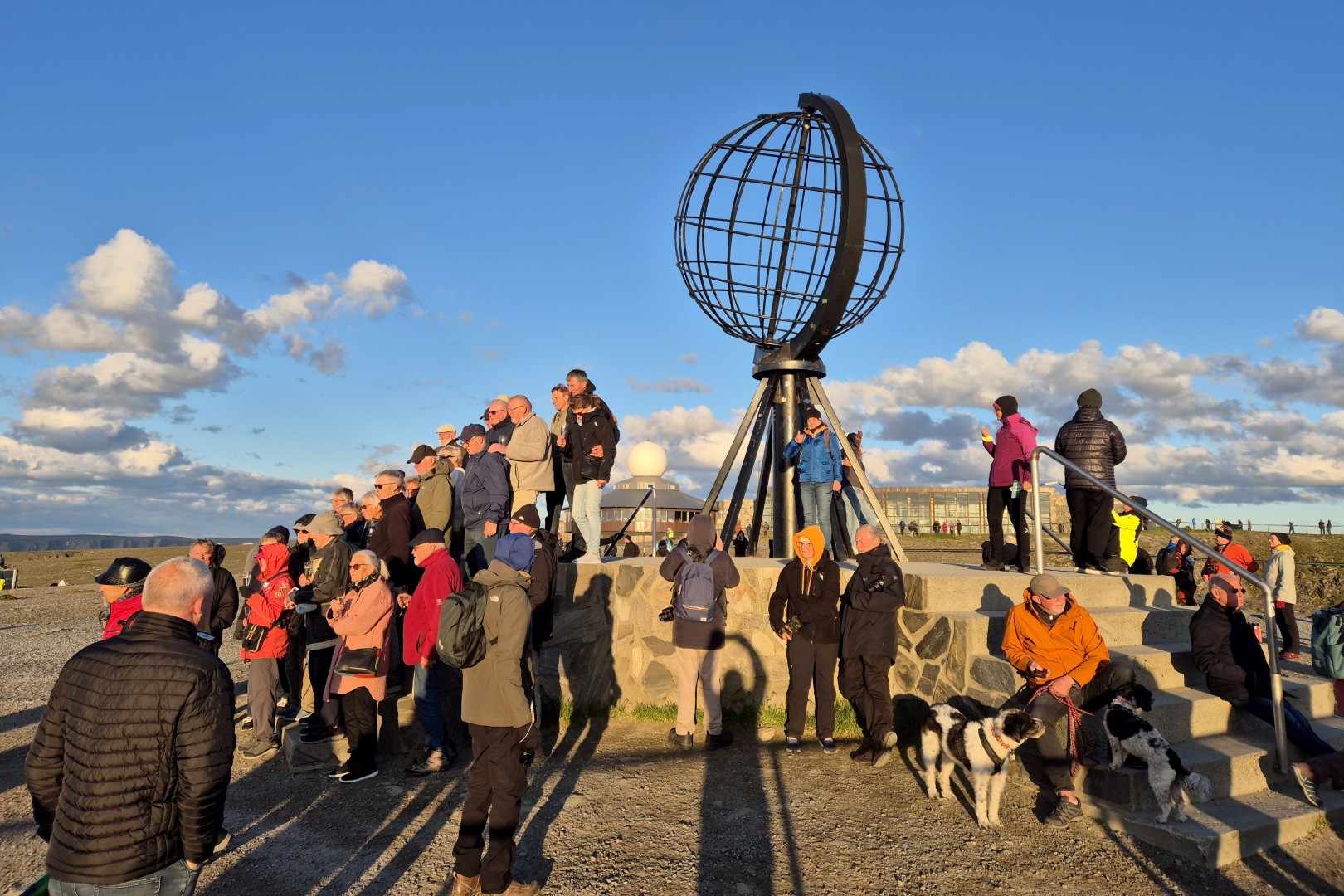
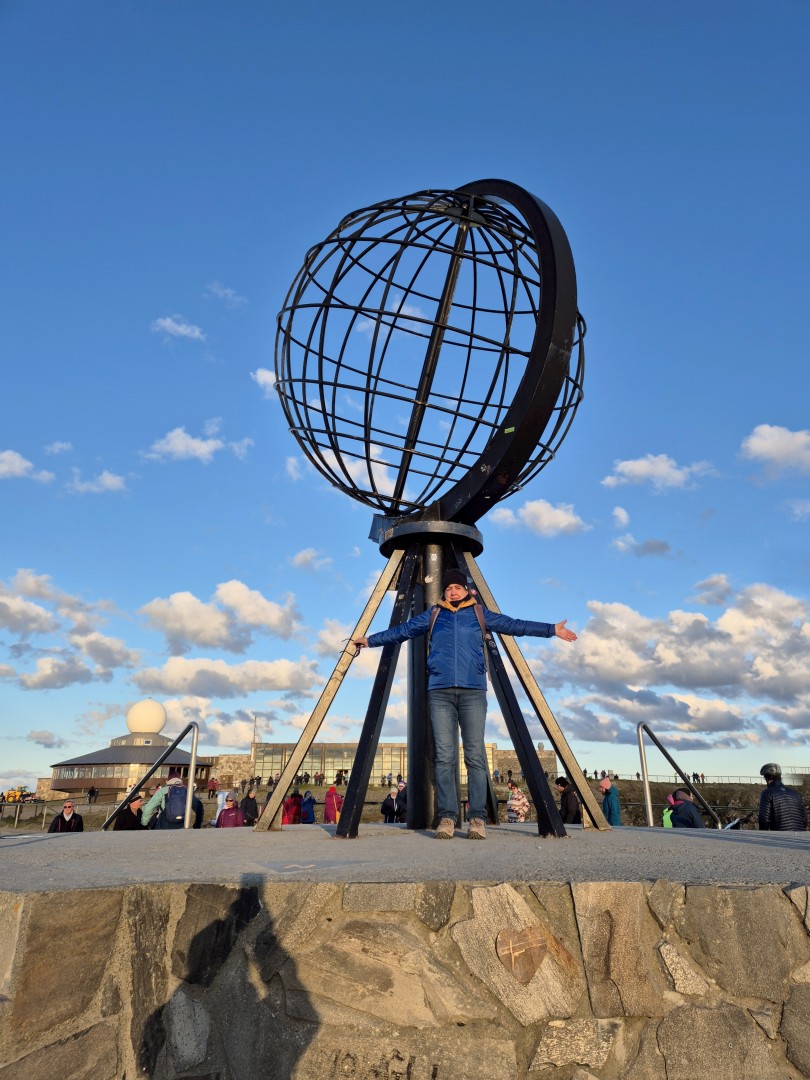
Naturally, our first port of call was the world-famous globe, the North Cape’s landmark. Surprisingly, it was even almost deserted at times – a rare opportunity to take souvenir photos without large groups of visitors.
Afterwards, we had plenty of time to explore the North Cape Hall in detail.
The impressive panoramic film in the Cave of Lights showed the four seasons at the North Cape and highlighted the extreme conditions to which people and nature are exposed here.
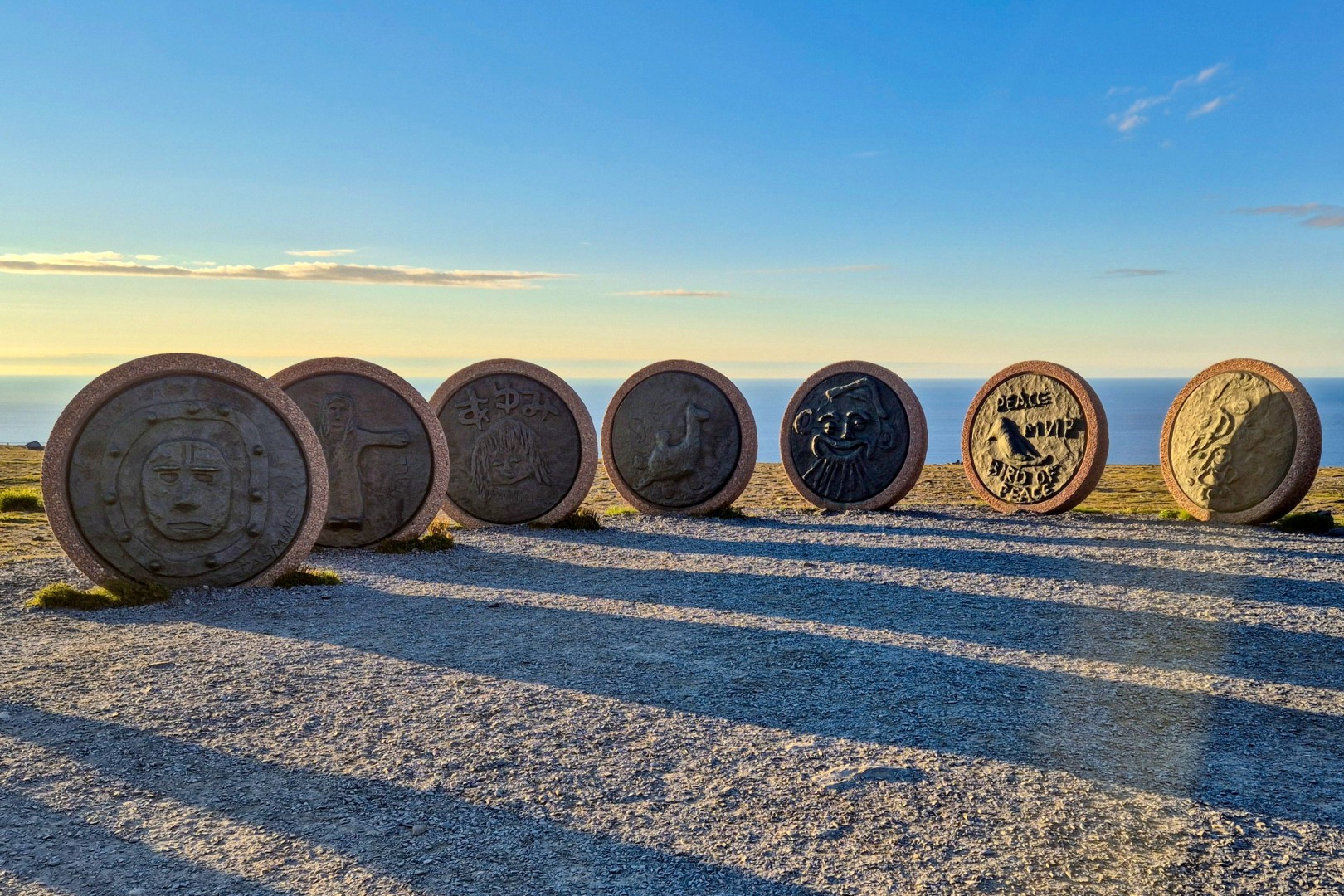
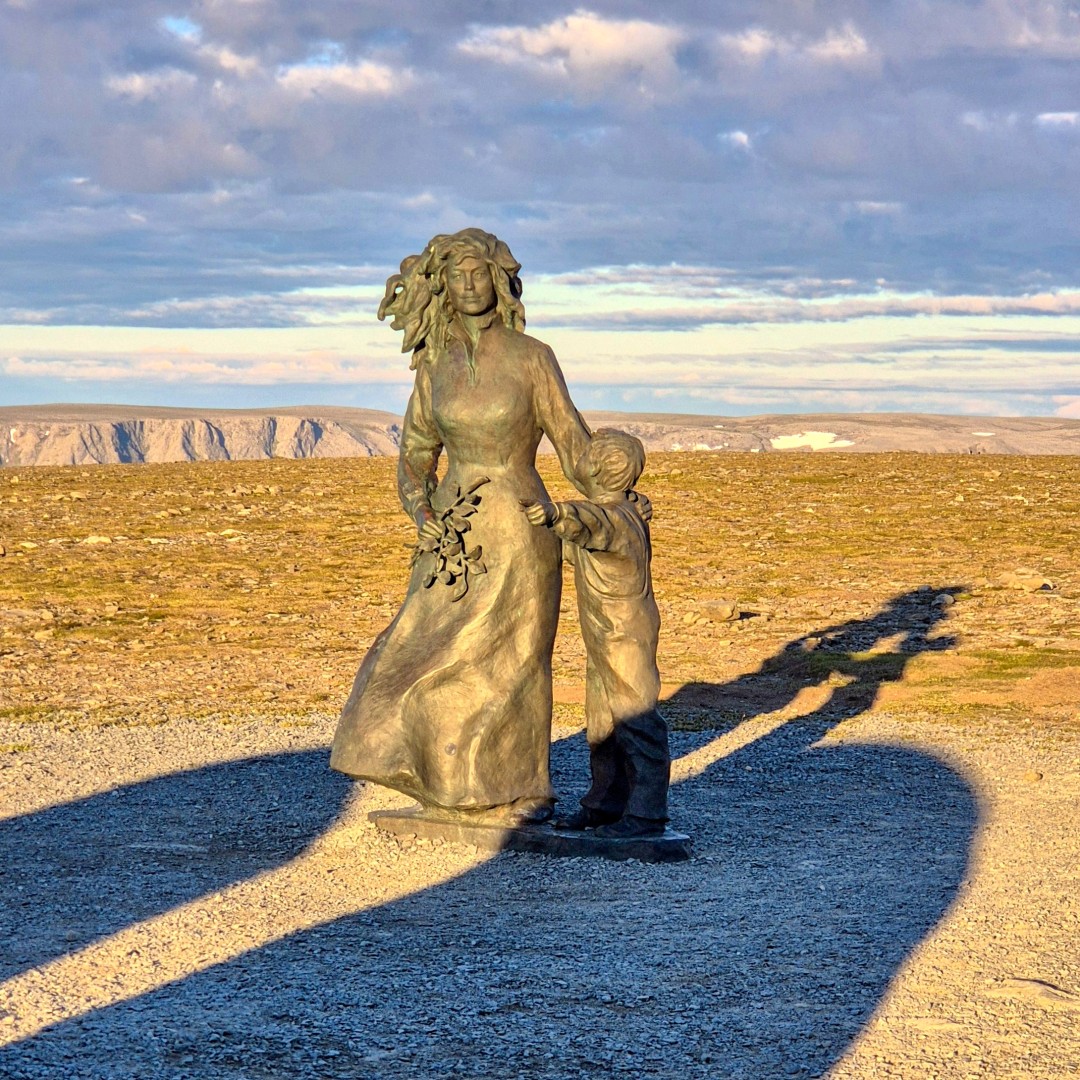
We also visited the ‘Children of the World’ monument, which was erected as a symbol of peace and international understanding.
The Midnattsolmonumentet and the official starting point of the European long-distance hiking trail E1, which leads all the way to Sicily, were of course also part of our tour.
Time and again, however, we found ourselves drawn out onto the cliffs.
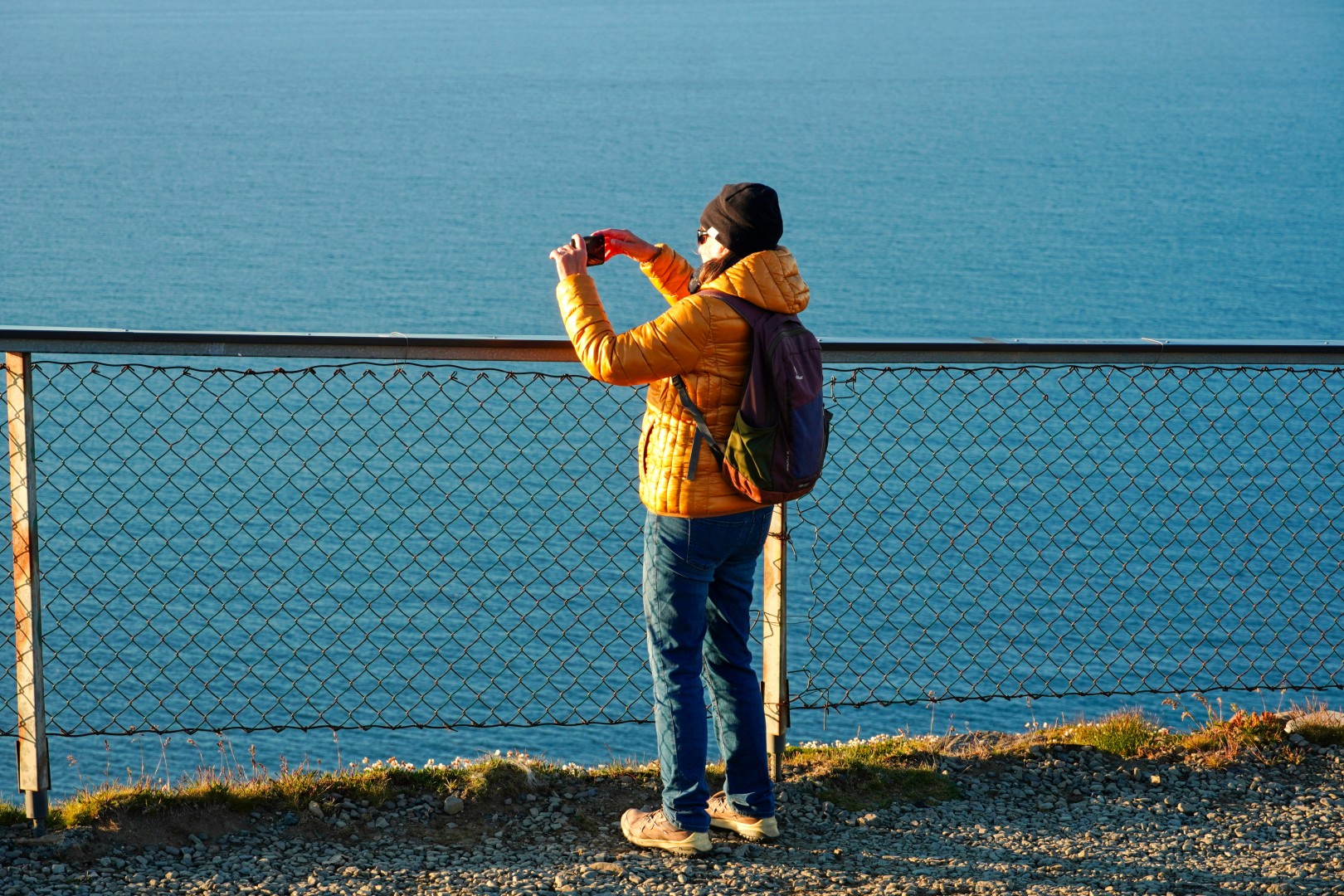
There we simply stood, gazing out at the icy sea and savouring this unique place. Even at midnight, the sun was still above the horizon, bathing the sea and the cliffs in a warm, golden light.
A natural spectacle that is almost impossible to put into words.
It wasn’t until around 12.15 am that we slowly made our way back to the coach. After taking countless photos, enjoying many quiet moments and experiencing the overwhelming beauty of nature, we set off back to the hotel at around 1.15 am.
Unbelievable.
There are days on a trip that you never forget.
25 June 2026 will certainly remain one of those for us…..
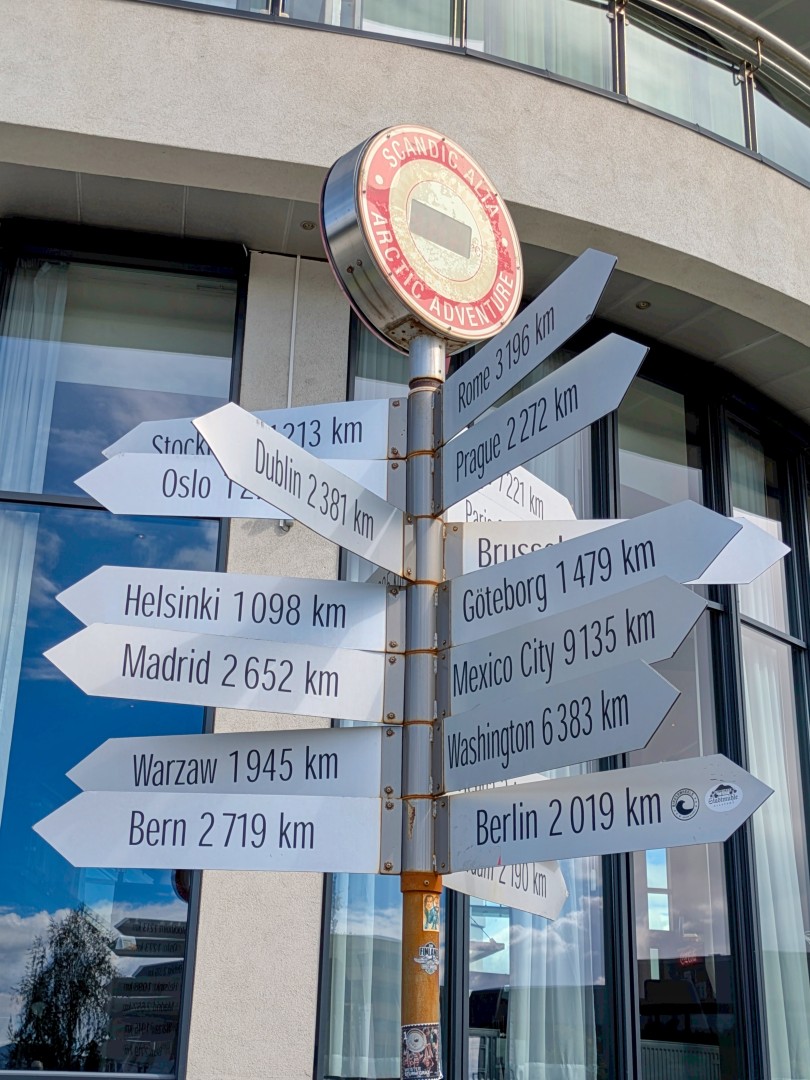
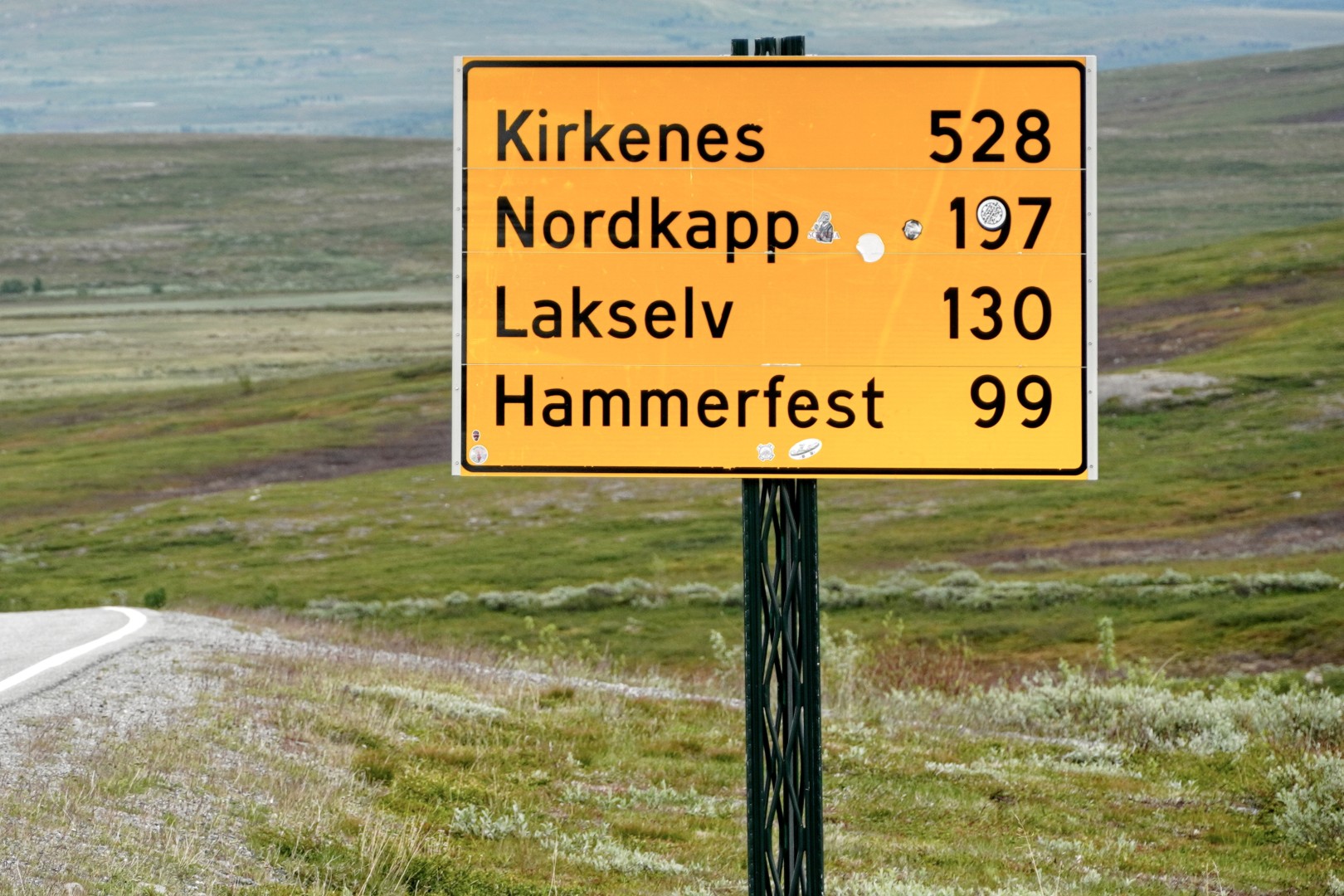
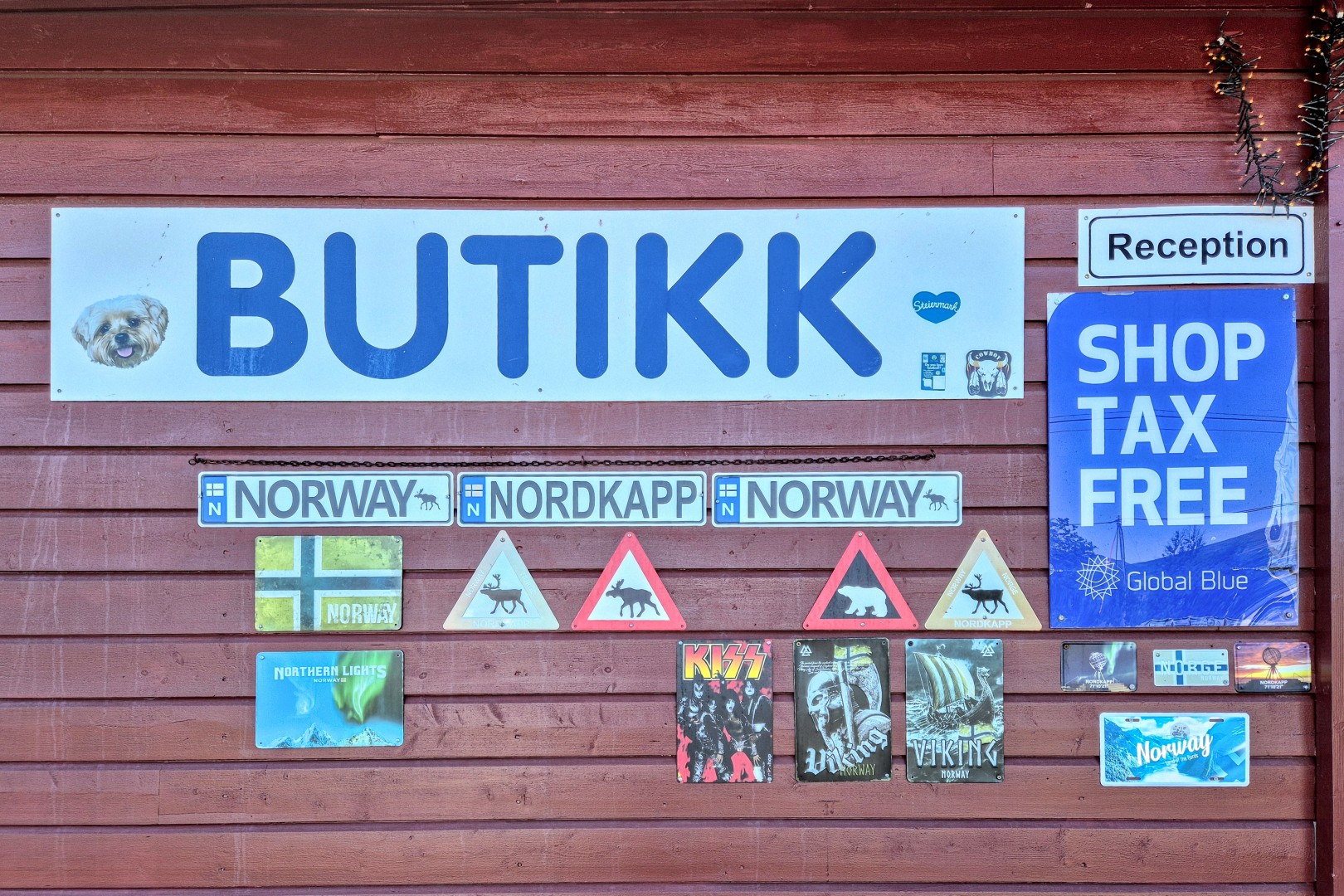
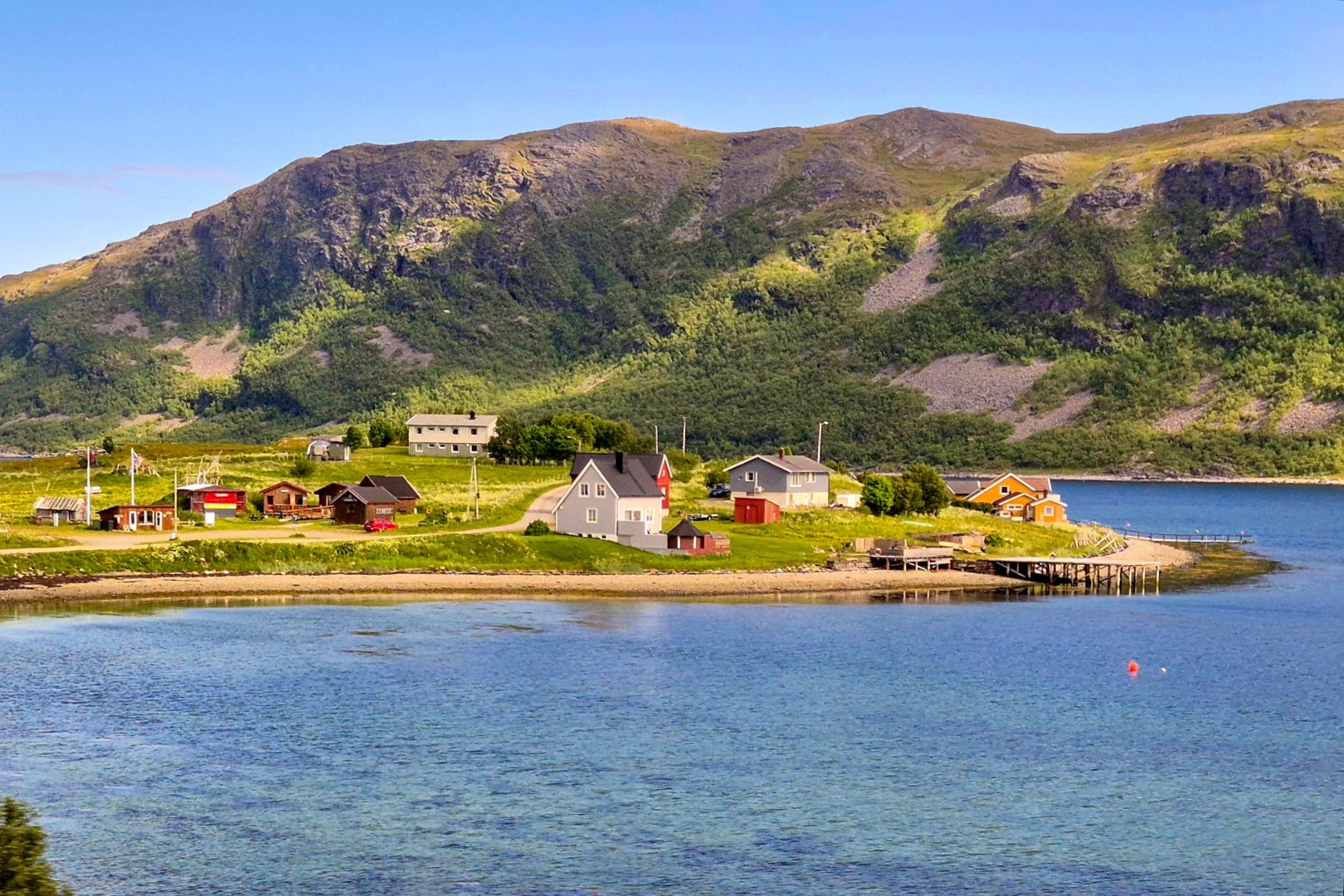
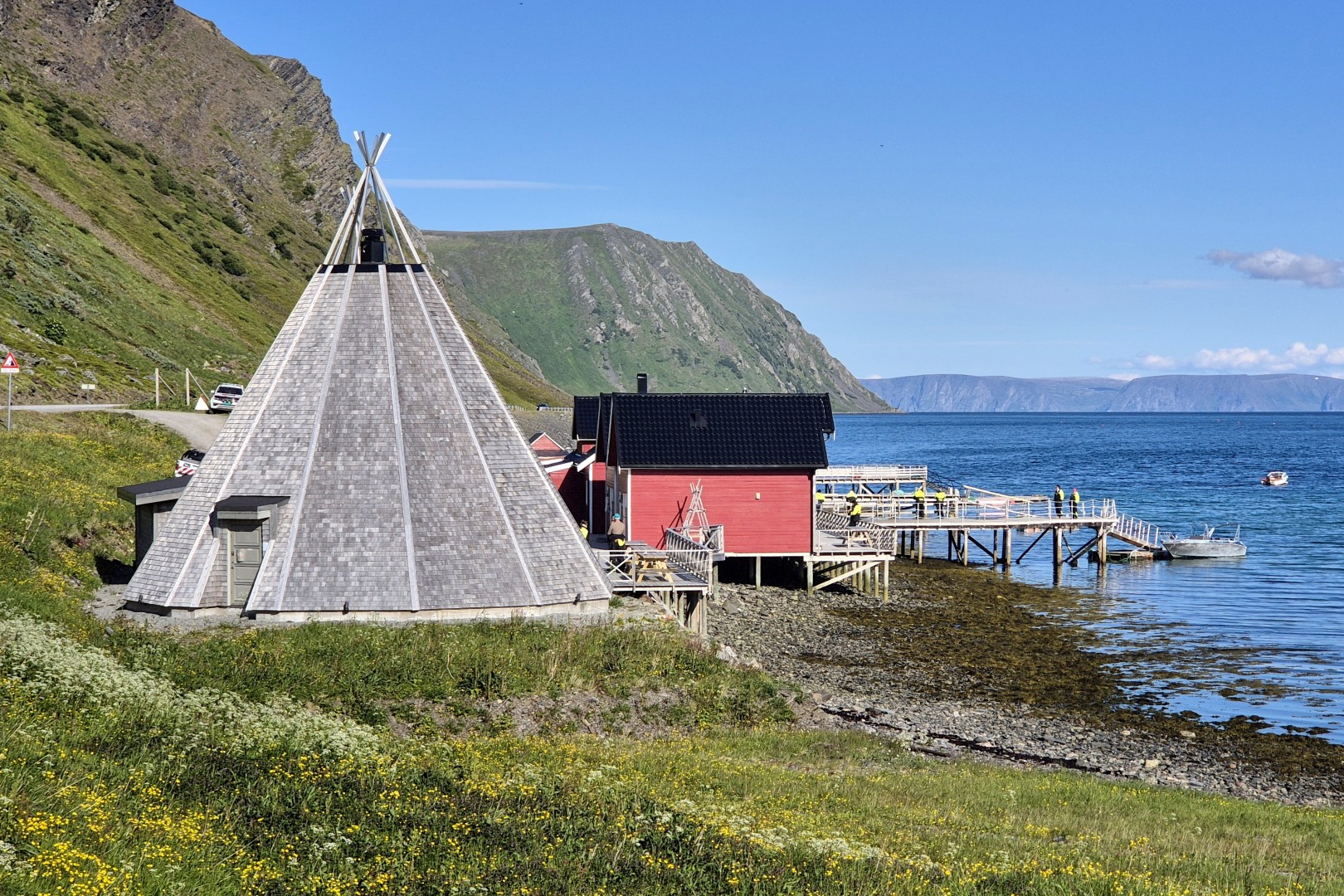
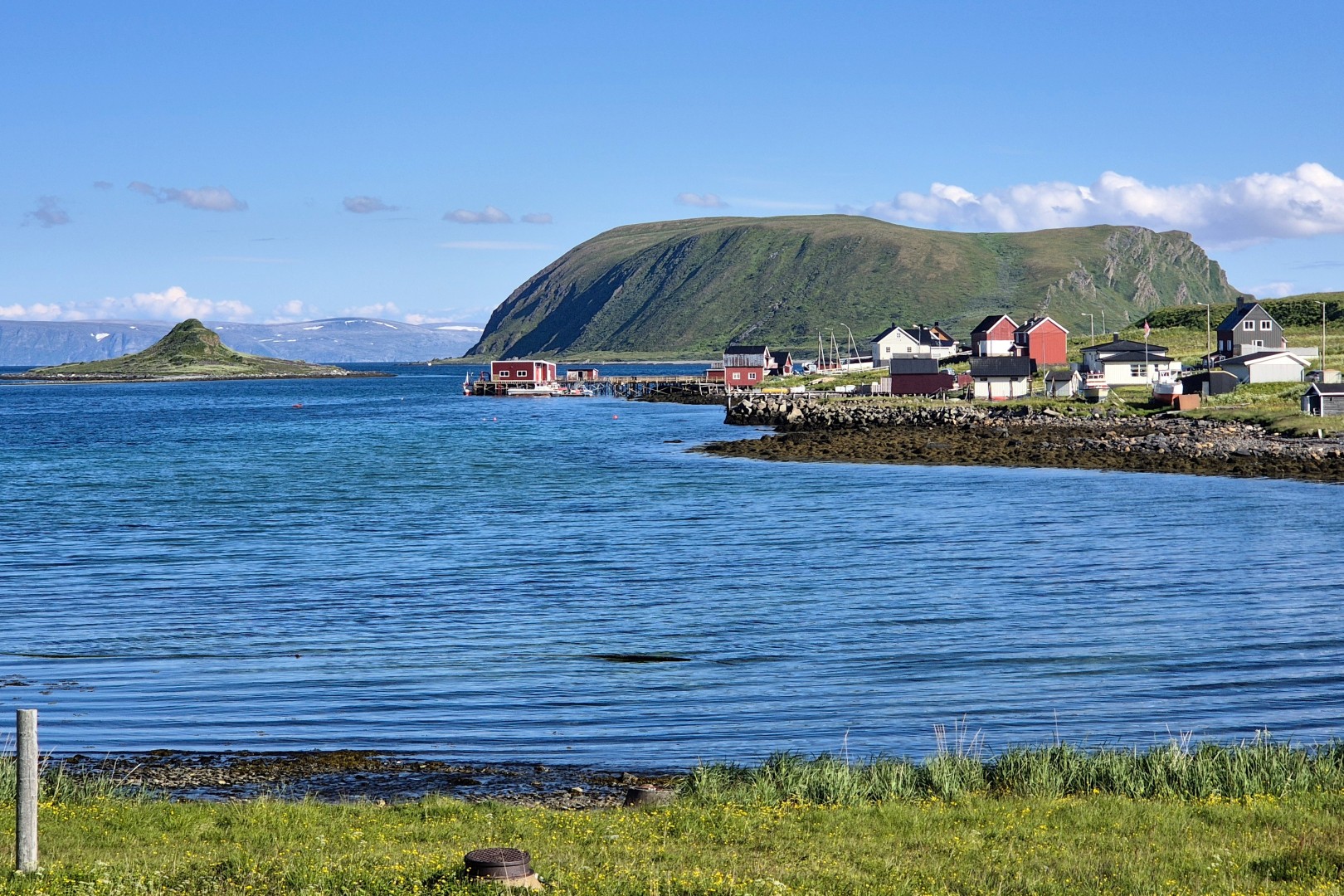
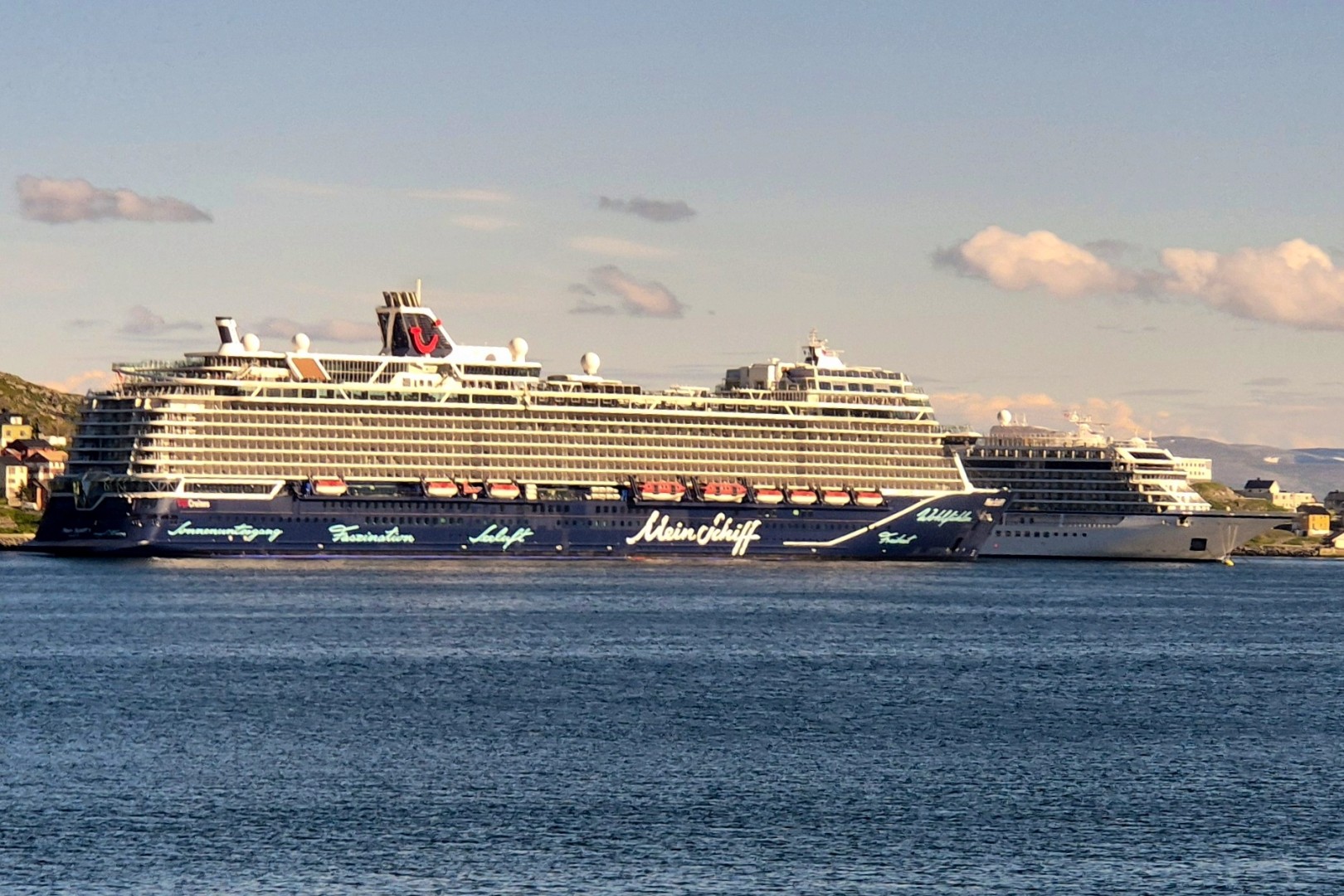
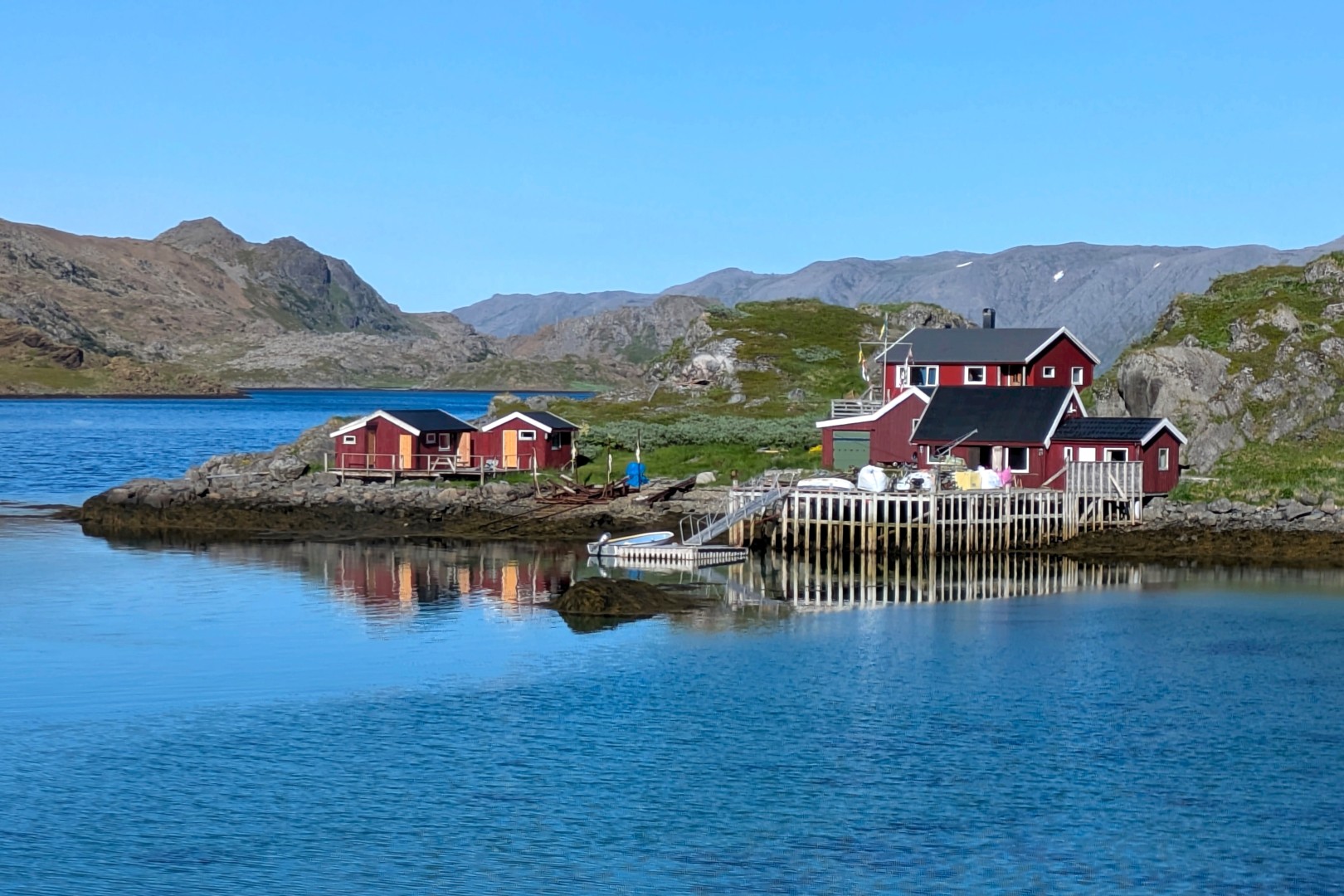
Along the fjords to Sørkjosen (380 km)
After that unforgettable evening at the North Cape, saying goodbye the next morning wasn’t exactly easy. But the next chapter of our journey was already waiting for us. Our destination today was Sørkjosen, a small village on the Reisafjord – the gateway to the Vesterålen and the Lofoten Islands.
At around 380 kilometres, today’s leg was considerably shorter than on previous days, but it was still set to take a fair amount of time due to the winding roads and numerous photo stops.
Shortly after setting off, Northern Norway once again showed itself from its most impressive side. The road took us past fjords, rugged mountains and endless tundra landscapes. A new panorama unfolded around every bend.
Our first stop was at Repparfjorddalen. From the car park, there was a magnificent view across the river of the same name, which meandered through the vast landscape. The clear air, the calm water and the almost untouched nature conveyed exactly the image that many associate with Northern Norway.
Another brief photo stop followed at Levdnjá, before we merely passed through the town of Alta on our onward journey.
Shortly afterwards, a surprise awaited us.
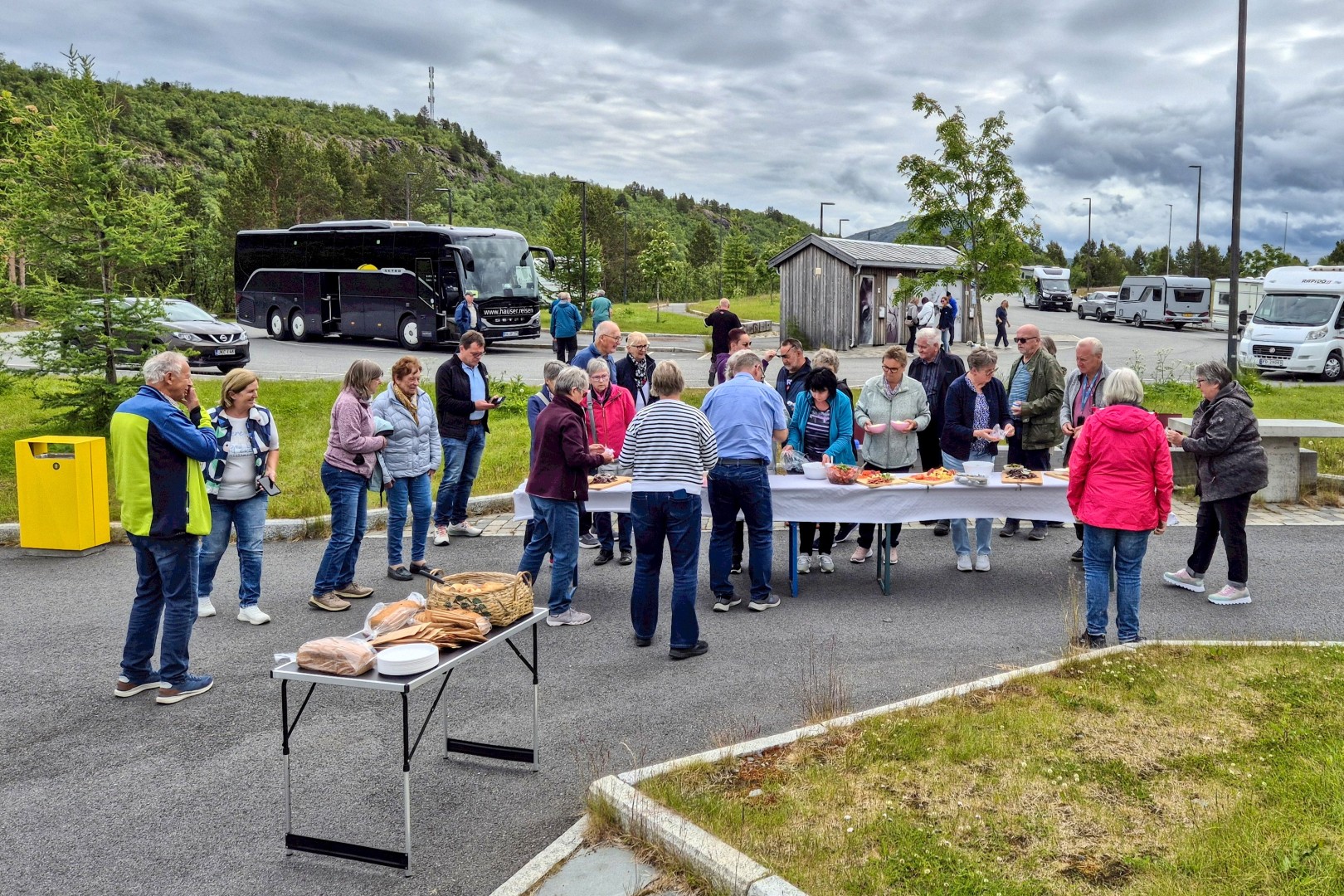
At a lay-by in the heart of the Norwegian countryside, the Hauser team had organised a very special break. Wansa had already bought plenty of ingredients in advance and, without further ado, transformed the car park into a cosy picnic spot.
Fresh bread, various types of sausage and cheese, fruit, vegetables and many other treats were lovingly laid out. Set against the backdrop of the impressive landscape, this spontaneous ‘Norwegian-style picnic’ tasted twice as good.
A brilliant idea from the Hauser team, which was enthusiastically received by all participants and will certainly remain in many people’s memories.
Refreshed, we continued our journey.
Our route was actually supposed to take us through the Kvænangsfjell Tunnel. Instead, however, we opted for the far more scenic mountain pass road over the fjell.
This decision proved to be spot on.
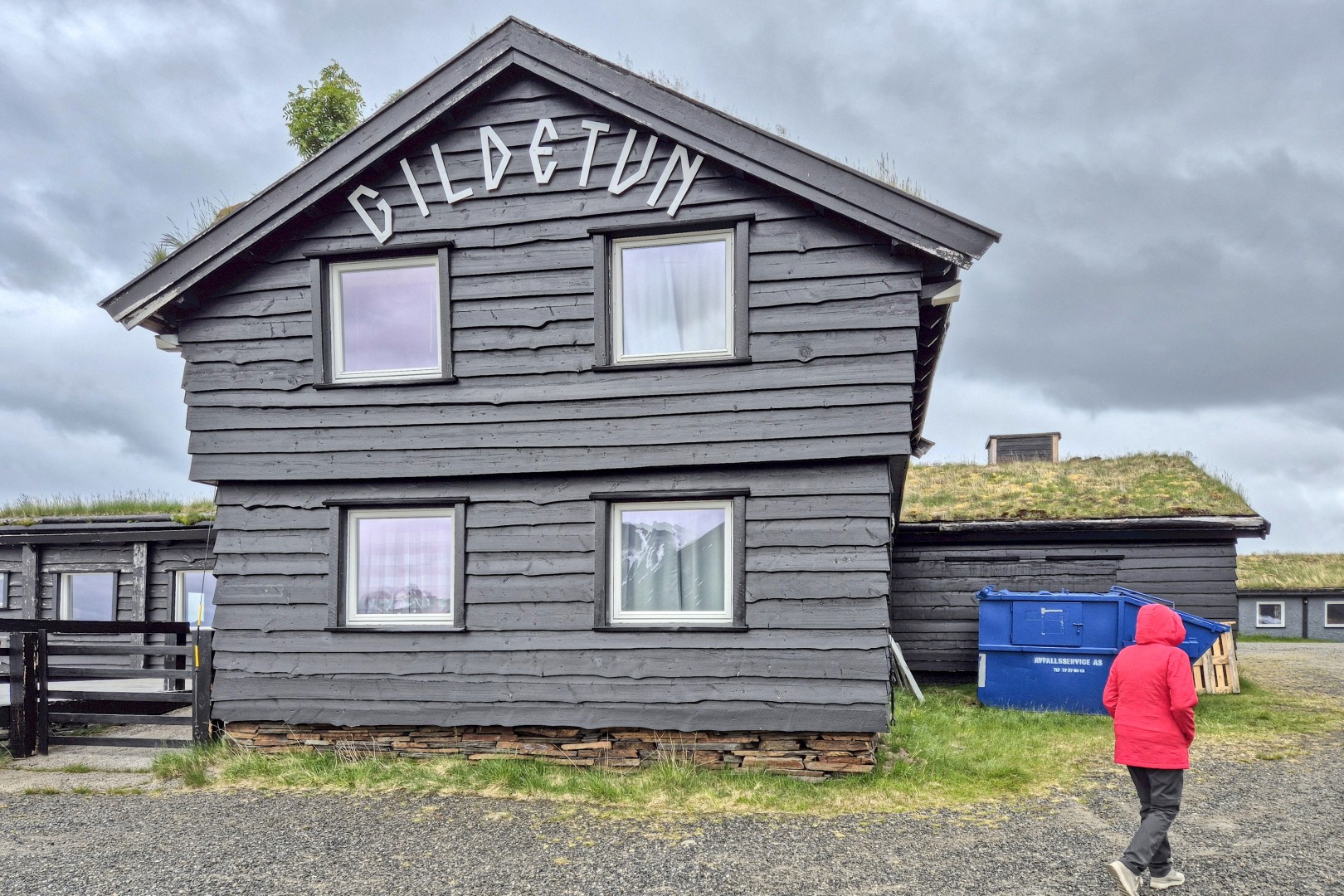
At the top of Gildetun, we took a longer break. The cosy mountain hotel, with its green roof and traditional Sámi artwork, blends harmoniously into the landscape.
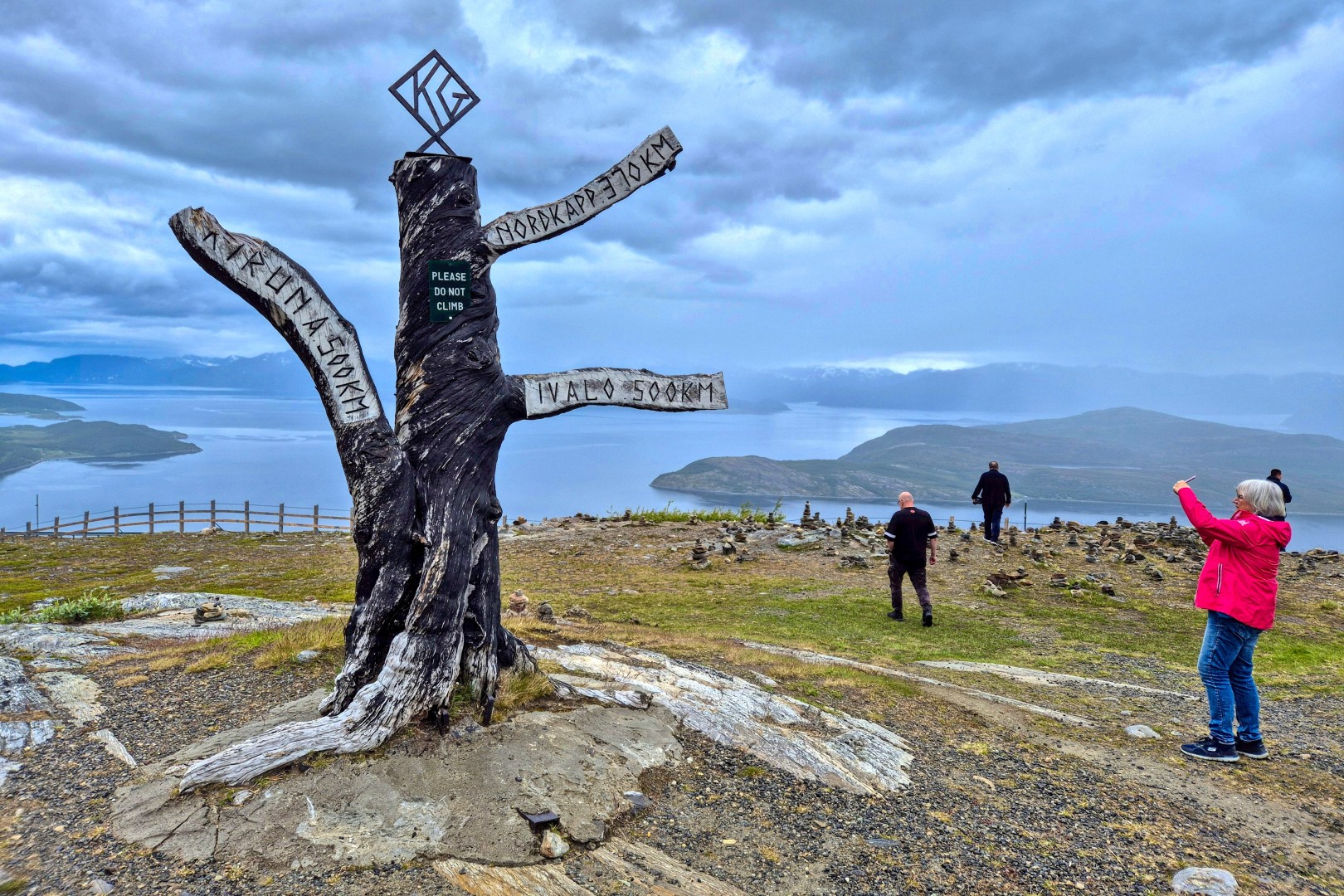
From up here, we were treated to one of the most beautiful views of the day.
Far below us stretched the Kvænangenfjord, its deep-blue waters reaching out to the open North Sea. Dotted amongst them were numerous salmon farms, their round net pens looking like tiny islands on the fjord. The combination of sea, mountains and cloudless sky offered an impressive panorama.
Time and again, there was time simply to stop and enjoy the tranquillity of this magnificent landscape. In the afternoon, the route took us further along the fjords to Sørkjosen.
Our destination for the day was the cosy Reisafjord Hotel, situated right by the fjord. After checking in, there was still plenty of time for a short stroll through the tranquil village.
Sørkjosen has a small regional airport and, on the whole, feels pleasantly quiet and unhurried. From the hotel, we strolled to the marina, where numerous sailing and motorboats were moored.
We then continued on to Storslett Skole. To our surprise, a gathering of classic car enthusiasts was taking place there. Numerous lovingly restored vehicles lined the car park, offering an interesting contrast to the otherwise modern Scandinavian surroundings. A relaxed day of travelling was slowly drawing to a close.
After the long drives and the many highlights of the past few days, this somewhat quieter day did us a world of good. Nevertheless, the fantastic landscape of Northern Norway accompanied us at every turn and made this leg of the journey a special experience too.
We rounded off the day in style with a good dinner and a view of the tranquil Reisafjord.
Tomorrow, the next highlight of our journey awaited us: the spectacular archipelago of Vesterålen and, a little later, the legendary Lofoten.
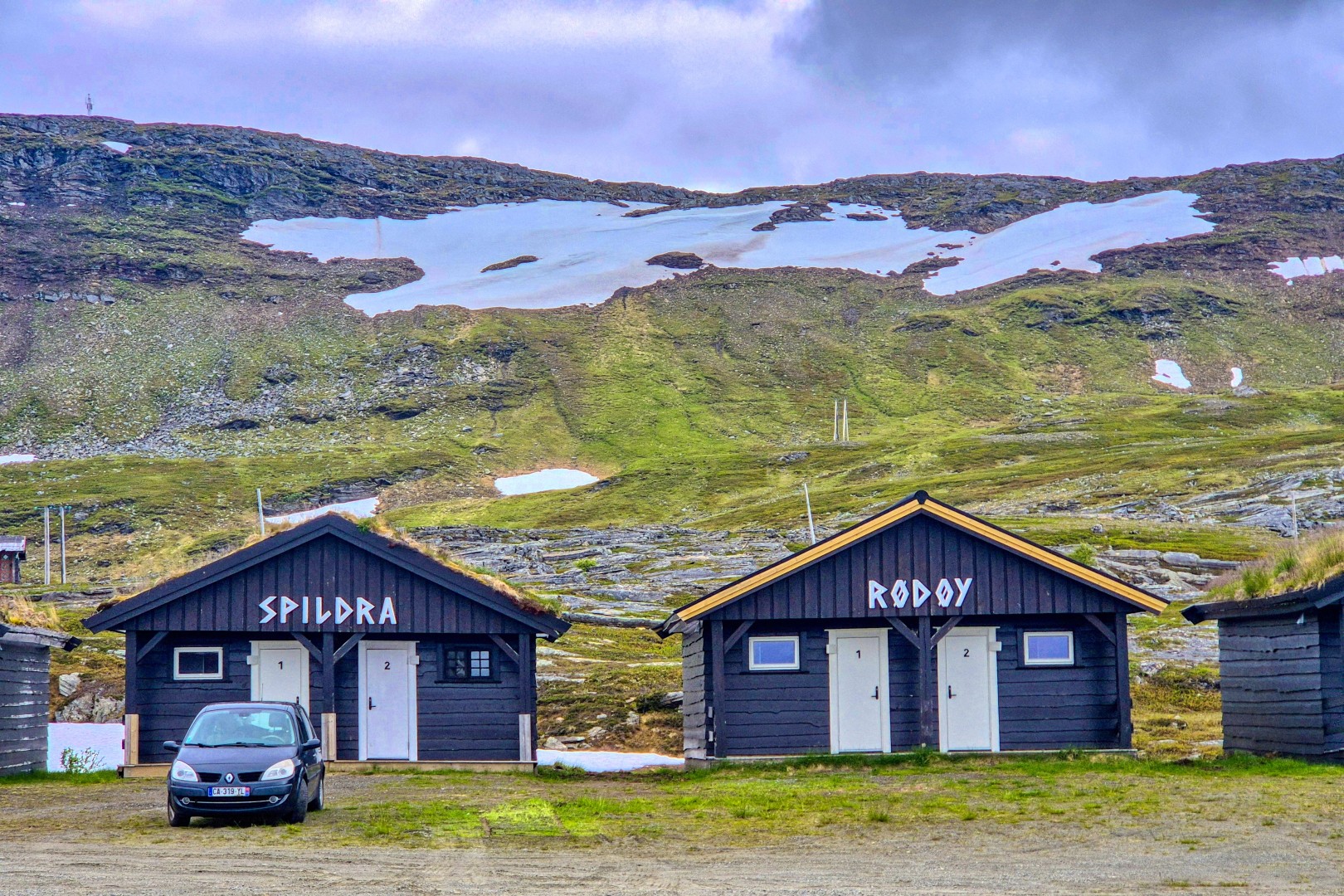
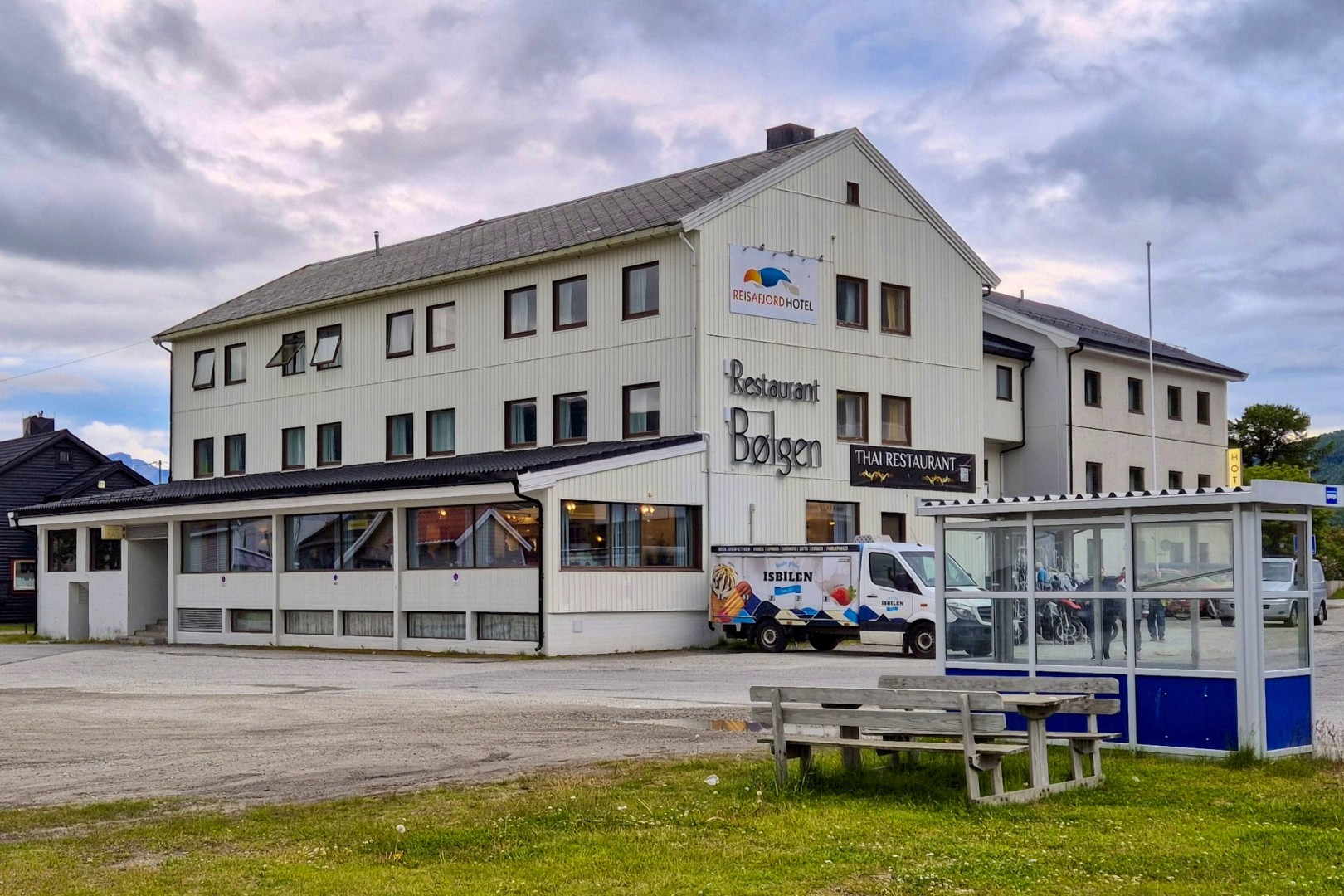
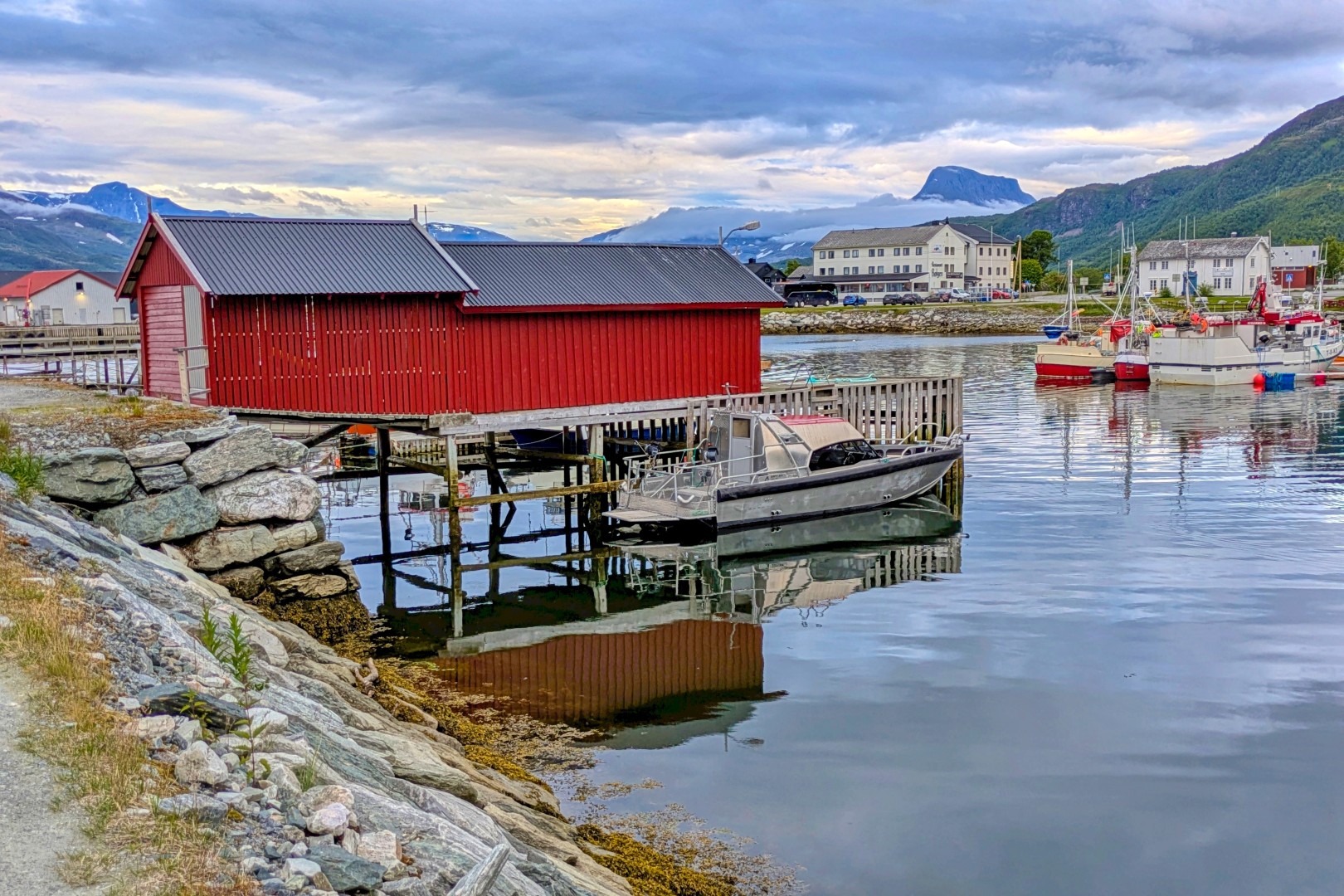
Dream roads, fjords and the world of bridges in Vesterålen
The sixth day of our trip began early once again. Our destination for the day was Melbu in the Vesterålen – an archipelago that is often overshadowed by the famous Lofoten, but whose scenery is at least as impressive.
With around 500 kilometres to cover, we had another long leg of the journey ahead of us. But as is so often the case in Norway, the same applied today: it wasn’t the destination that was the real highlight, but the journey itself.
After just a short drive, we made our first brief stop at Skibotn. The morning sun glinted off the fjords, whilst the surrounding mountains were still partly covered in snowfields. The crisp air and the almost untouched natural landscape accompanied us throughout the day.
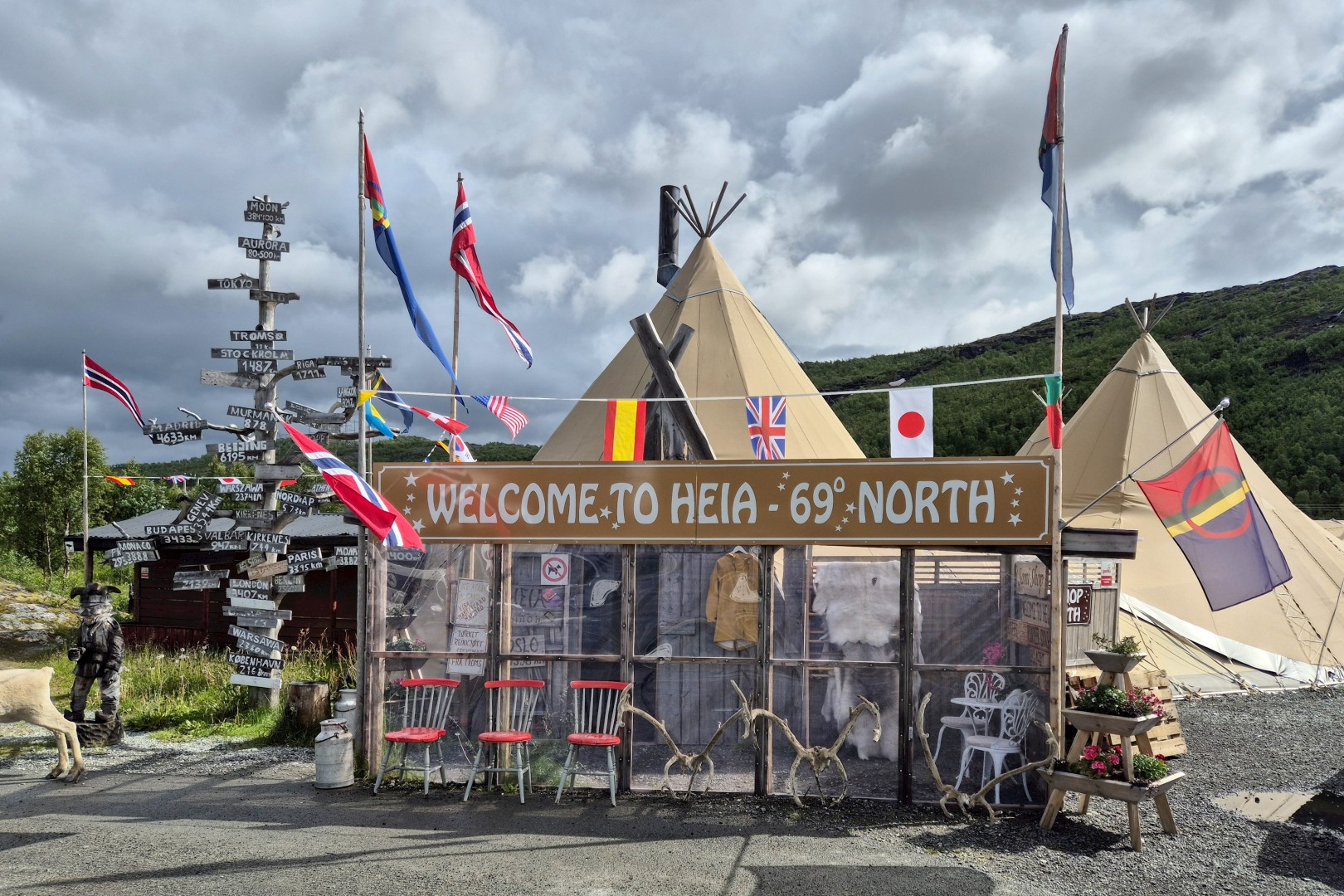
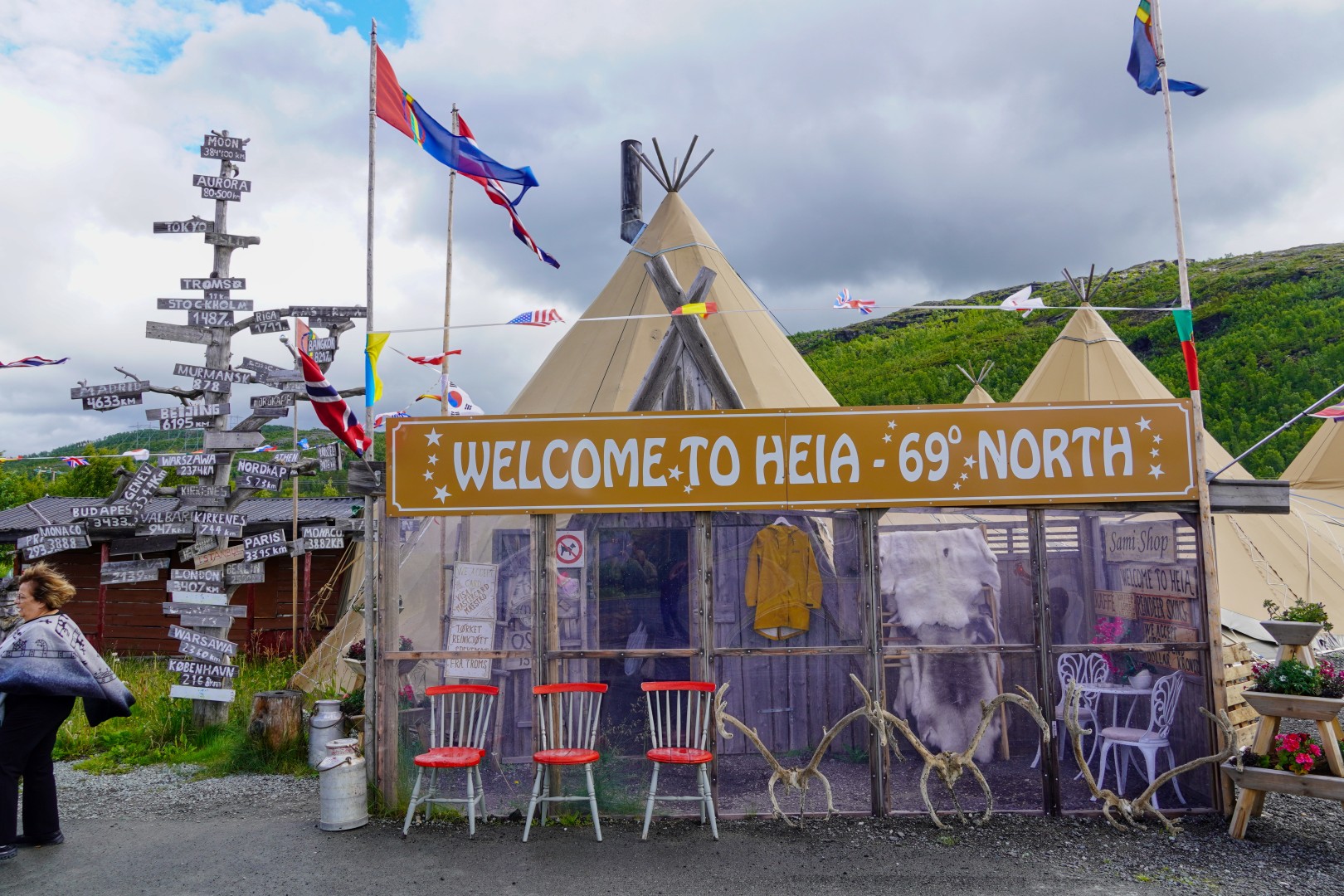
A special experience awaited us a little later at the Sami Shop Heia, 69° north latitude.
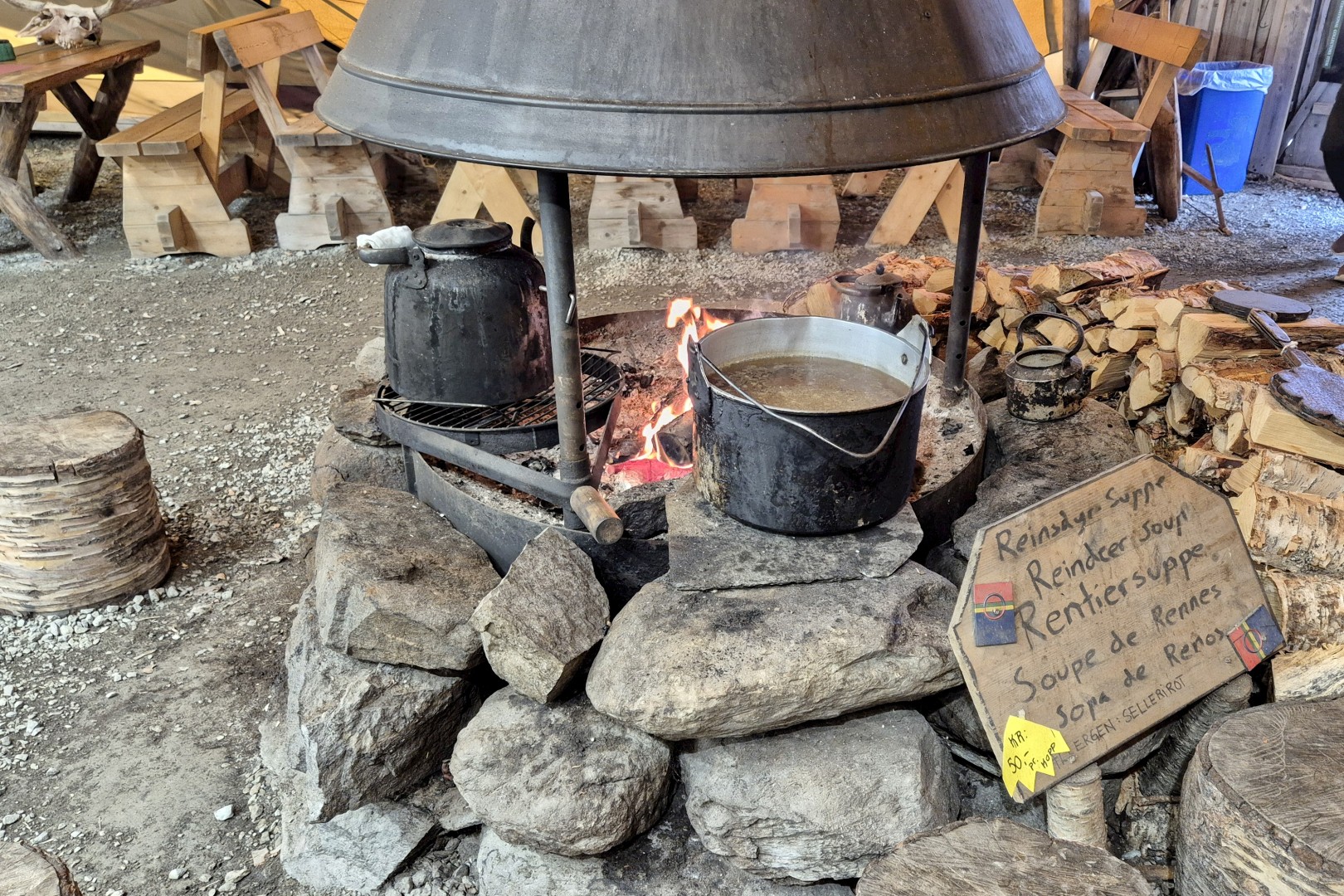
Even the entrance was exceptionally designed. Several large traditional Sami tents, known as lavvus, formed the centrepiece of the site. We were warmly welcomed in front of an open campfire. The scent of burning wood and smoked specialities immediately created a cosy atmosphere.
Inside, there were countless typical Norwegian products, ranging from reindeer skins and intricately crafted knives to jumpers, jewellery and souvenirs from Lapland.
Of course, a little culinary tasting was a must. We sampled reindeer sausage, elk sausage and even whale sausage – specialities you don’t get to eat every day. Quite an interesting taste experience and certainly worth trying.
Afterwards, our journey continued southwards.
In Bjerkvik, beautifully situated on the Ofotfjord, we took a longer break. The sunny weather was the perfect excuse to treat ourselves to a large ice cream and let our gaze wander over the fjord.
The further we drove, the more spectacular the landscape became.
The roads wound their way time and again along deeply carved fjords, whilst snow-capped mountain peaks were reflected in the water. Behind almost every bend, a new picture-postcard view unfolded.
Another highlight was crossing the Tjeldsundbrua. This elegant bridge connects the Norwegian mainland with the offshore islands and is considered a key transport hub on the route to the Vesterålen and Lofoten archipelagos.
From the bridge, there was a magnificent view of the Tjeldsund and the surrounding mountains.
Time and again, it became clear just what an enormous feat of engineering Norway has achieved in developing its transport infrastructure. Without the numerous bridges and tunnels, many of these regions would still be difficult to reach today.
Our route then took us along the picturesque Gullesfjord to Gullesfjordbotn, a small village nestled in the heart of a stunning fjord landscape. The surrounding nature reserve was at its most beautiful. Deep-blue water, green mountain slopes and snow-capped peaks formed a backdrop straight out of a travel brochure.
A short while later, we reached the striking Sortlandbrua.
This imposing bridge connects the islands of Langøya and Hinnøya and is one of the region’s most important transport links. From its height, we were once again treated to a fantastic view across the fjords, islands and the open sea.
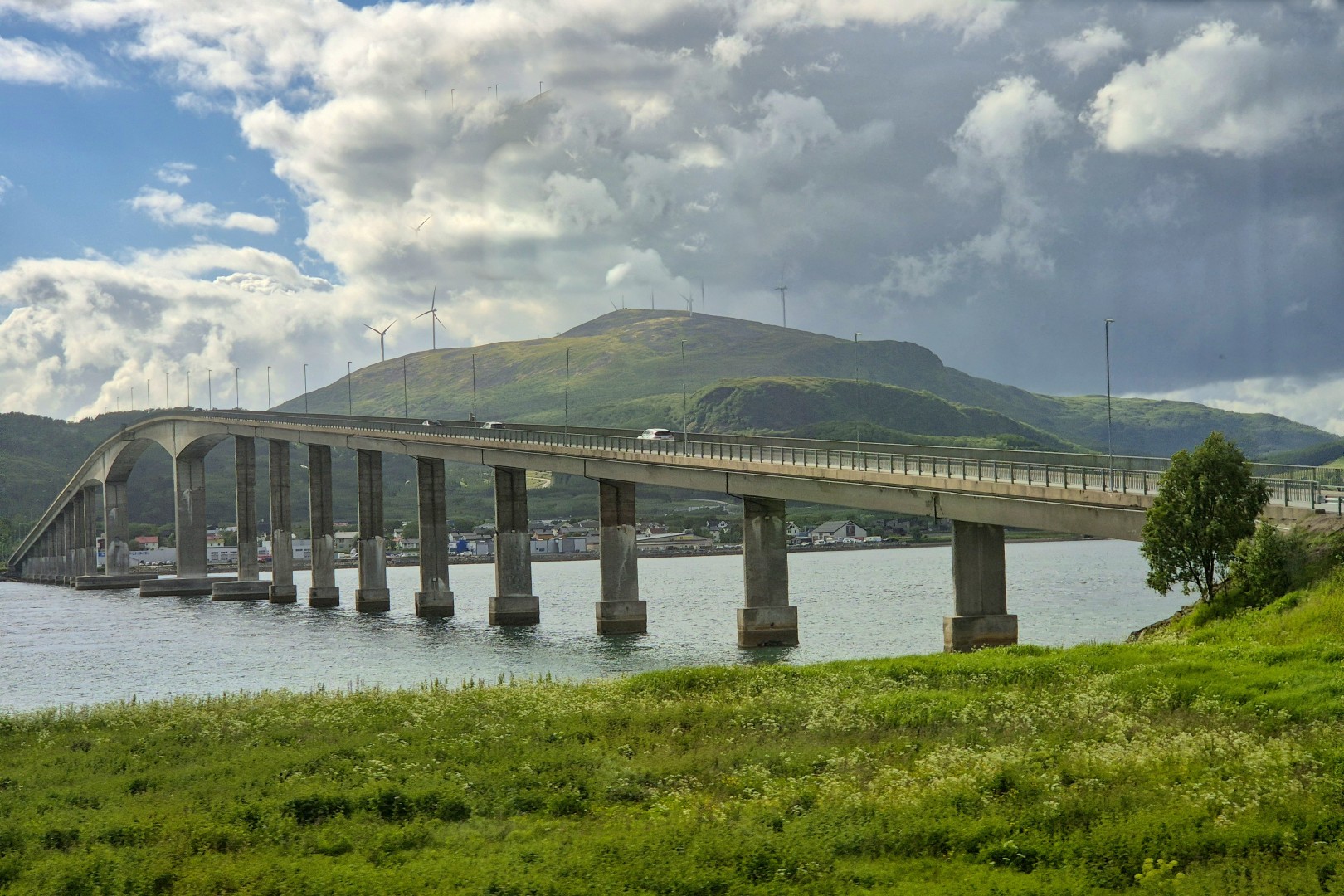
But the day was far from over. Shortly afterwards, the next impressive structure, the Hadselbrua, came into view. This elegant cable-stayed bridge spans the Hadselfjord and is one of Northern Norway’s best-known bridges.
No sooner had we crossed it than we came to the Børøybrua, which eventually led us to Stokmarknes. This small town holds a very special significance for Norway.
It was here, in 1893, that the legendary Hurtigruten was founded. What began as a postal ship service developed over the decades into one of the world’s most famous coastal cruises. The modern Hurtigruten Museum serves as a striking reminder of this history and makes Stokmarknes a significant site for Norwegian seafaring. In the late afternoon, we finally reached Melbu.
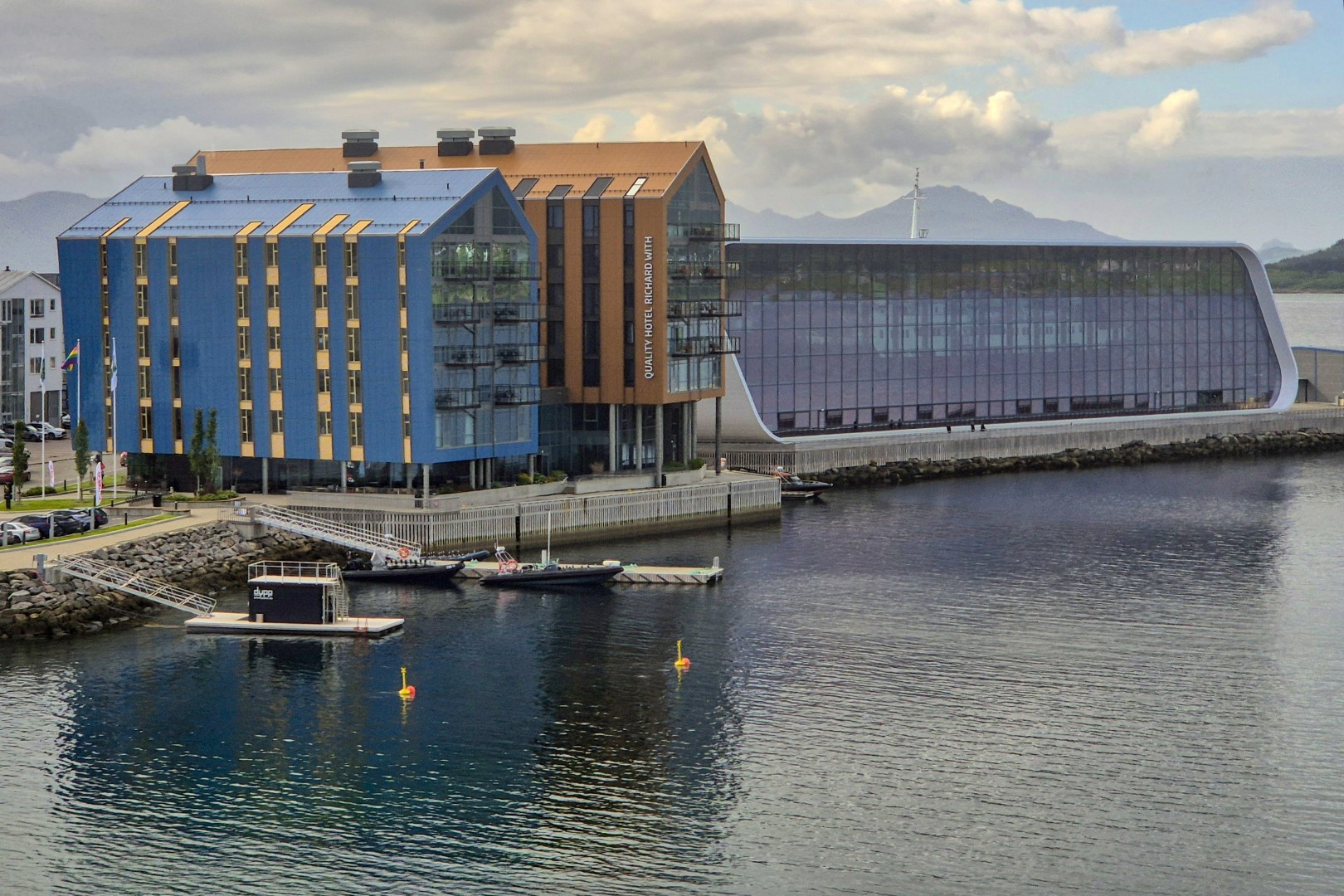
Our hotel was situated right by the ferry terminal and offered a magnificent view of the fjord and the passing ships. The peaceful setting provided the perfect end to this eventful day’s journey. Looking back, today the journey itself was indeed the real destination.
Countless fjords, snow-capped mountains, spectacular bridges and ever-changing panoramic views made this leg of the journey one of the most scenic of our entire tour. After dinner, we wound down the day in a relaxed manner and enjoyed the special atmosphere of Vesterålen.
We were already looking forward to the next day with great anticipation; after all, the world-famous Lofoten, one of Europe’s most spectacular archipelagos, now lay ahead of us.
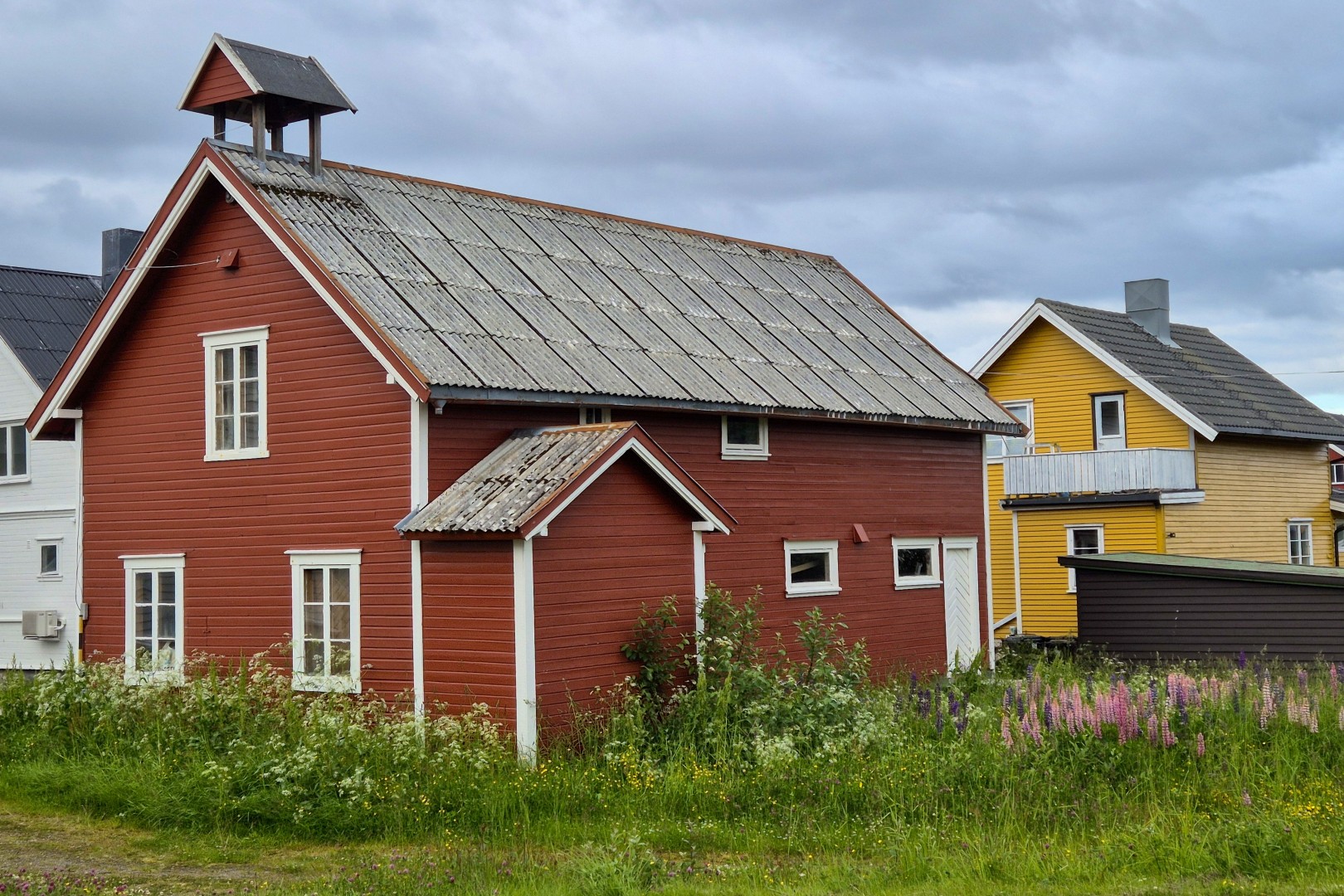
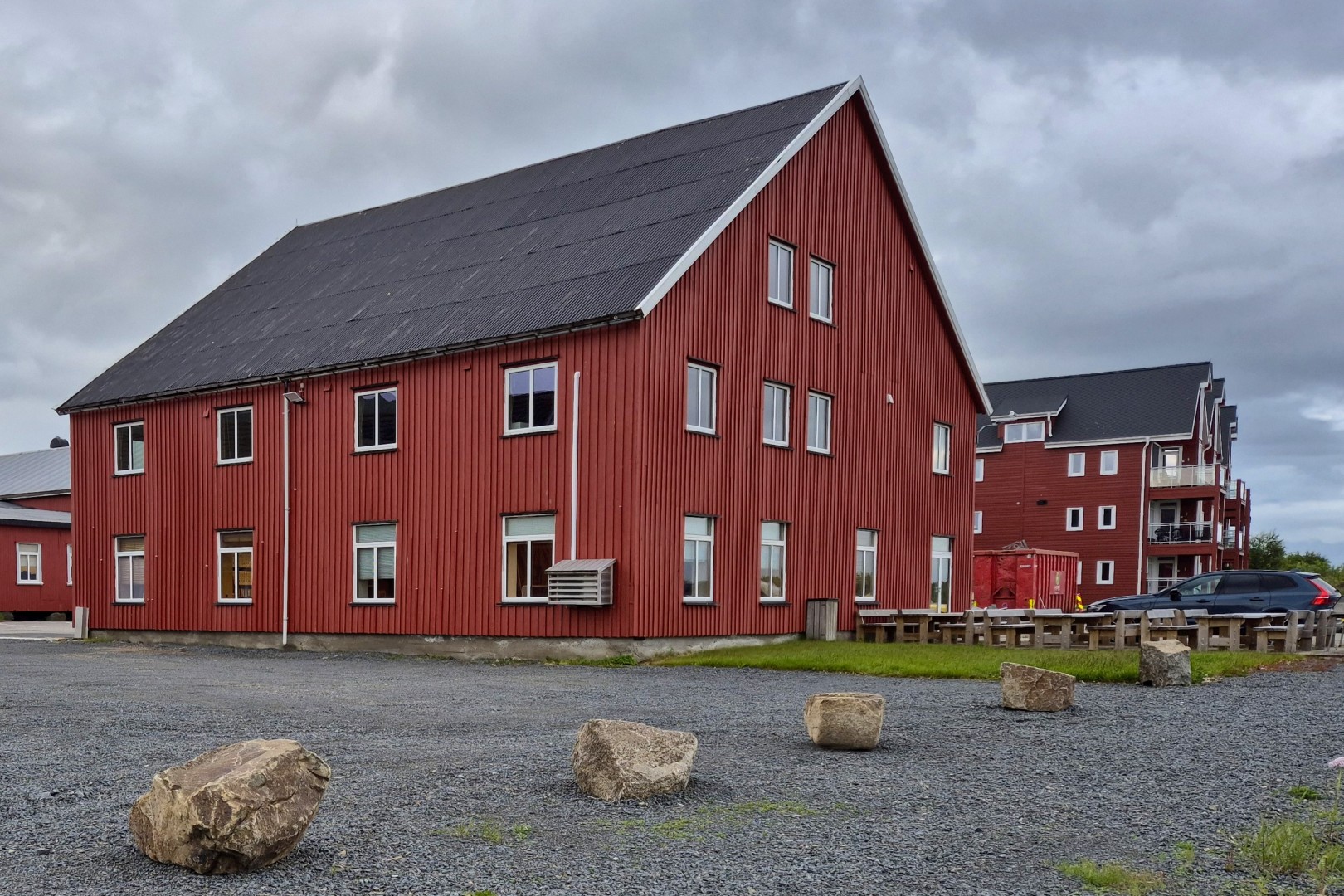
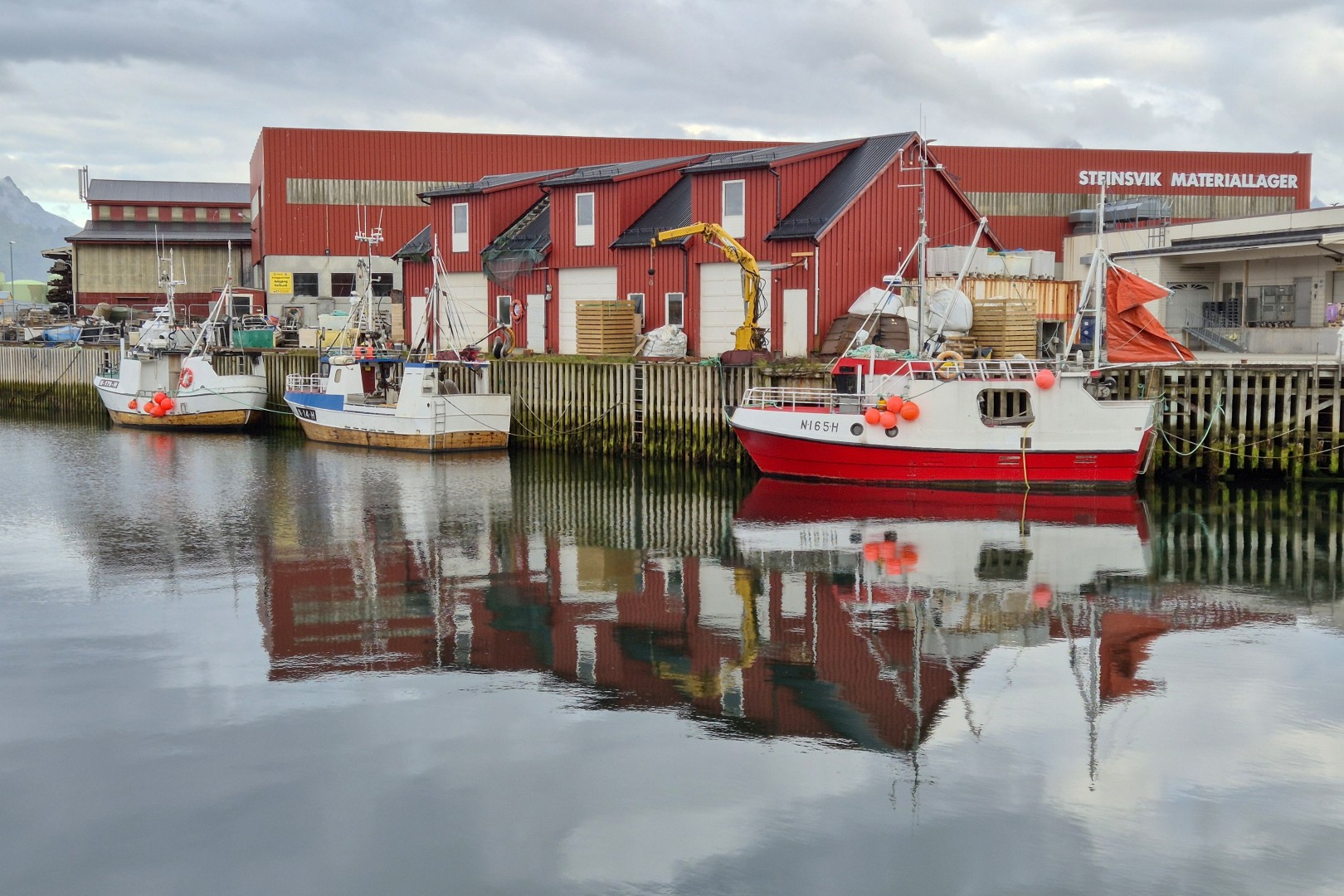
The Lofoten Islands: A day full of picture-postcard views (126 km)
For many of the tour participants, today’s itinerary featured the highlight of the entire tour: the Lofoten Islands. Hardly any other region in Europe is photographed as often as this spectacular archipelago far above the Arctic Circle. Rugged mountains, deep-blue fjords, white sandy beaches and picturesque fishing villages make the Lofoten Islands one of Norway’s most beautiful destinations.
There was a palpable sense of anticipation early in the morning. At 7.30 am, our ferry set sail from Melbu. The crossing to Fiskebøl, just over nine kilometres long, took barely half an hour. Travelling by road would have meant covering around 126 kilometres – an enormous time-saver and, at the same time, a wonderful start to the day.
Shortly after leaving the ferry, it became clear why the Lofoten Islands are so famous worldwide.
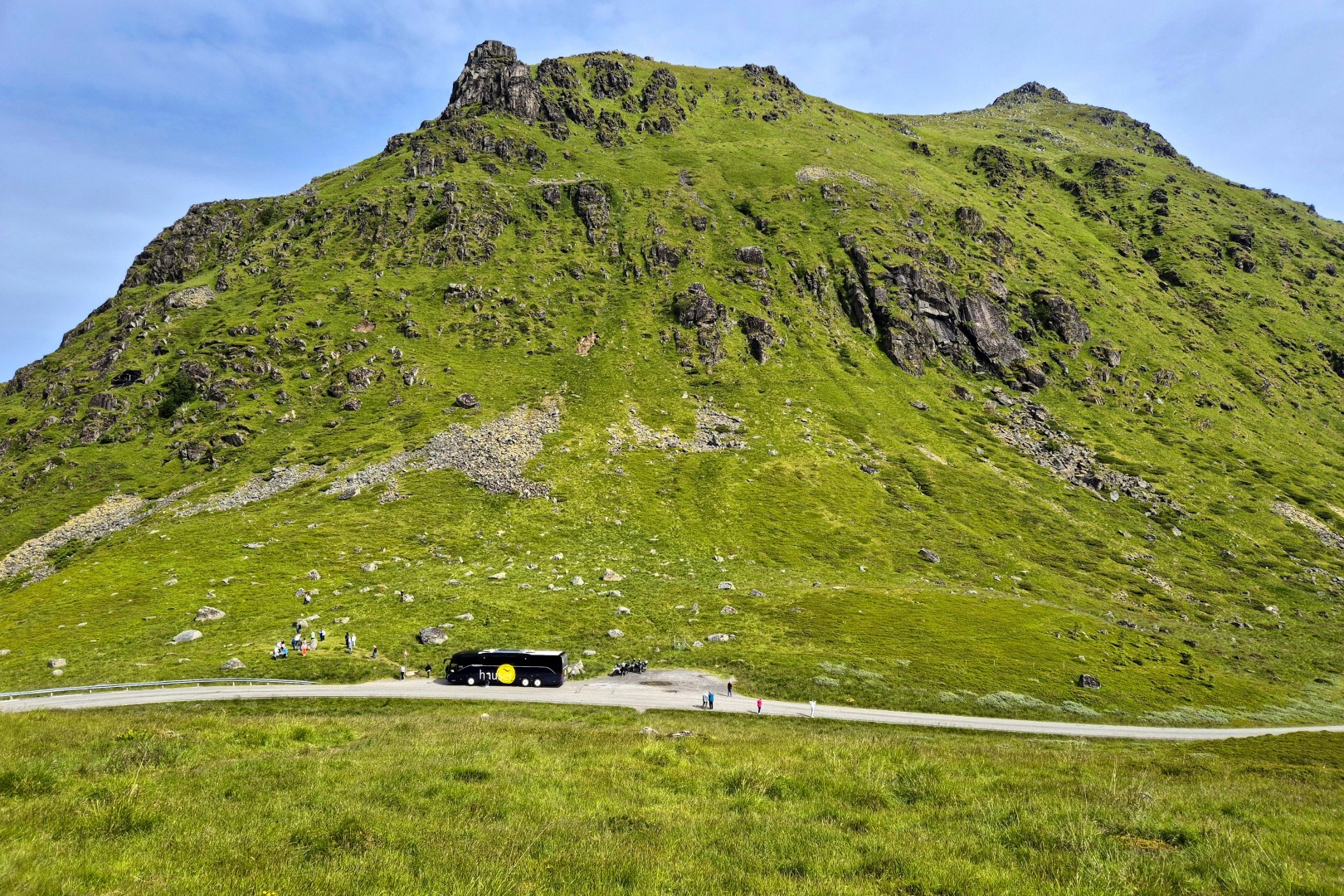
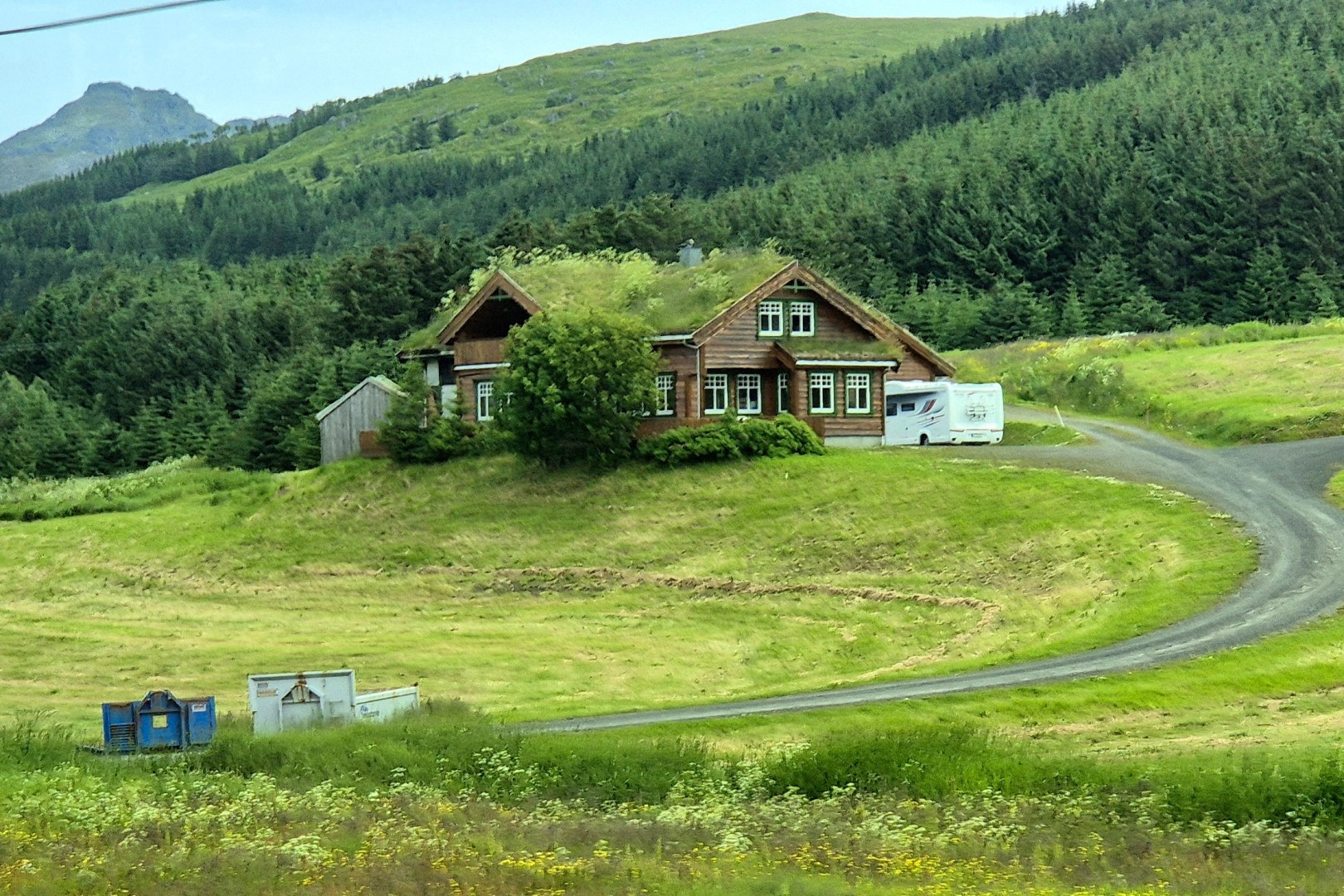
The road wound past rugged granite mountains, crystal-clear fjords and small fishing villages. A new panorama unfolded around almost every bend. The camera was hardly ever put down.
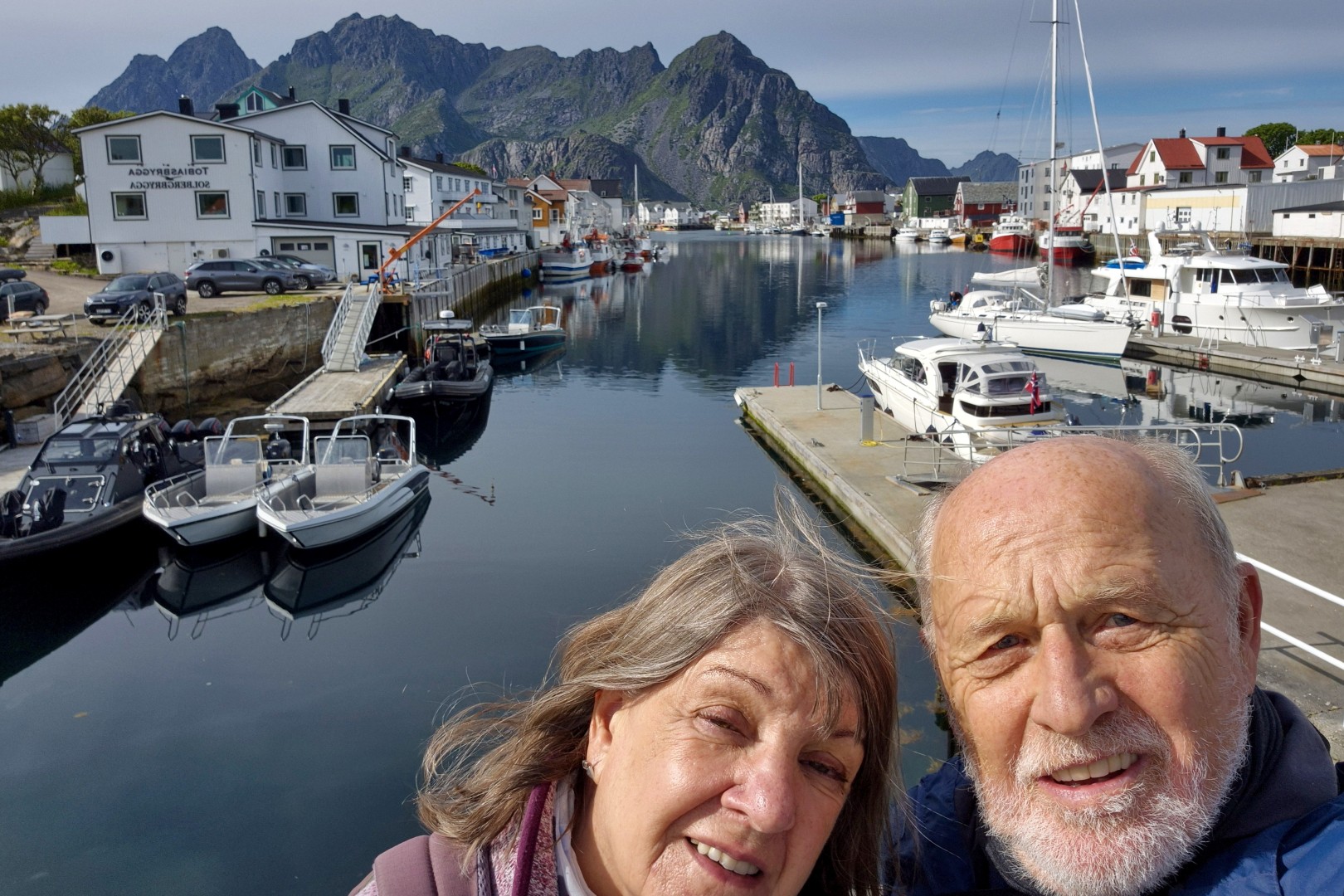
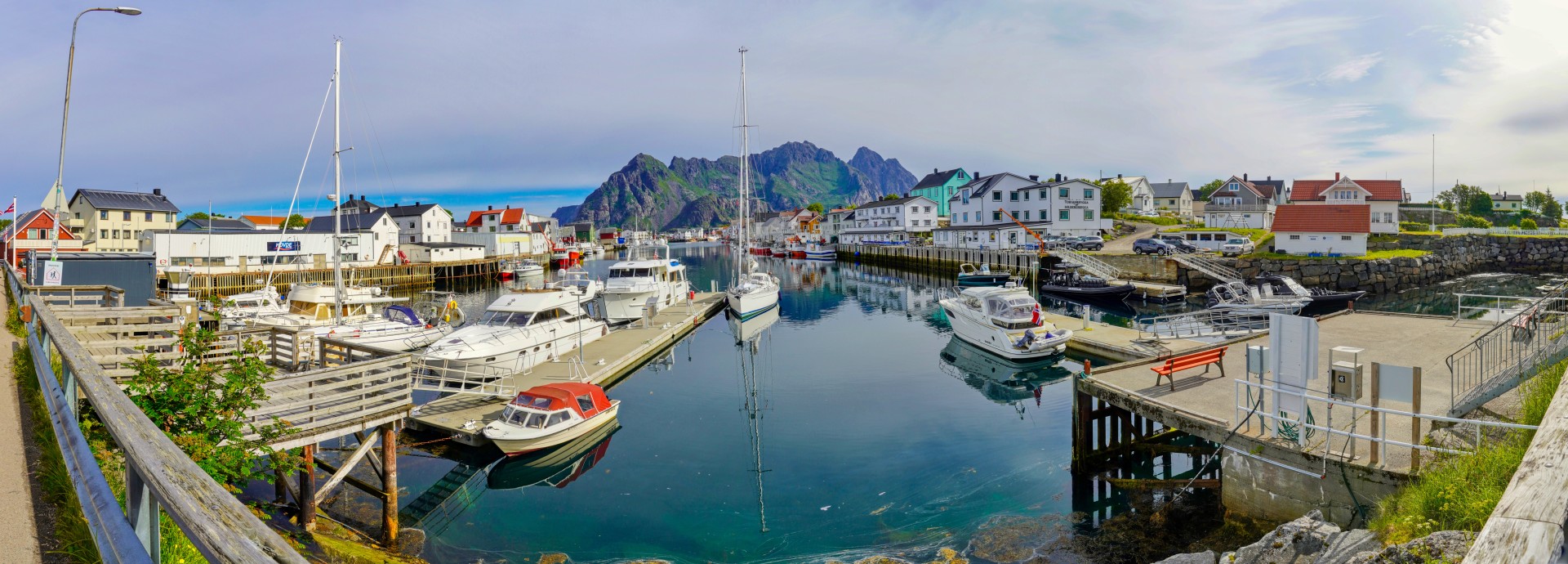
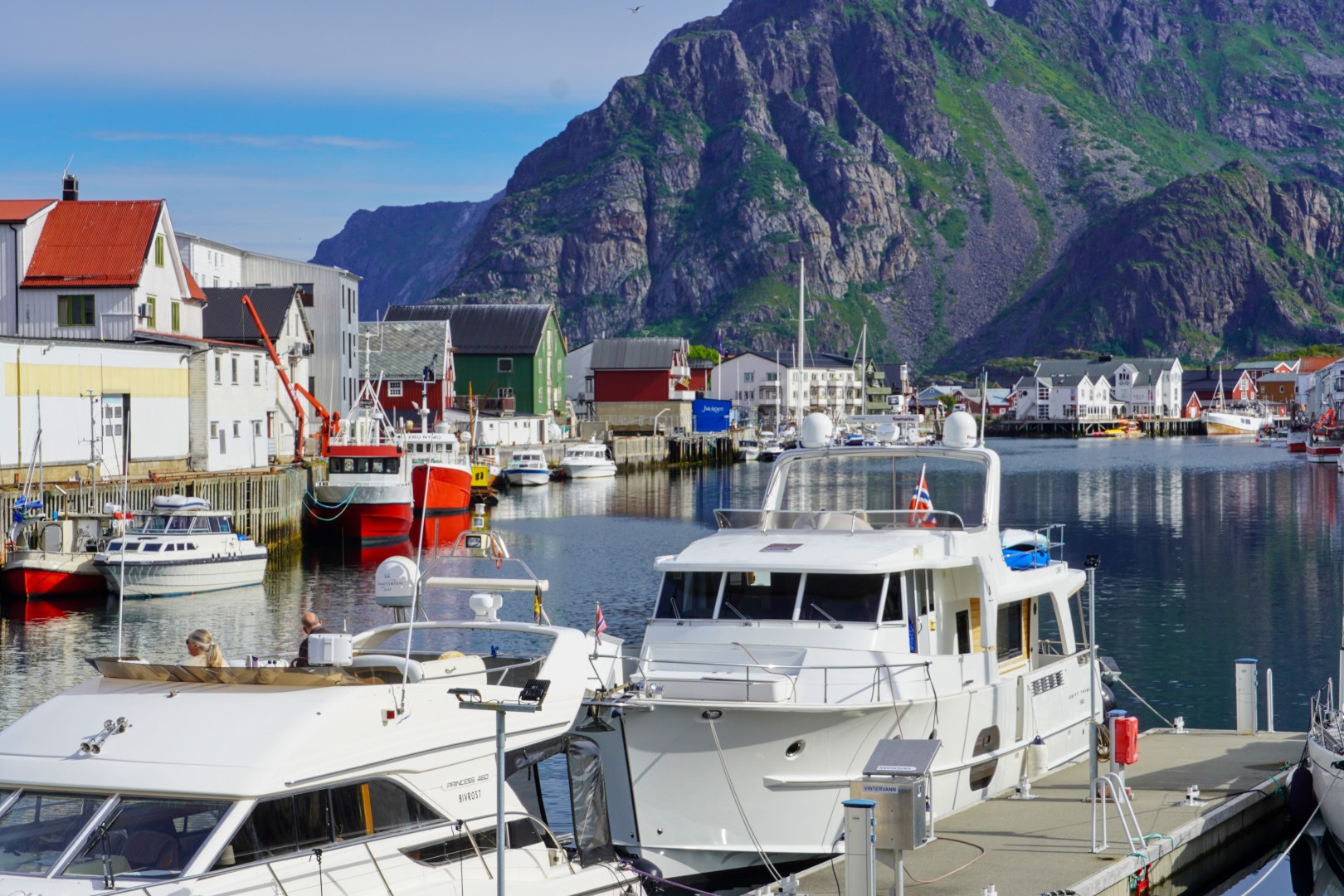
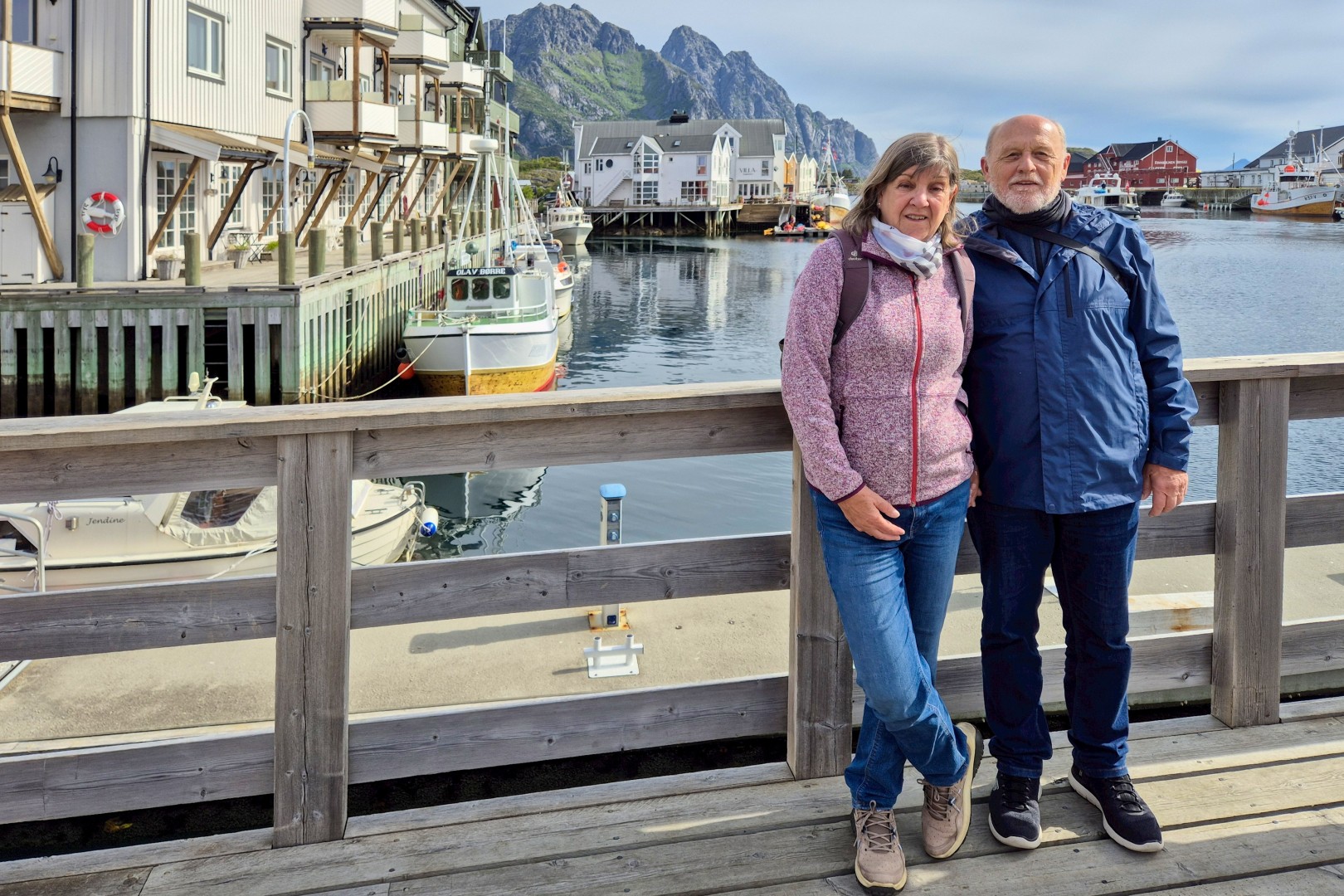
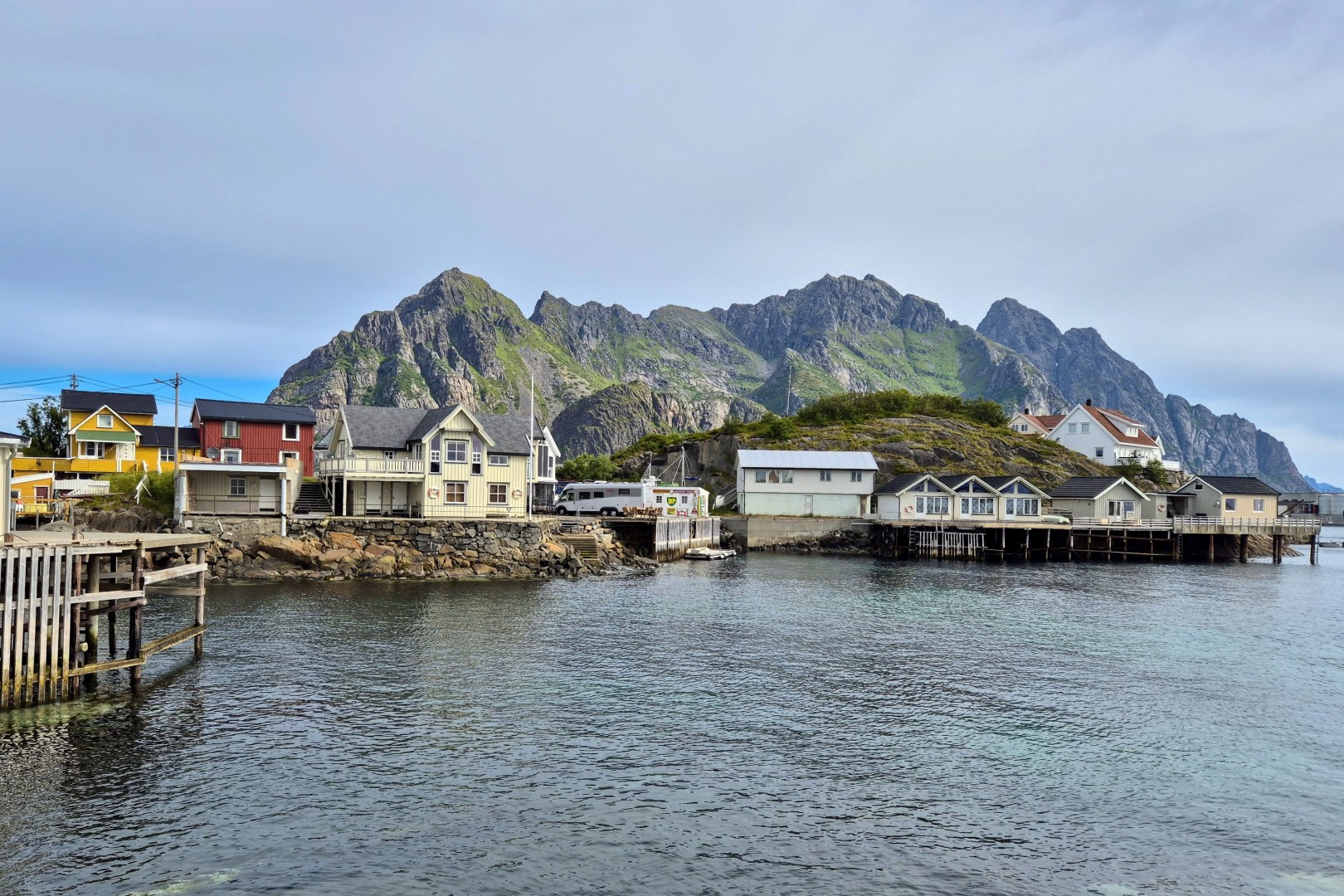
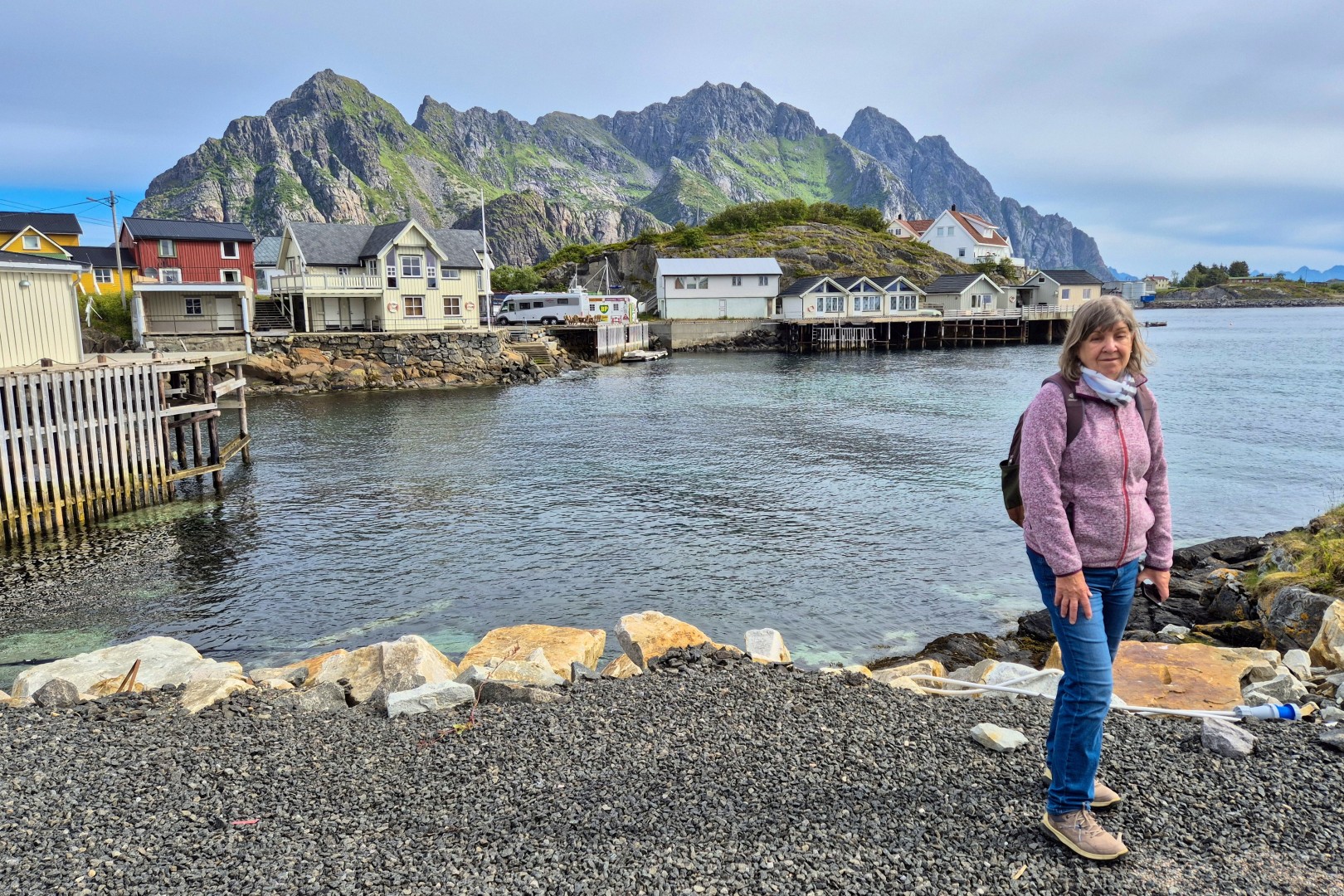
Our first major destination was Henningsvær, often affectionately referred to as the ‘Venice of the Lofoten Islands’.
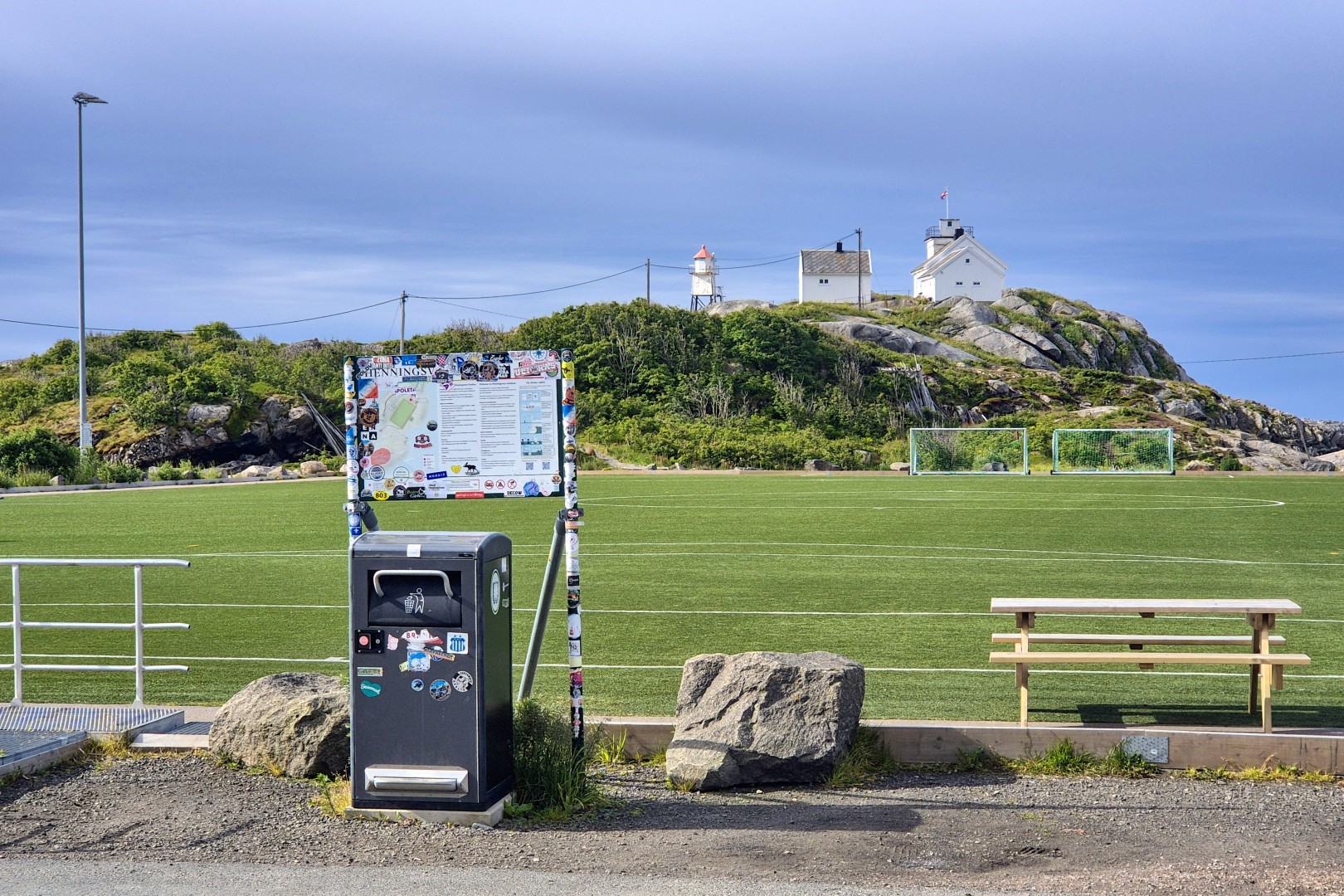
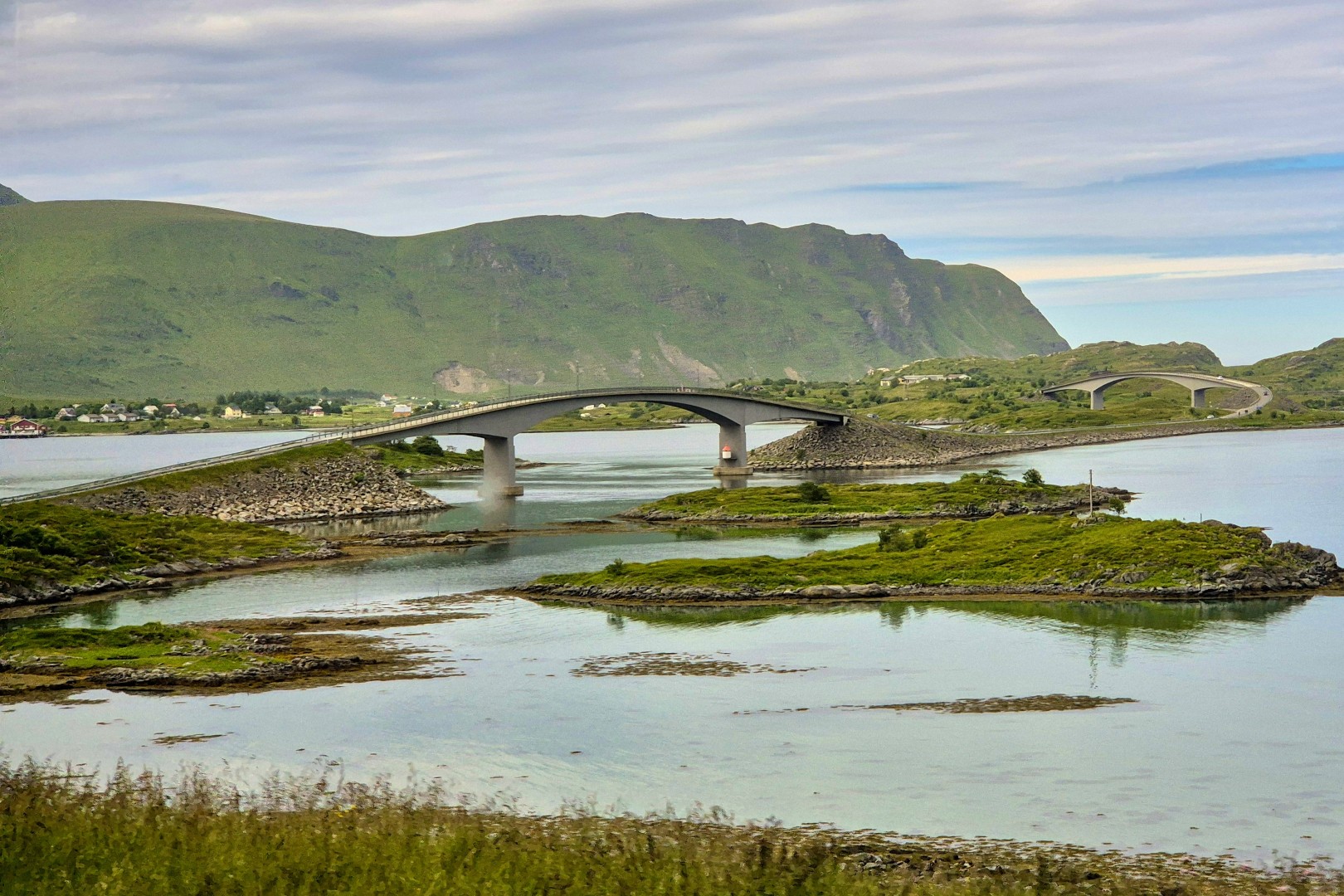
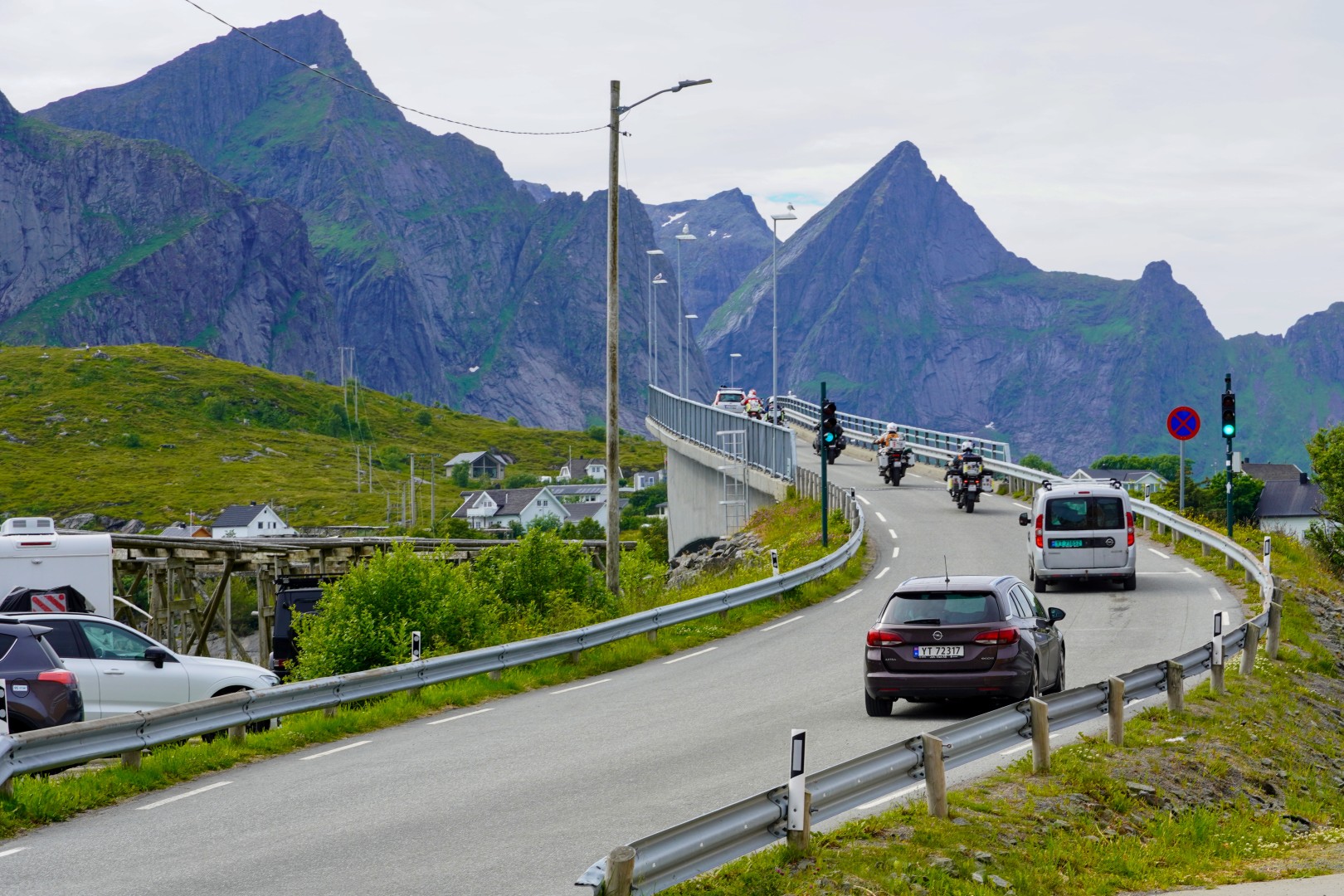
Even the approach across two elegant bridges was spectacular. The small fishing village is spread across several islands and is completely surrounded by the sea. Our coach took us first to the Henningsvær Stadion kryss bus stop.
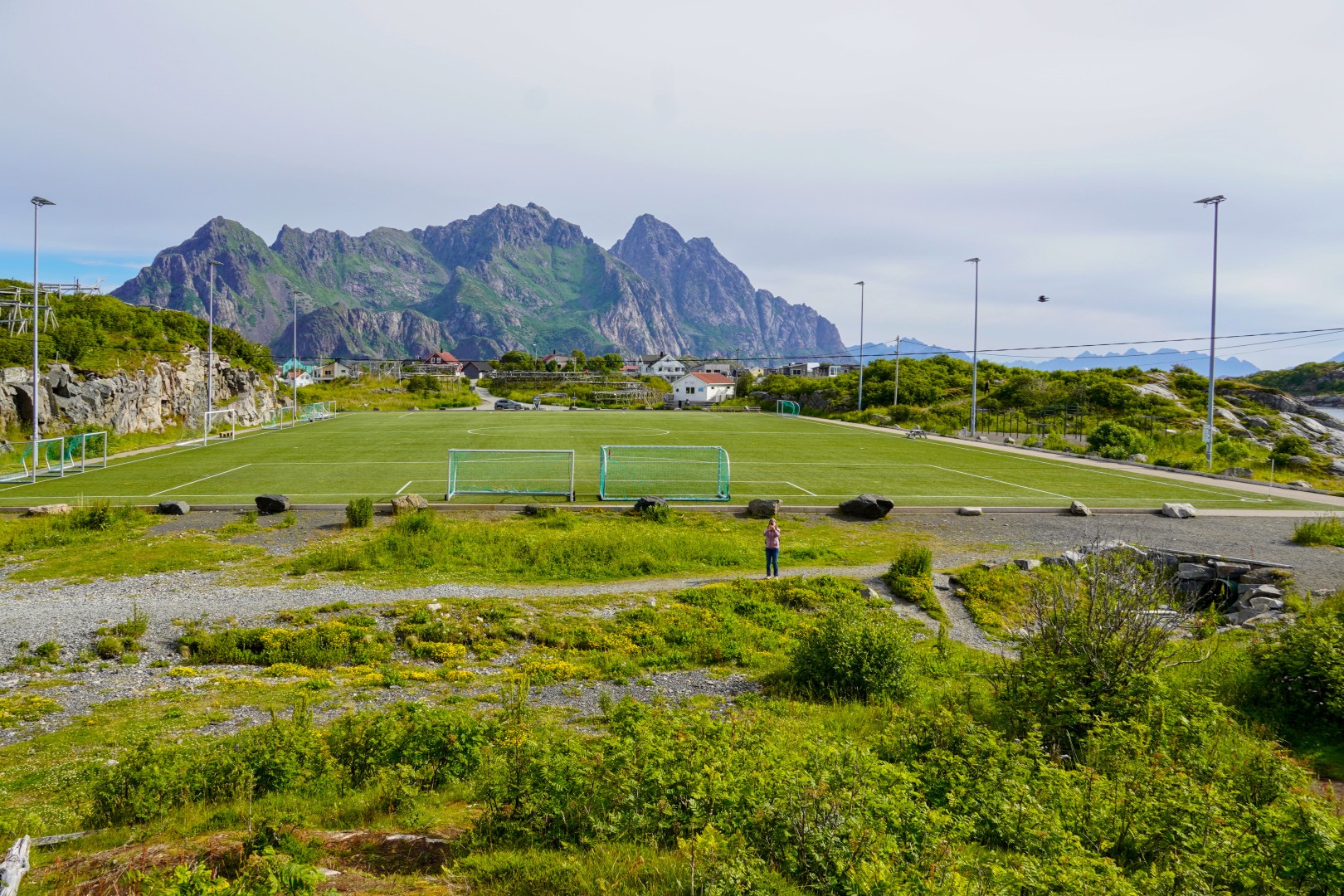
From there, we walked to what is probably Norway’s most famous football pitch.
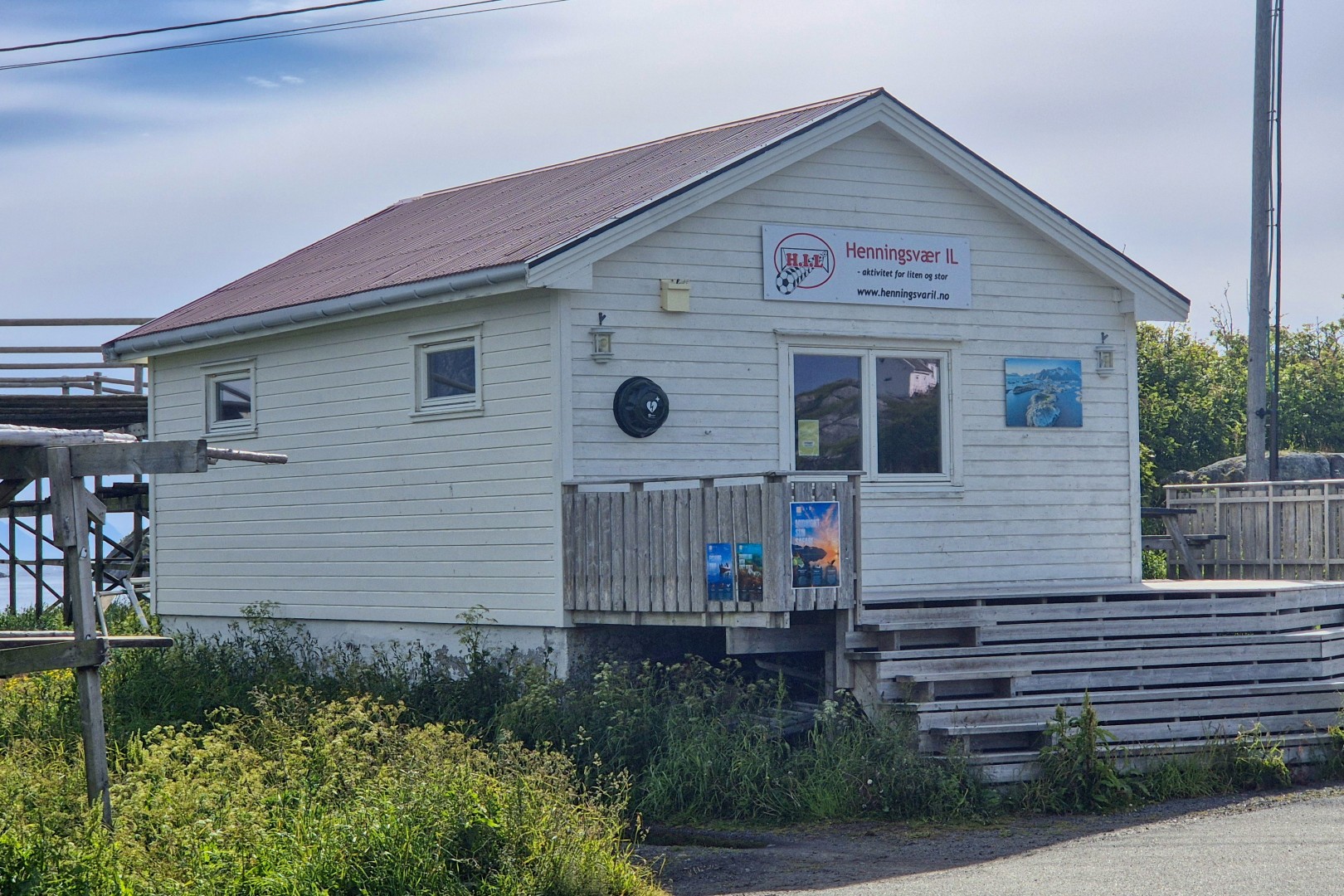
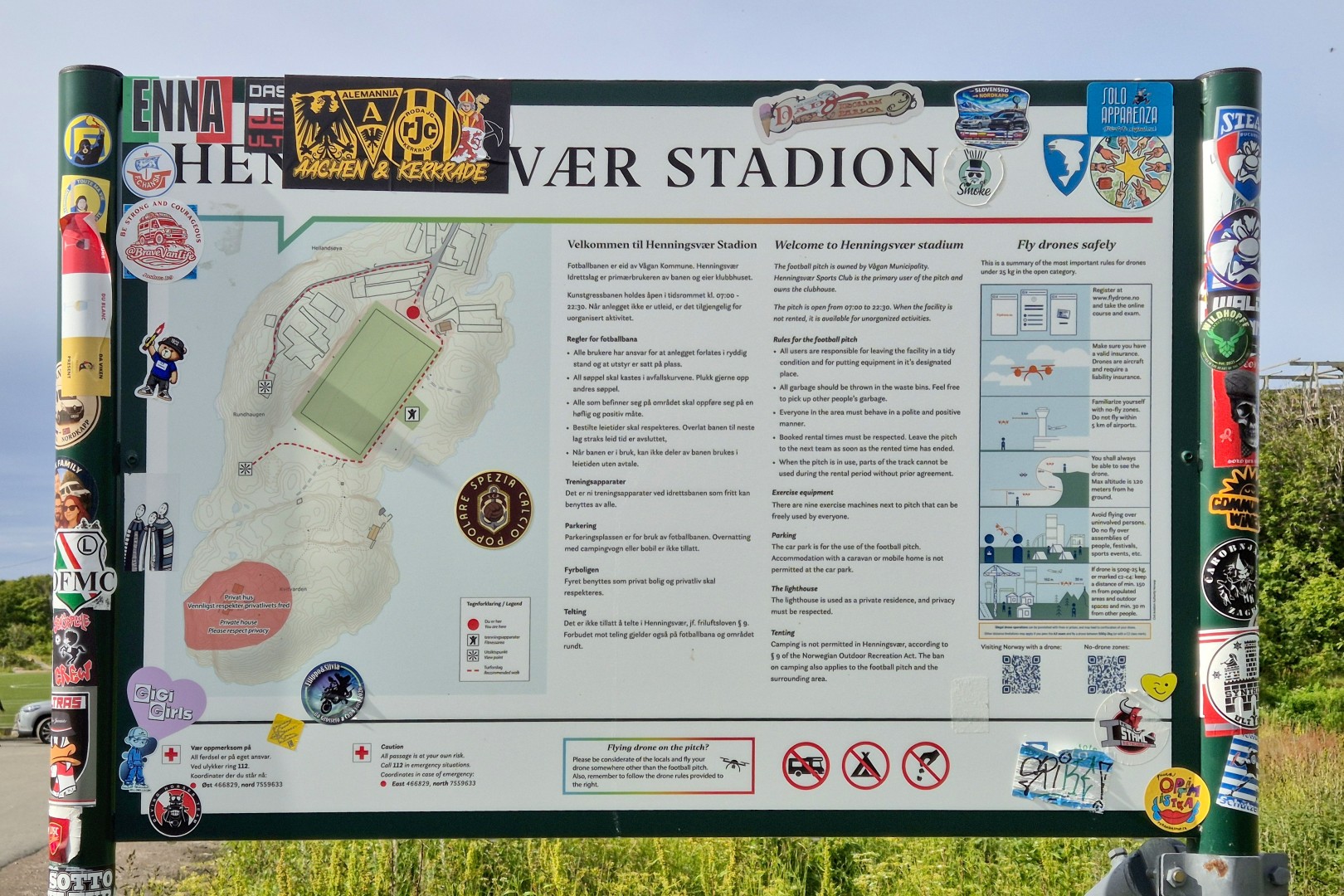
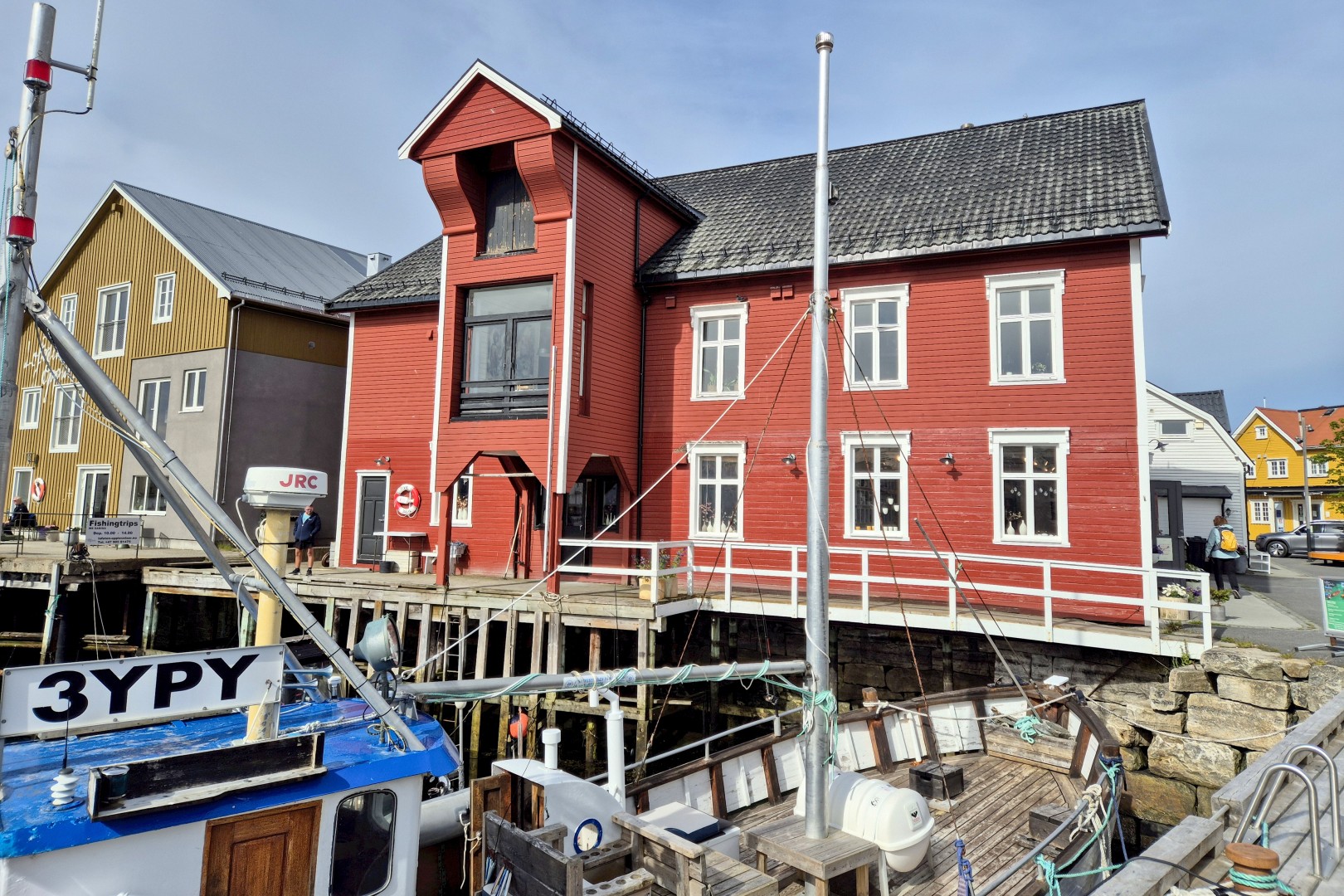
Henningsvær Stadion is situated on a small rocky plateau right by the sea. Surrounded by rugged mountains, water and the characteristic red fishermen’s cottages, it is one of the most photographed sports grounds in the world. Aerial views of this extraordinary stadium, in particular, have long since achieved cult status. From there, we strolled leisurely through the village.
Passing Gjestehavn, the small marina, our route took us along Dreyers gate right through the heart of Henningsvær. Lovingly restored wooden houses lined the streets everywhere. Small galleries, cafés, fish restaurants and traditional fishermen’s huts lent the town its very special charm.
We stopped for a longer photo session on the harbour promenade. The calm water reflected the surrounding mountains and offered a constant stream of new, dreamlike scenes. It was hard to leave this special place behind.
But the Lofoten Islands had much more to offer. Our journey continued along the E10 European route through a landscape that could scarcely have been more beautiful.
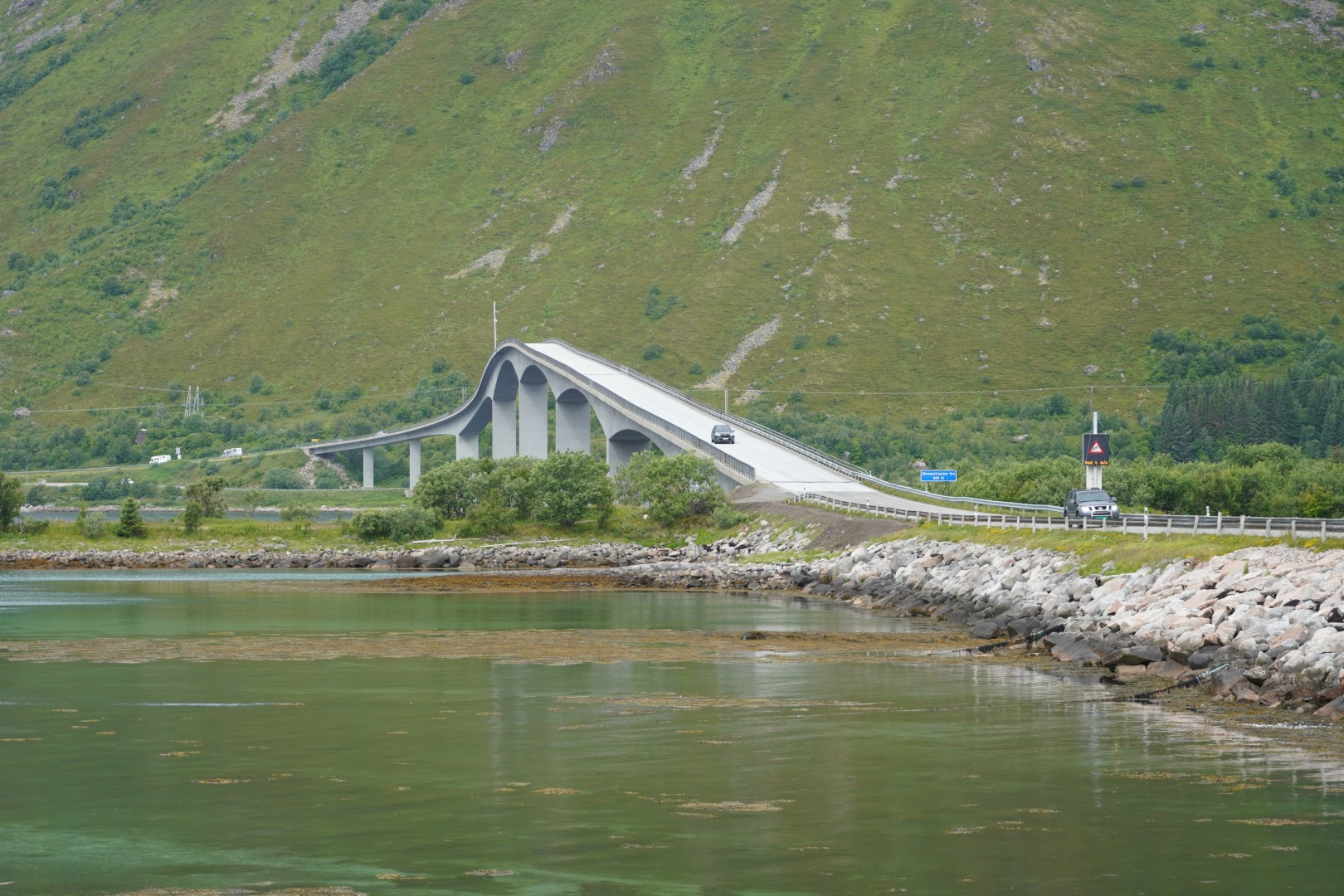
We made our next stop at Gimsøystraumen. From here, we were treated to a magnificent view of the Gimsøystraumen Bridge, which spans the narrow inlet with elegance. The turquoise water, the white sandy bays and the steep mountains formed an almost perfect backdrop.
A little later, we reached another viewpoint on Valbergsveien near Leknes. Once again, an impressive view opened up over fjords, meadows, small villages and the mighty peaks of the Lofoten Islands. Each photo stop seemed to surpass the previous one.
Shortly afterwards, we reached the viewpoint at Buksnesfjord. Here, the mountains, sea and sky merged into a magnificent landscape. It was hard to know which direction to photograph first. After a brief stop in Leknes, the largest town in the central Lofoten, our journey continued along the E10.
Crossing several bridges and finally passing through the Nappstraum Tunnel, we reached the Nappskaret viewpoint. What lay before us here is almost impossible to put into words.
Before us lay rugged mountain peaks, deeply carved fjords, white sandy beaches and the intense blue waters of the North Atlantic. It was one of those moments when you simply pause and let the landscape wash over you.
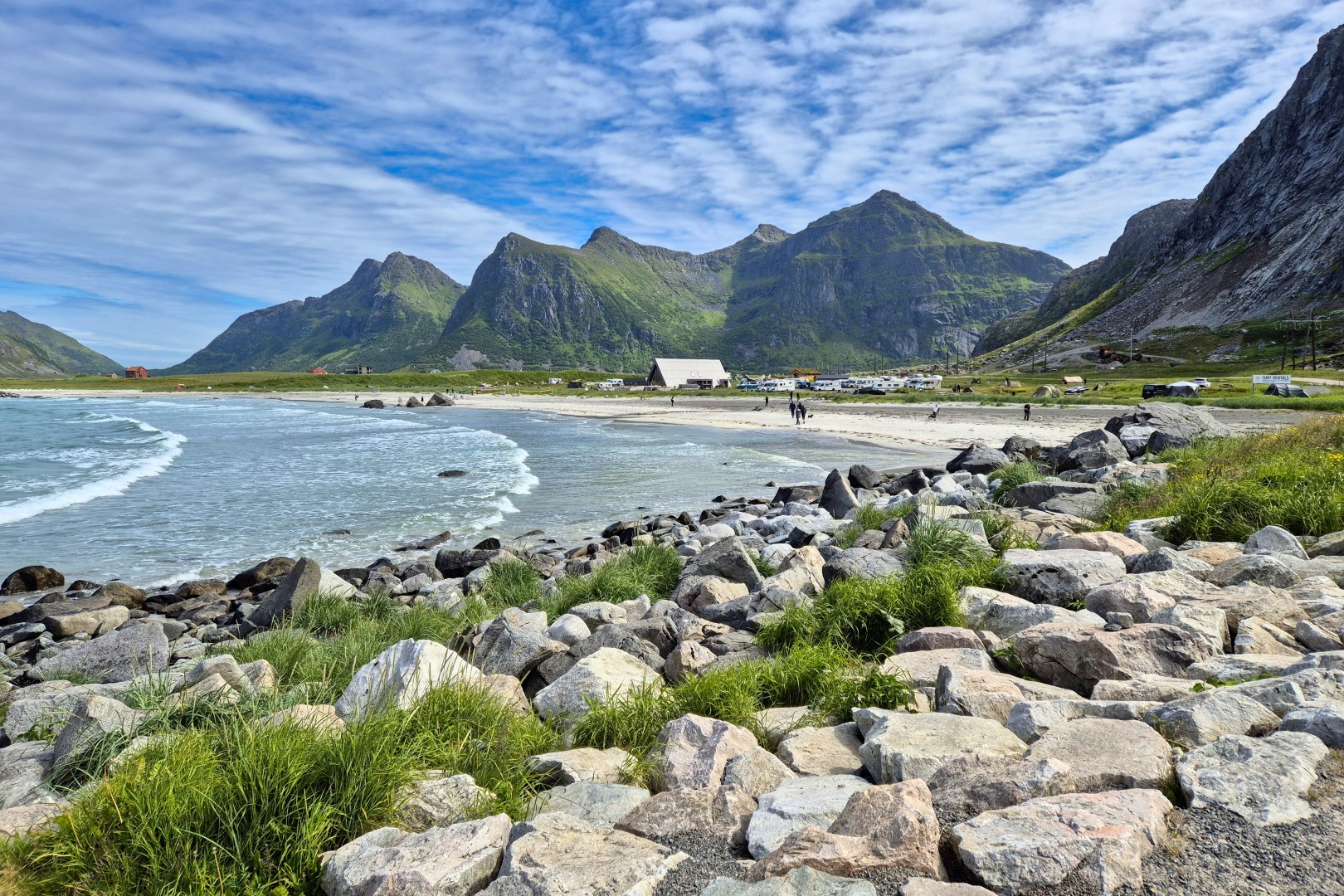
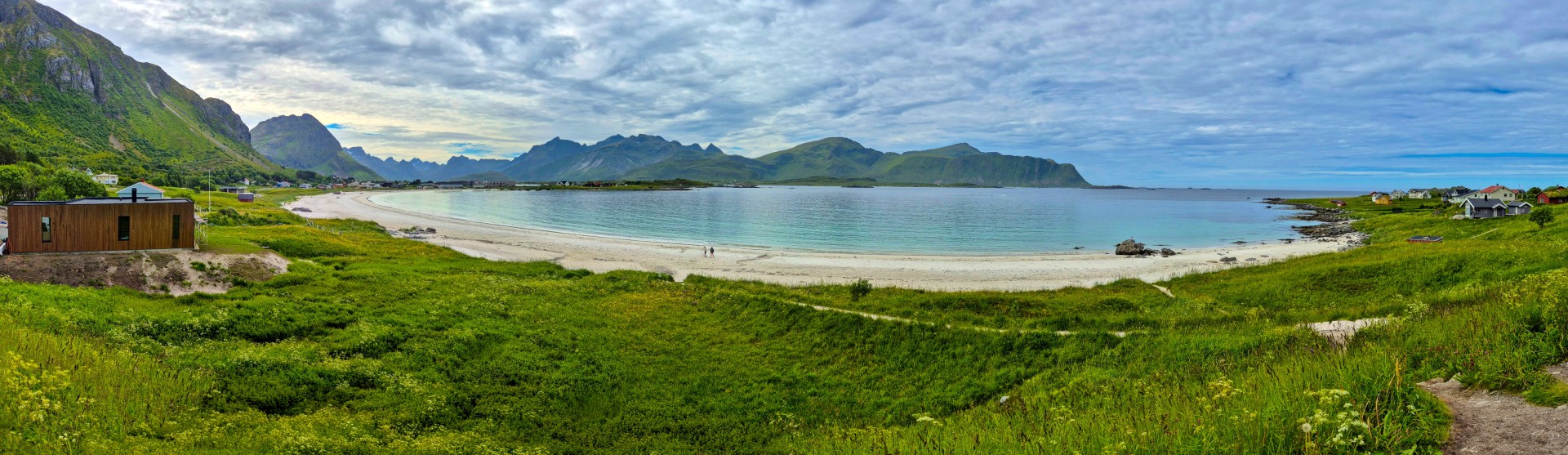
Another highlight awaited us shortly afterwards. Skagsanden beach is one of the most famous beaches in the Lofoten Islands – and quite rightly so. Fine, white sand, turquoise water and the imposing mountains in the background actually reminded us more of the Caribbean than of northern Norway.
Here, the Hauser team had once again prepared a wonderful surprise. Wansa and the team set up tables and, in no time at all, transformed the car park into an open-air Norwegian picnic restaurant. Fresh bread, cheese, sausage, fruit and many other delicacies were already waiting for us. Against this dreamlike backdrop, the food tasted twice as good.
Afterwards, there was plenty of time for a stroll along the beach. Some even dared to dip their feet into the ice-cold waters of the North Atlantic.
Our journey was actually supposed to end in Stamsund. The ferry crossing to Bodø had originally been planned from there. But sometimes travel writes its own most beautiful stories. The ferry was cancelled at short notice. At first, this news caused a bit of surprise. In hindsight, however, the decision turned out to be a real stroke of luck.
Our tour guide quickly organised a new route.
This meant we were also able to experience the southernmost and arguably most beautiful part of the Lofoten Islands. The journey now took us further towards Reine along the E10. On the way, we passed countless bridges, fjords and small bays.
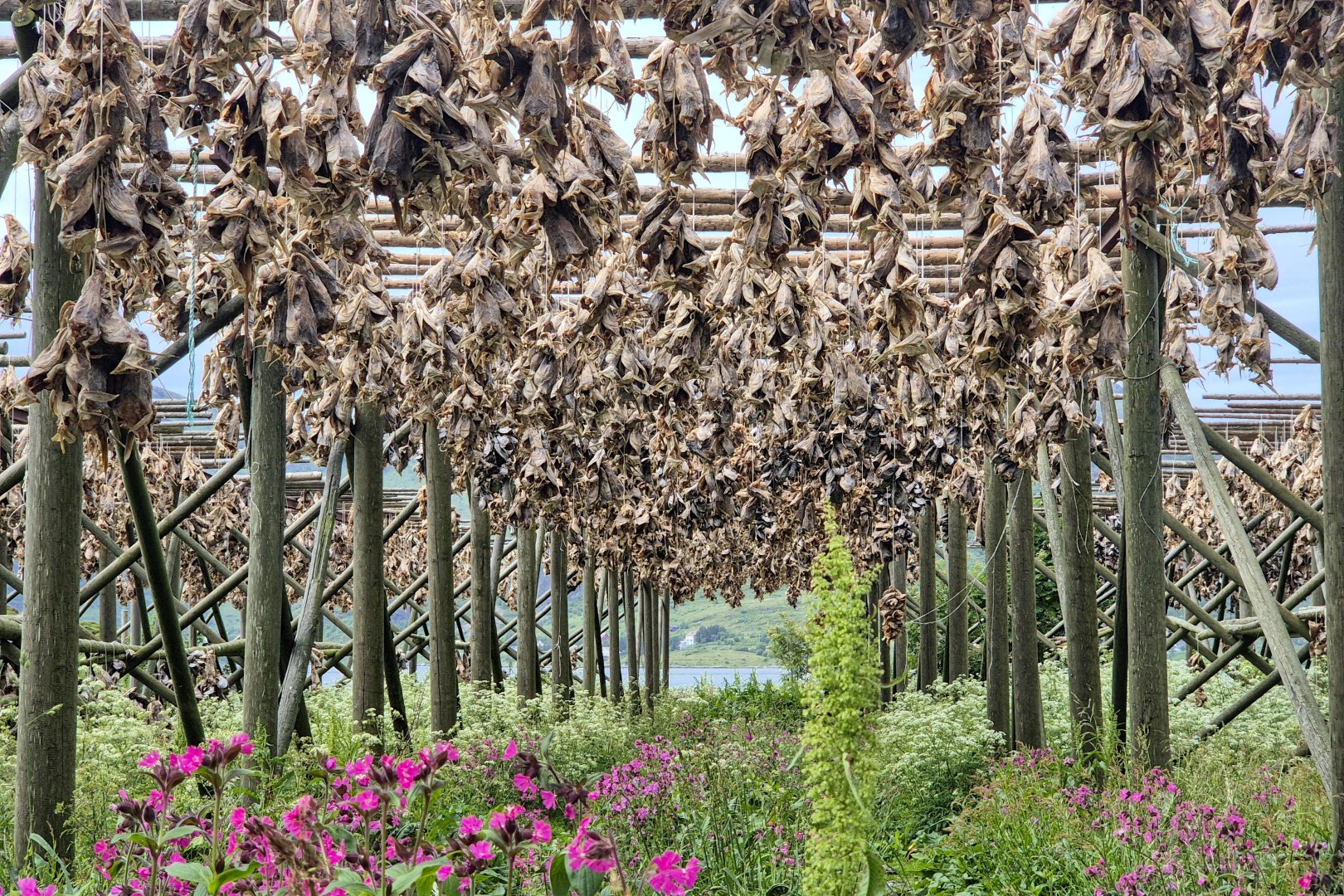
We made a brief stop in Finnbyen. Opposite the island of Geitøya, countless dried cod hung on traditional wooden racks to dry – one of the Lofoten Islands’ most famous landmarks. For centuries, cod has been naturally preserved here by the wind and salty sea air.
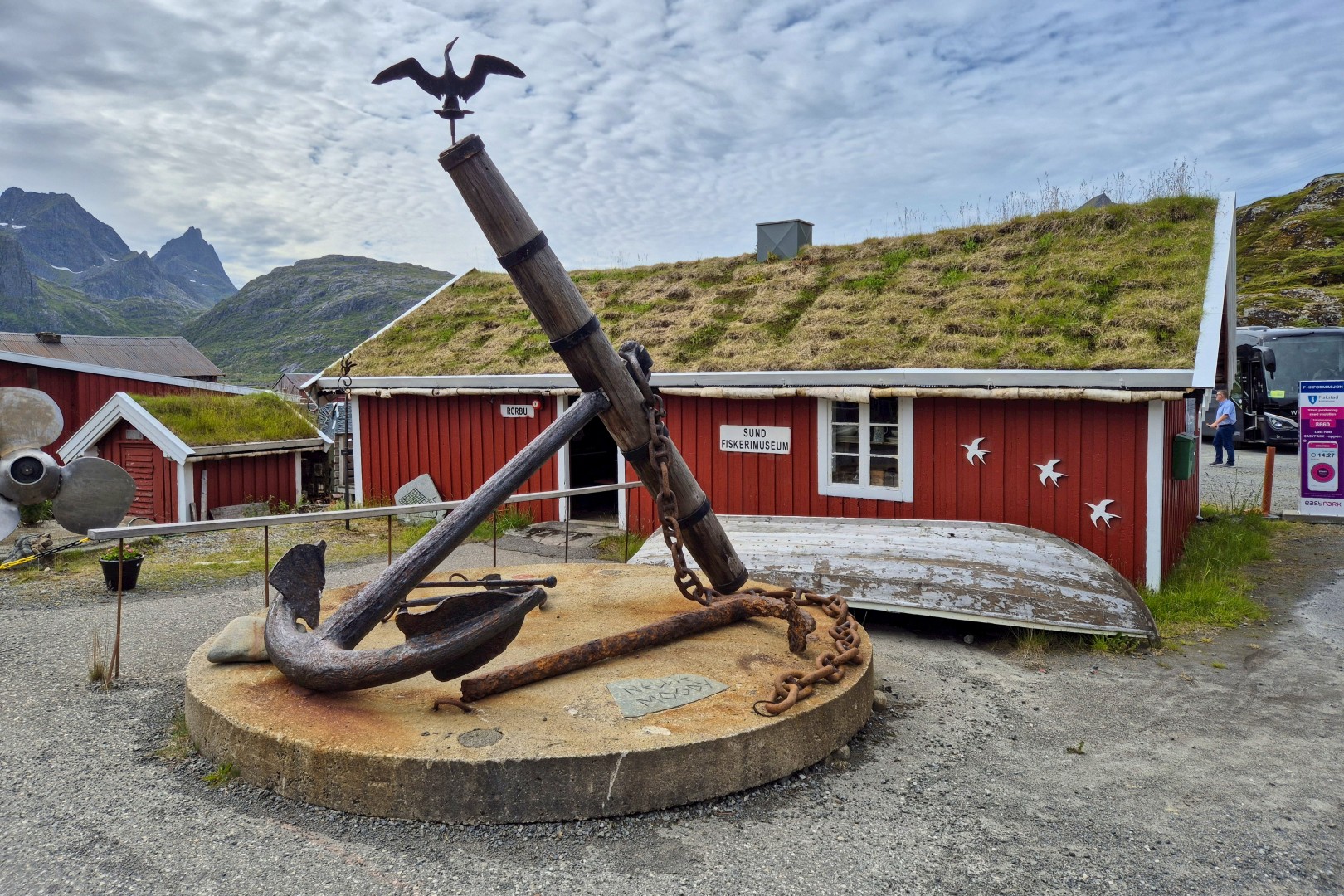
We made another brief stop in the small village of Sund. Unfortunately, the cosy café had already closed, so we limited our visit to a short walk along the coast.
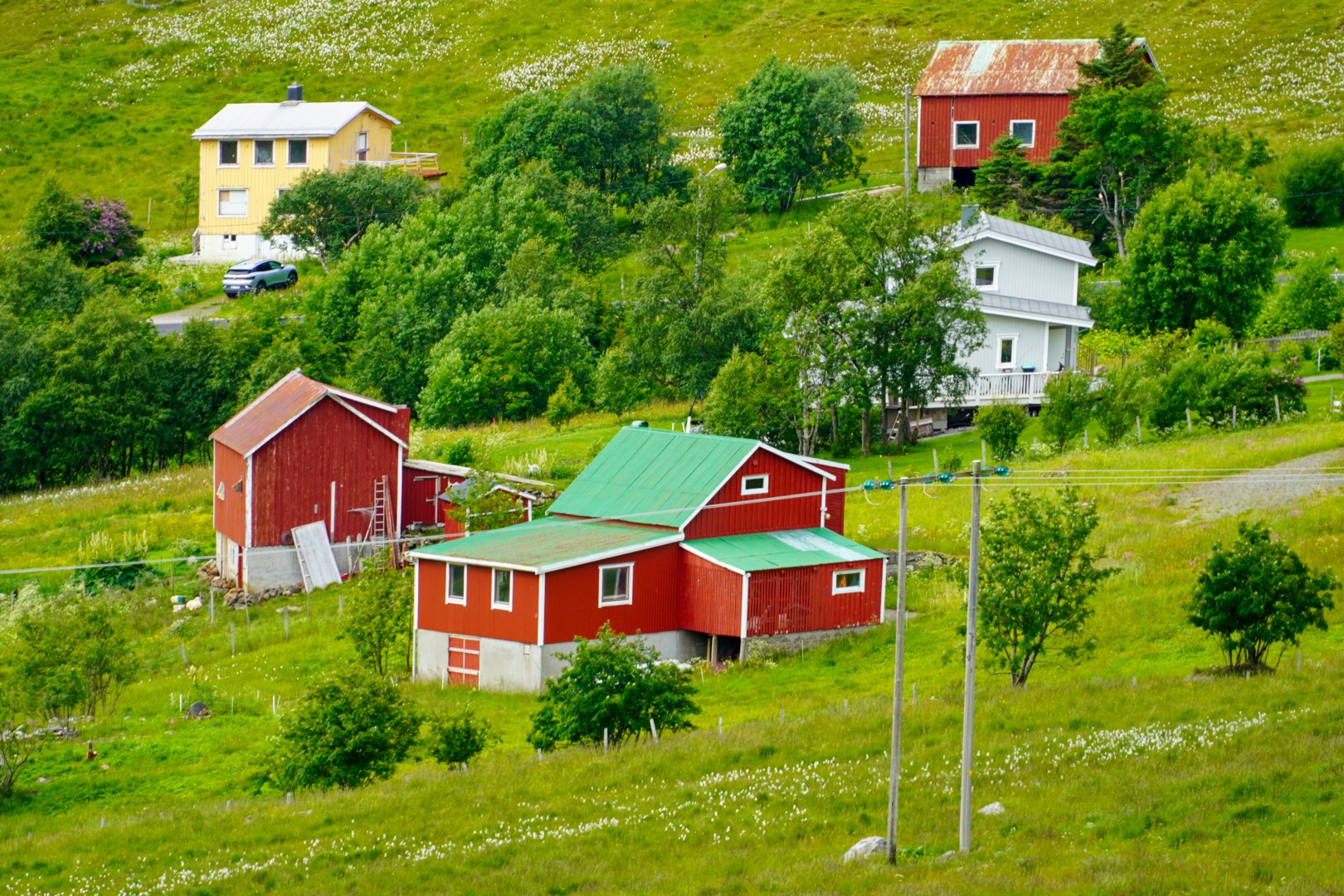
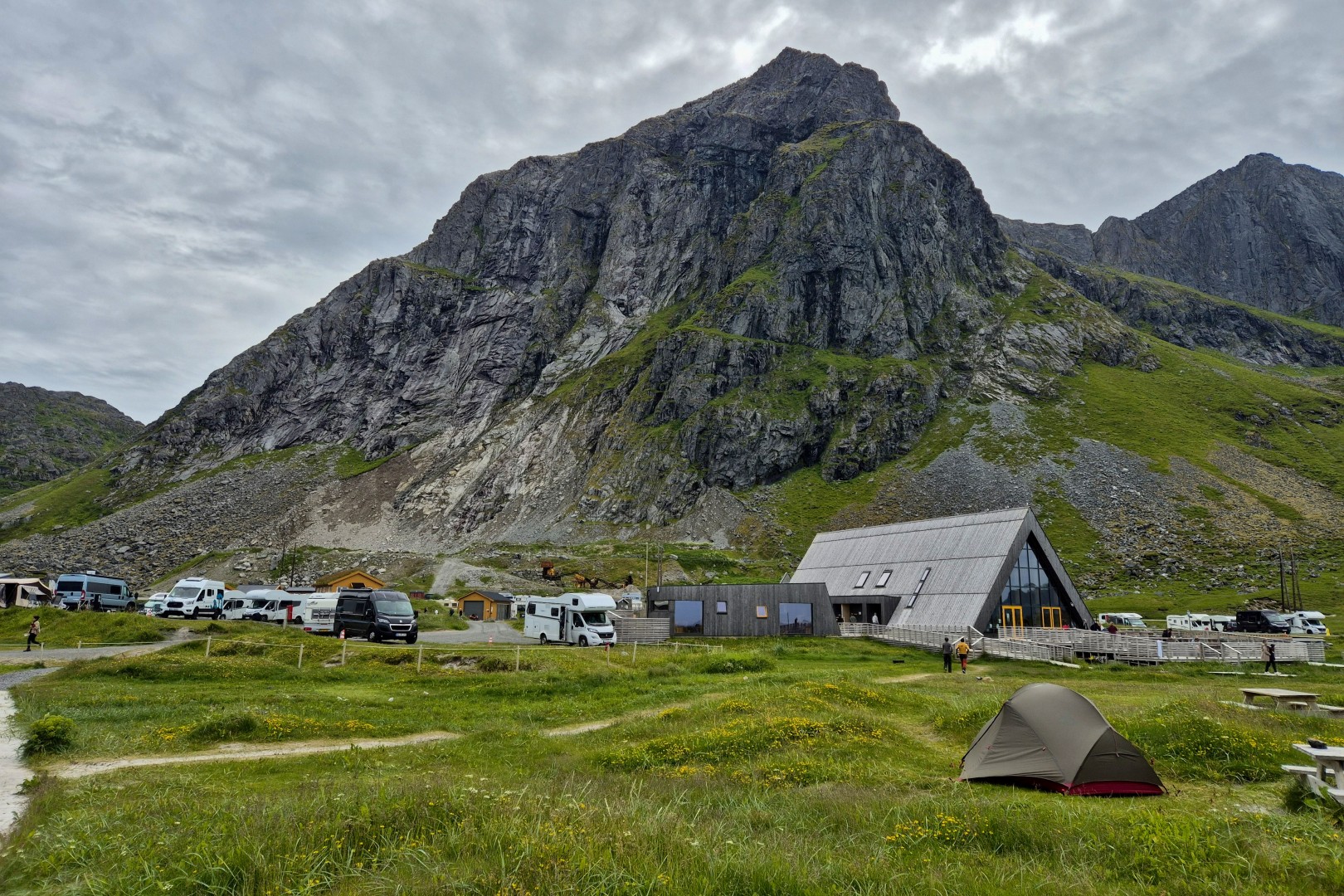
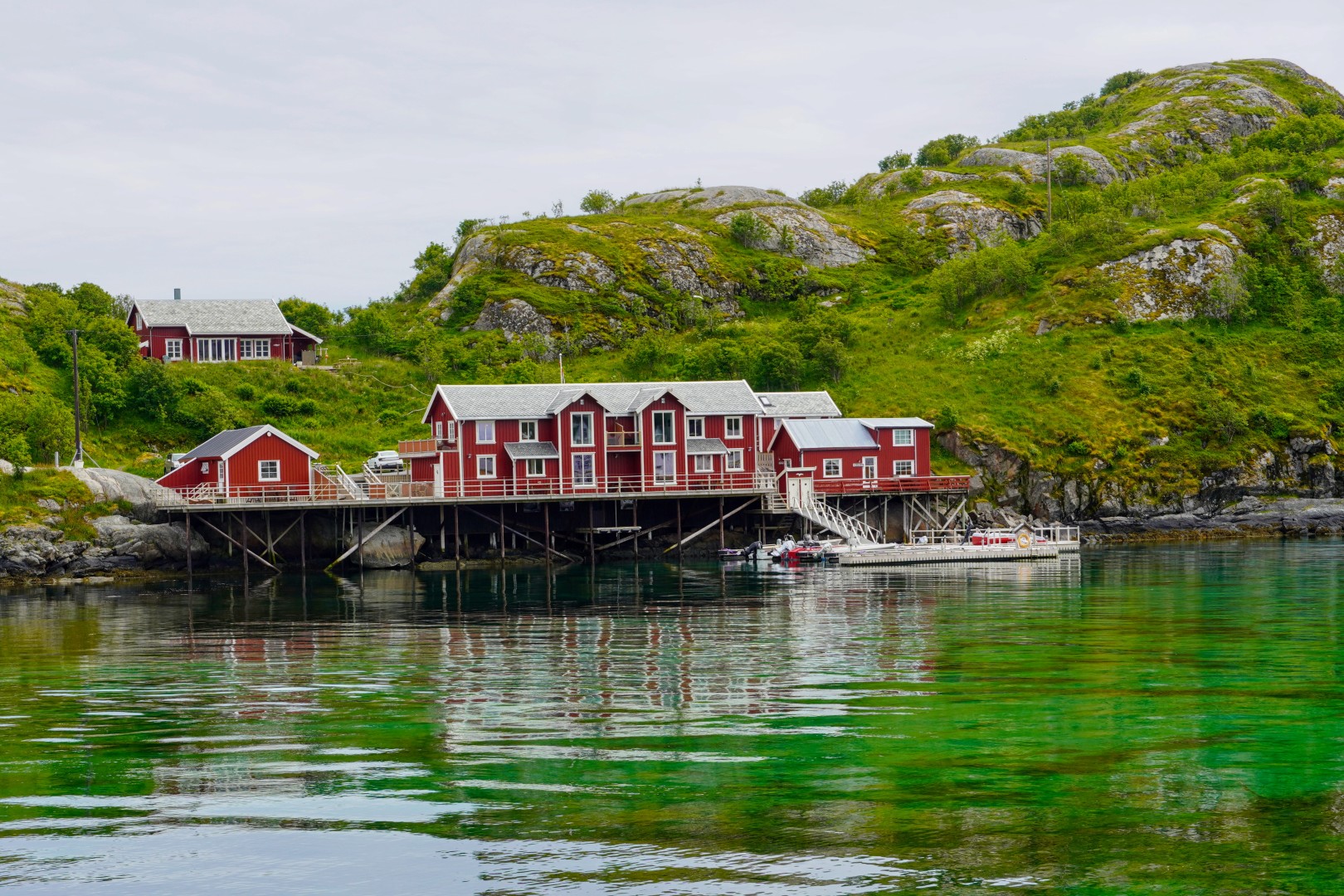
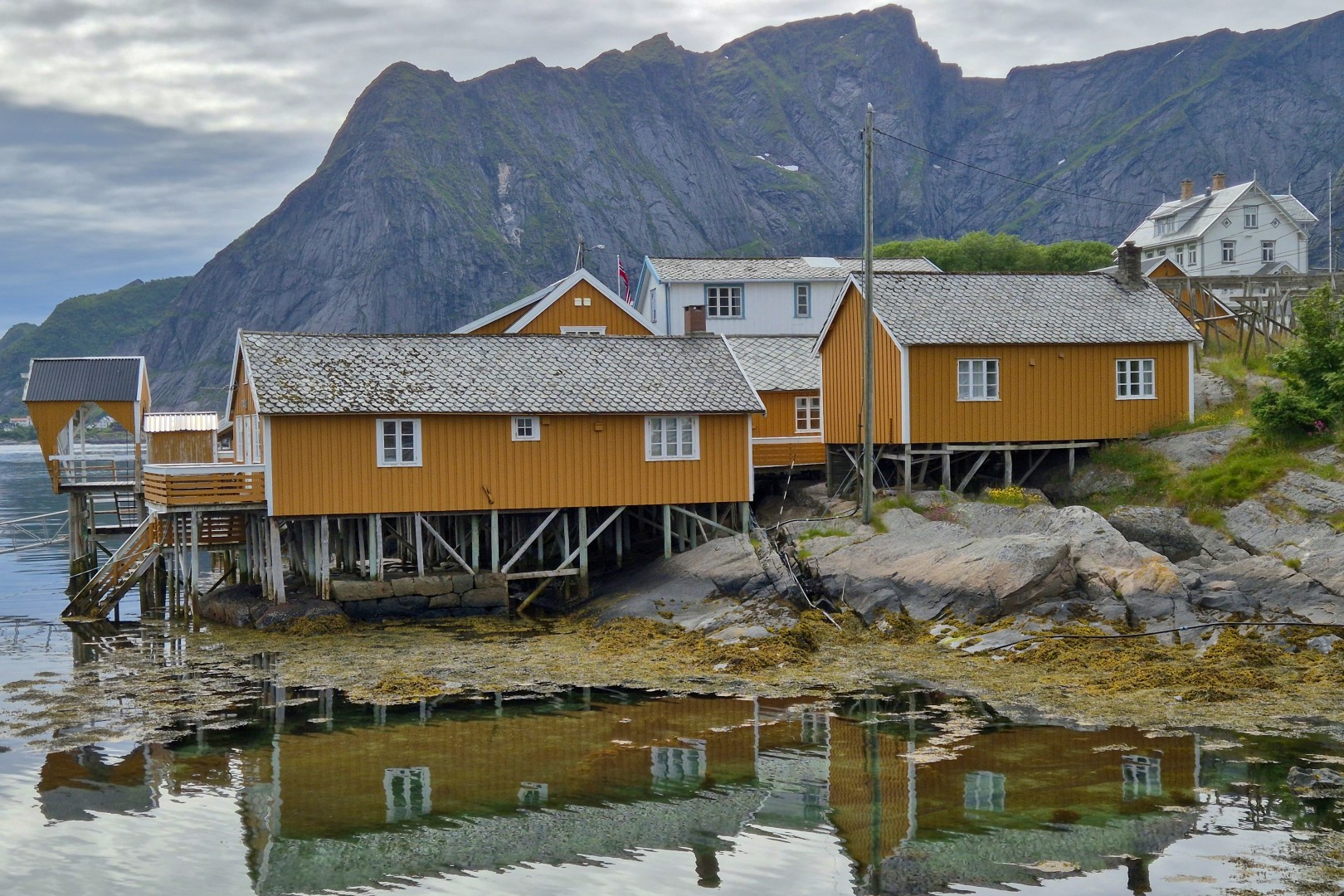
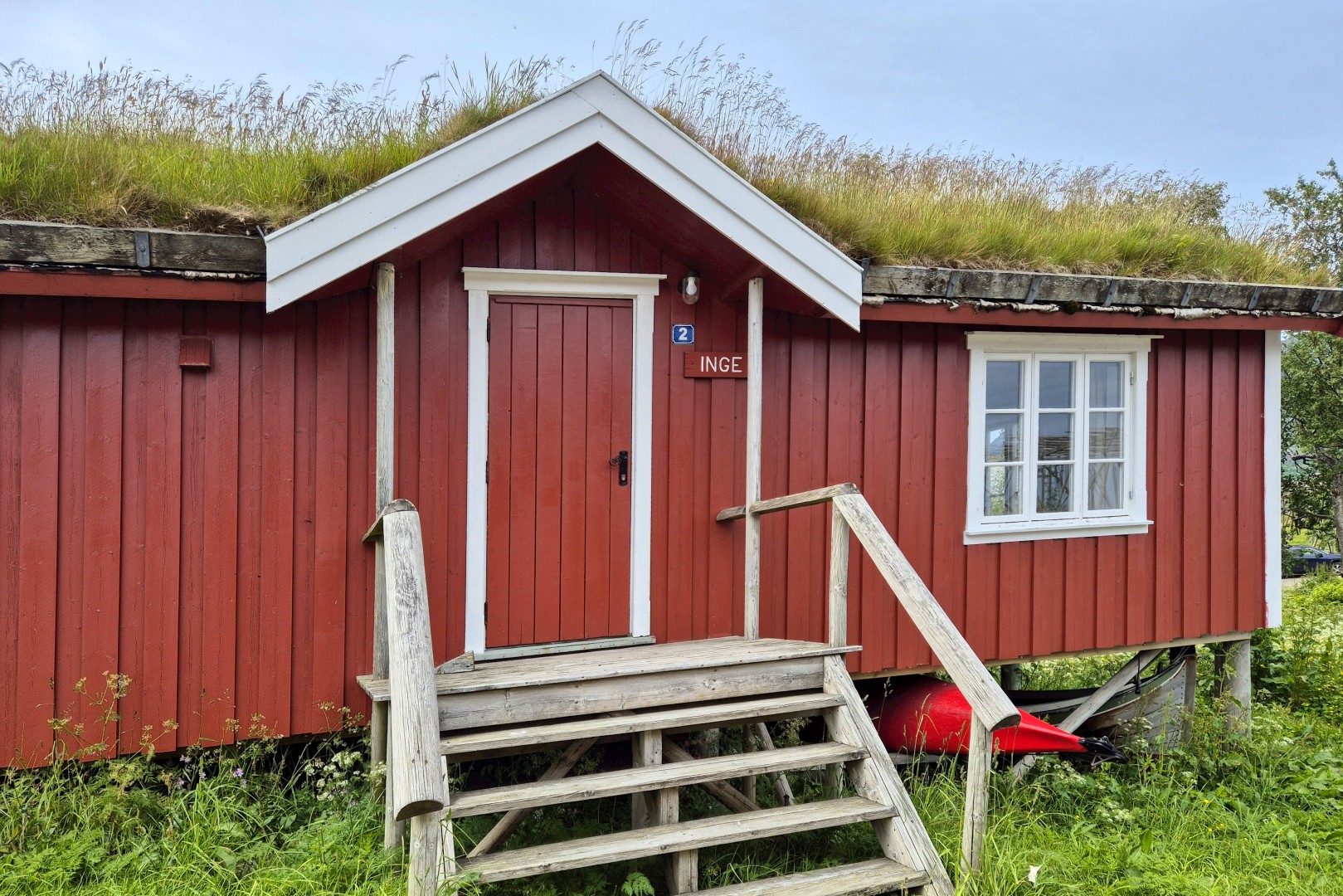
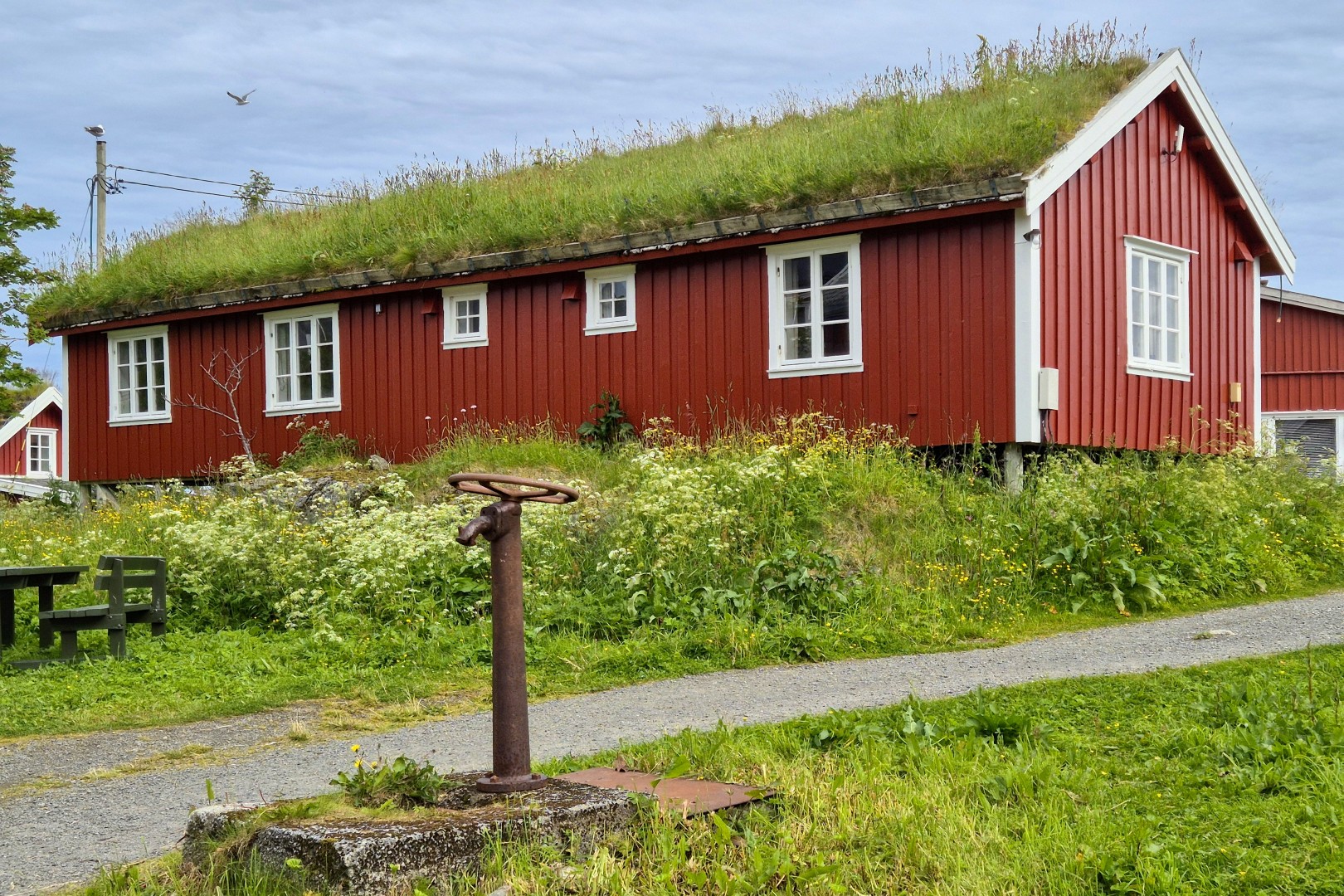
Shortly afterwards, we reached Sakrisøy. Crossing narrow bridges, we made our way onto the small island with its yellow fishermen’s cottages and the typical rorbu huts. Its location, nestled between steep mountains and crystal-clear water, made this place a real gem too.
And then, finally, came the highlight of the day.
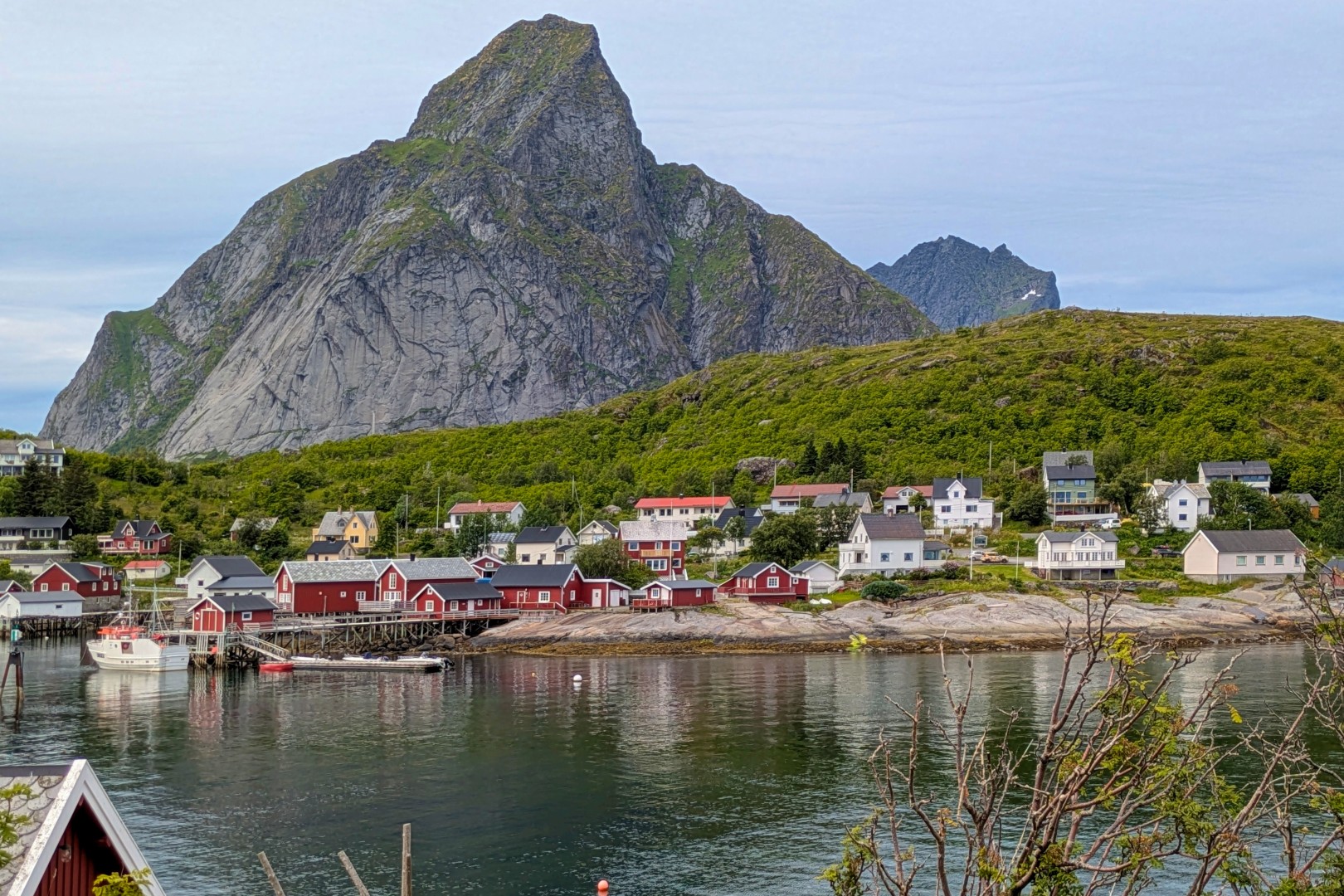
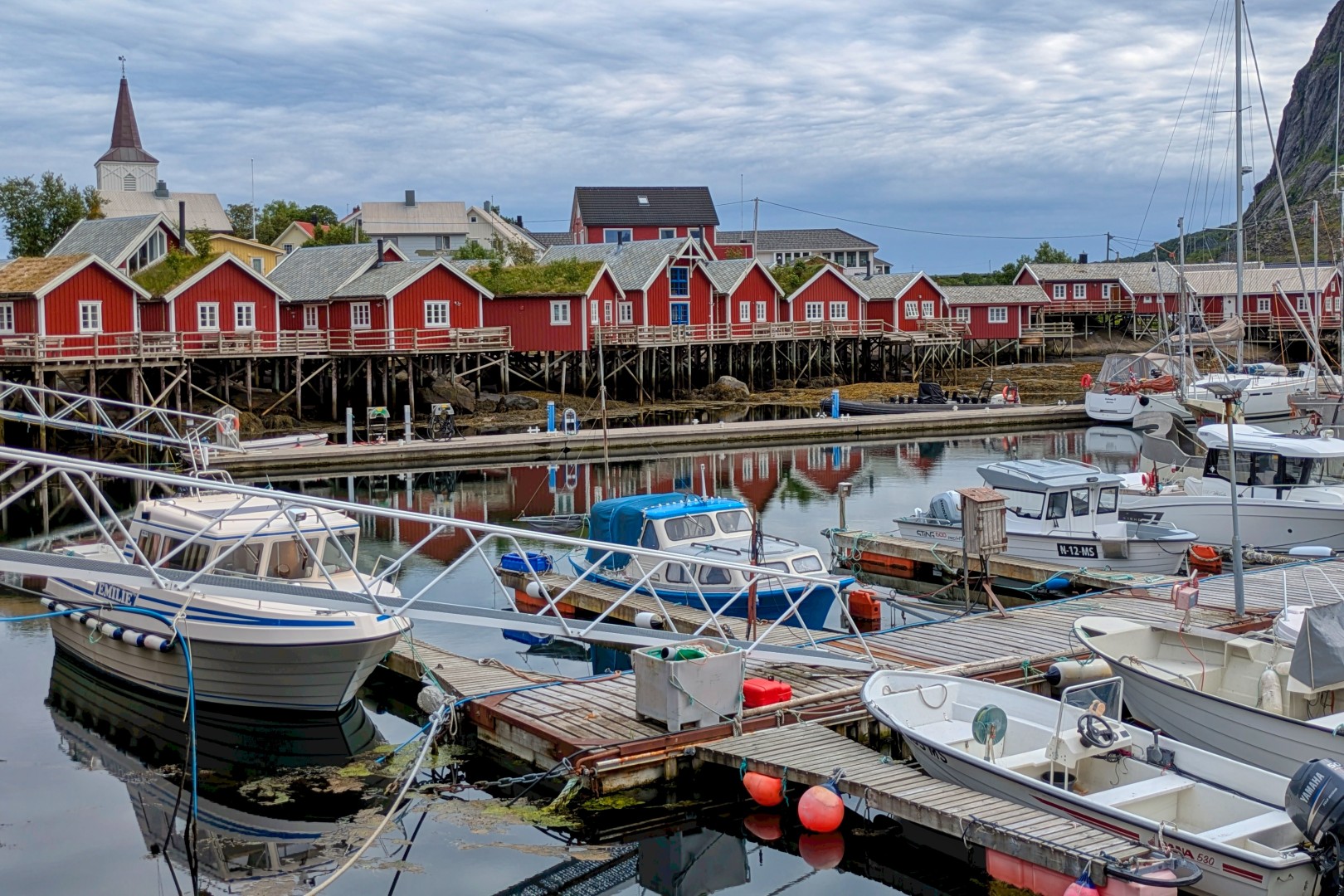
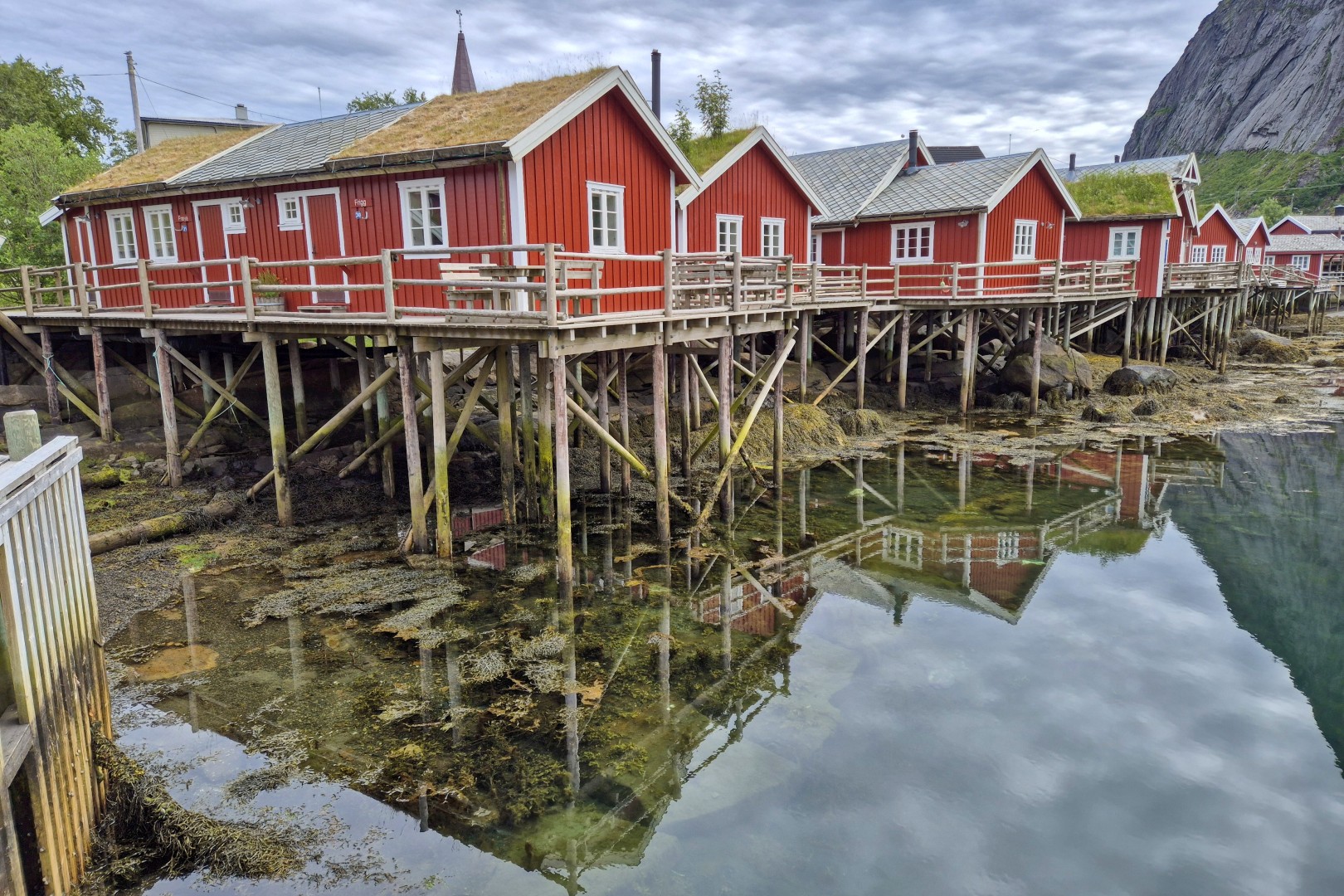
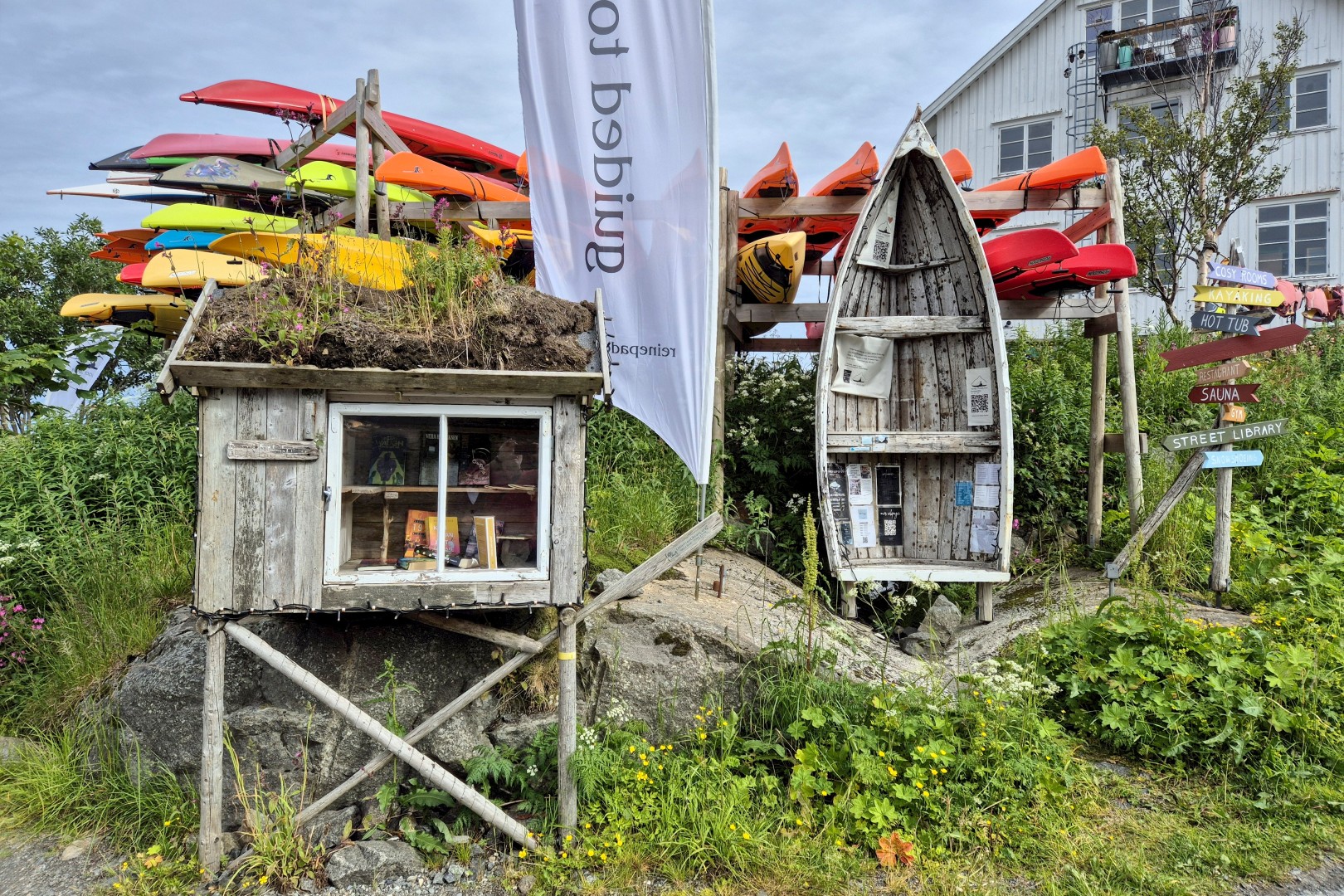
Reine. Even the drive there is one of the most beautiful scenic routes in Europe.
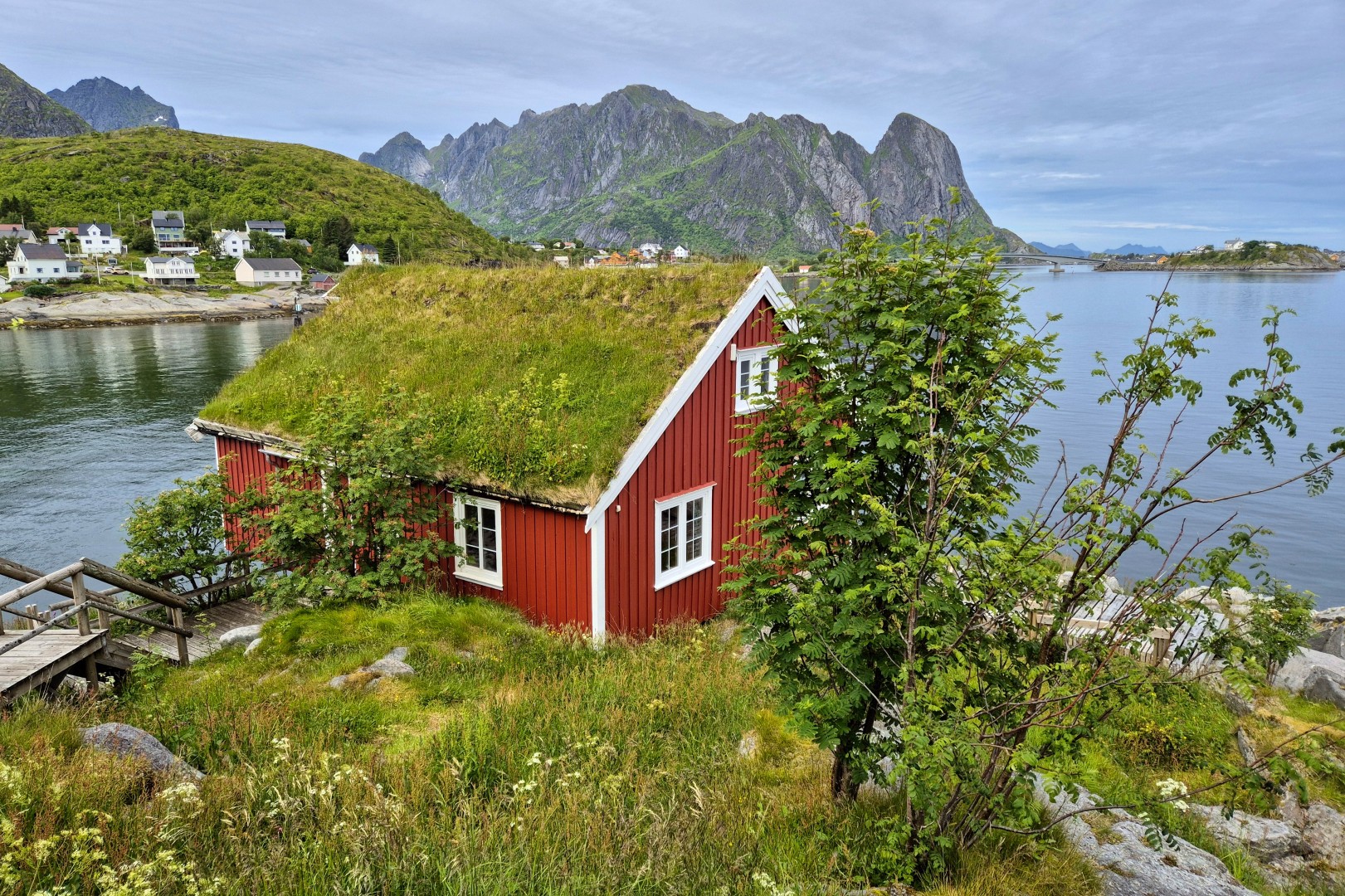
The red fishermen’s cottages nestle right by the fjord, with the striking mountains rising almost vertically behind them. Anyone who has ever seen pictures of the Lofoten Islands is probably familiar with this scene. In person, it was even more impressive. Reine is undoubtedly one of Norway’s most beautiful villages. No wonder visitors from all over the world flock here.
We made the most of our time with a long walk, soaked up the atmosphere and took countless souvenir photos.
All too soon, it was time to say goodbye.
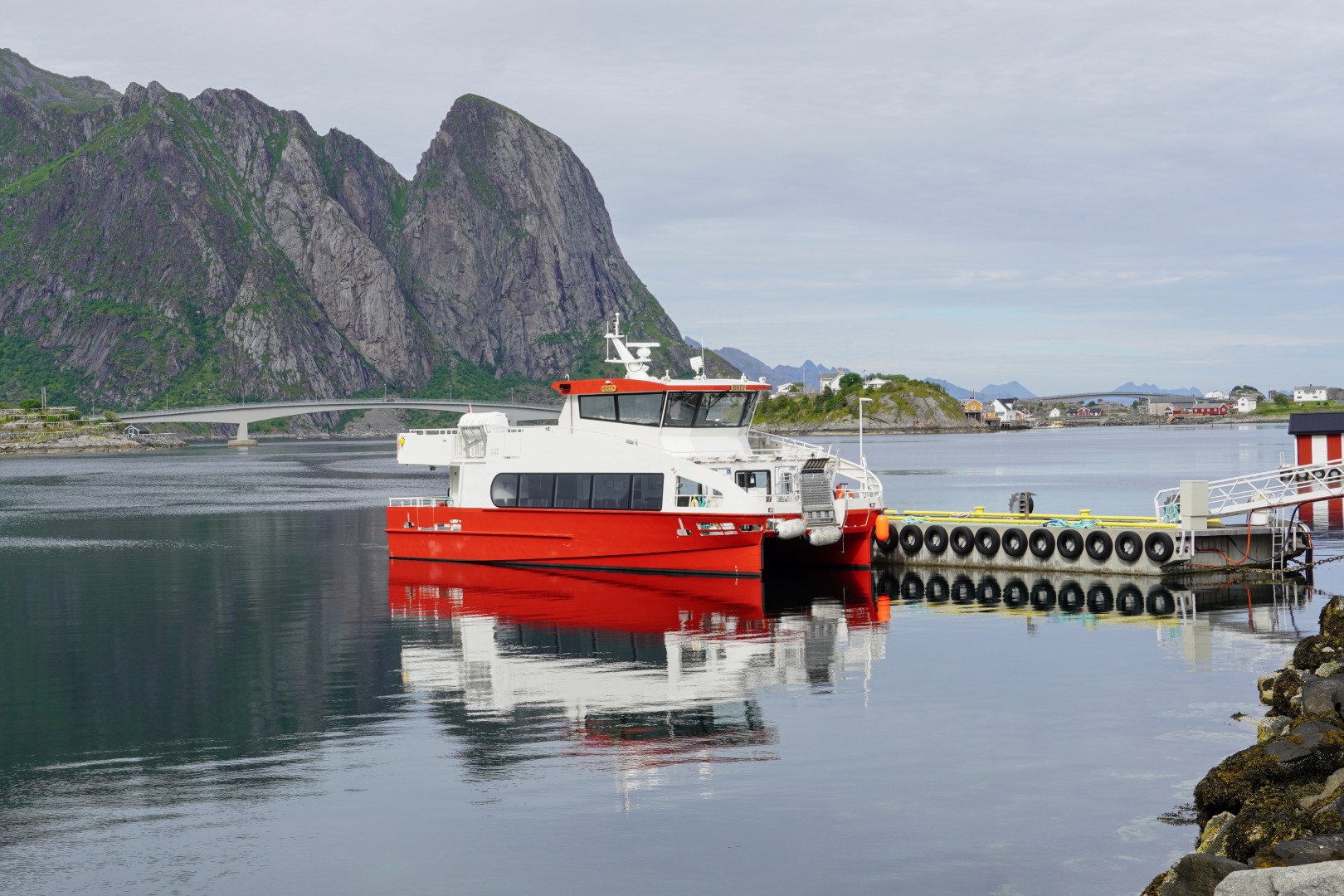
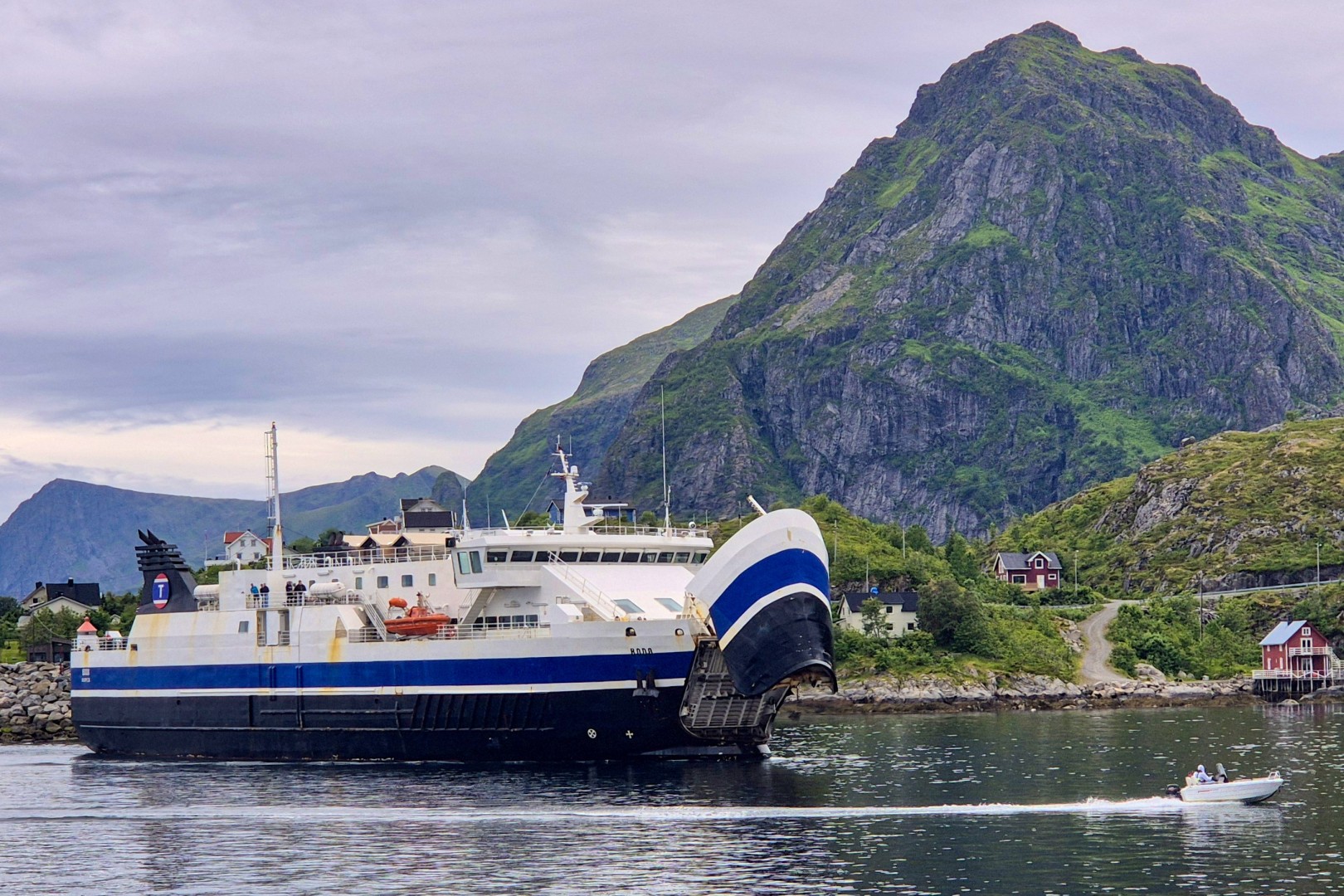
In Moskenes, we finally boarded the ferry to Bodø. The ship set sail on time and took us back to the Norwegian mainland in around two and a half hours.
During the crossing, many of us watched the spectacular mountain silhouettes of the Lofoten Islands glide past once more.
From Bodø, it was just a short bus journey to Fauske, where we arrived at our Scandic Fauske Hotel late in the evening. Thanks to the hotel’s excellent service, a hot dinner was still waiting for our tour group despite our late arrival. Exhausted but full of new experiences, we brought this extraordinary day to a close.
The Lofoten Islands had exceeded all expectations. They are far more than just a beautiful holiday destination – they are a work of natural art that everyone should see at least once in their lifetime.
A day full of unforgettable moments. Incredible!
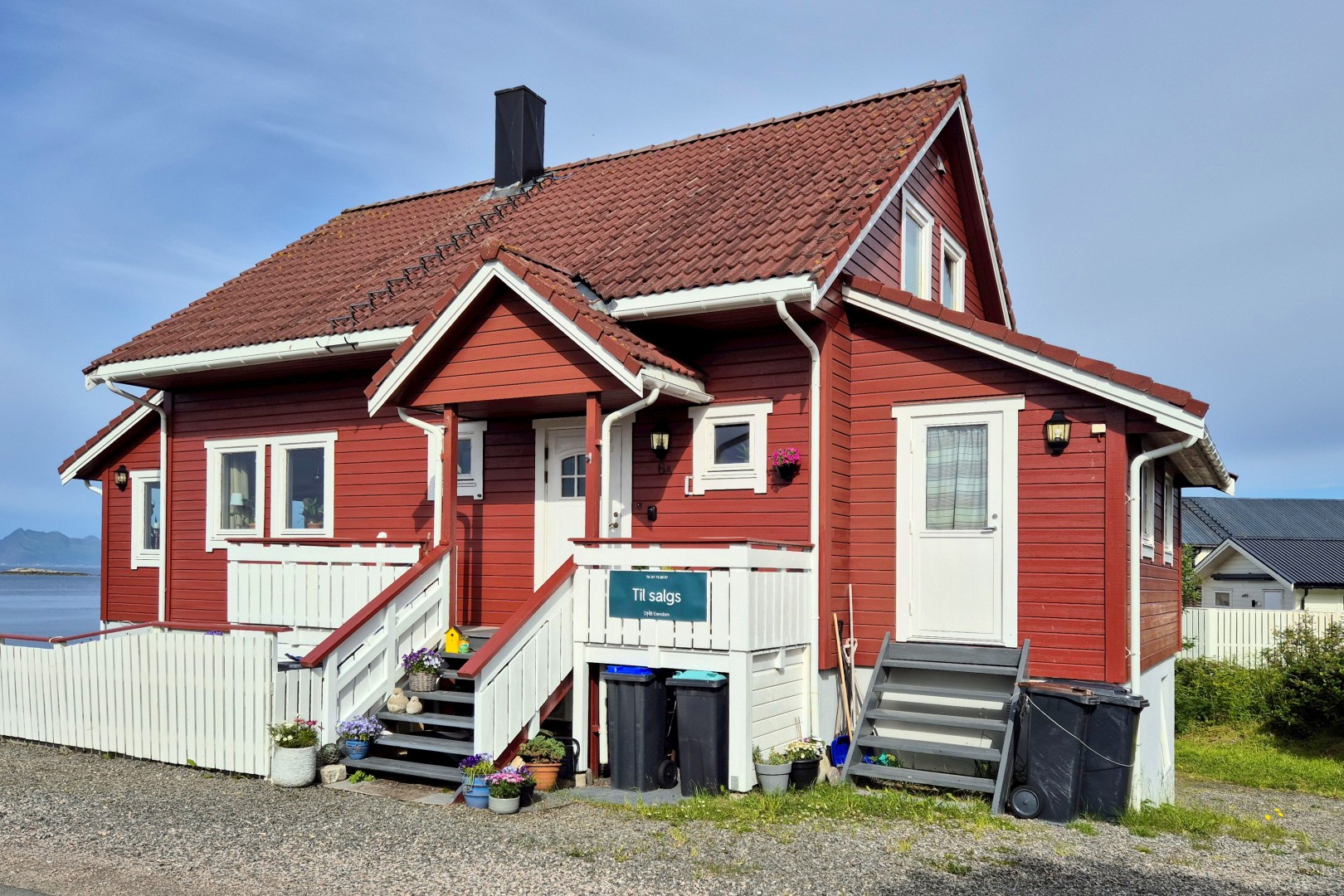
Farewell to the far north and back to Sweden
After the overwhelming experiences of the past few days, today it was time to say goodbye to Northern Norway. Our destination for the day was Umeå in Sweden. At around 620 kilometres, we were once again facing a long bus journey. However, our driver deliberately opted for a detour that was about 100 kilometres longer – not because it was the quickest route, but because the scenery along this route is far more picturesque. A decision that would prove to be absolutely spot on as the day went on.
Shortly after setting off, we were back on the E6 European route, Norway’s most important north-south link. The road wound its way through an impressive mountainous landscape with deep, steep-sided valleys, clear rivers and dense birch forests.
Our first stop was at the Saltdal Viewpoint.
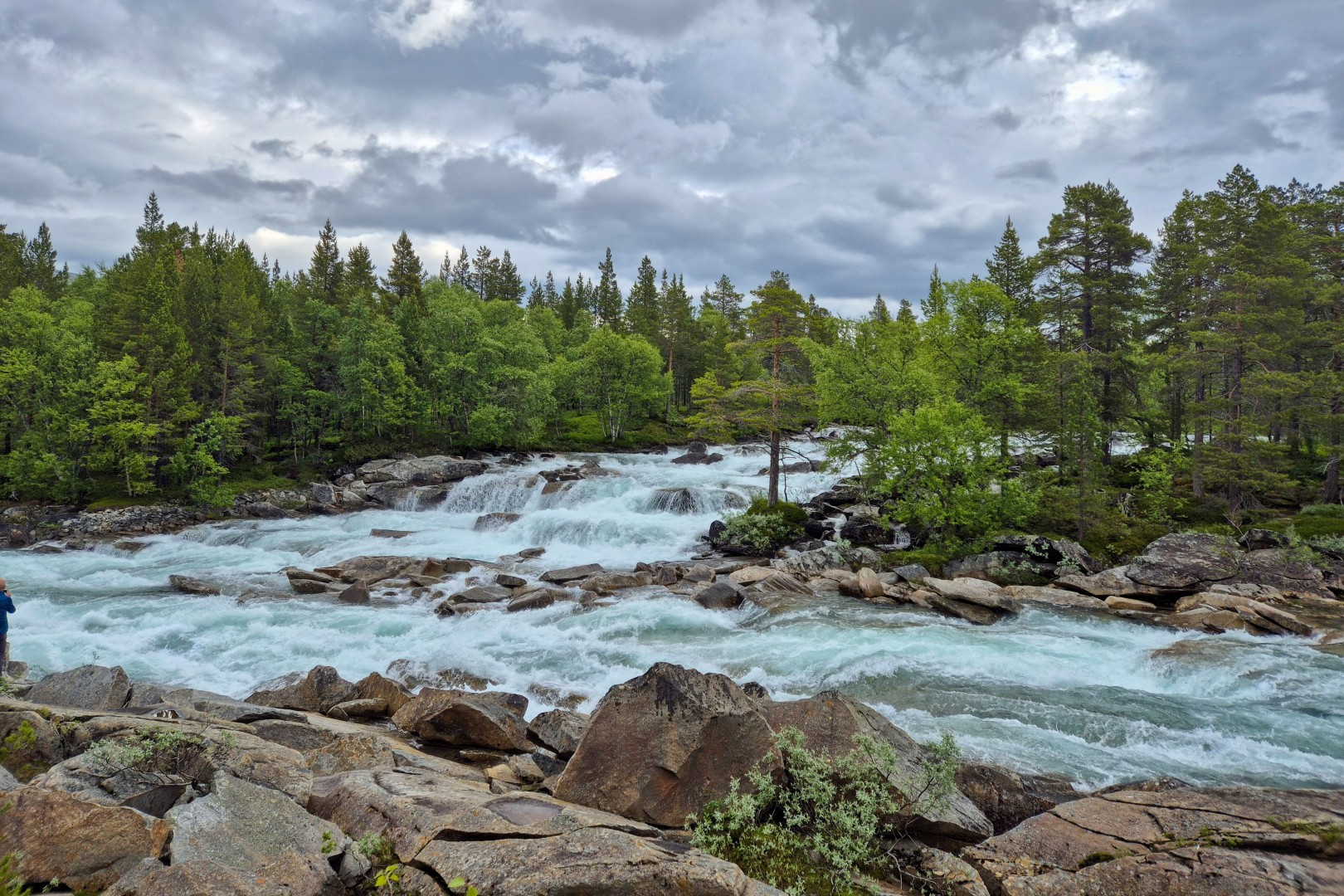
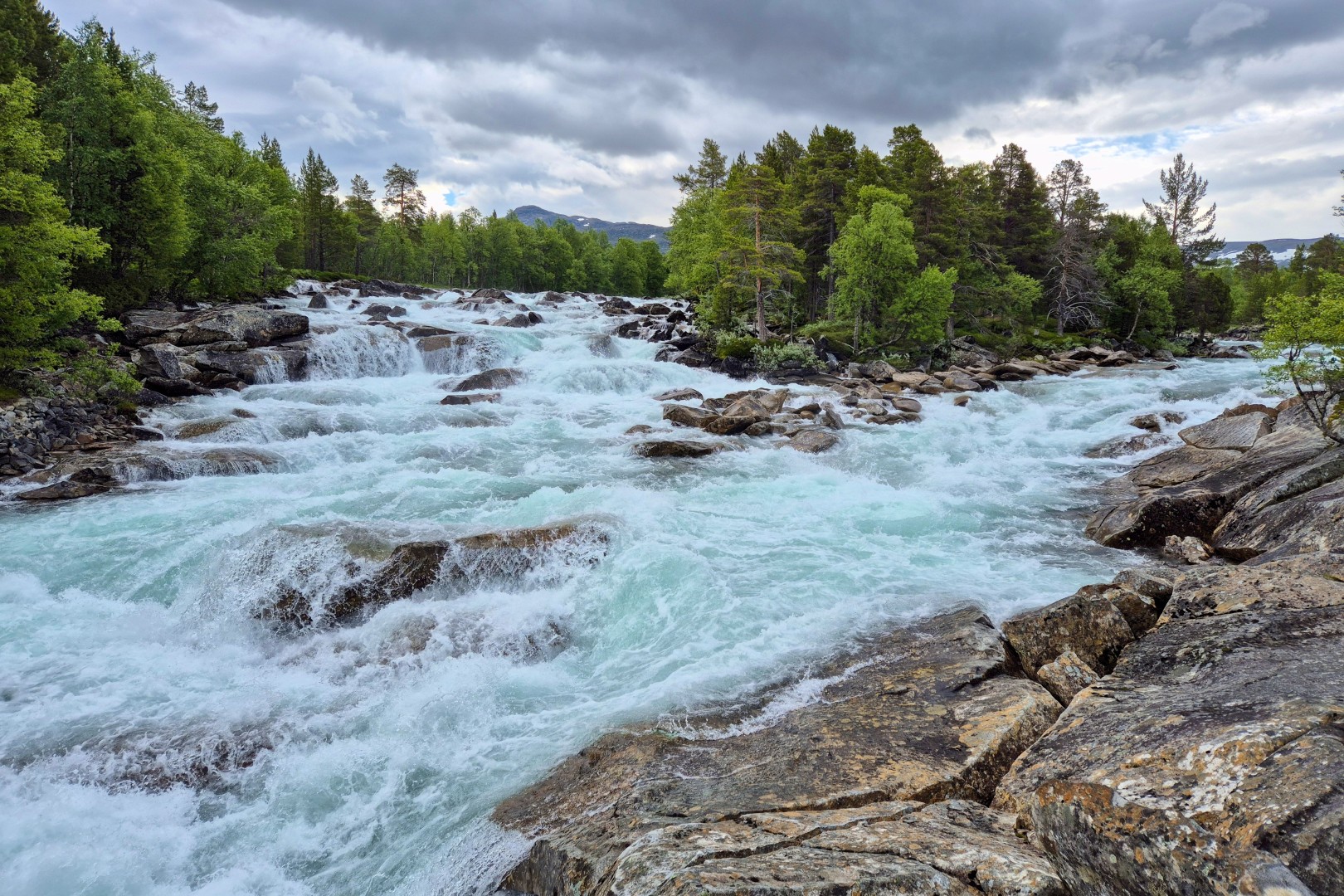
From the viewing platform, there was a fantastic view of the Lønselva, which splits around a small island just before the viewpoint and rejoins as a mighty river a few metres further on. The crystal-clear water rushed down the valley at an impressive speed – a wonderful photo opportunity and a great start to the day’s journey. A little later, we reached a place we’d already passed a few days earlier whilst travelling in the opposite direction.
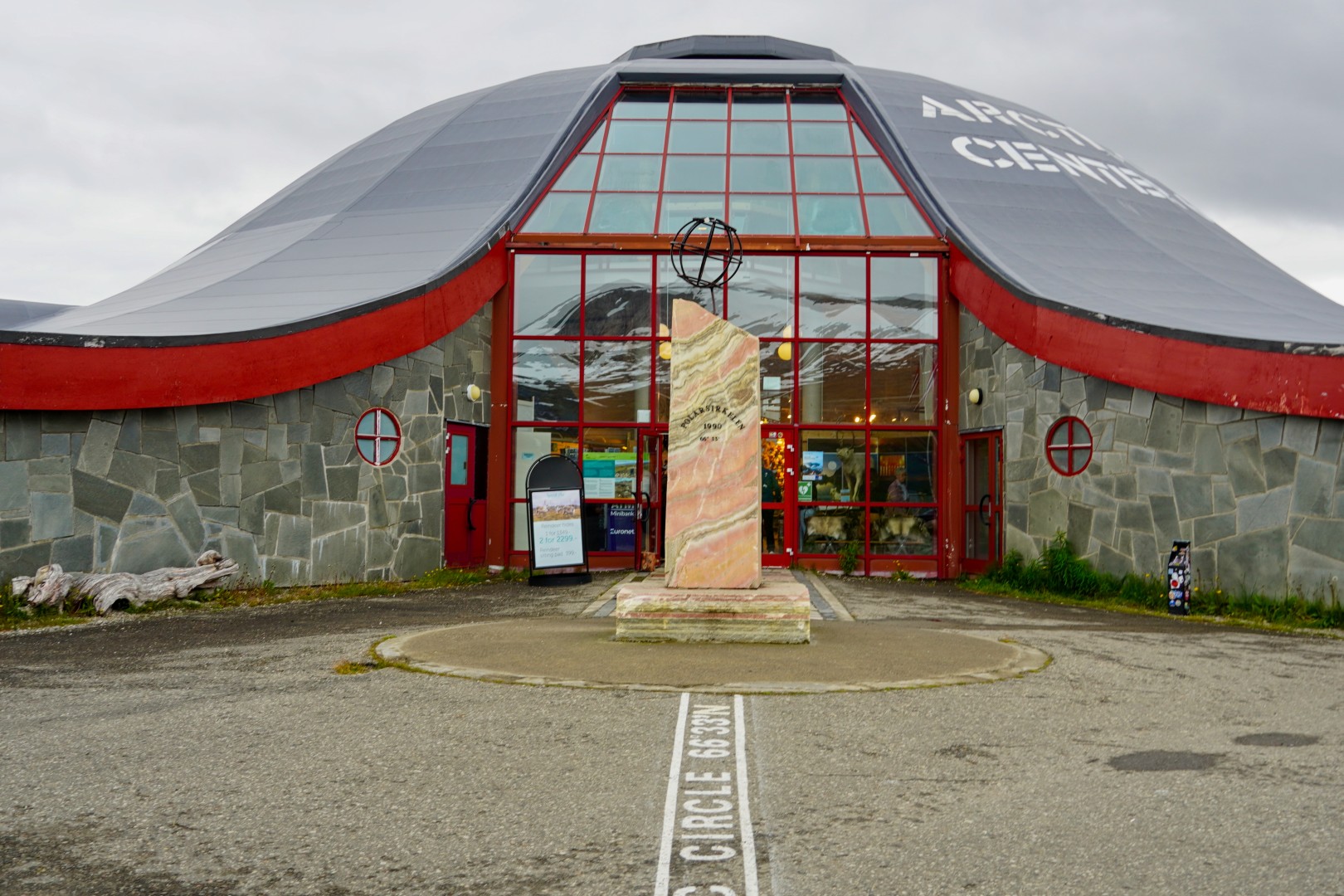
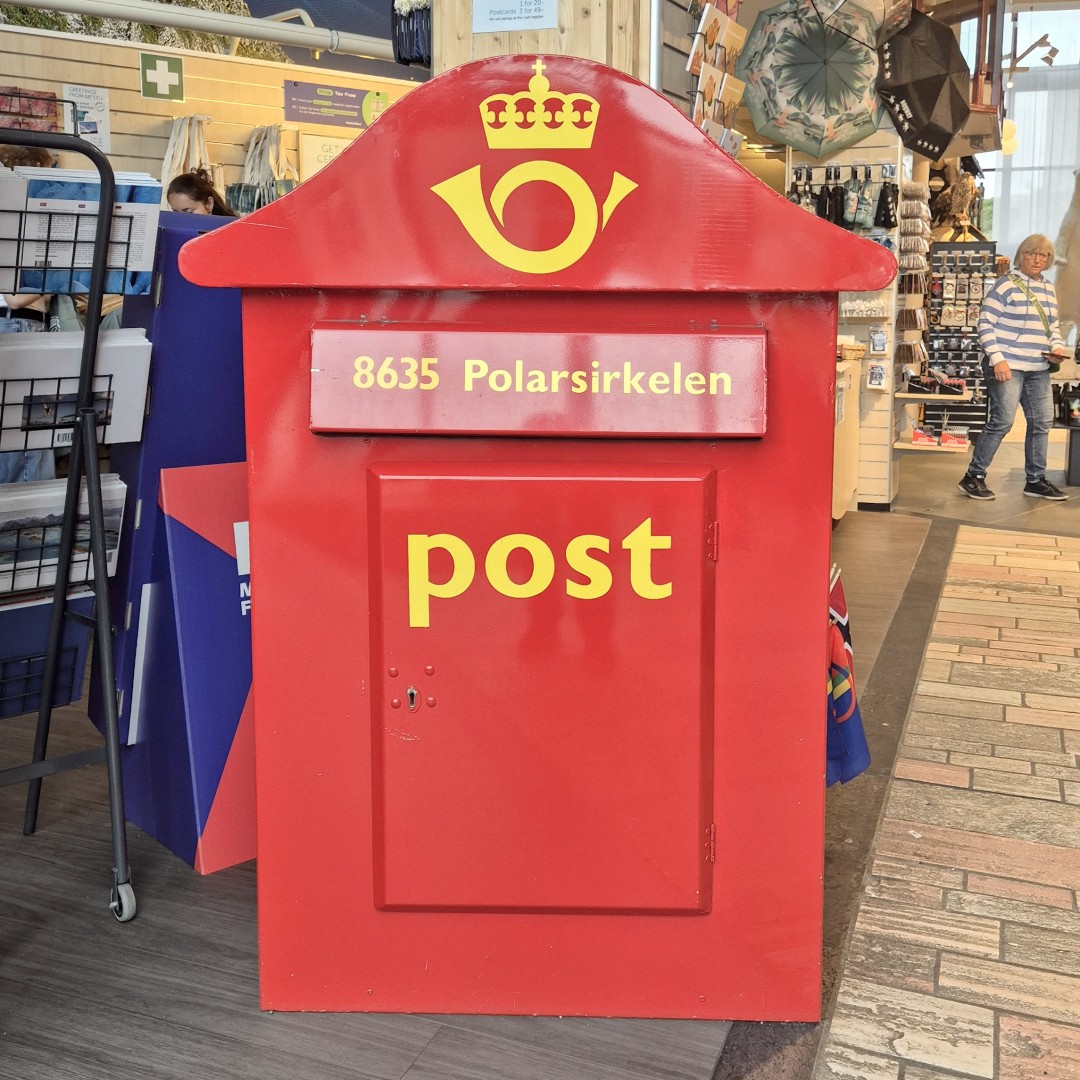
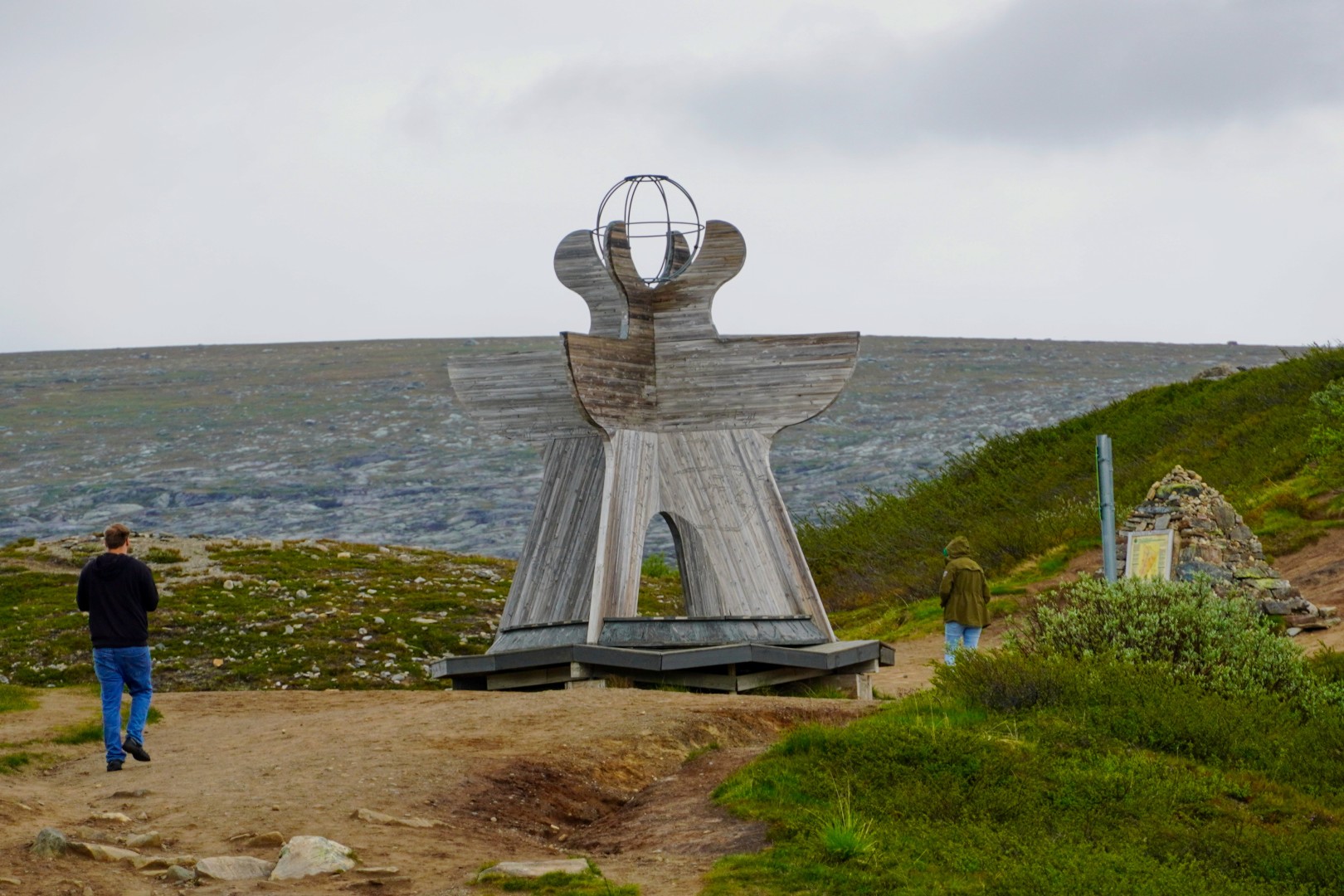
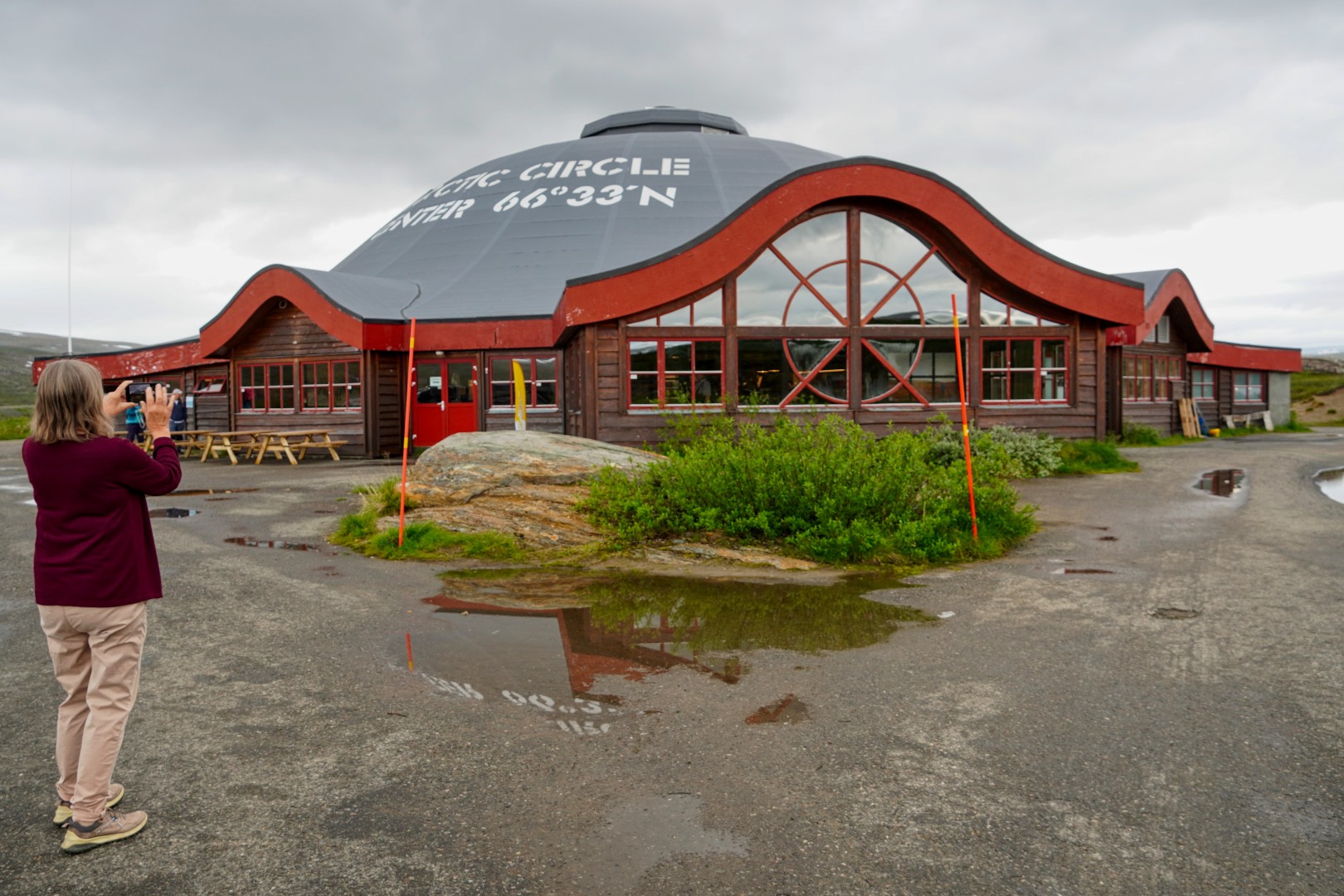
At 66°33′ north latitude, we crossed the Arctic Circle once more. We stopped for a longer visit at the Arctic Circle Centre near Storforshei. The modern visitor centre is considerably larger and more impressively designed than the small car park on the Swedish side where we had crossed the Arctic Circle on the way there.
Large monuments, sculptures and the striking ground marker bearing the inscription ‘Arctic Circle’ made it clear that we were at a very special geographical location. Naturally, we couldn’t miss the opportunity to take the obligatory souvenir photo here either.
At around 10 o’clock, we bid a final farewell to the land of the midnight sun. From then on, our journey slowly took us back towards more southerly latitudes.
The next major town was Mo i Rana. For over 100 years, steelworks, rolling mills and other industrial plants have shaped the town’s skyline. Mo i Rana is still regarded today as one of the most important industrial centres in northern Norway. In contrast to the small fishing villages of the past few days, a completely different side of the country was revealed here.
Beyond Mo i Rana, we joined the E12 European route, which took us towards the Swedish border. The road is one of the most beautiful east-west routes in Scandinavia. It winds through secluded mountain landscapes, past countless lakes and time and again alongside crystal-clear rivers.
At Lake Umbukta, we finally crossed the border into Sweden. No sooner had we left Norwegian soil than the weather took a completely different turn. For the first time on our entire journey, heavy rain set in. After a week of almost uninterrupted sunshine, we could almost smile at it. Our run of good weather was bound to come to an end at some point.
Numerous winter sports resorts lined the shores of Lake Umbukta.
We stopped for a break in Tärnaby during a heavy downpour. This small town enjoys an excellent reputation in Sweden as a winter sports centre. Two of Sweden’s most successful alpine skiers hail from here: Ingemar Stenmark, one of the most successful skiers of all time, and the multiple Olympic and world champion Anja Pärson.
In addition, Tärnaby is also home to an interesting Sami museum, which commemorates the history and culture of Lapland’s indigenous people.
Once the rain had stopped, we continued our journey. We drove along the scenically stunning Blå Vägen – the ‘Blue Road’ – through the endless forests of northern Sweden. The road is aptly named: it links the Norwegian Atlantic coast with the Gulf of Bothnia and is considered one of Scandinavia’s most beautiful holiday routes.
Beyond Lycksele, the forests gradually grew denser, the roads became wider again and the traffic a little busier. In the early evening, we finally reached Umeå once more.
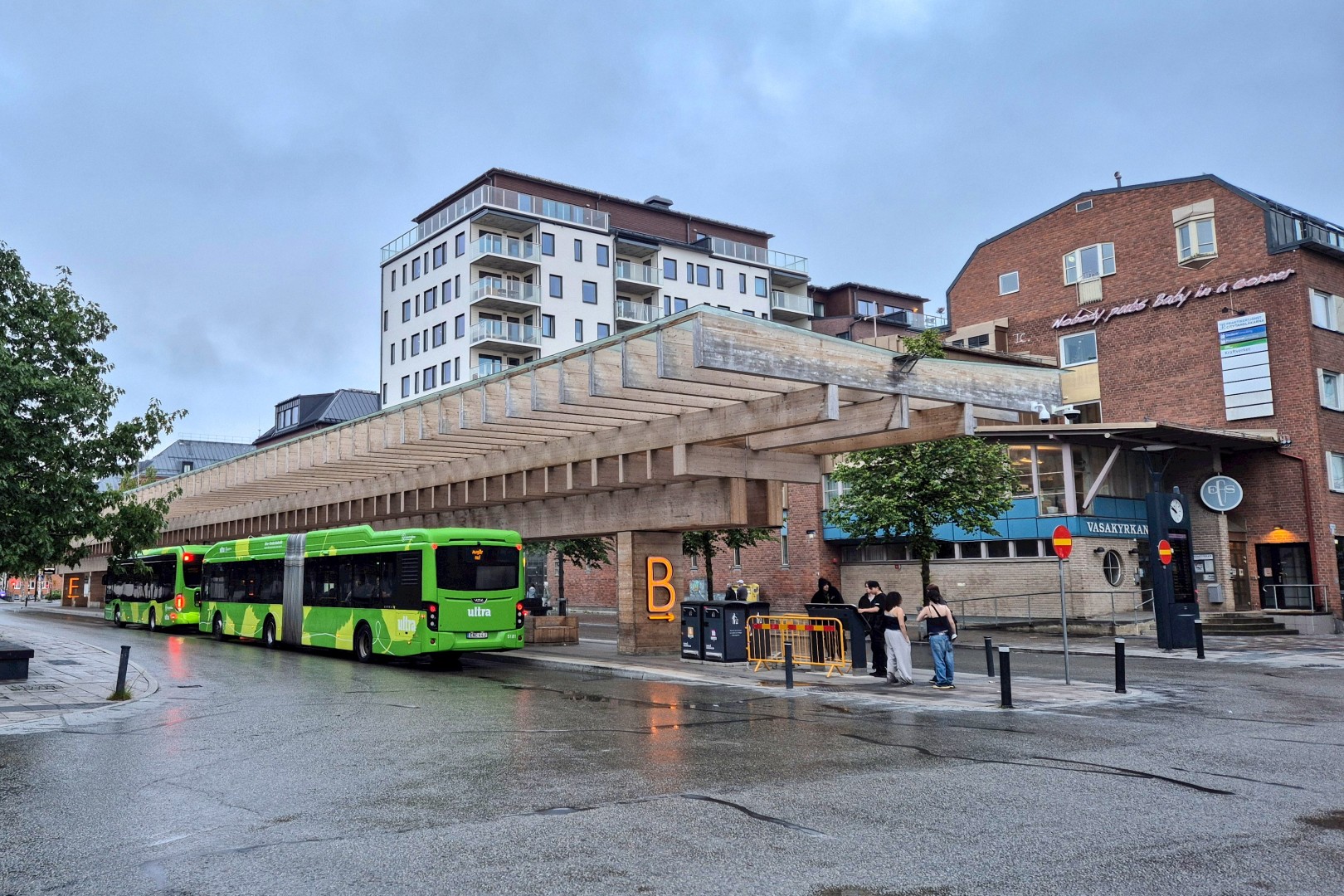
This time, we stayed at the centrally located Home Hotel Uman. Our room on the second floor offered a lovely view over the city’s rooftops down to the River Umeälven, which gives Umeå its distinctive character.
After dinner together, we took the opportunity to go for a long stroll through the city centre. The streets seemed much livelier than during our first stay. Nevertheless, Umeå exuded that pleasant sense of calm that makes many Nordic cities so appealing. Gradually, the long coach journey began to take its toll.
After nearly 620 kilometres, many new impressions and a brief reunion with the Arctic Circle, everyone was finally looking forward to a quiet evening.
A relaxed end to another eventful day of travelling, which took us step by step back towards the south.
Back to Stockholm along the Baltic Sea coast
Our grand tour of Scandinavia was slowly drawing to a close. Today, another long leg of the journey was on the itinerary. Around 630 kilometres lay between Umeå and Stockholm. Once again, our route took us along the E4 European route, hugging the Swedish Baltic Sea coast, past forests, lakes and small coastal villages.
After breakfast, we left Umeå and set off southwards. By now, the long bus journeys had almost become part of our daily routine. Thanks to the excellent organisation by the Hauser team, regular breaks and the varied landscape, the hours usually passed more quickly than expected.
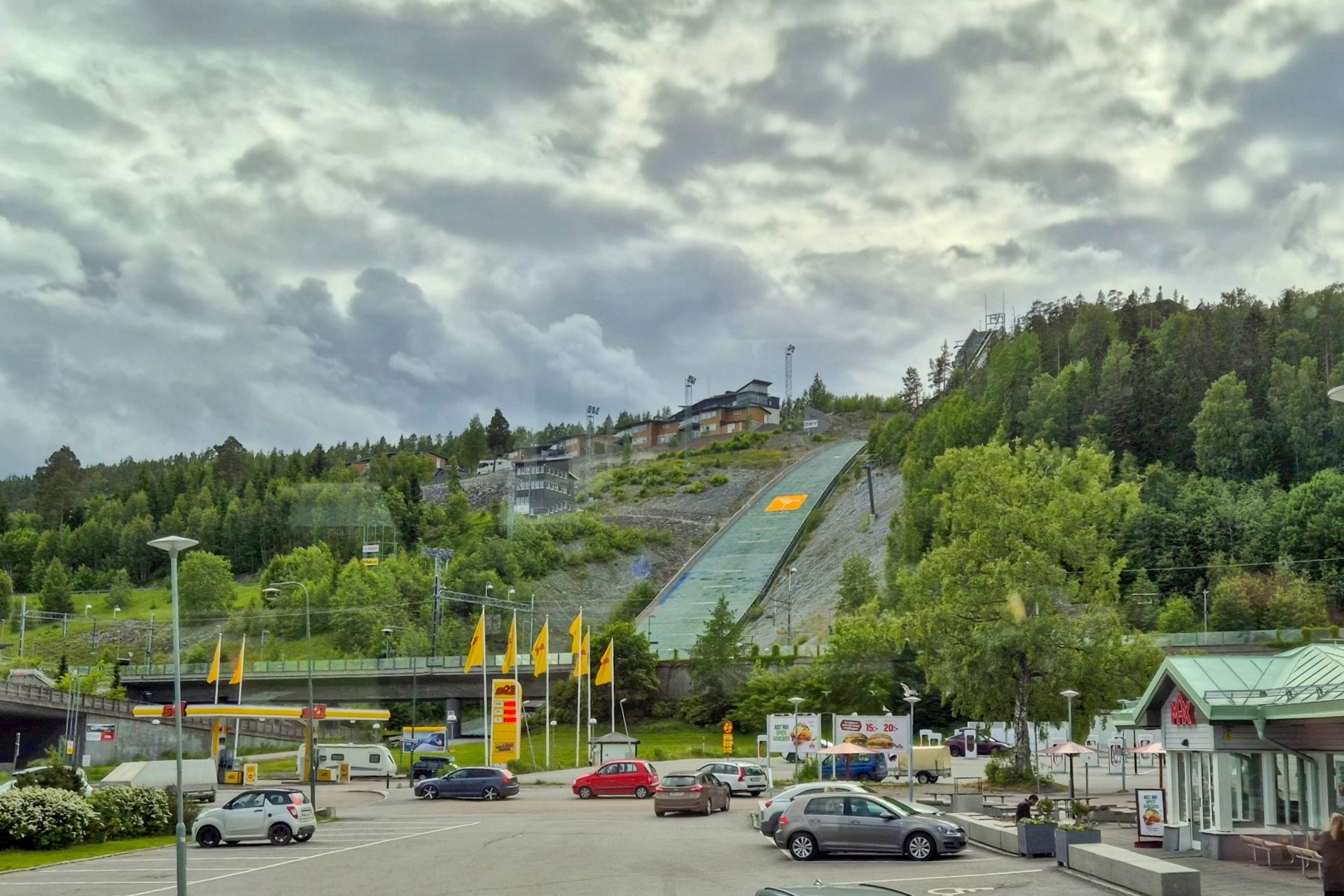
Our first stop took us to Örnsköldsvik. The town is known far beyond Sweden’s borders as a winter sports centre. The spectacular Paradiskullen ski jump is particularly impressive. It has one extraordinary feature: the landing area of the jump ends right next to the railway line that runs straight through the town – a sight you rarely get to see. After a short break, we continued our journey.
Before long, we reached the High Coast (Höga Kusten) region again, which we’d already explored on the way there. At Hornöbergets Rastplats & Utsiktsplats, we stopped for a longer photo break.
From the elevated viewing platform, we were once again treated to a fantastic view of the elegant Högakusten Bridge, which spans the mighty Ångermanälven majestically. Even though we’d visited this viewpoint a few days earlier, the panorama impressed us all over again. Bathed in sunshine, the landscape looked its very best.
We then continued along the E4, following the Swedish Baltic Sea coast. Dense forests alternated with small lakes, red wooden houses and, every now and then, brief glimpses of the Baltic Sea. The kilometres flew by. After a brief stop in Sundsvall, we later took another break in Gävle. We passed through both towns largely whilst passing through. Nevertheless, the stops offered a welcome opportunity to stretch our legs and enjoy that typical Swedish calm once more. The closer we got to Stockholm, the heavier the traffic became.
After many days in the sparsely populated regions of Lapland and Northern Norway, the Stockholm metropolitan area seemed almost hectic. At the same time, we realised that our impressive round trip was slowly drawing to a close. In the late afternoon, we finally reached our hotel, the Best Western Plus Bromma, which was to be our home for the next three nights.
After checking in, there was still some time to relax before we met up for dinner together.
Over dinner, we looked back over the past few days. Almost automatically, the conversation turned to the many highlights of our trip: the North Cape in glorious sunshine, the midnight sun, the breathtaking landscape of the Lofoten Islands, the Vesterålen Islands, countless fjords and bridges, and the warm atmosphere within our tour group.
The longer we chatted, the clearer it became just how many extraordinary experiences we’d had in the space of just one week. With these thoughts in mind, another day of our trip drew to a cosy close.
The next day, Stockholm – one of Europe’s most beautiful capital cities – awaited us once again – though this time with considerably more time to explore on our own.
Exploring Stockholm on your own
After nine eventful days of travelling, the independent part of our trip began today. No coach, no fixed departure times; instead, we explored Stockholm at our own pace in a relaxed manner.
After a leisurely breakfast, we first bought a 3-day ticket for public transport online. For around 20 euros per person, we were able to make unlimited use of buses, trams, the underground and ferries – an excellent investment, as Stockholm has one of the best public transport systems in Europe.
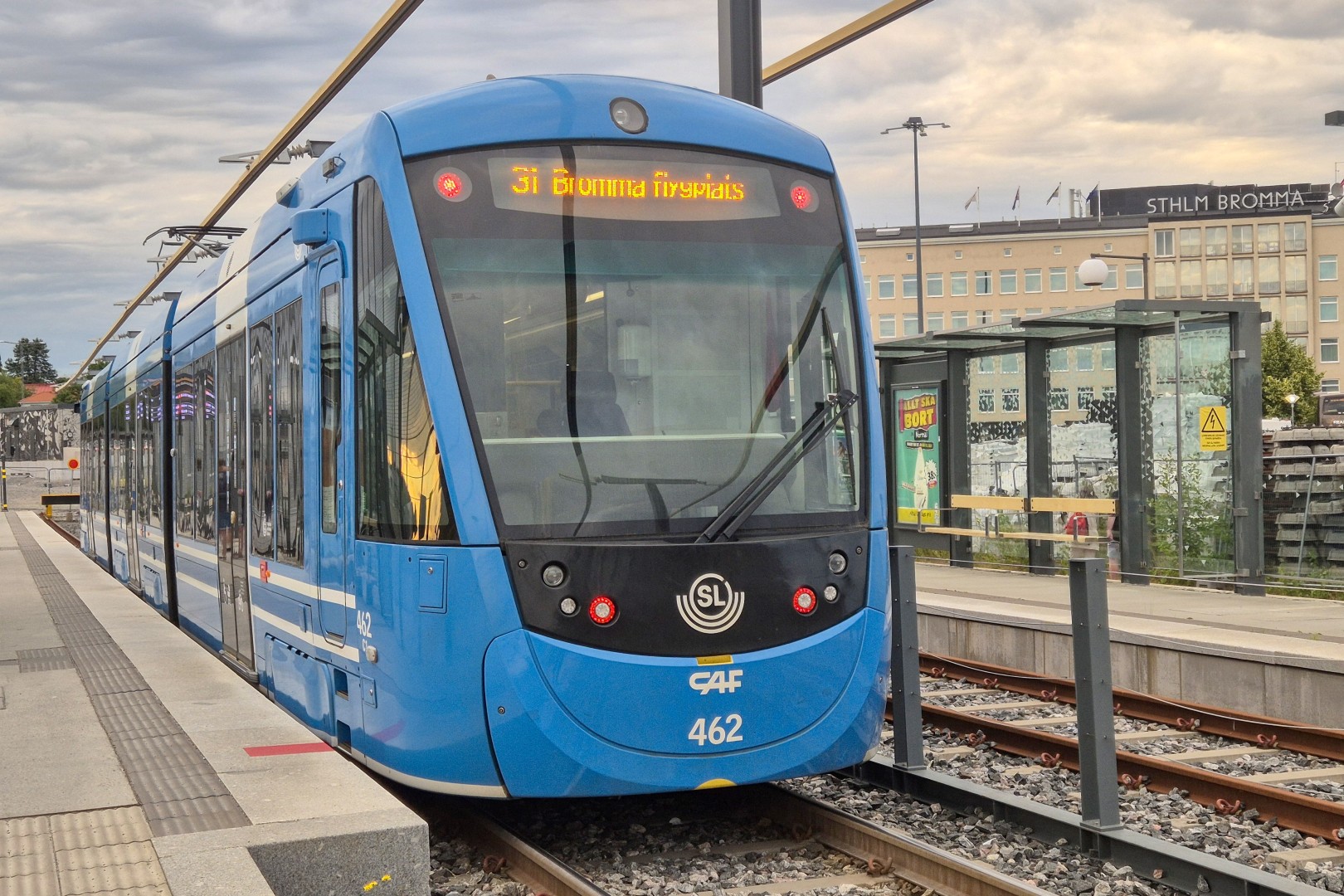
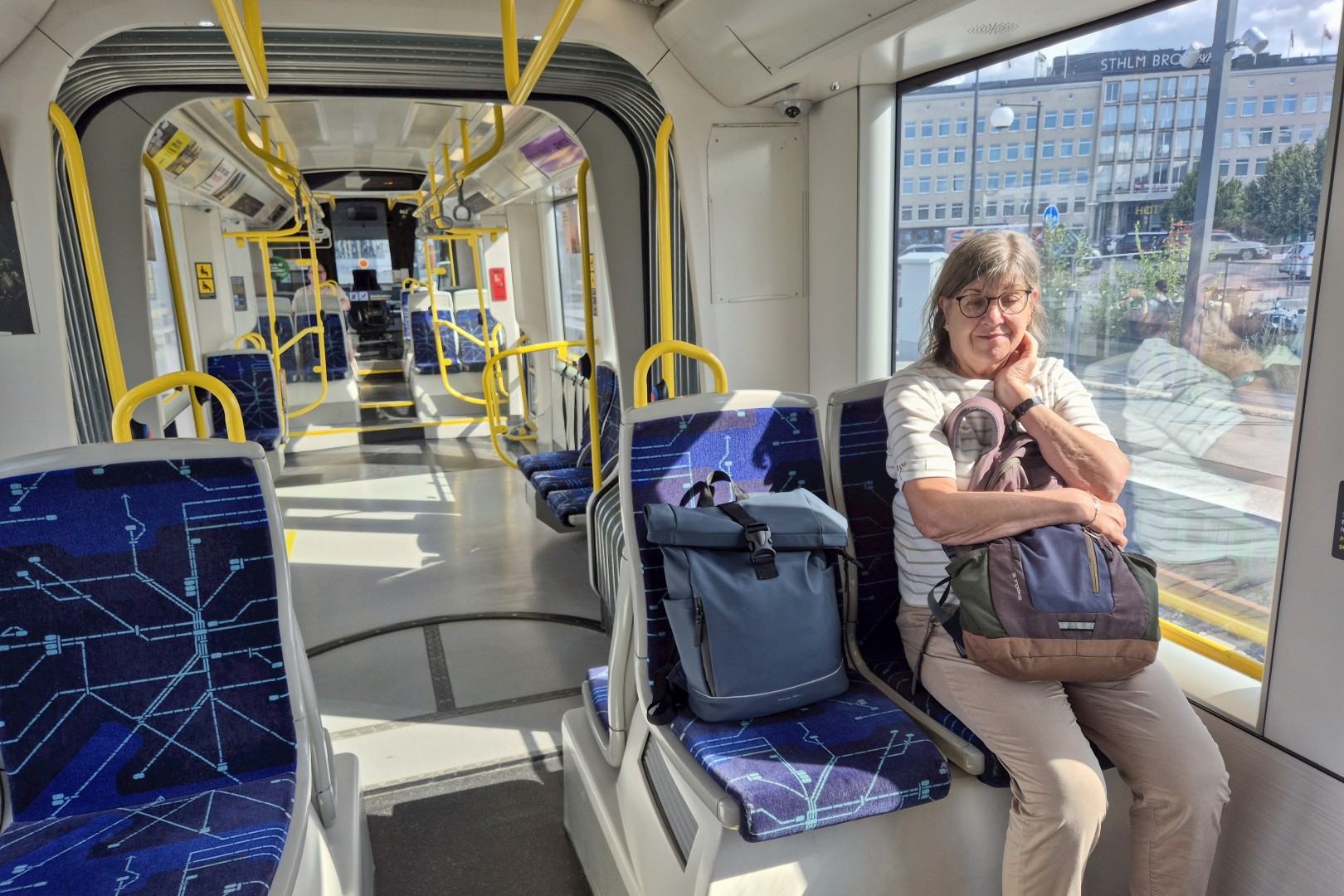
From the hotel, tram line 31 took us to Alvik. There, we changed to the green metro line (T17, T18 or T19) and shortly afterwards reached T-Centralen, the heart of Stockholm’s public transport network. This is where our stroll through the city began.
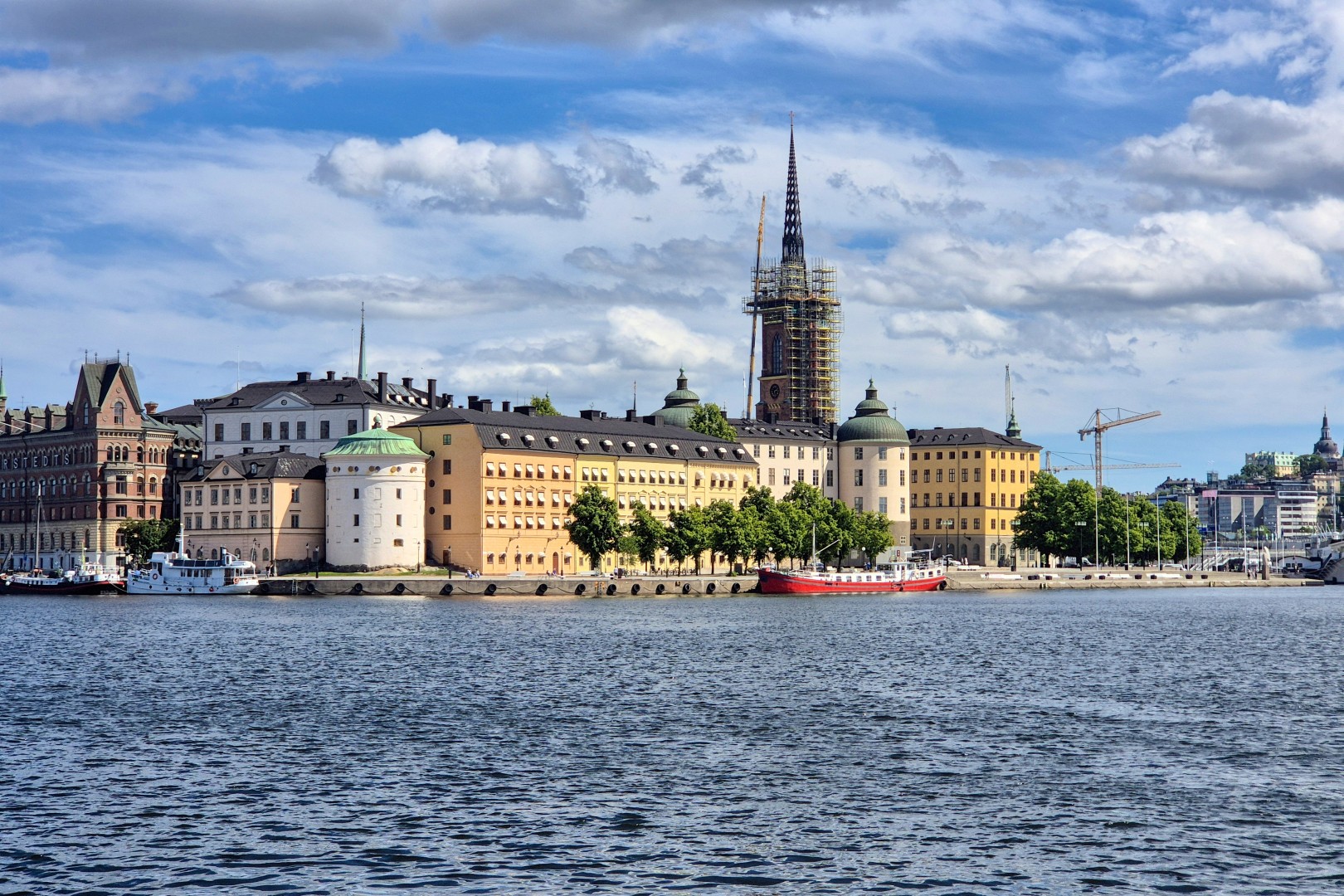
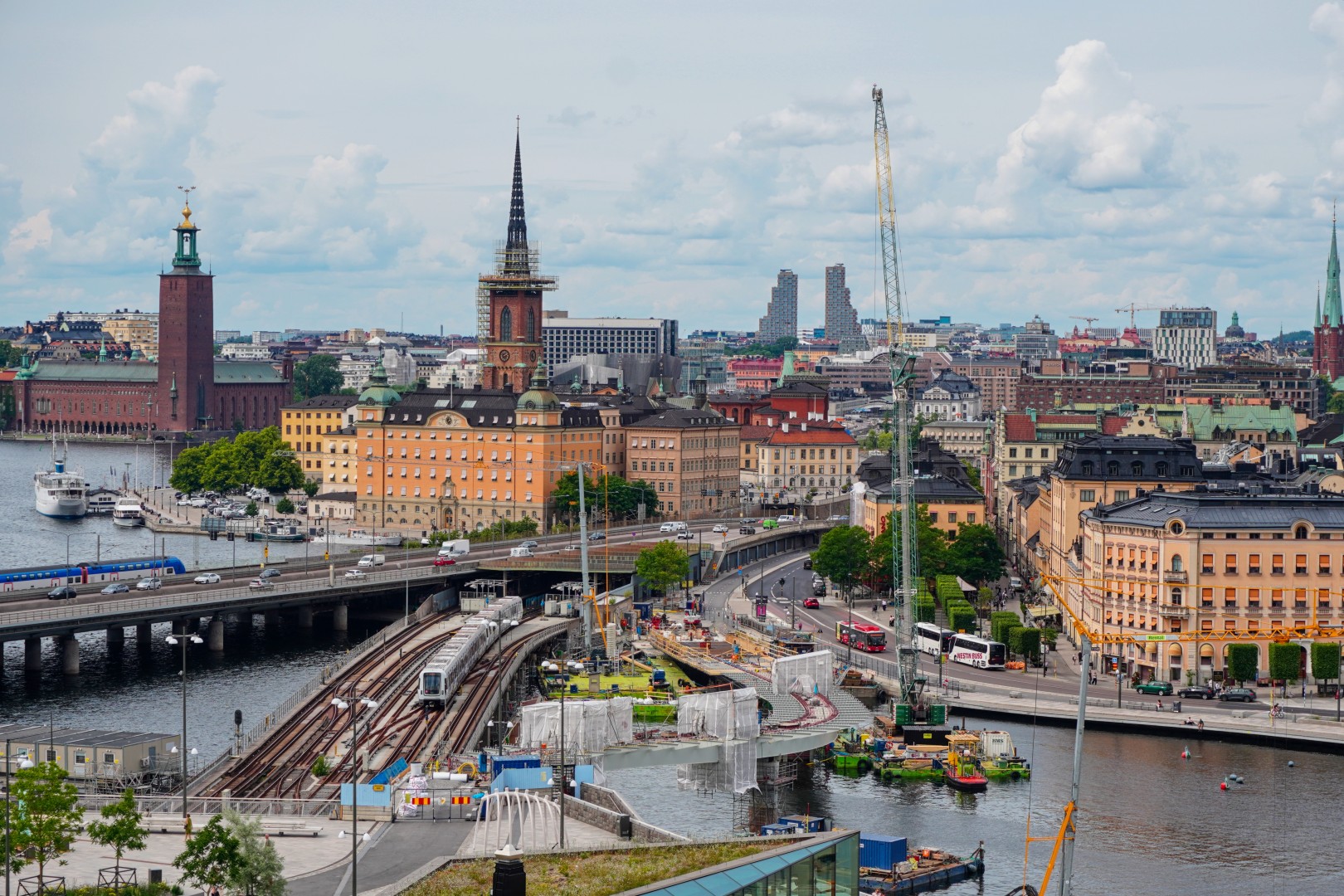
Our first stop took us once again to the imposing Stadshuset, Stockholm’s famous town hall. In the morning light, the striking brick building looked even more impressive than it had during our first city tour. We then strolled across the island of Riddarholmen with its historic aristocratic palaces and the well-known Riddarholm Church. From here, we enjoyed wonderful views of the Old Town and the water.
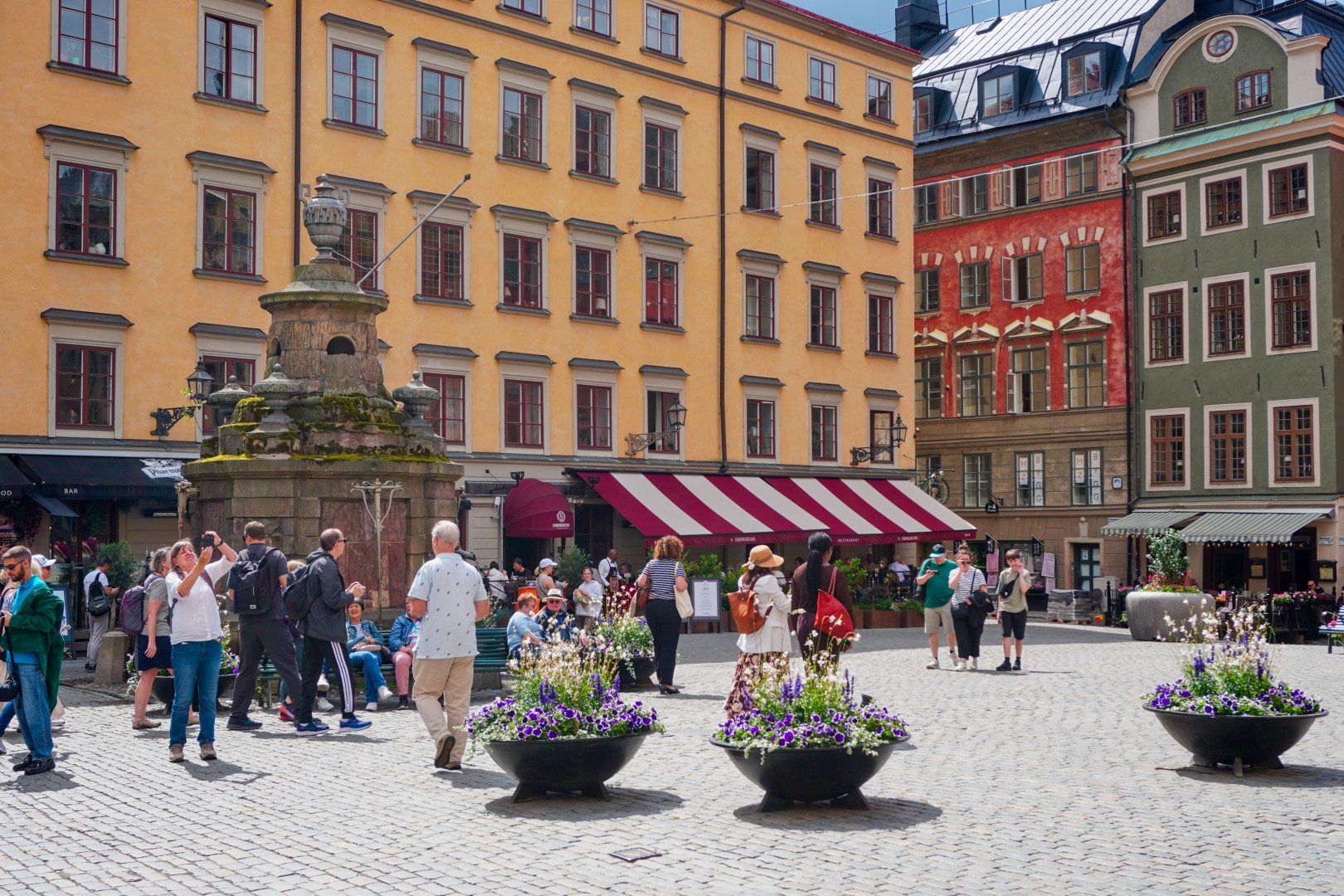
Of course, we couldn’t miss out on another stroll through Gamla Stan. Although we’d already explored the old town on the first day of our trip, this time we discovered many little alleyways, squares and lovingly restored houses that had previously remained hidden from us.
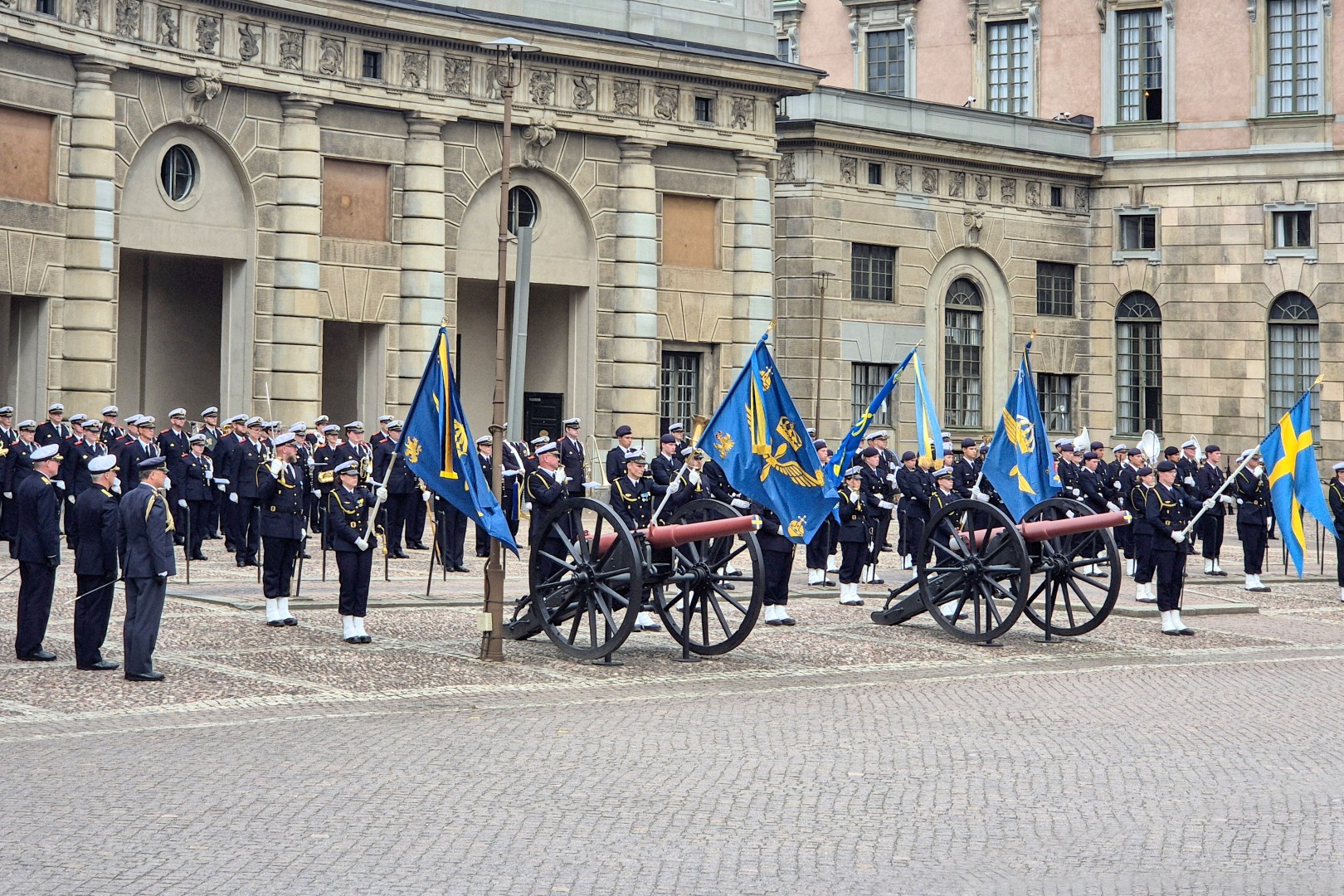
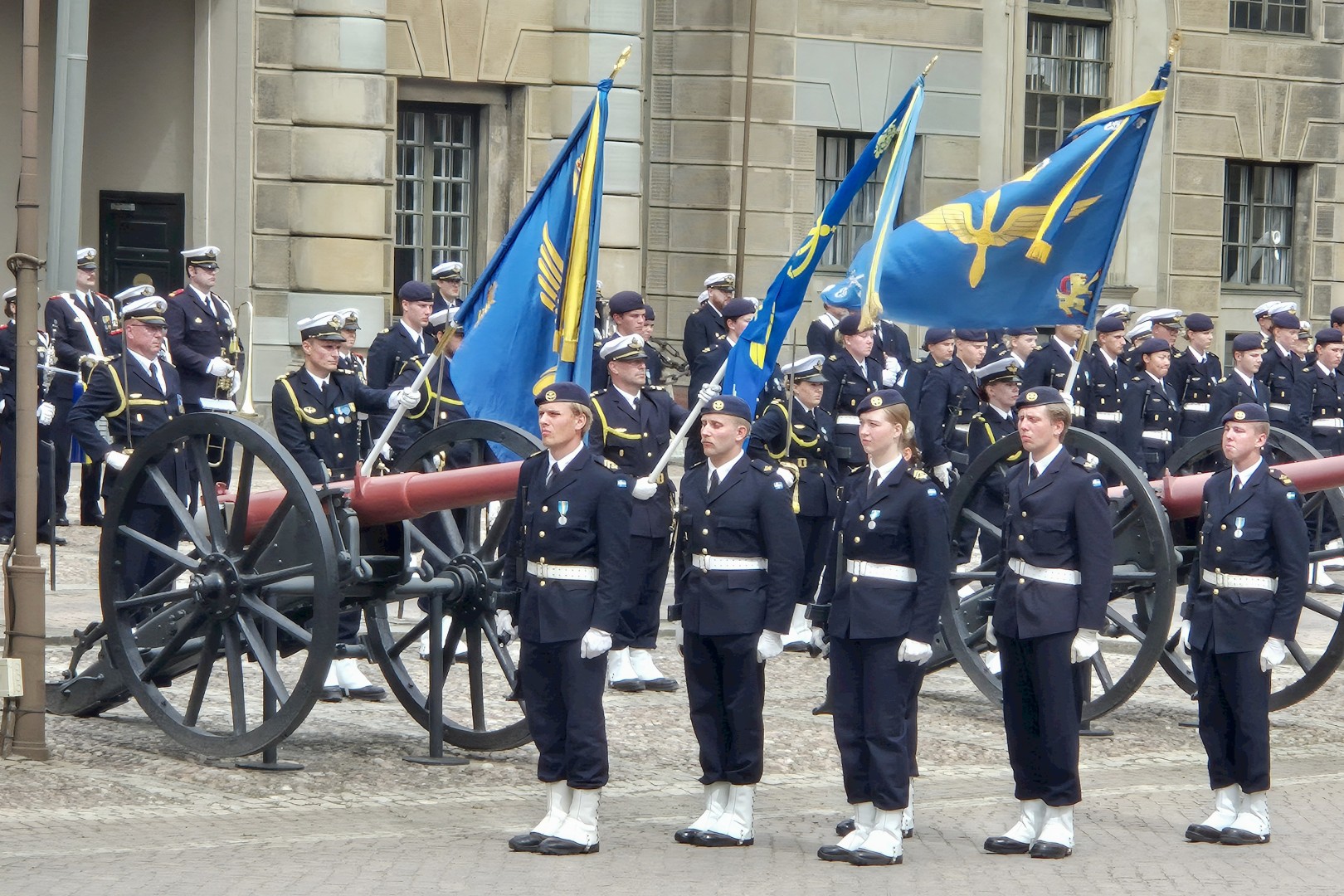
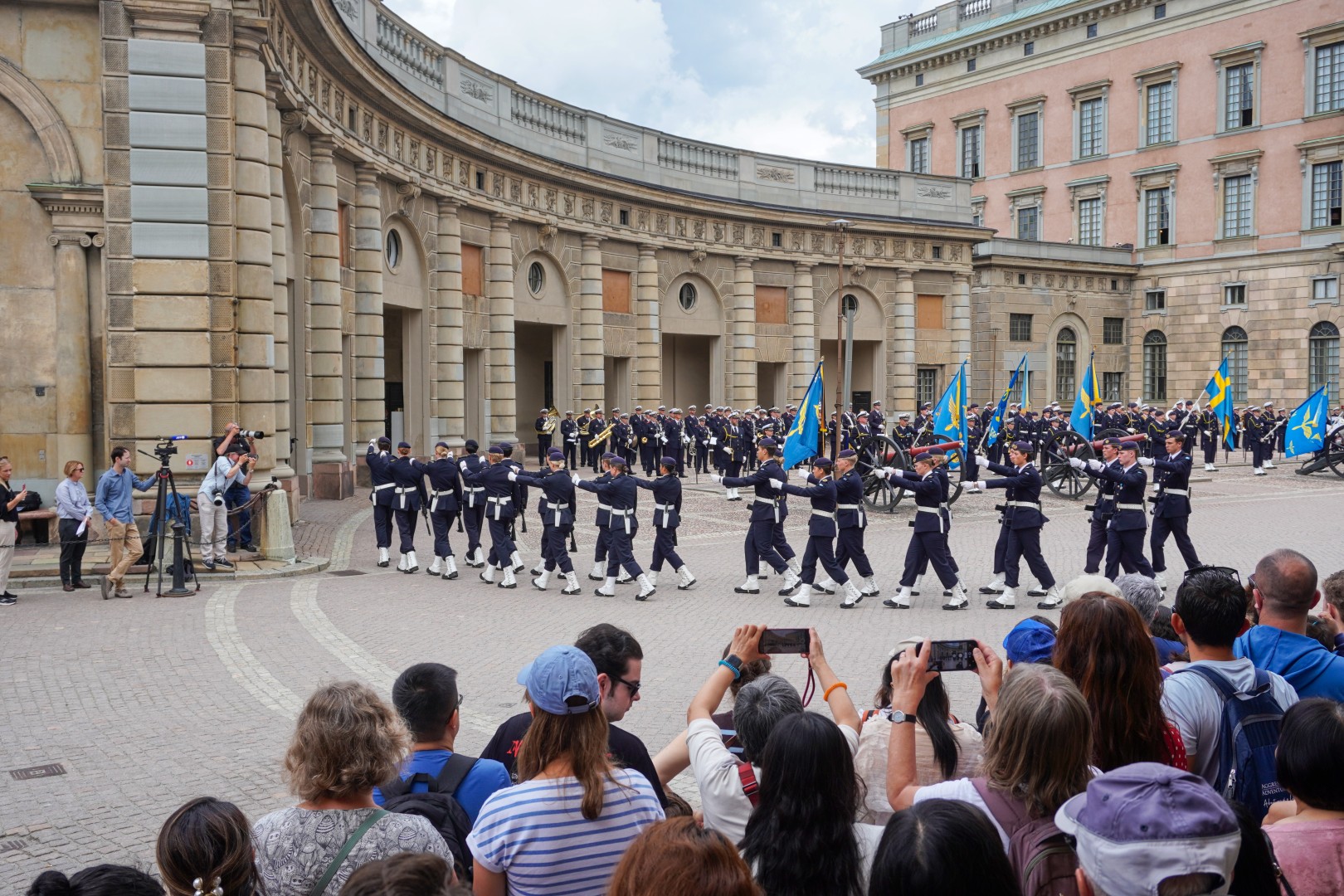
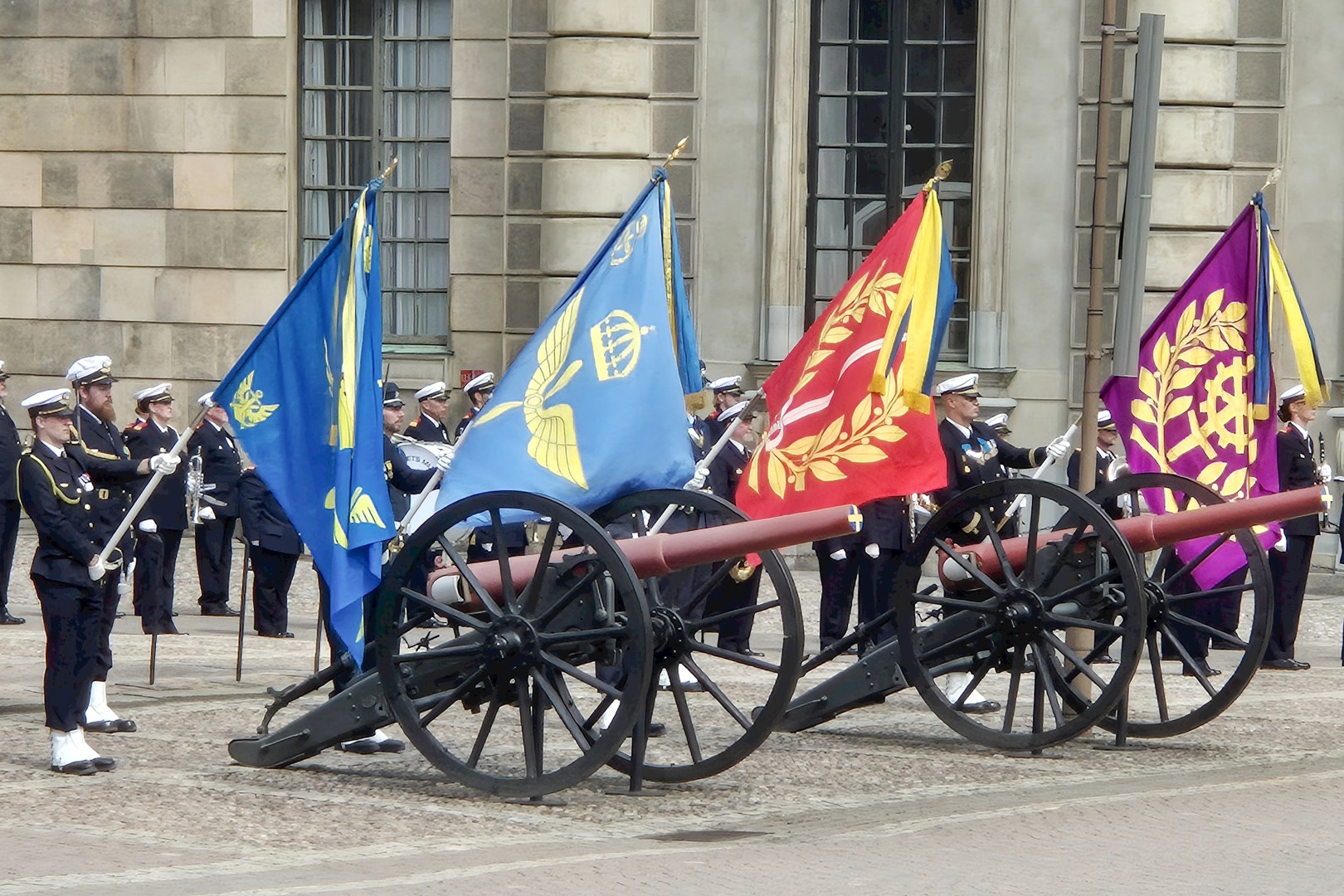
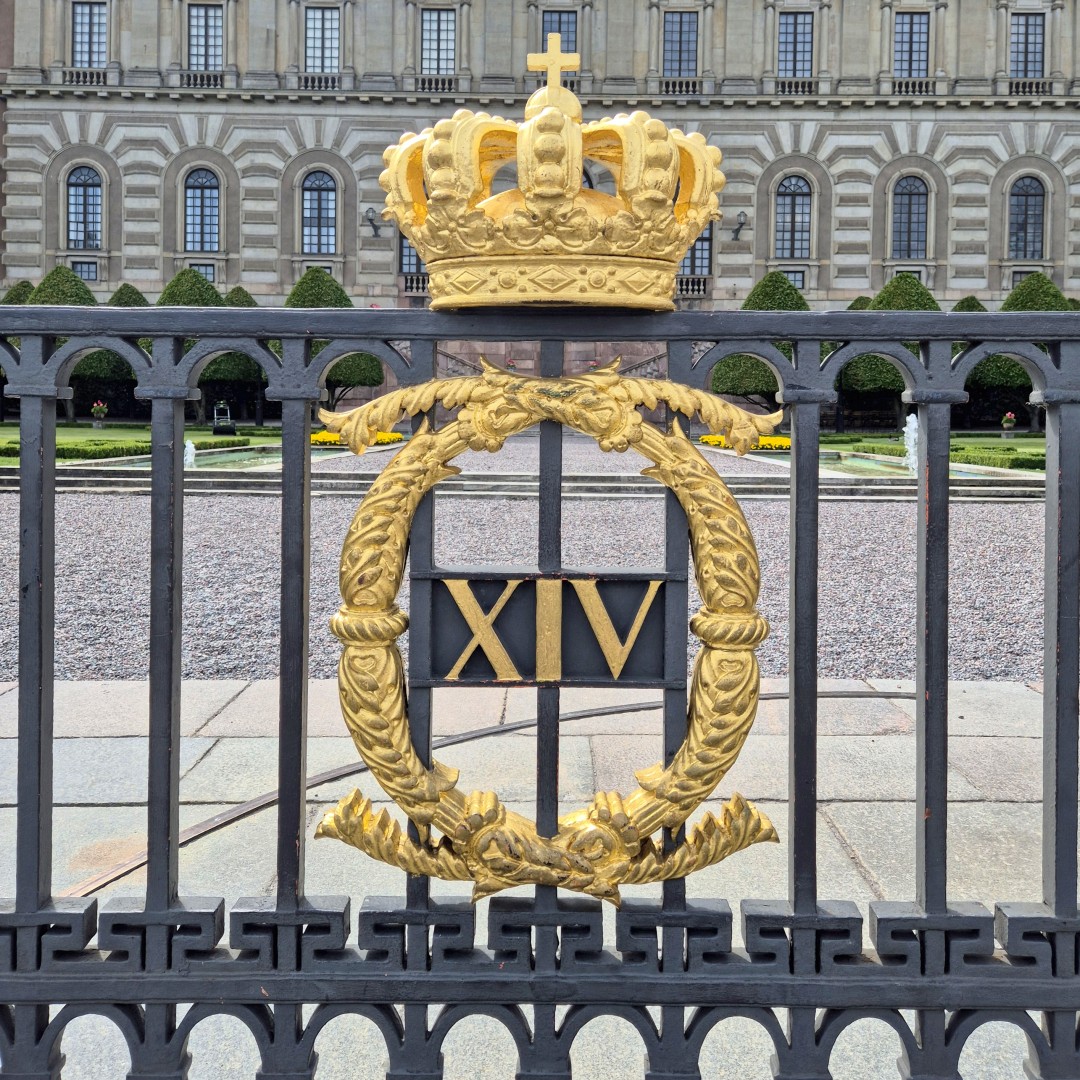
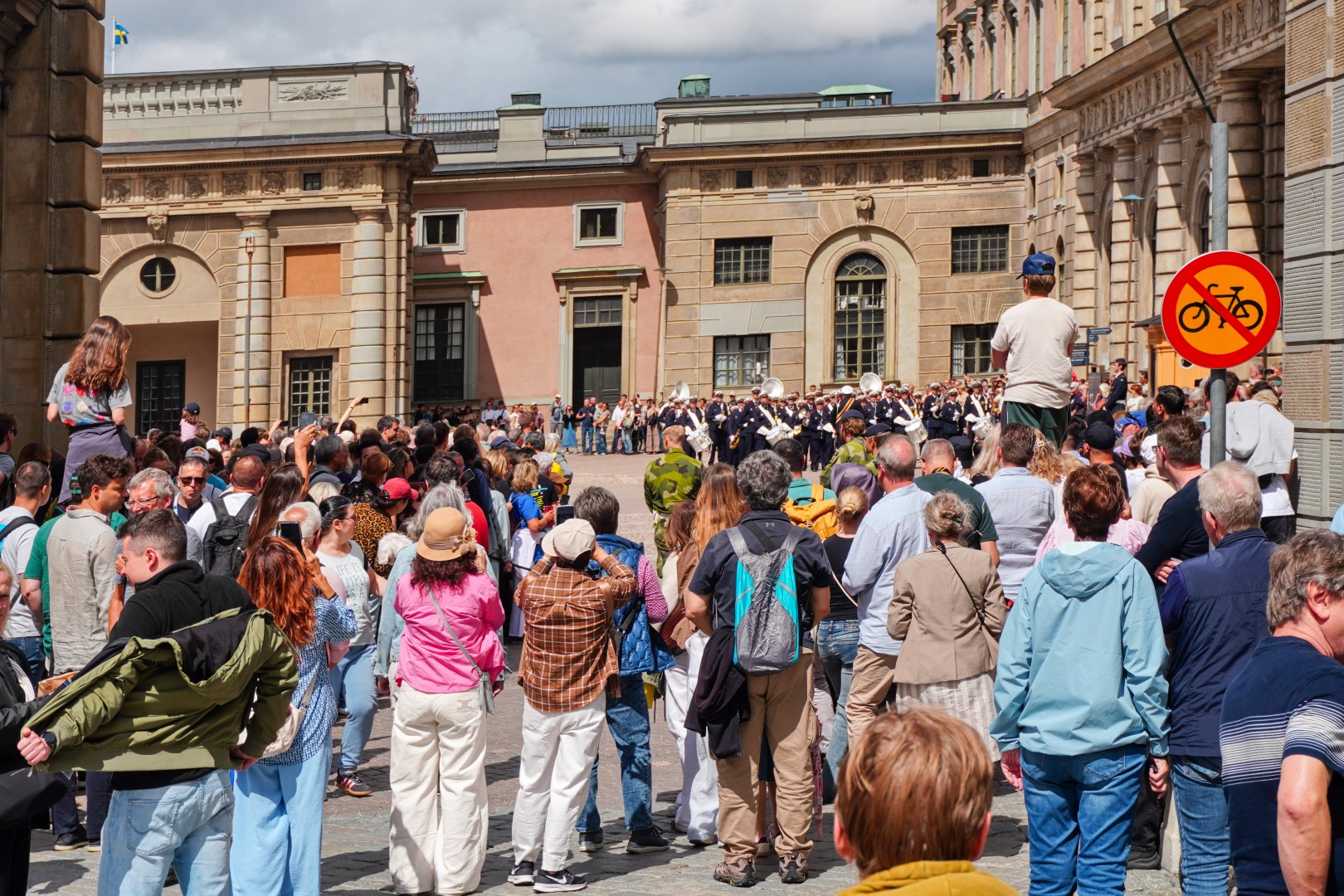
Then, completely out of the blue, came the absolute highlight of the day. When we reached the outer courtyard of the Kungliga Slottet – the Yttre Borggården – there was an unusually bustle of activity. What at first looked like the usual changing of the guard turned out to be an impressive large-scale event.
A festive military ceremony was taking place to mark the 100th anniversary of the Swedish Navy and the 500th anniversary of the Kingdom of Sweden. Military bands marched in, honour guards stood to attention in historical uniforms, military formations paraded across the palace courtyard, and marches and fanfares rang out time and again. All of this was eventually accompanied by several flypast formations over Stockholm. We were extremely lucky to secure an excellent spot right at the heart of the action.
We watched the celebrations for almost two hours – an experience that wasn’t mentioned in any travel guide and which, quite unexpectedly, enriched our time in Stockholm.
Unbelievable – we couldn’t have planned the day any better.
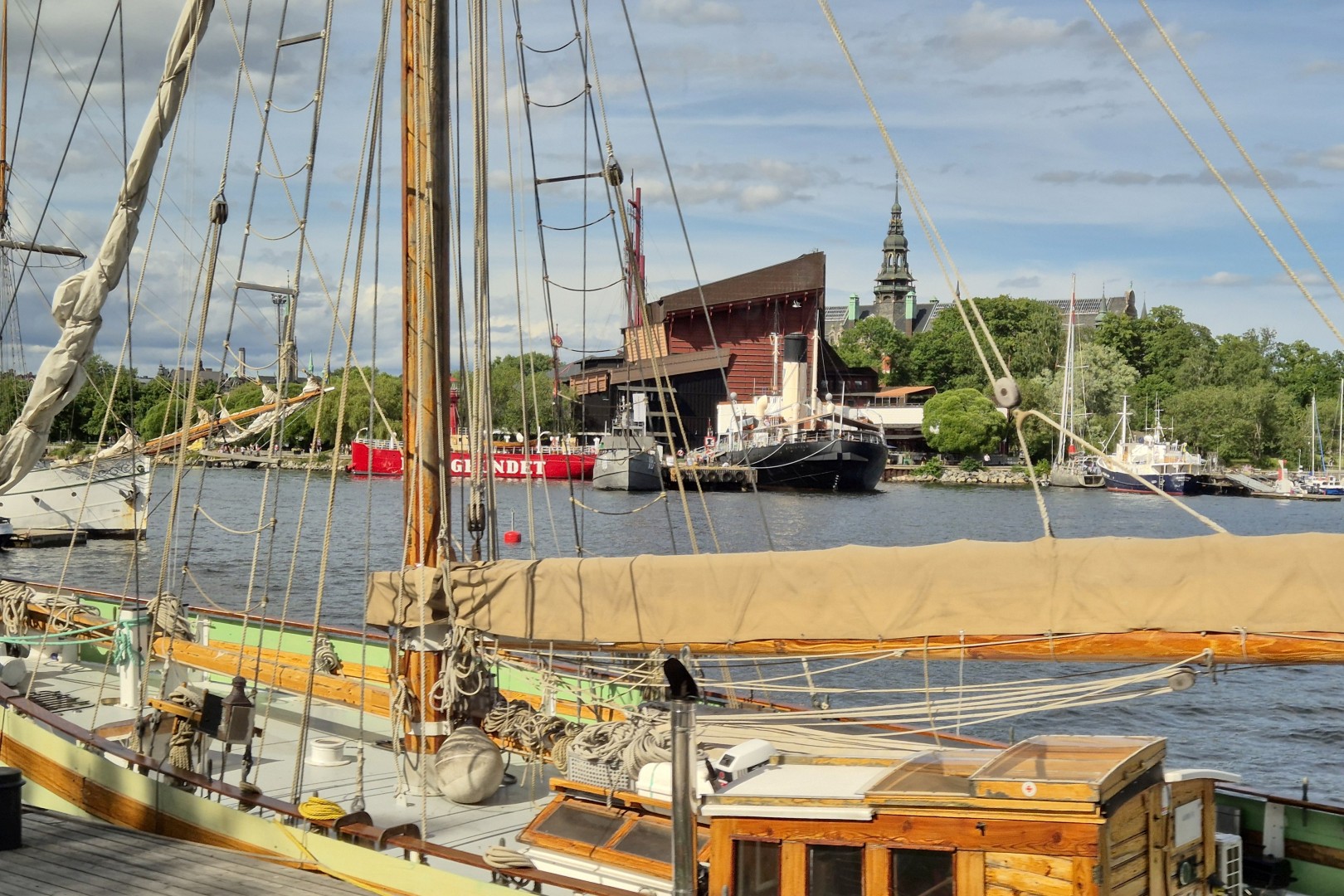
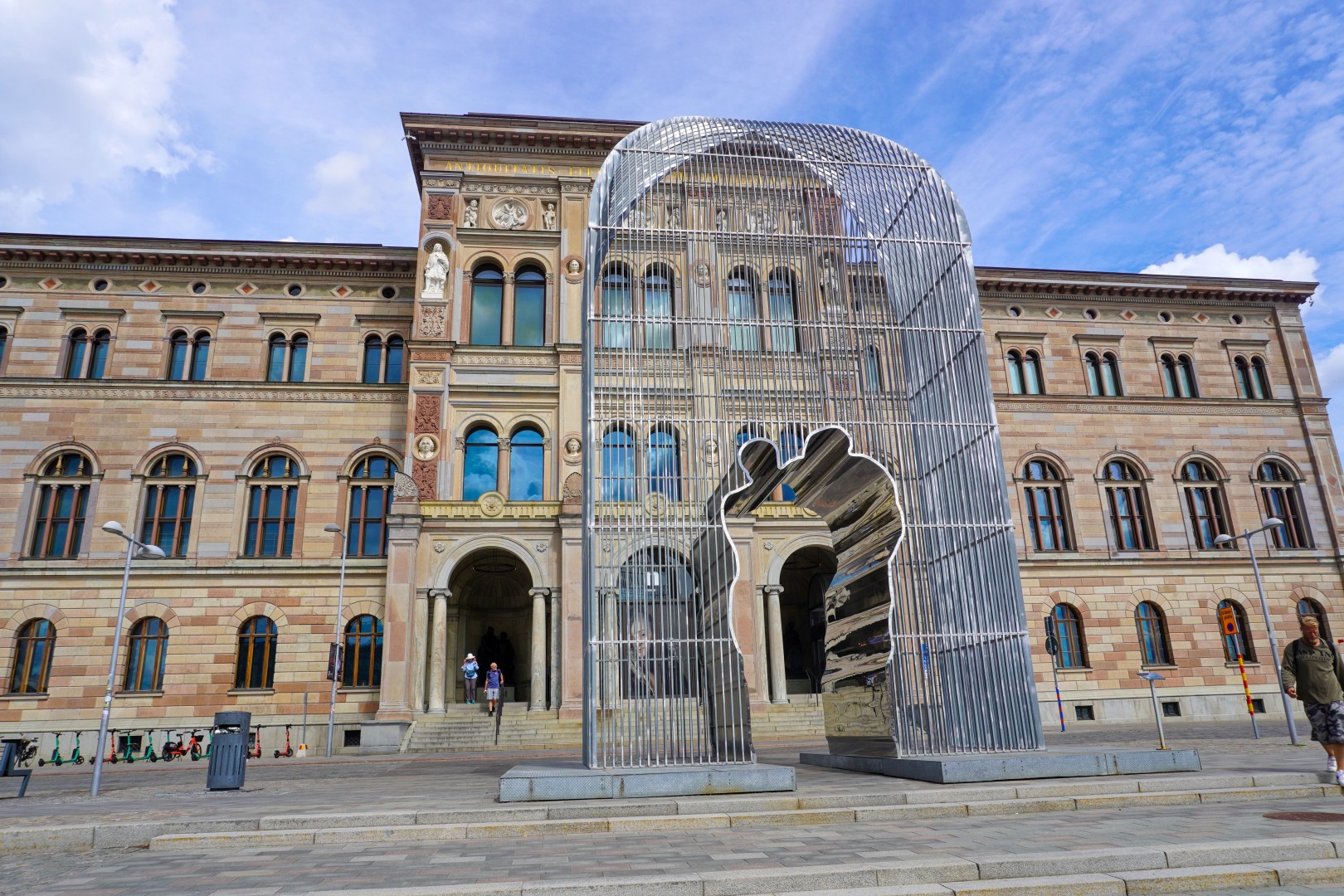
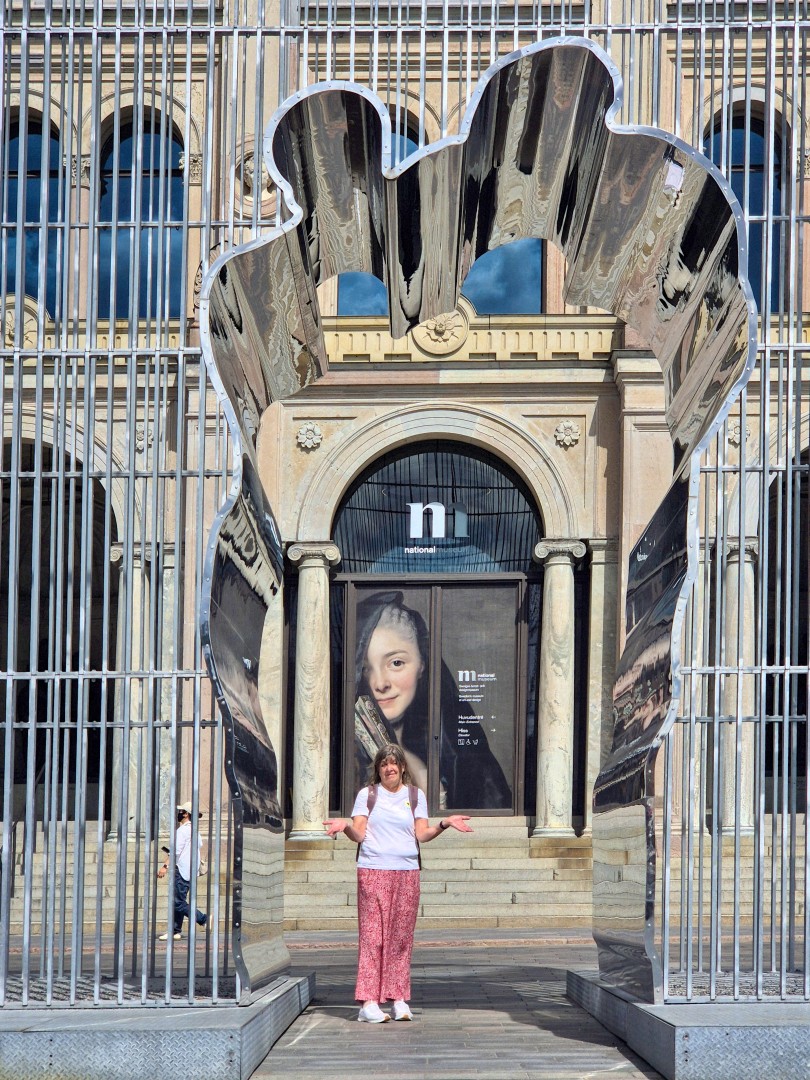
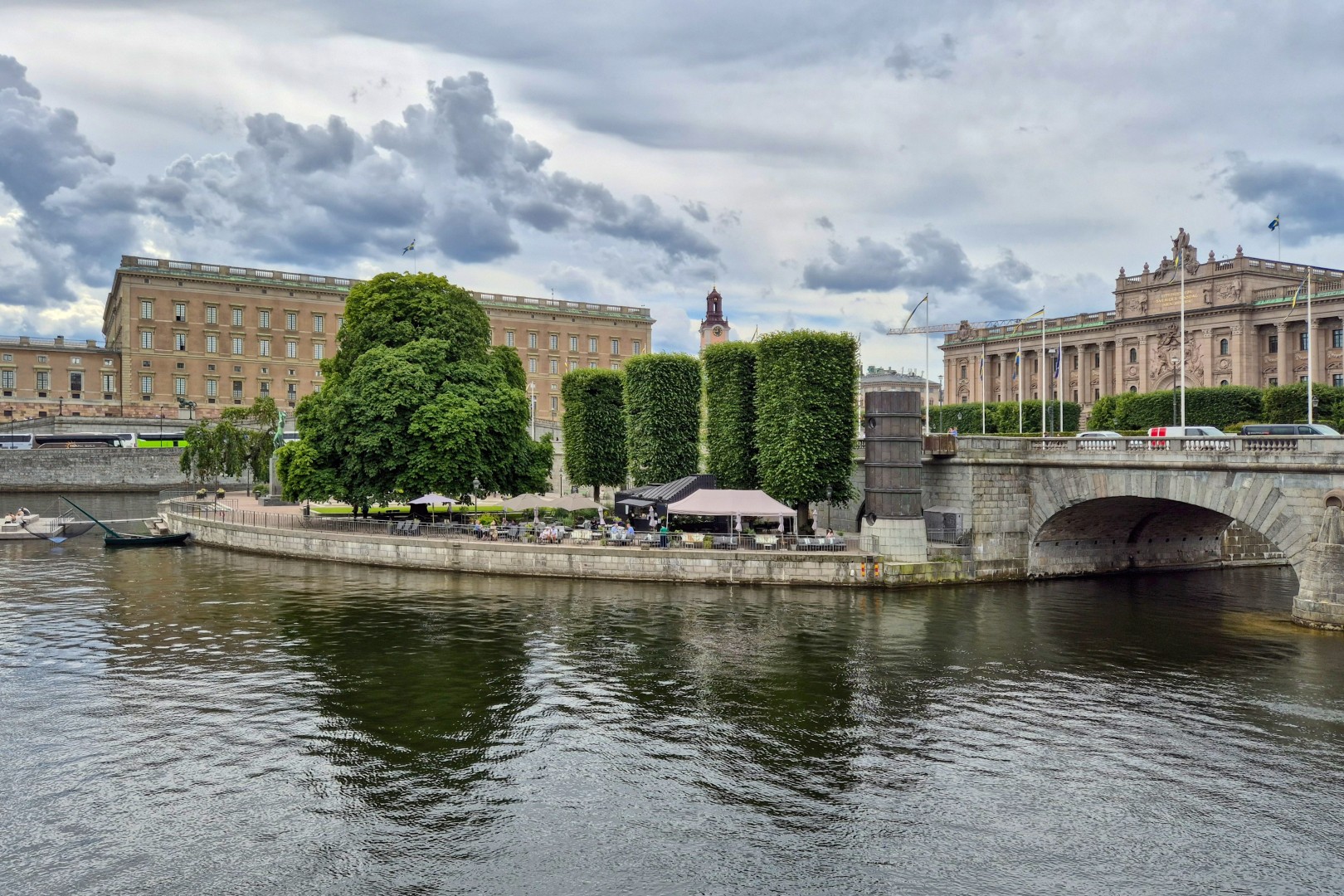
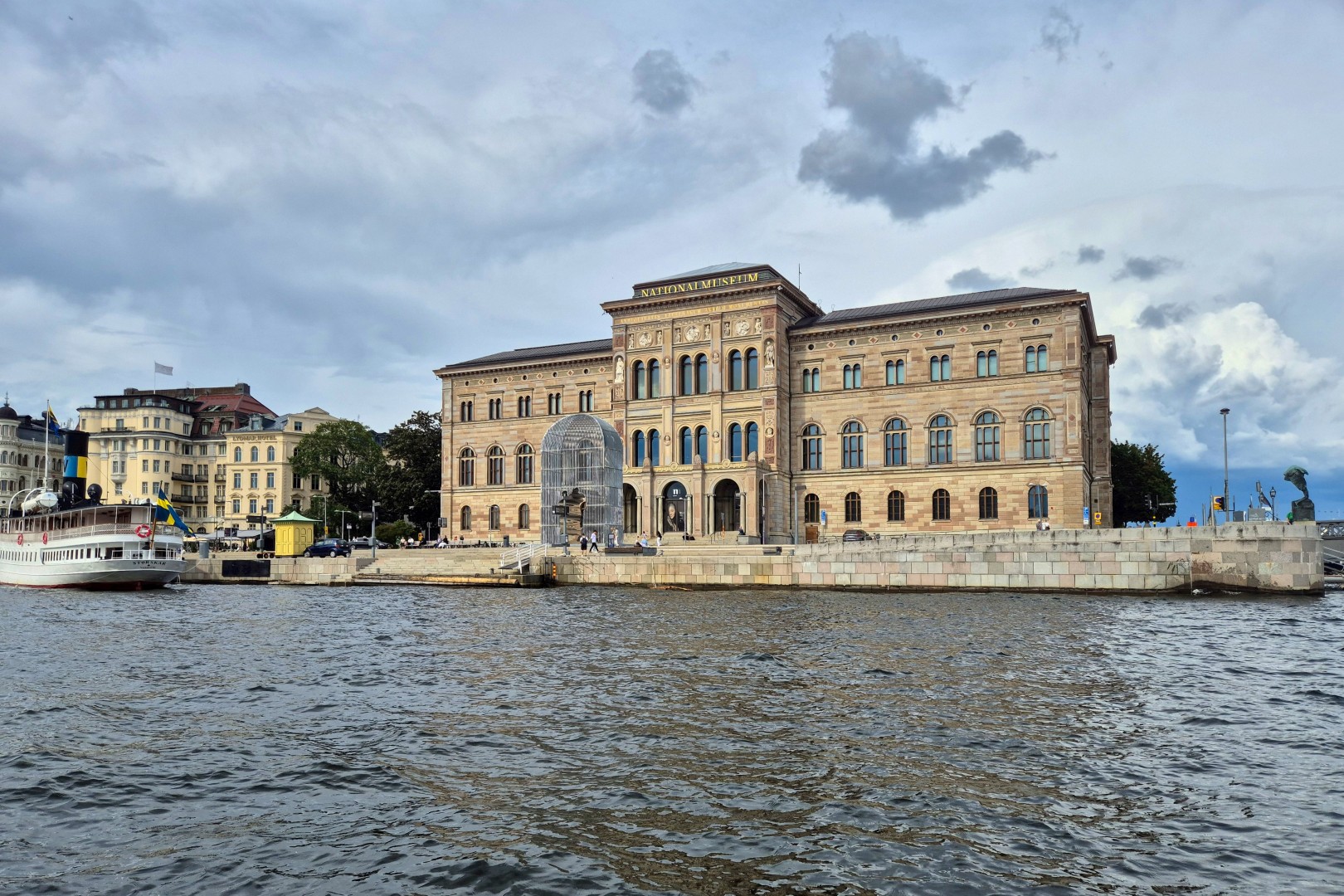
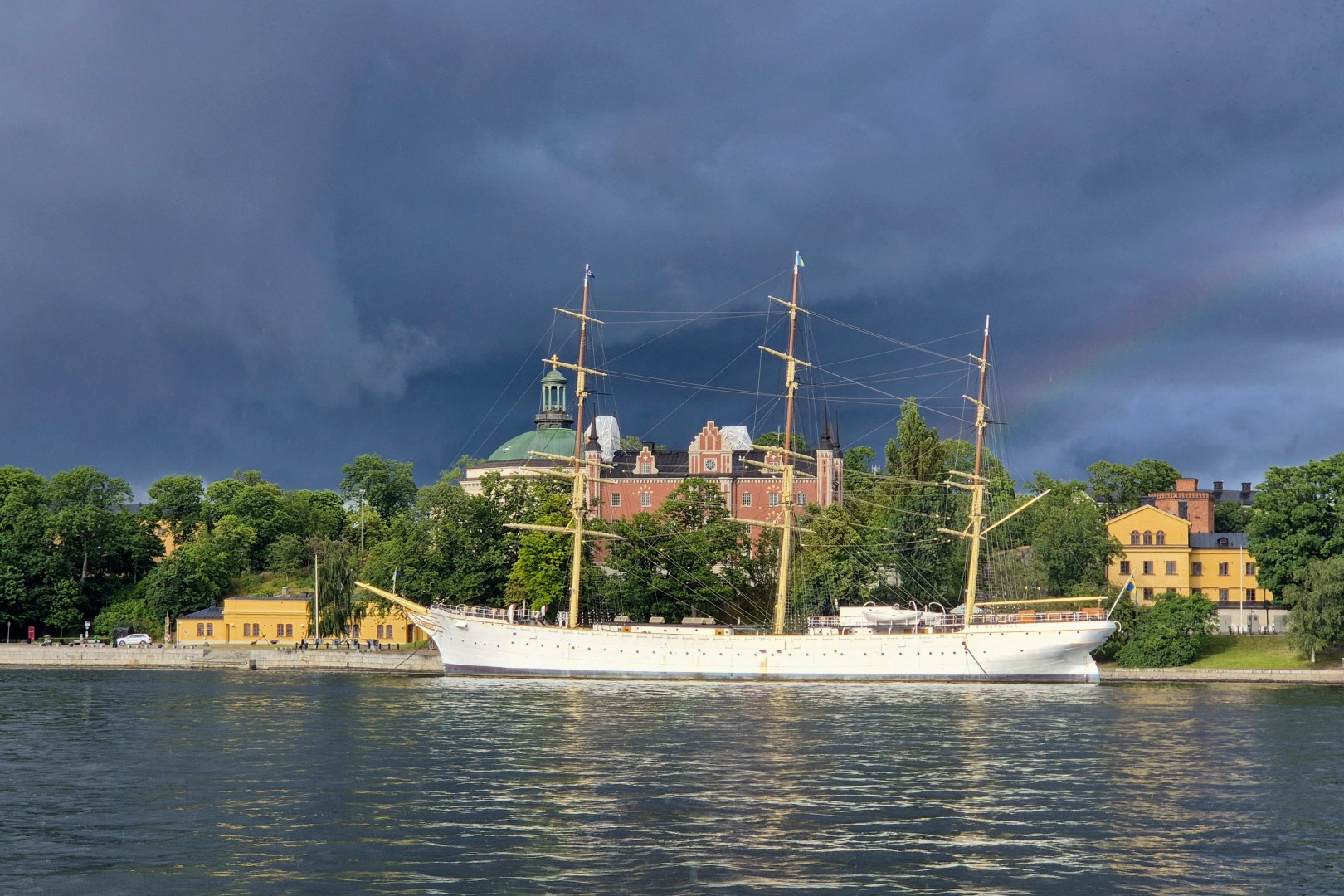
After this special experience, we strolled on through the Old Town. Passing the Royal Palace, our route took us across the Strömbron to the National Museum. Right in front of it, the monumental sculpture ‘Arch’ by the Chinese artist Ai Weiwei caught our eye. From there, we continued our walk across the elegant Skeppsholmsbron, whose golden crowns are among Stockholm’s most famous photo opportunities. Once we arrived on Museum Island, we reached the historic M/S Fladen lighthouse and then crossed the Kastellholmsbron.
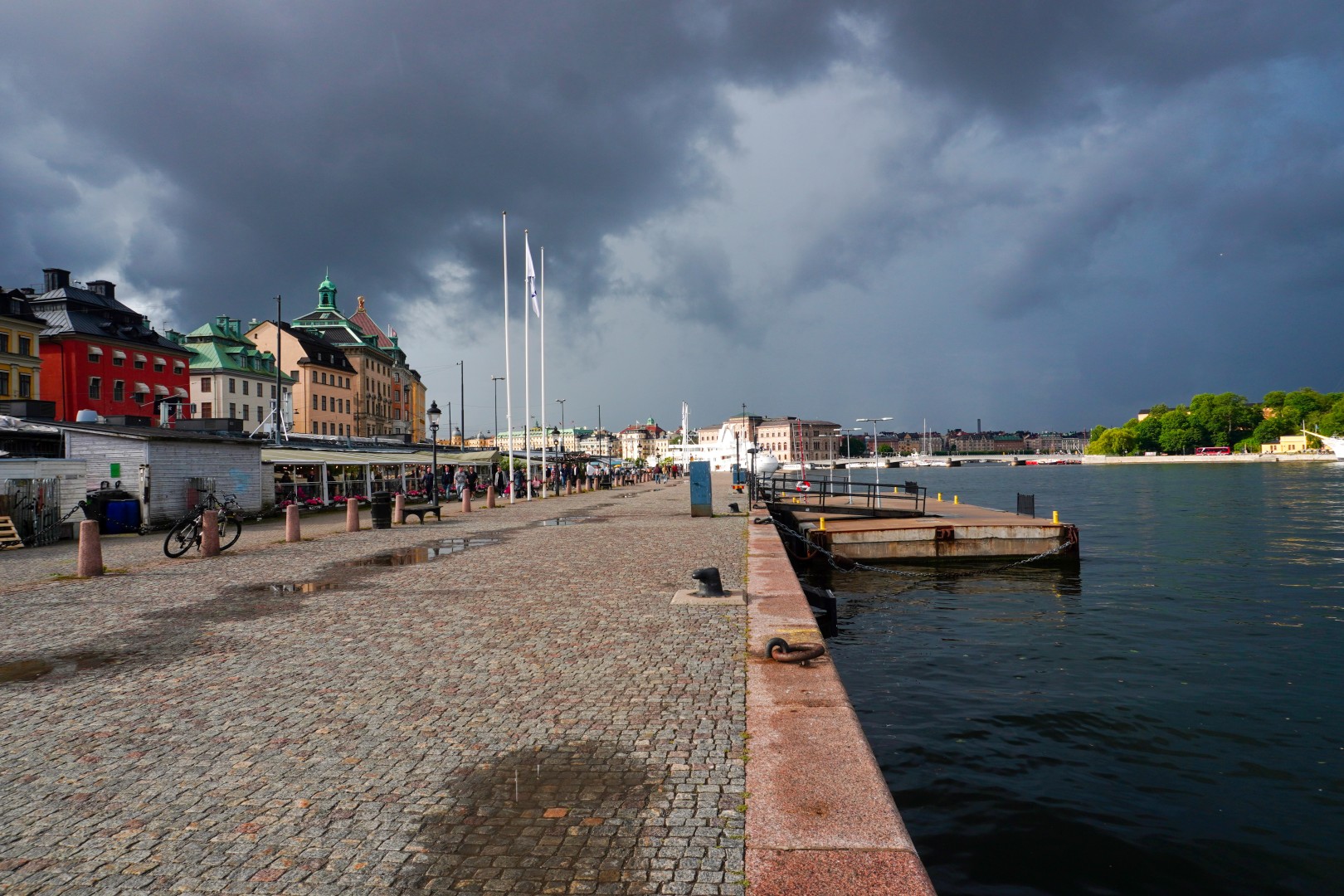
We then took bus number 65 to Karl XII torg to begin the next part of our city tour. From there, we strolled leisurely along Skeppsbrokajen, right by the water’s edge, to the ferry terminal. On the way, we stopped for a short break at the little Skeppsbro Bageri – a perfect spot for a coffee and a light snack.
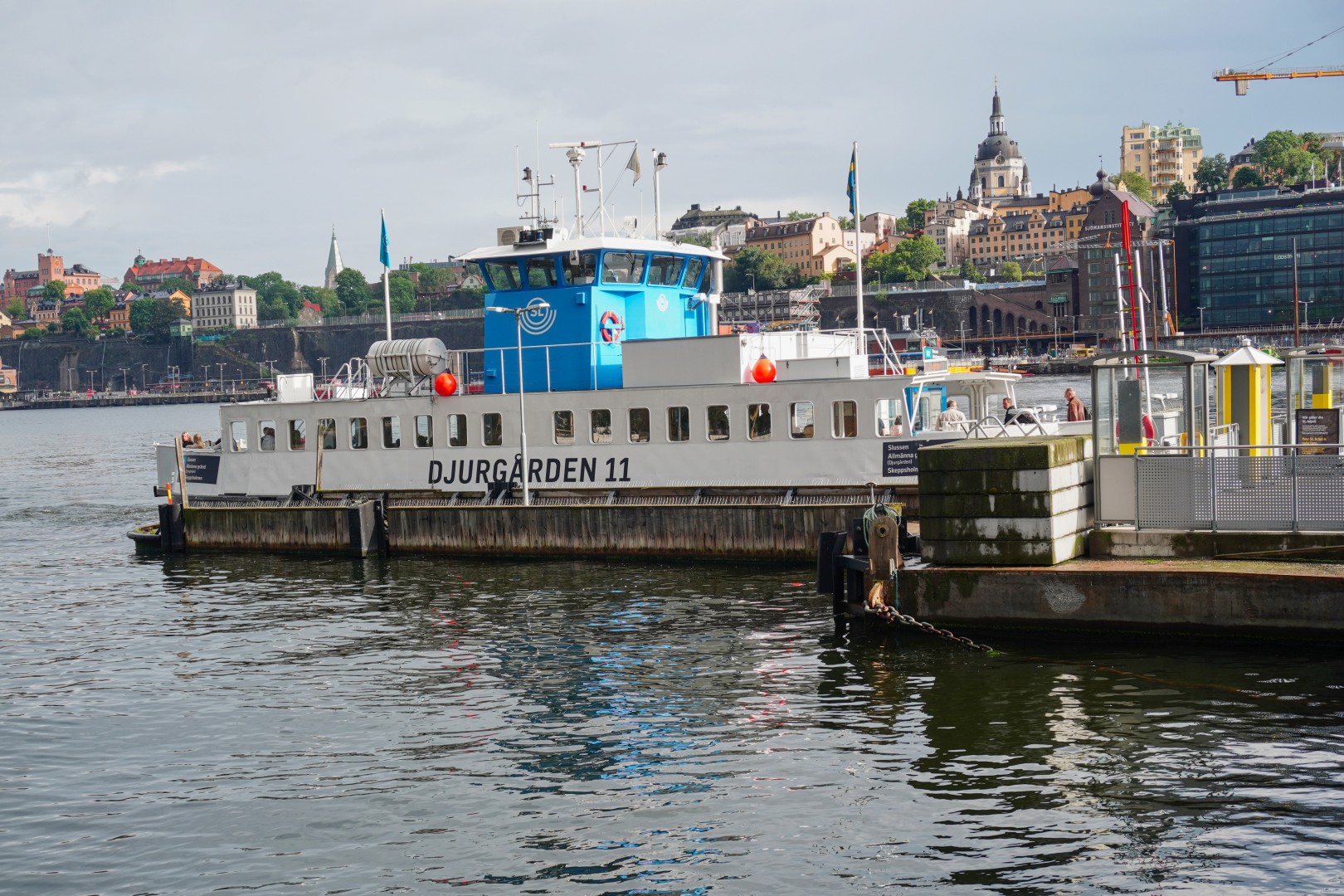
We then took ferry 82 across to Allmänna Gränd. This is home to one of Stockholm’s most popular leisure and museum districts. Right next to one another are the historic Gröna Lund amusement park, the world-famous ABBA Museum, the Viking Museum and numerous other museums and attractions.
The lively atmosphere alone made this part of town a worthwhile destination. We took tram line 7 on to Waldemarsudde. From there, we strolled leisurely along the waterfront promenade via Singelbaken, past the historic Hällestadsstapeln, to the Cirkus, one of Stockholm’s best-known venues.
The route ran constantly alongside the water and offered wonderful views of the archipelago time and again. Back at the Liljevalchs/Gröna Lund stop, we took ferry 82 again, this time back to Slussen.
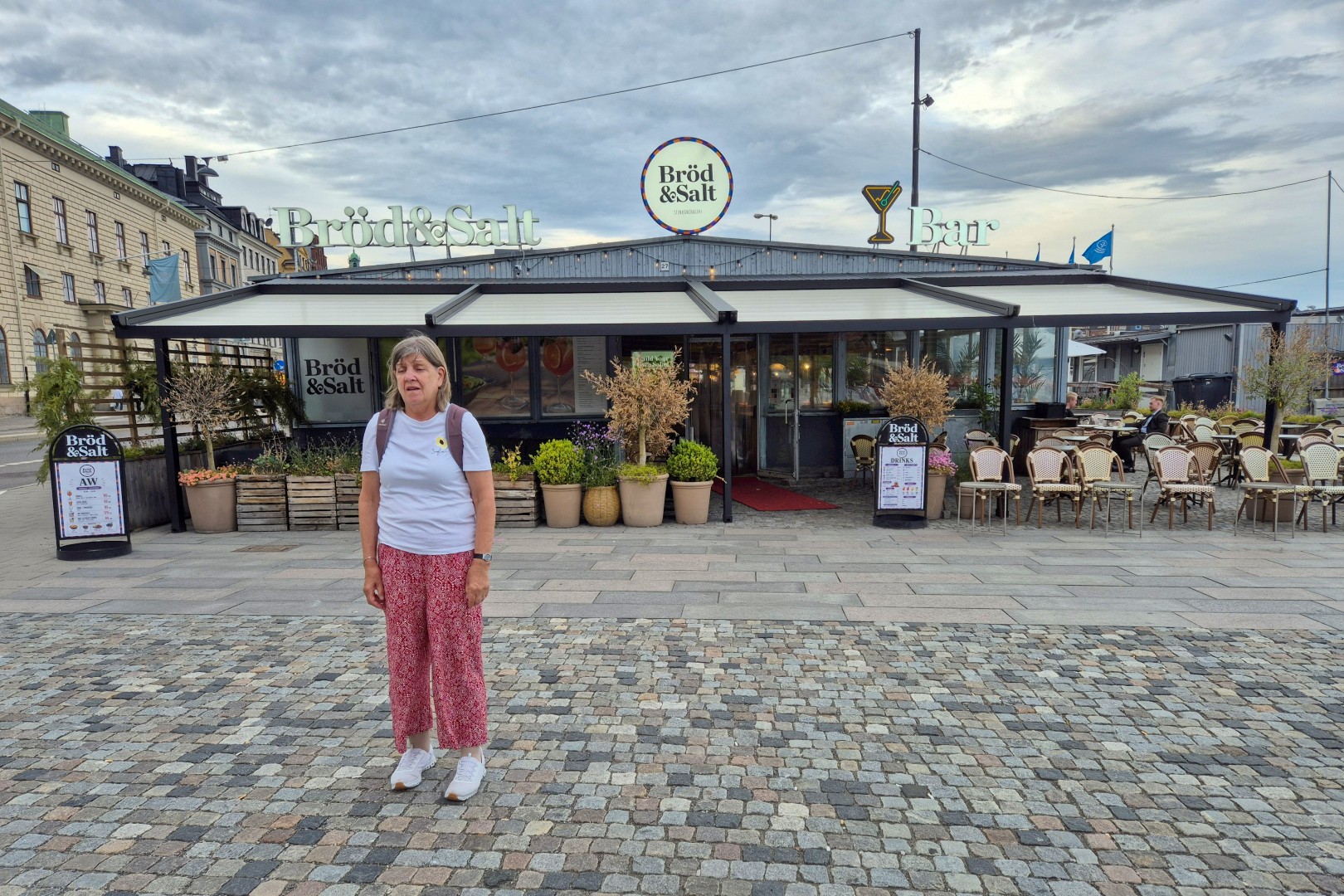
To round off the day, we treated ourselves to a little snack at Bröd & Salt. The freshly baked pizza breads on offer there tasted superb and were just the thing after walking for many kilometres. We then took the underground back to Alvik, where we changed to the well-known tram line 31 and finally reached our hotel, the Best Western Plus Bromma.
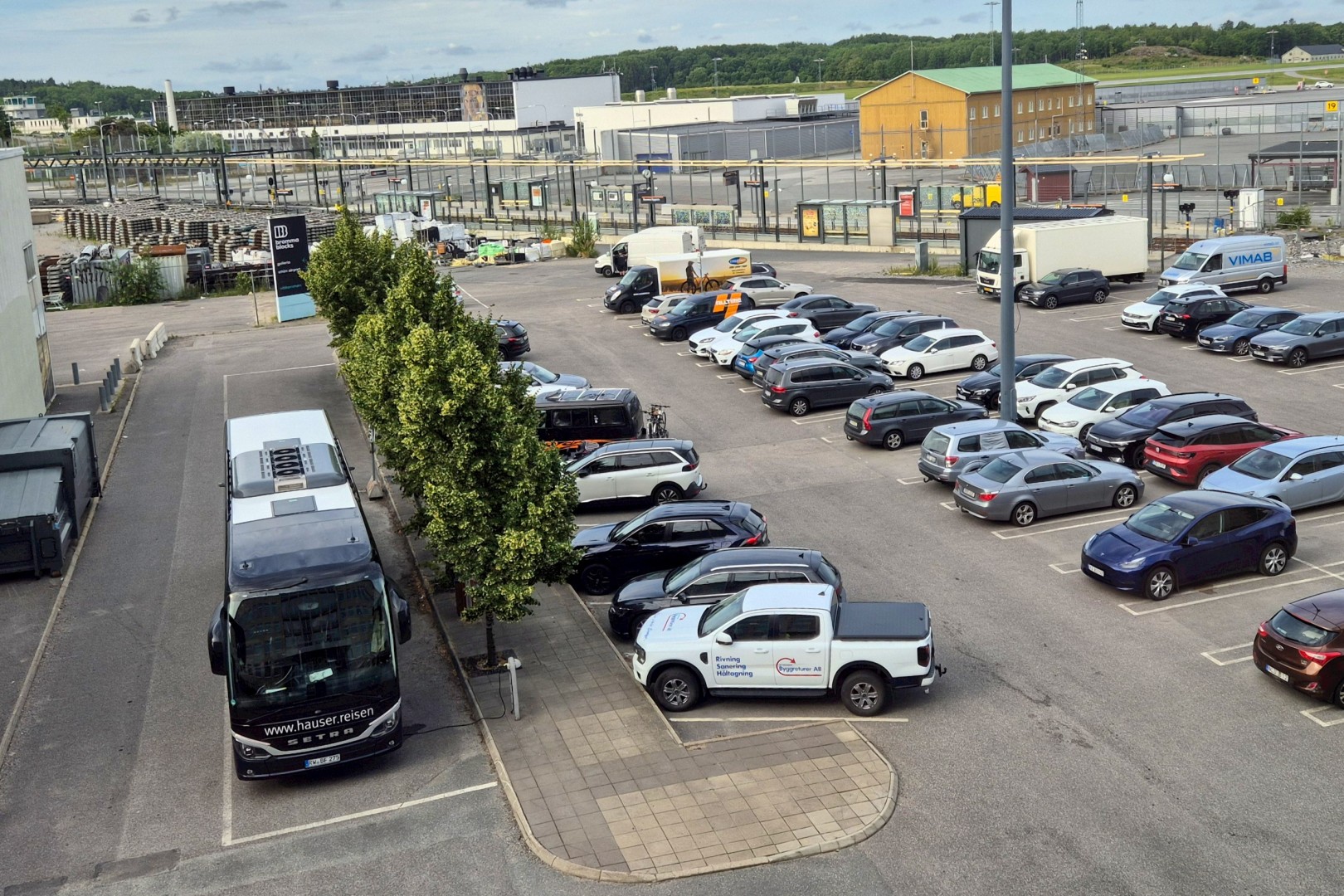
Our familiar Hauser coach was still parked outside the hotel. After the strenuous days of travelling, the Hauser team treated themselves to a few well-deserved days of rest in Stockholm before setting off again with the next tour group.
For us, an exceptionally eventful day came to an end.
Stockholm had once again surprised us today with a very special side of itself. The anniversary celebrations at the Royal Palace, which we happened to witness by chance, made this day an unforgettable experience – sometimes it’s precisely the unplanned moments that make a trip special.
A perfect day in one of Europe’s most beautiful capital cities.
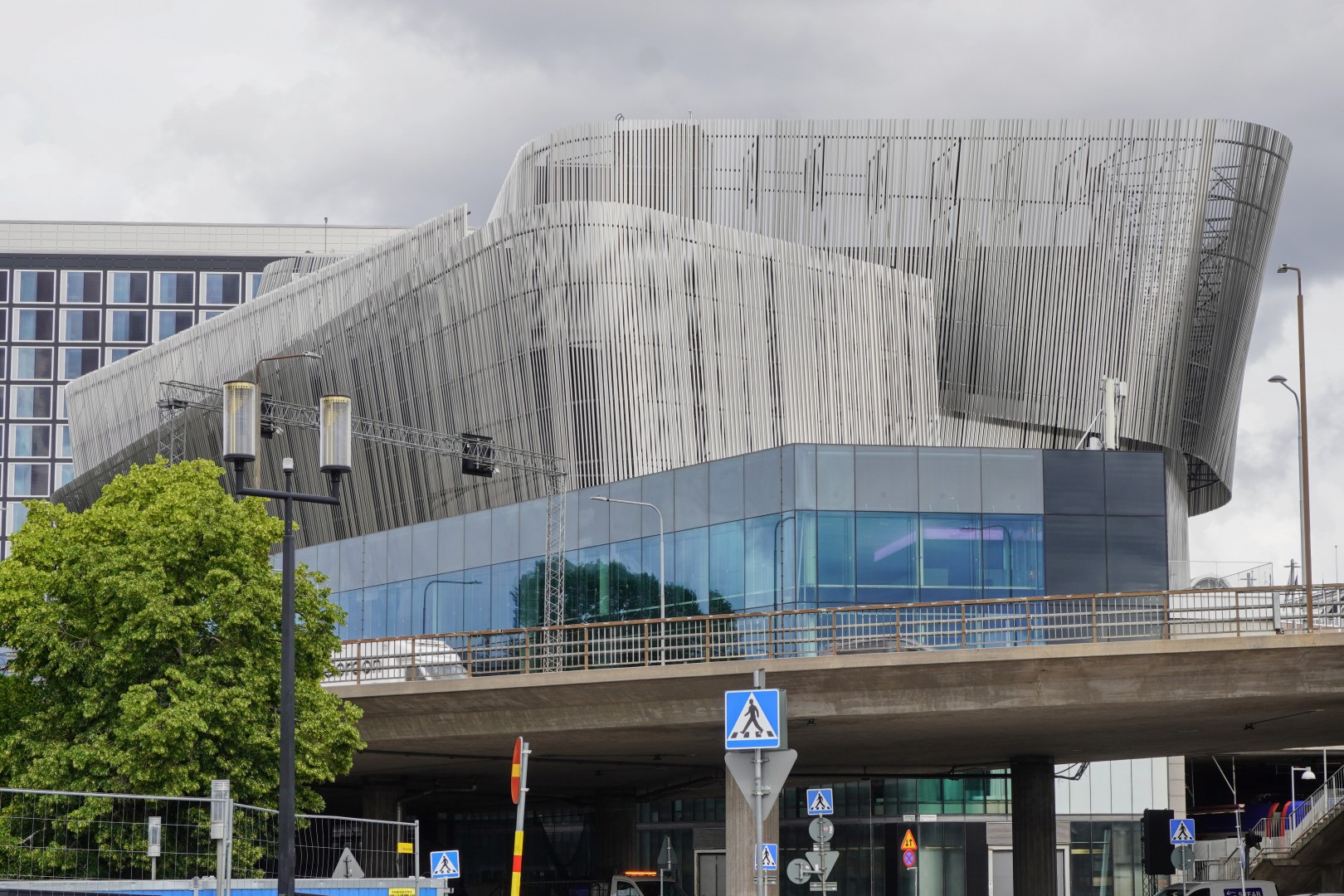
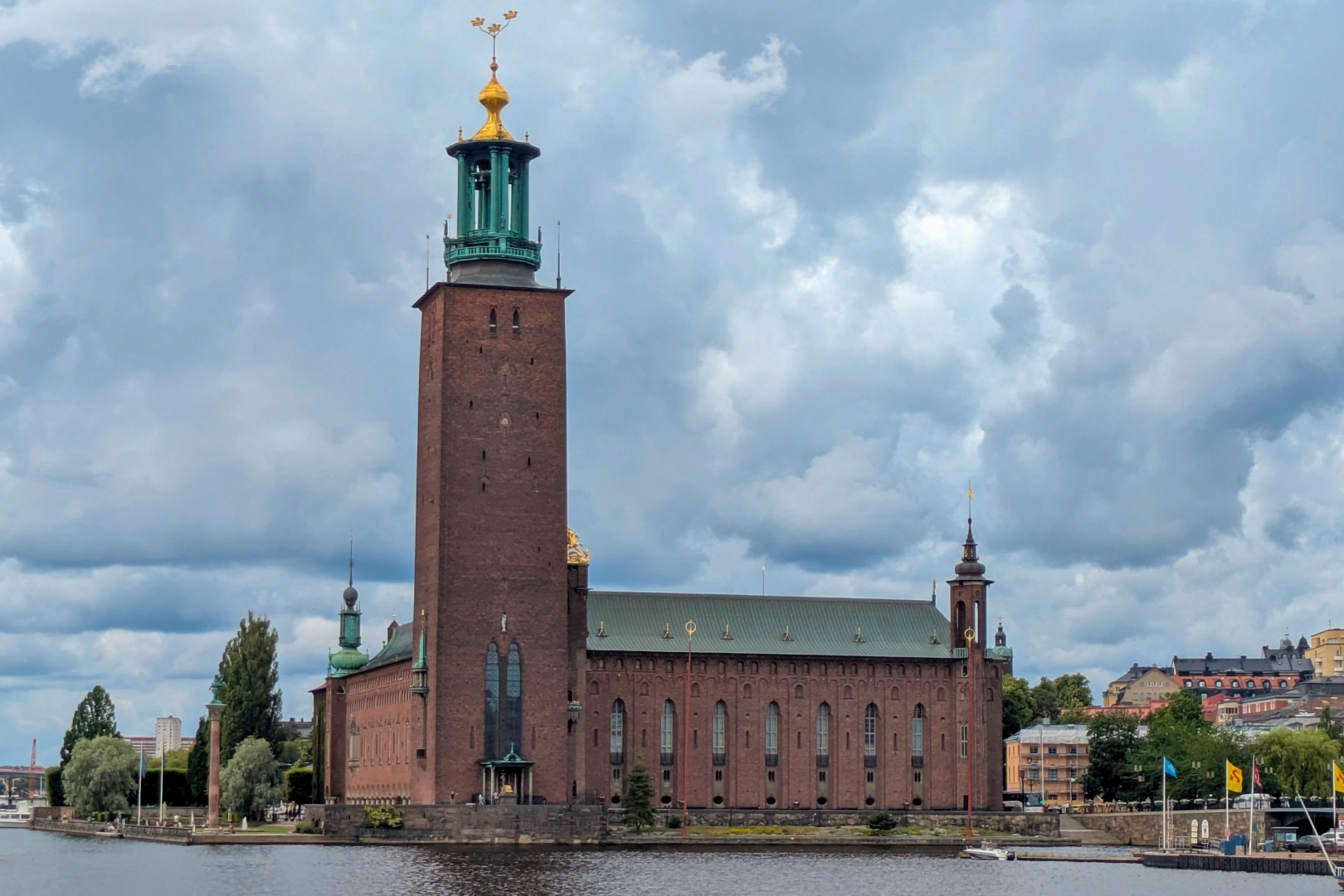
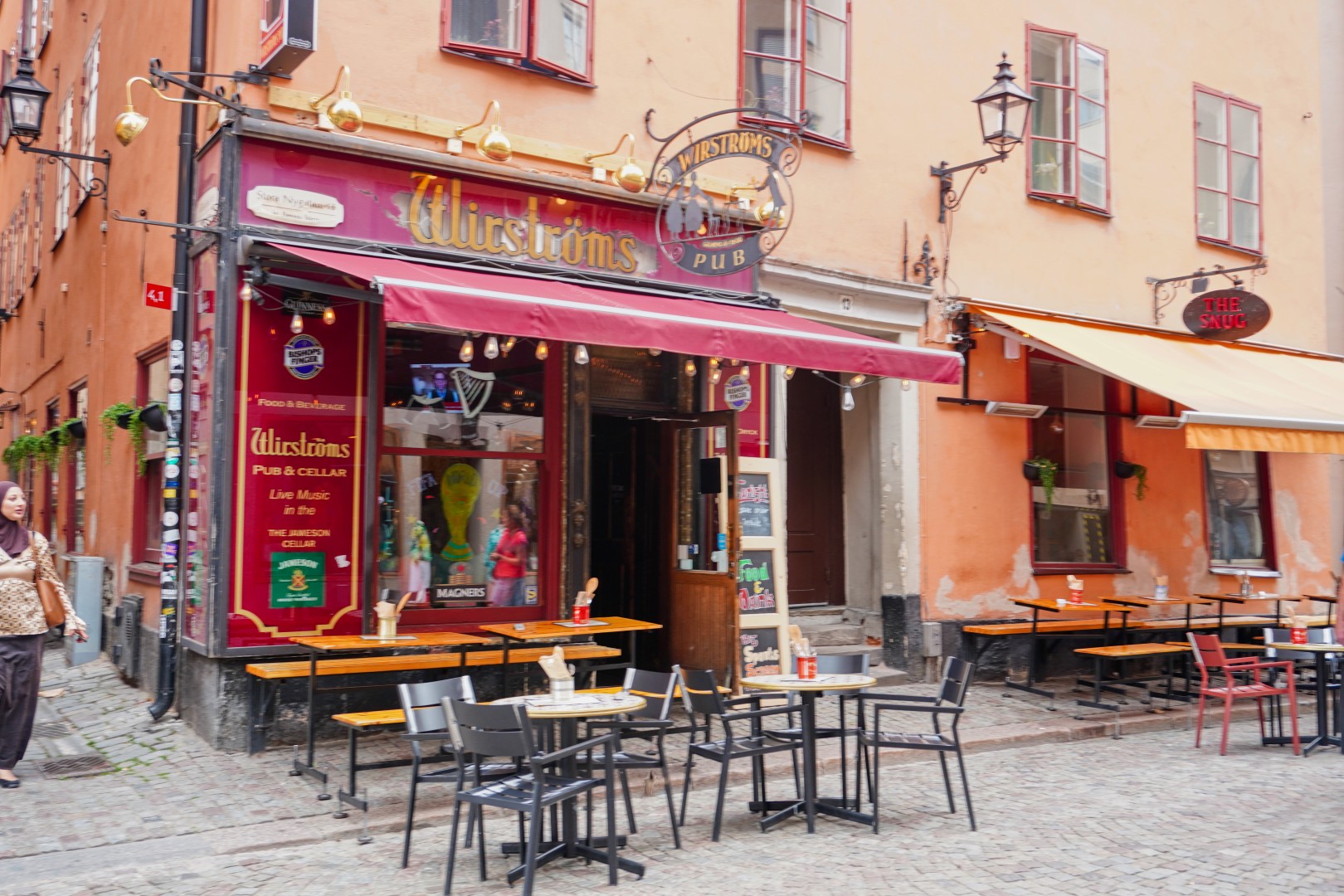
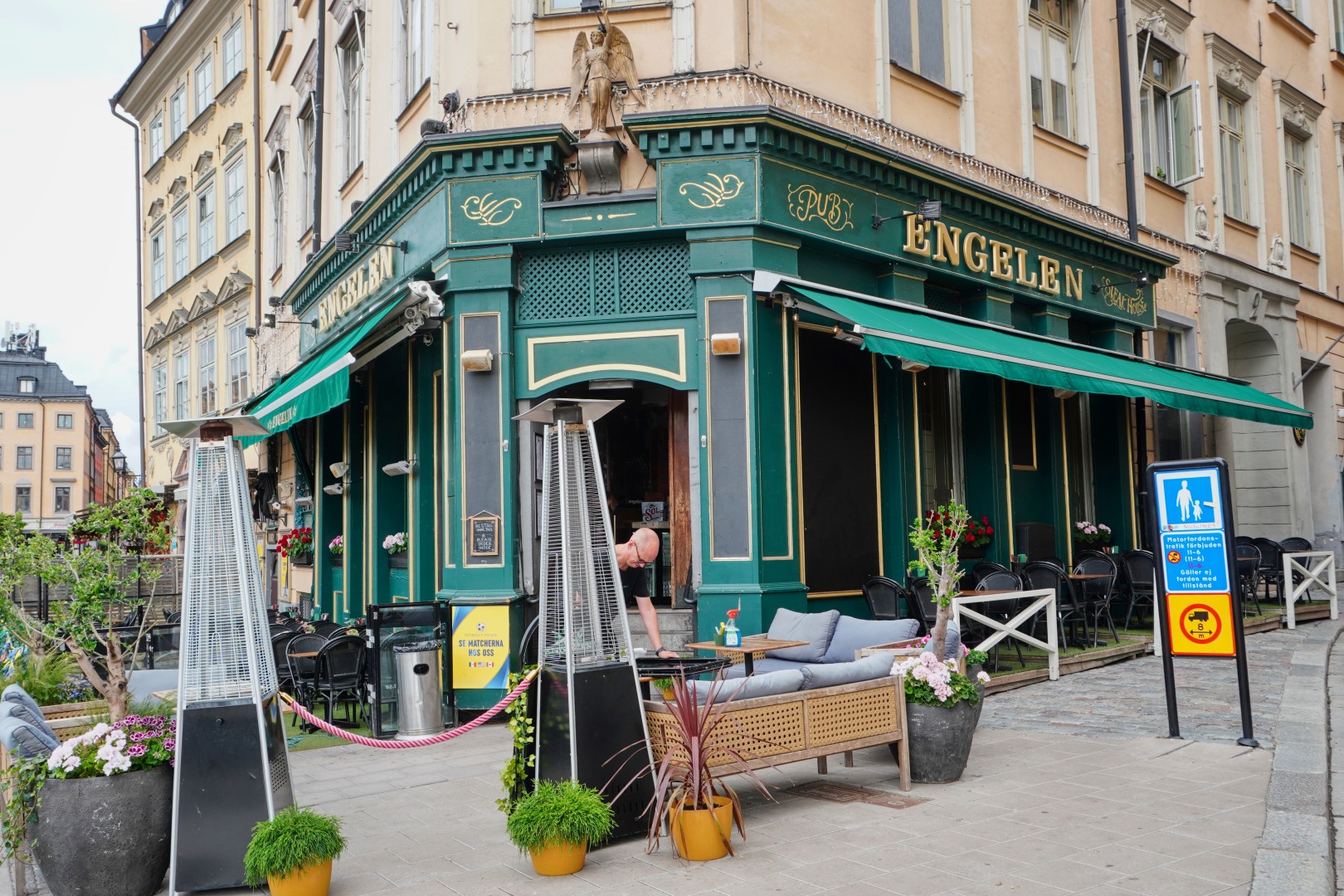
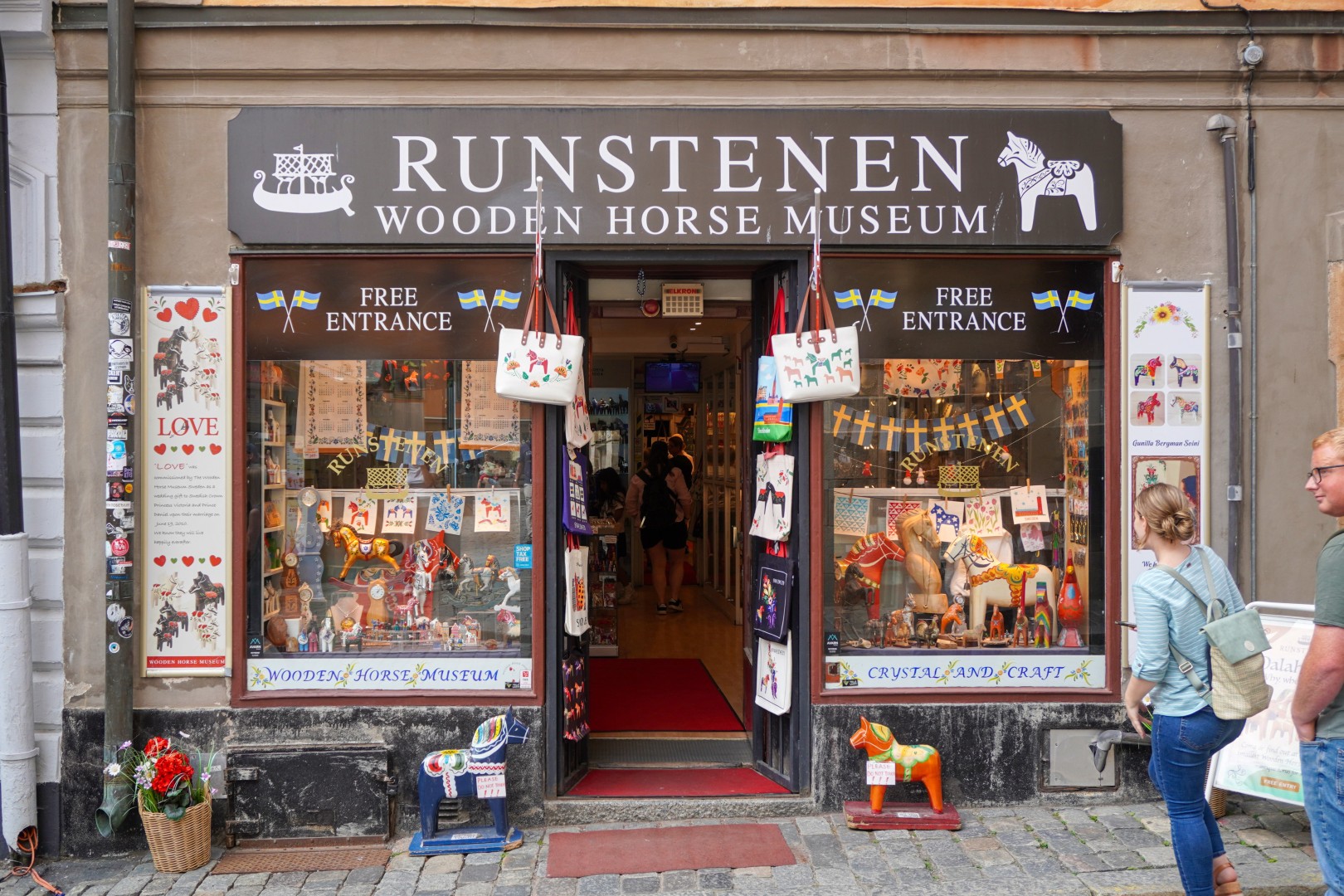
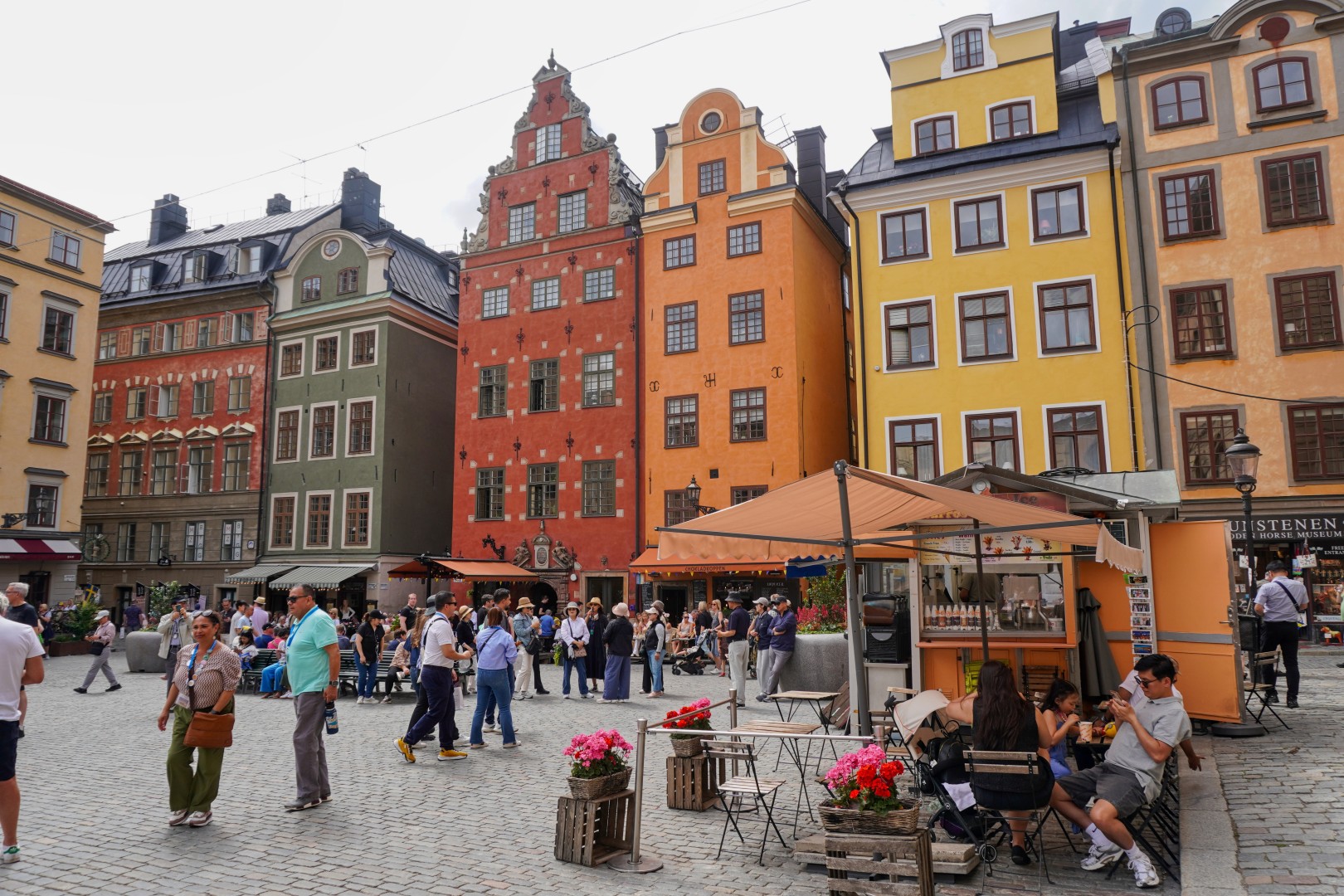
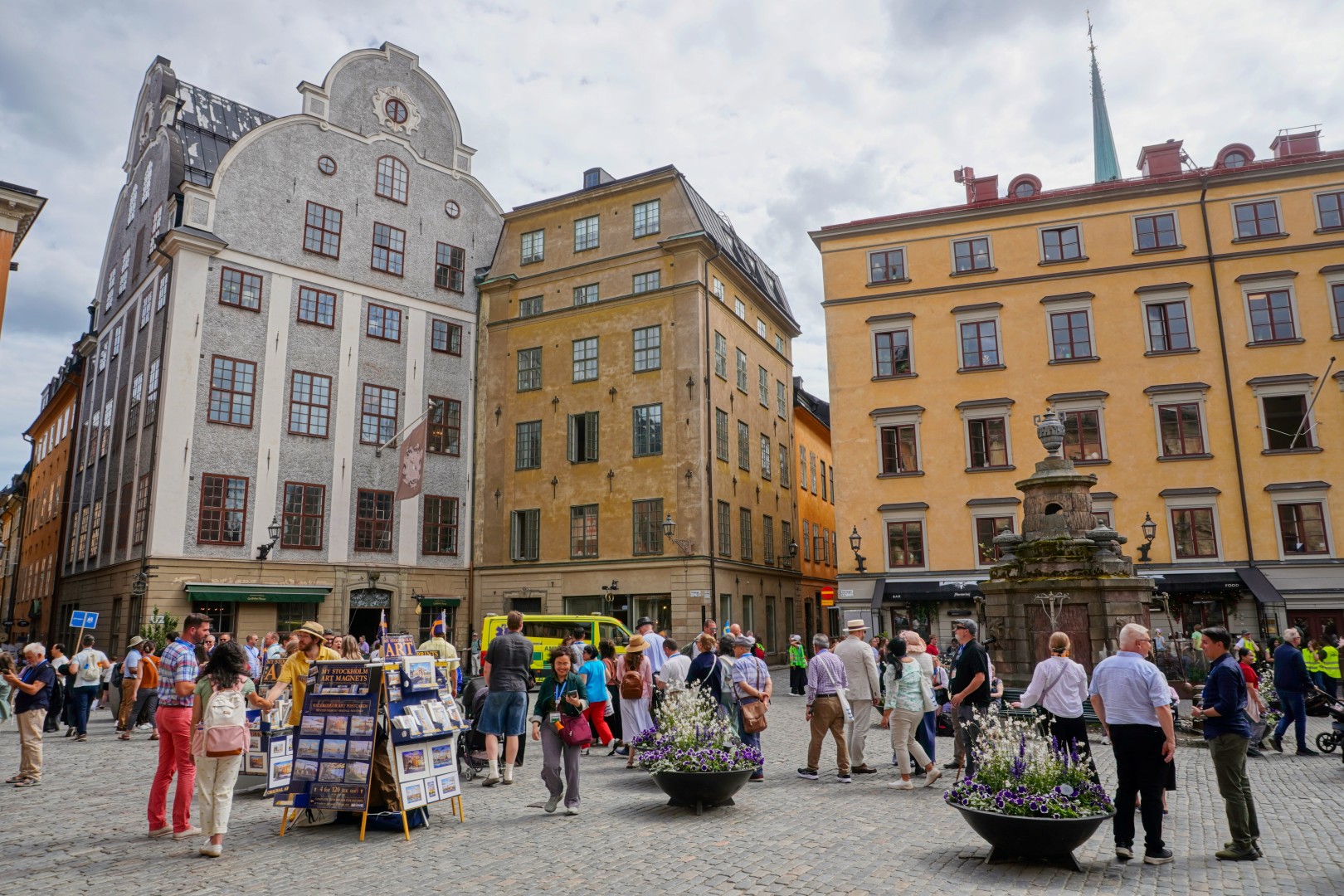
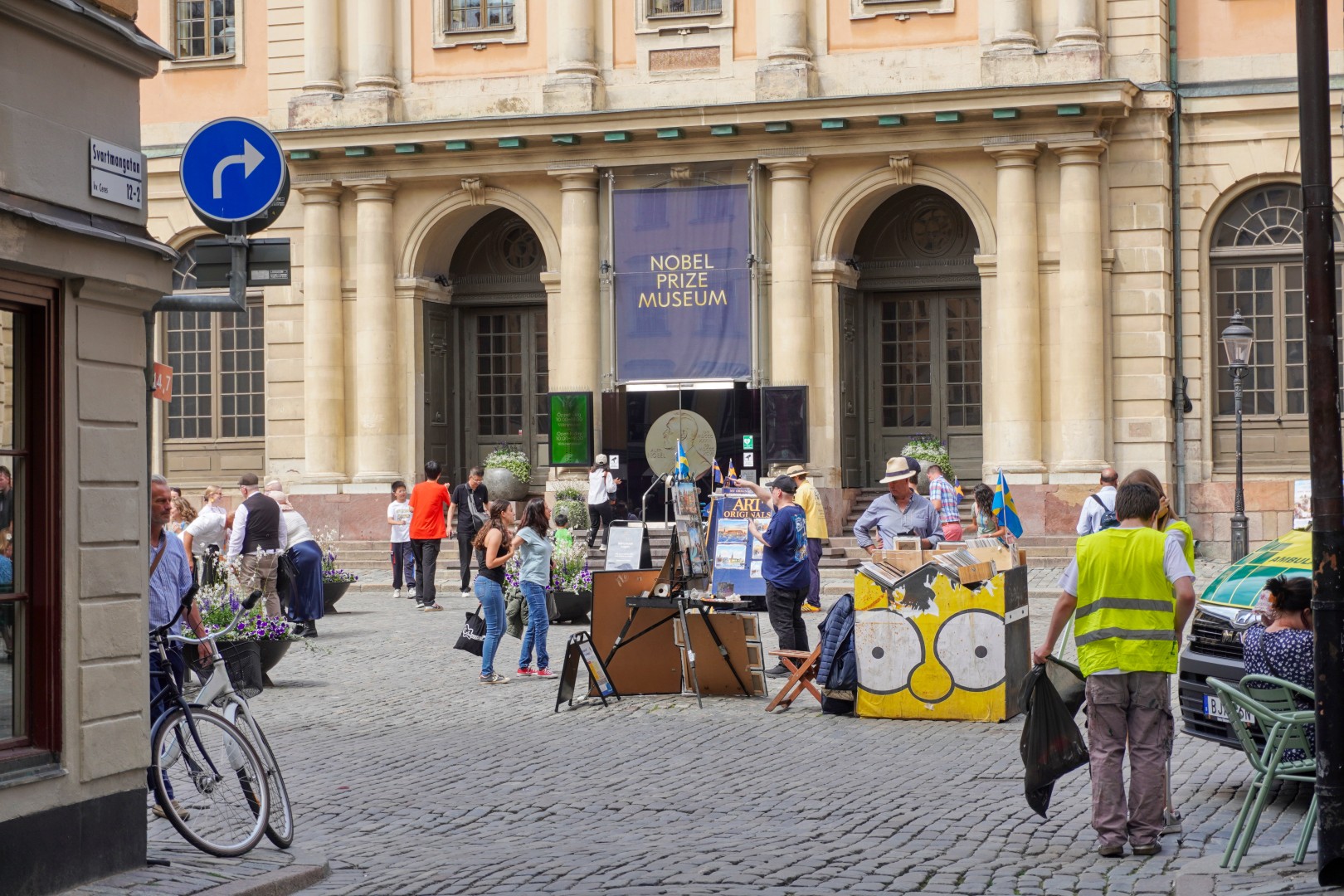
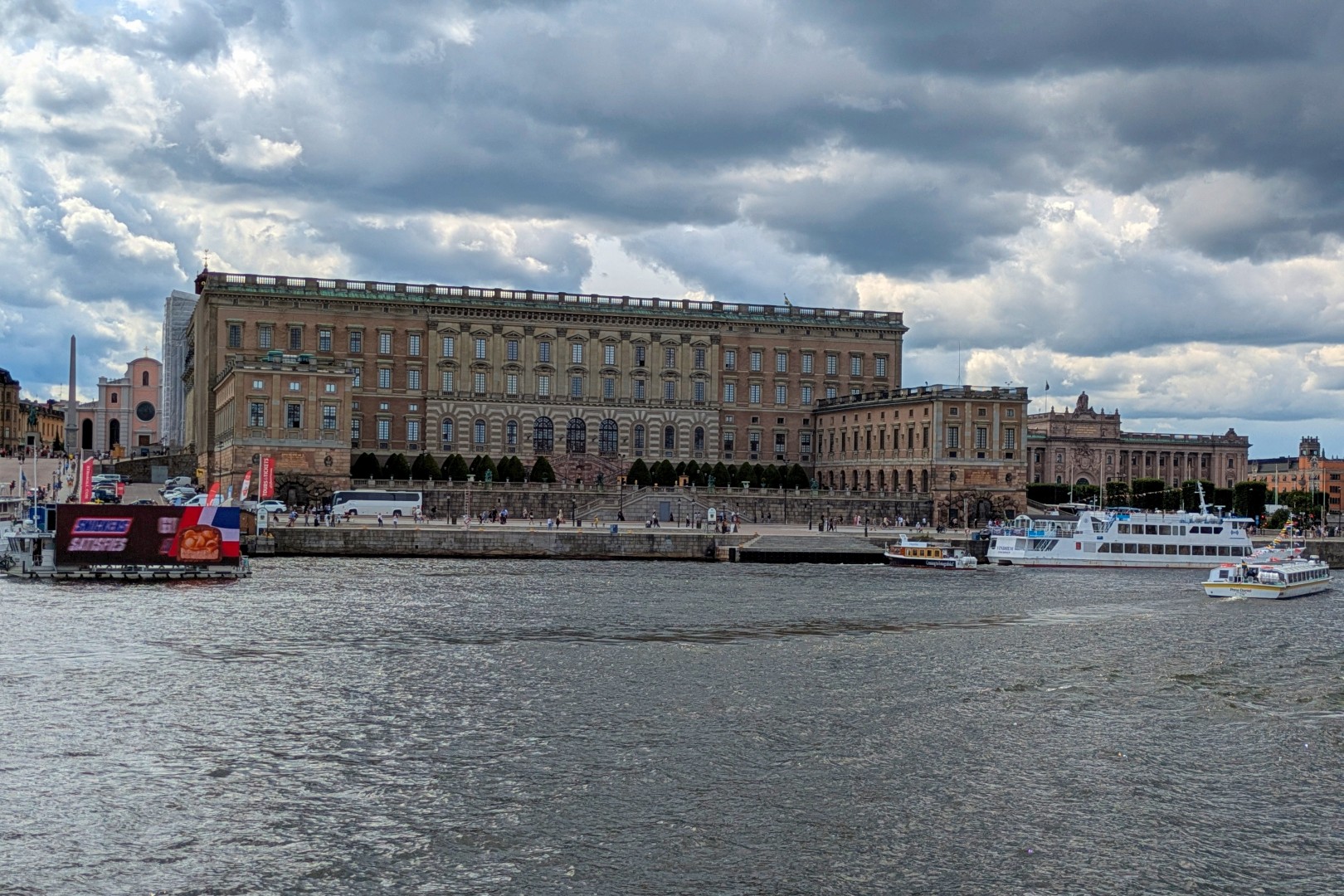
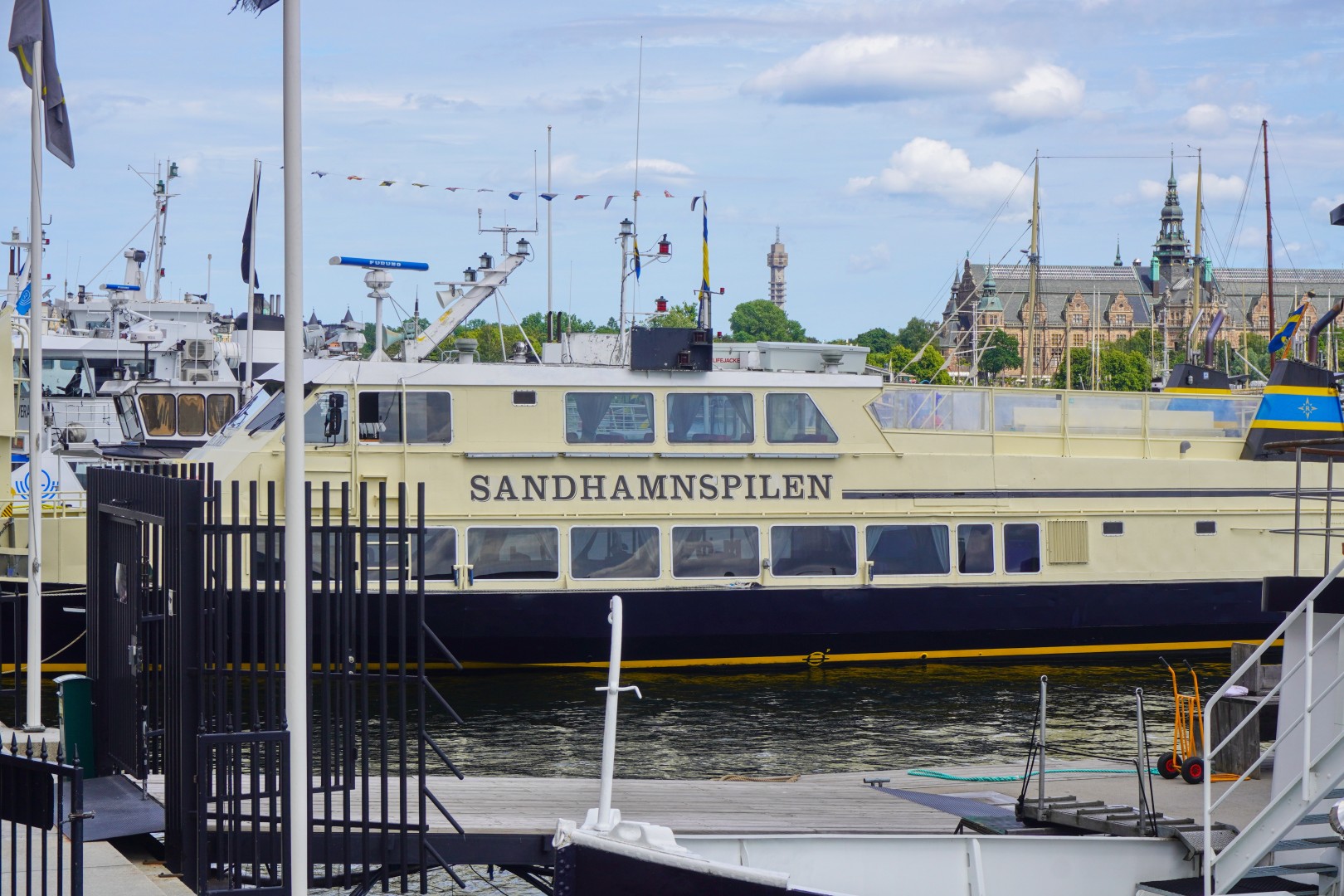
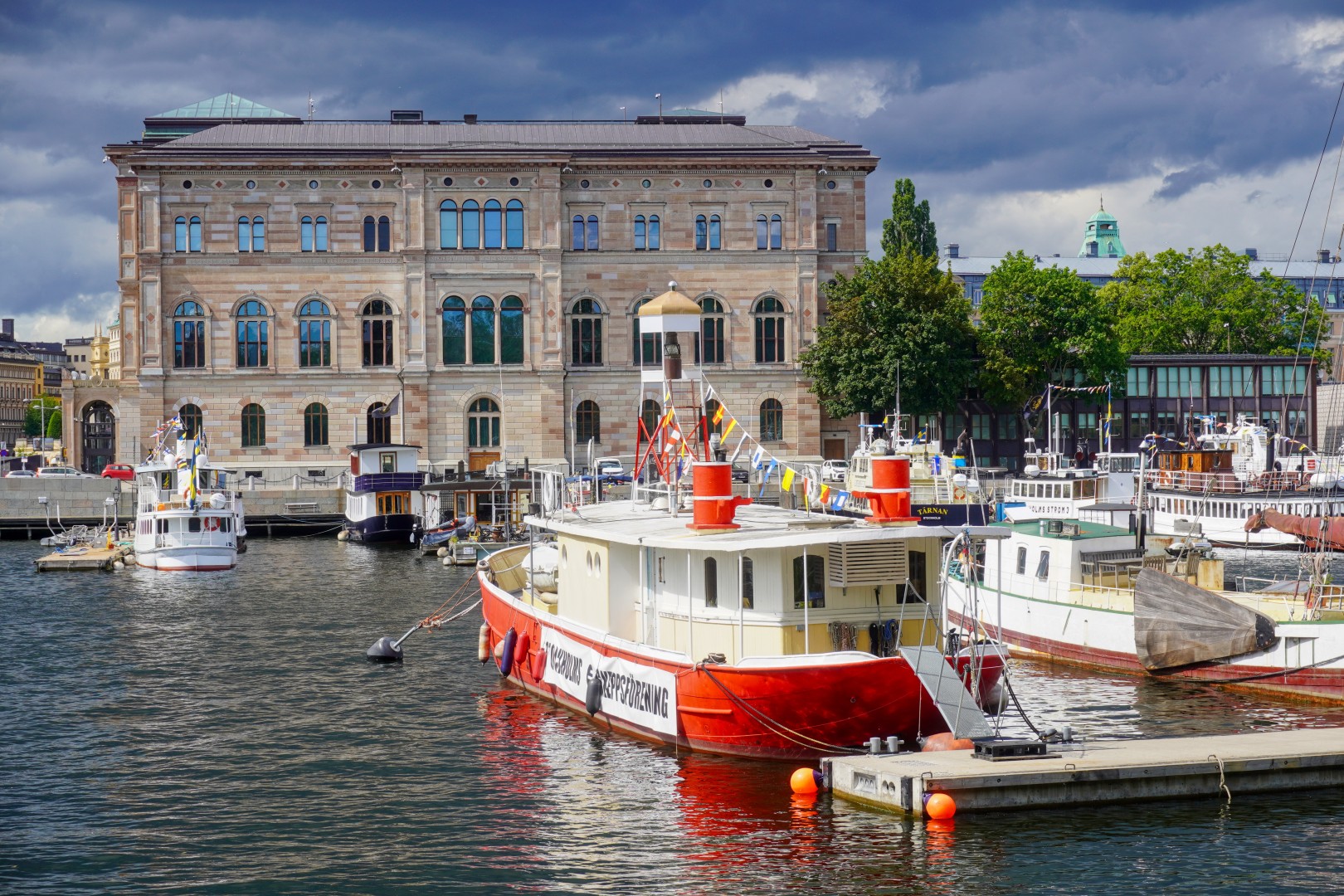
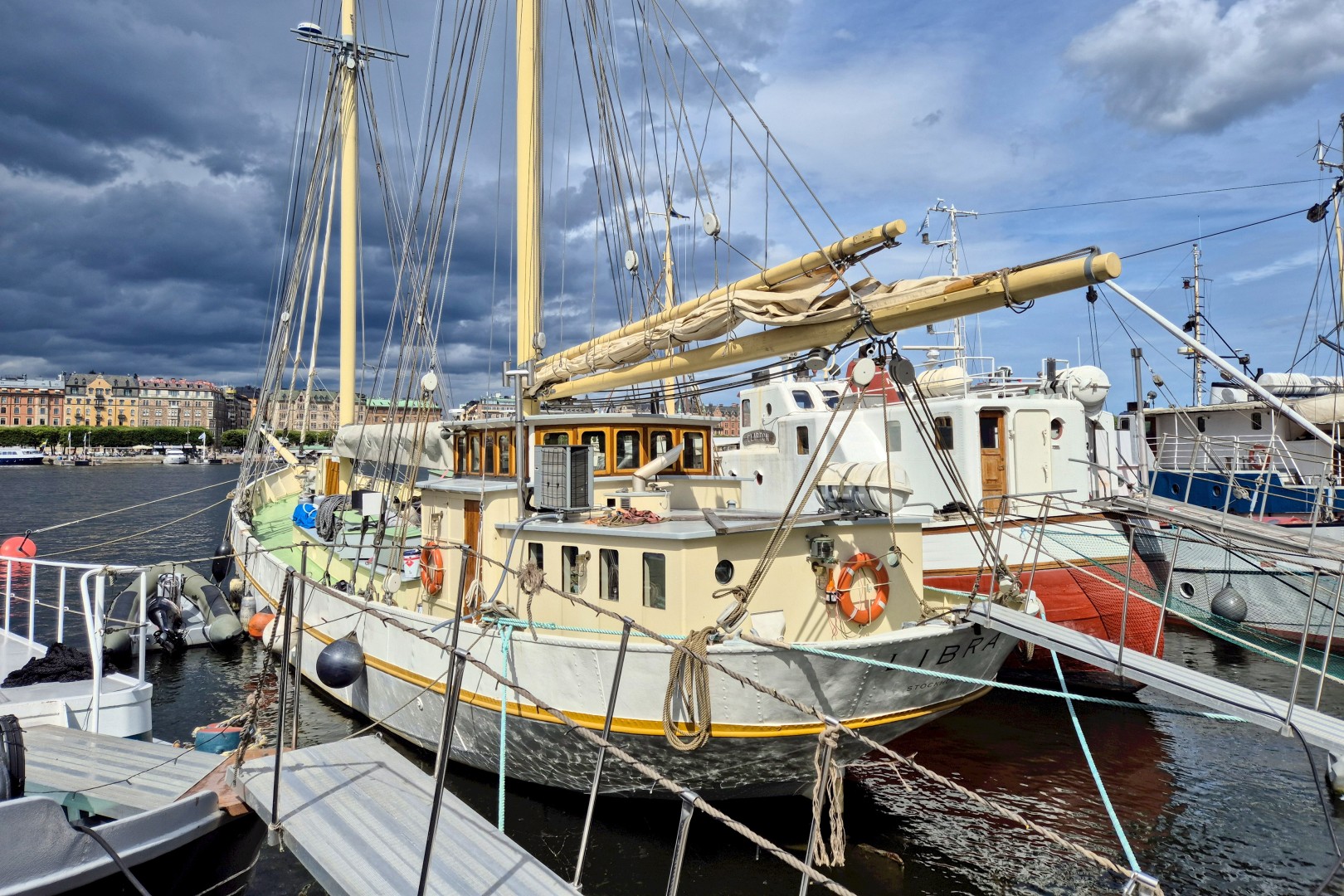
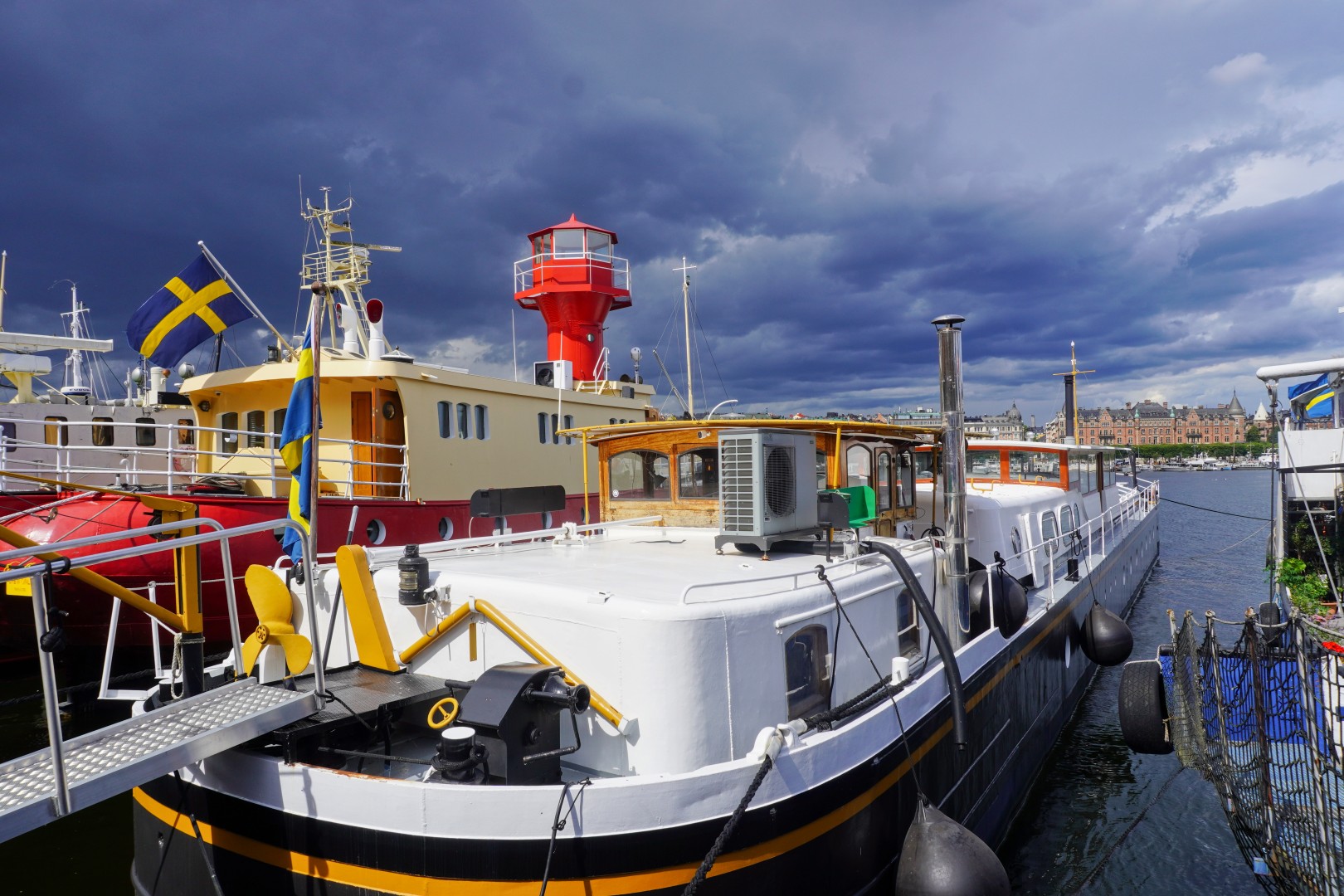
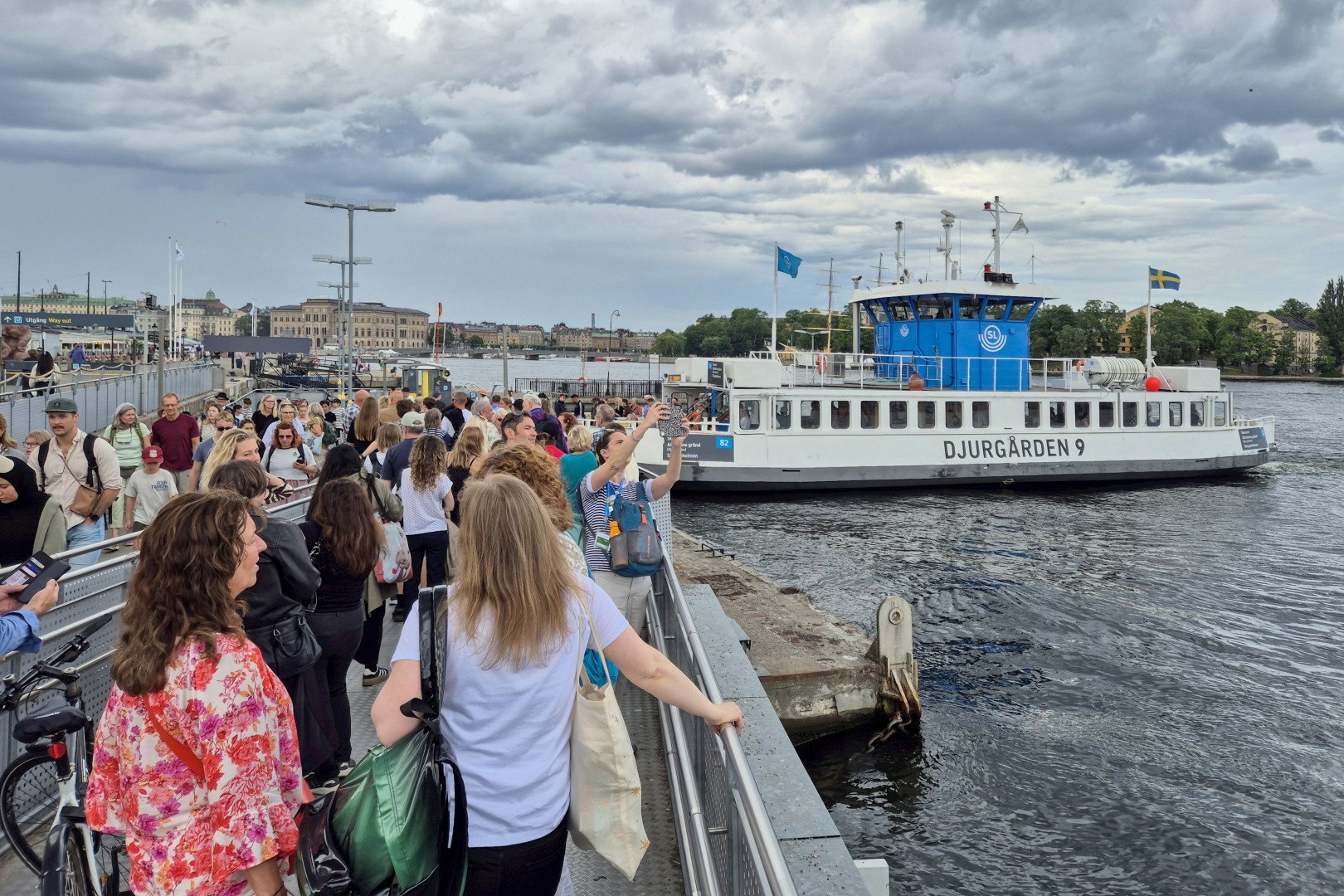
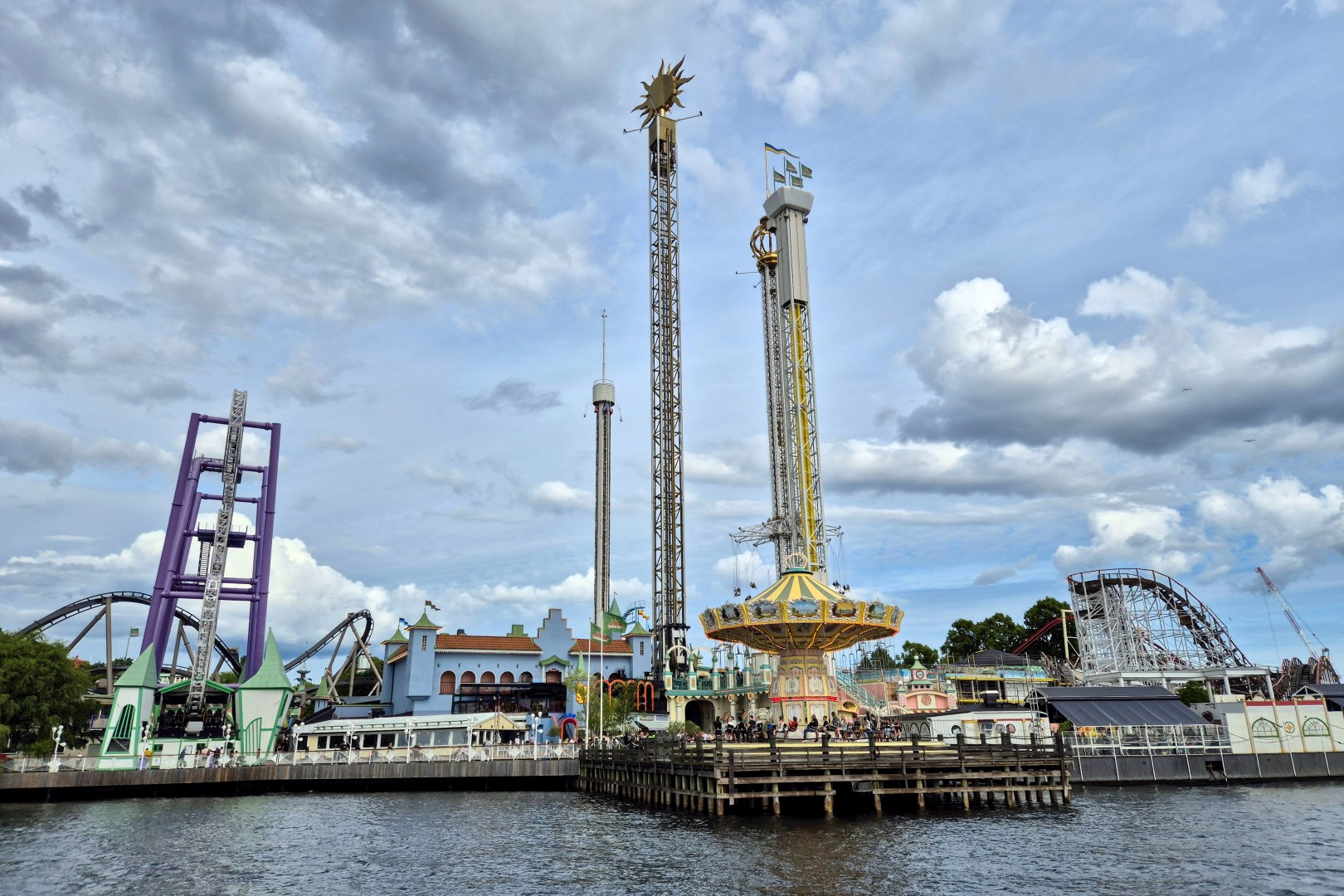
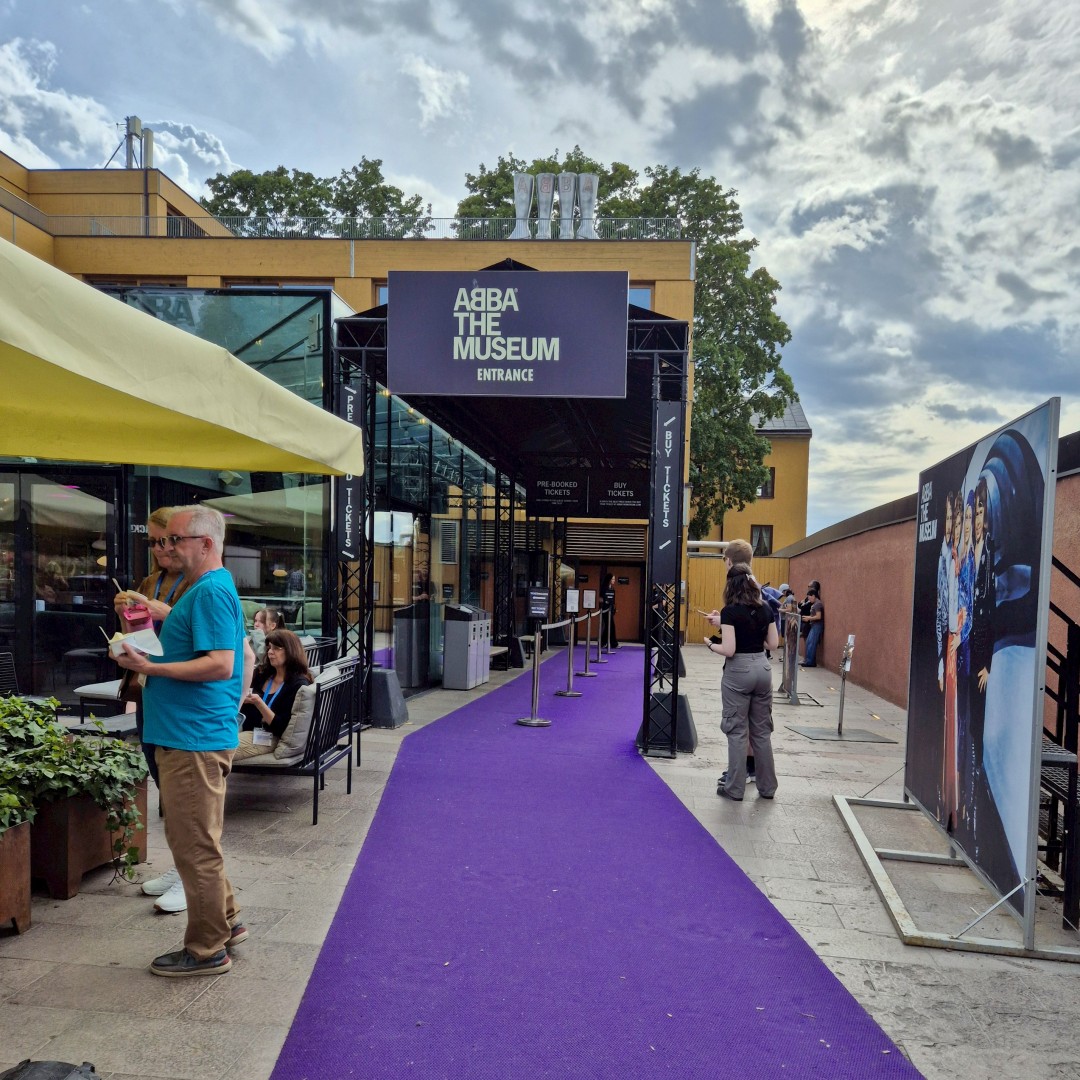
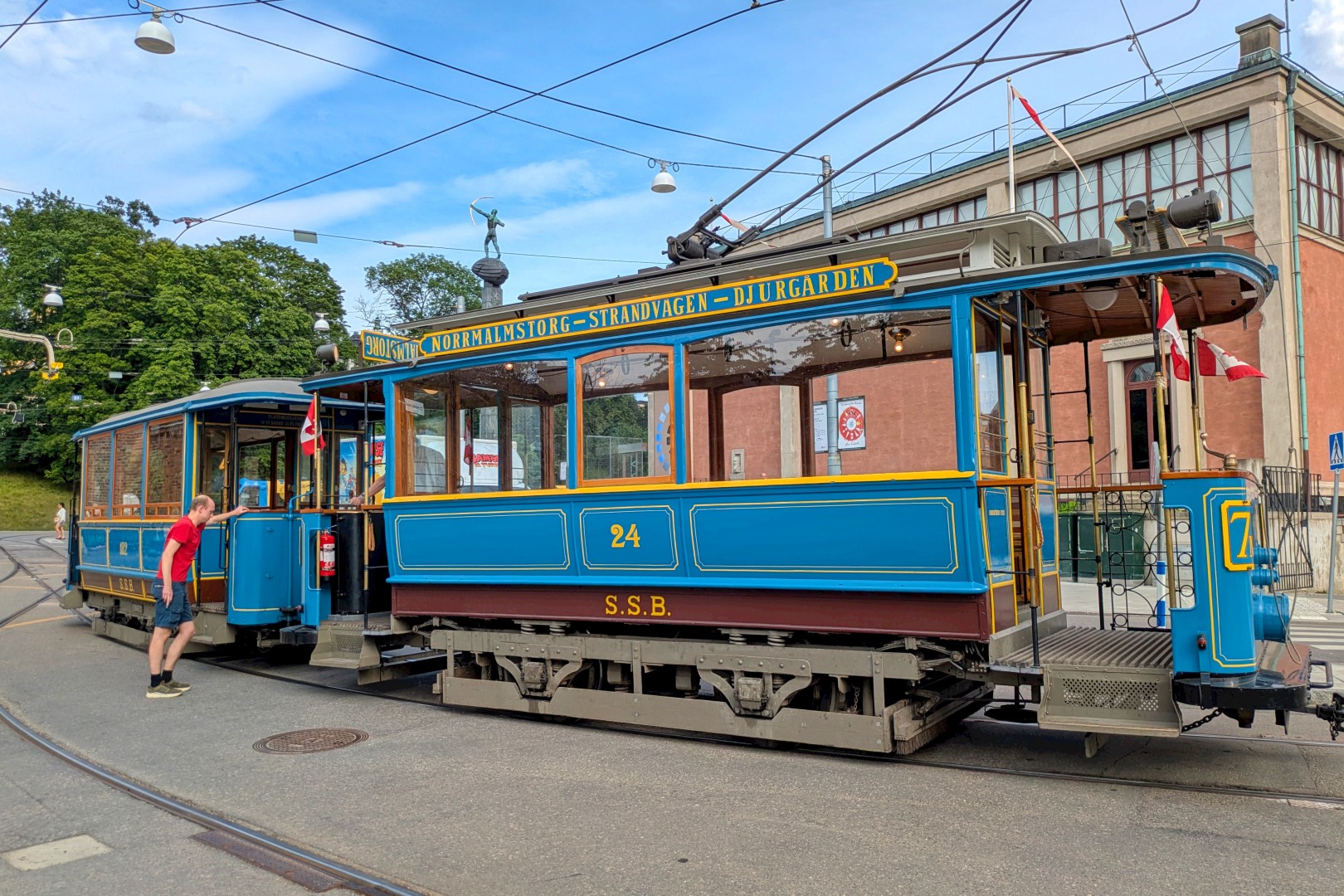
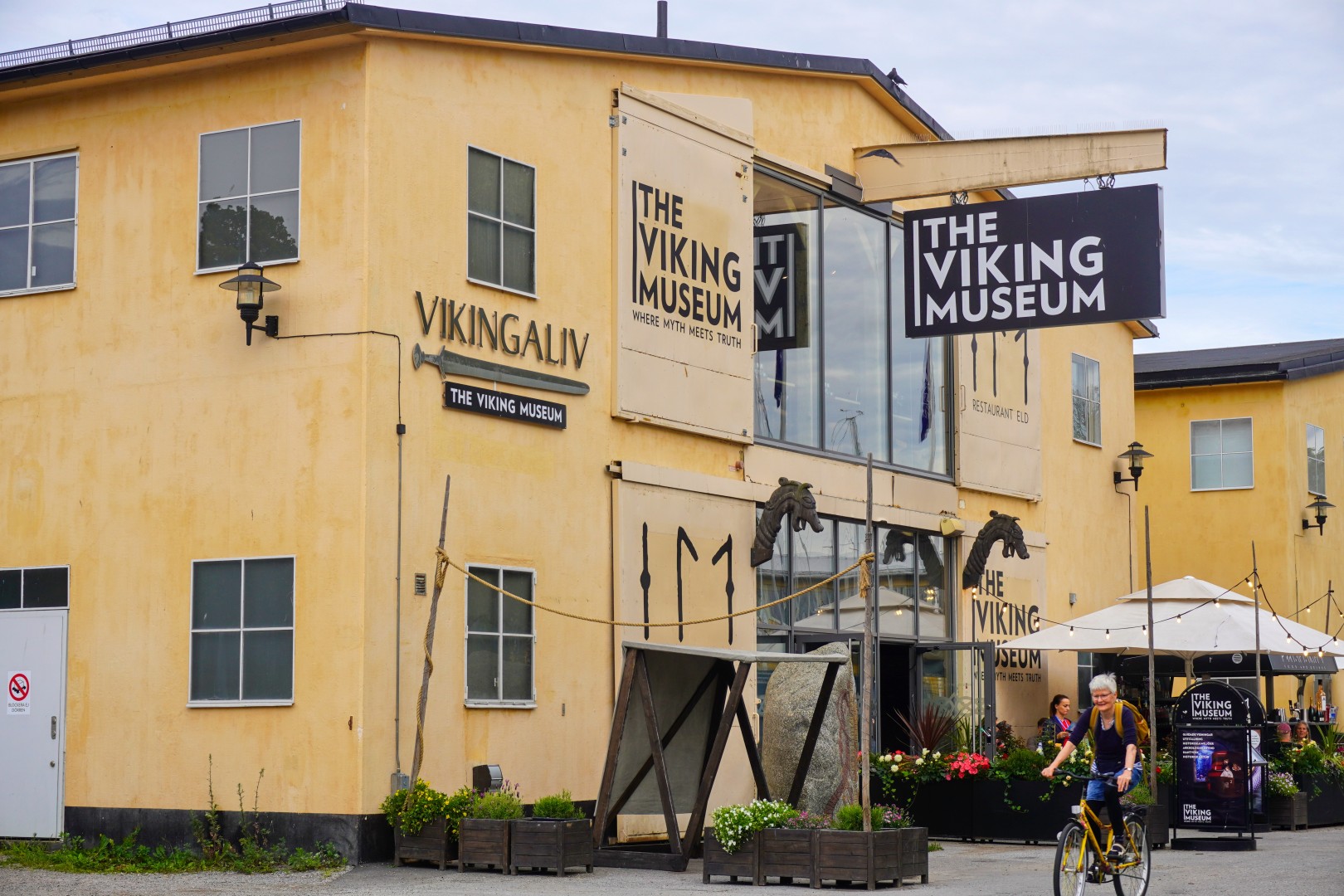
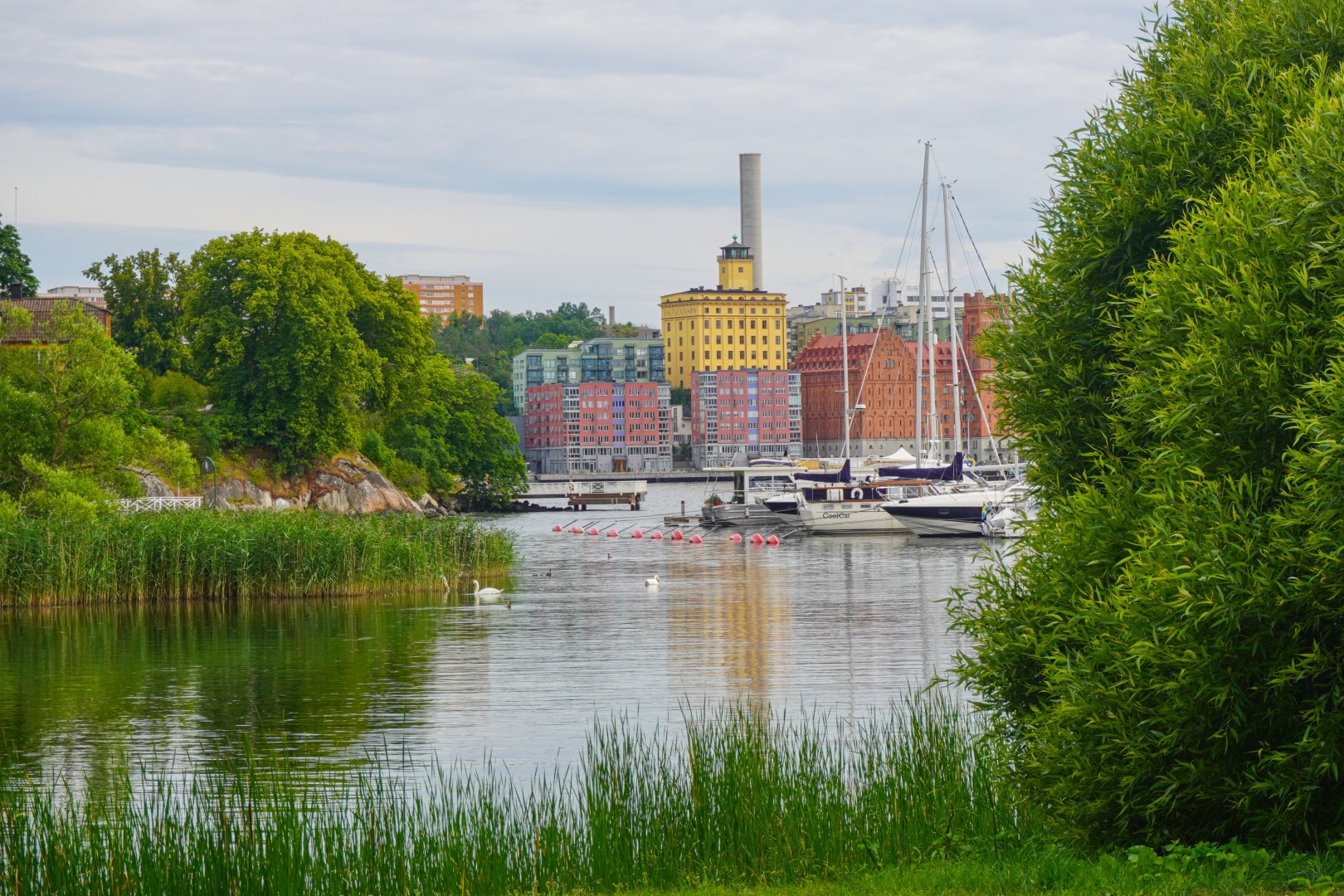
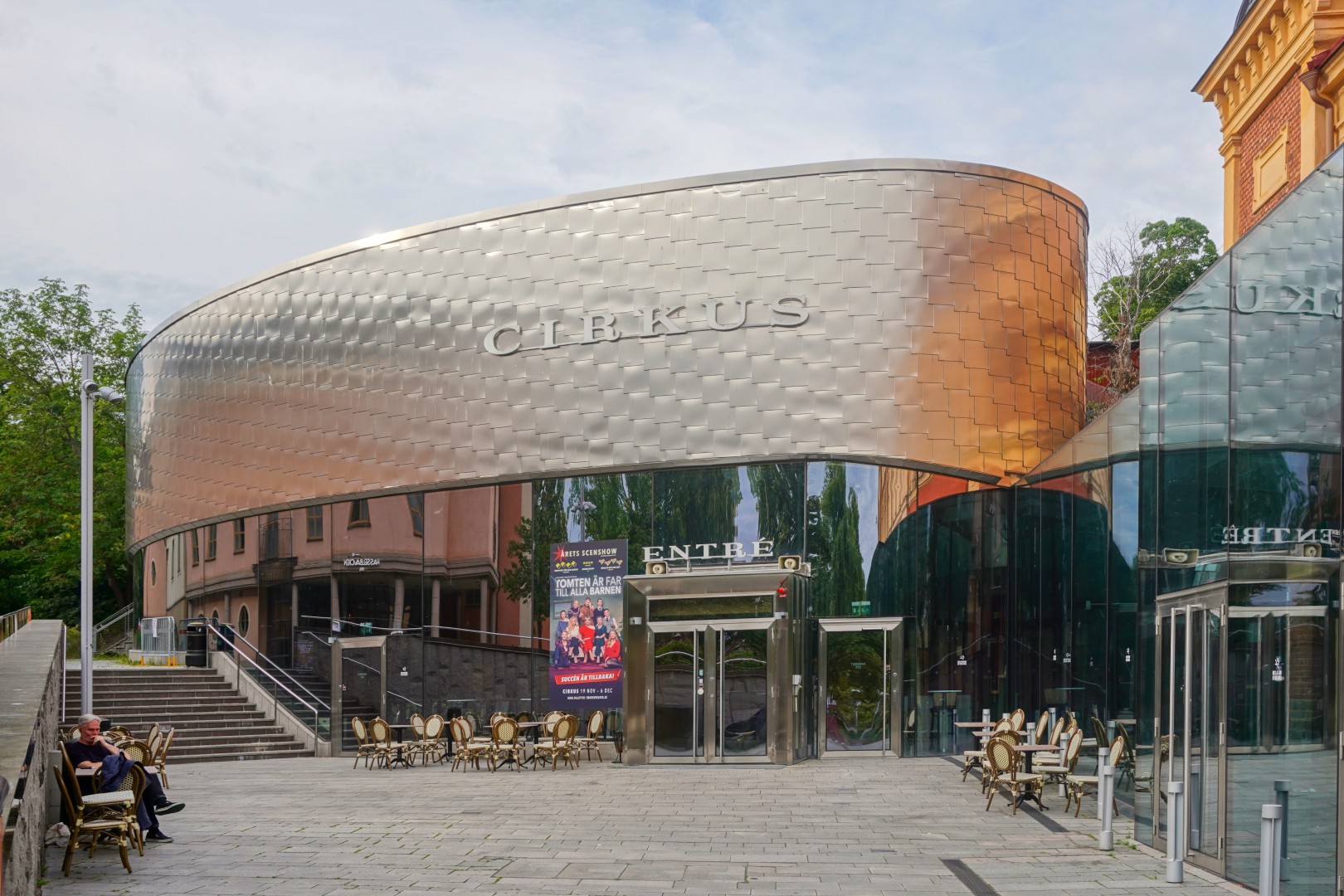
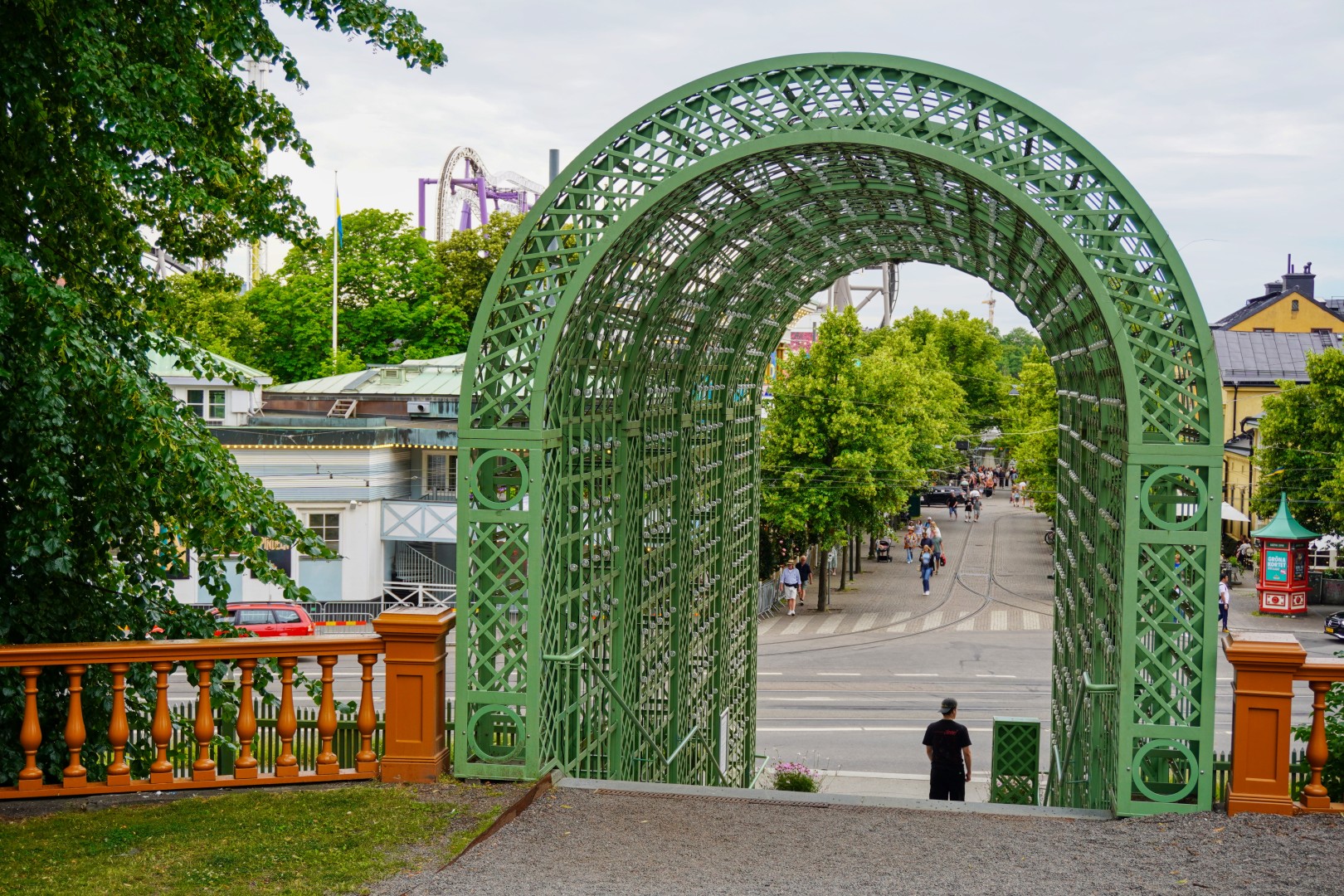
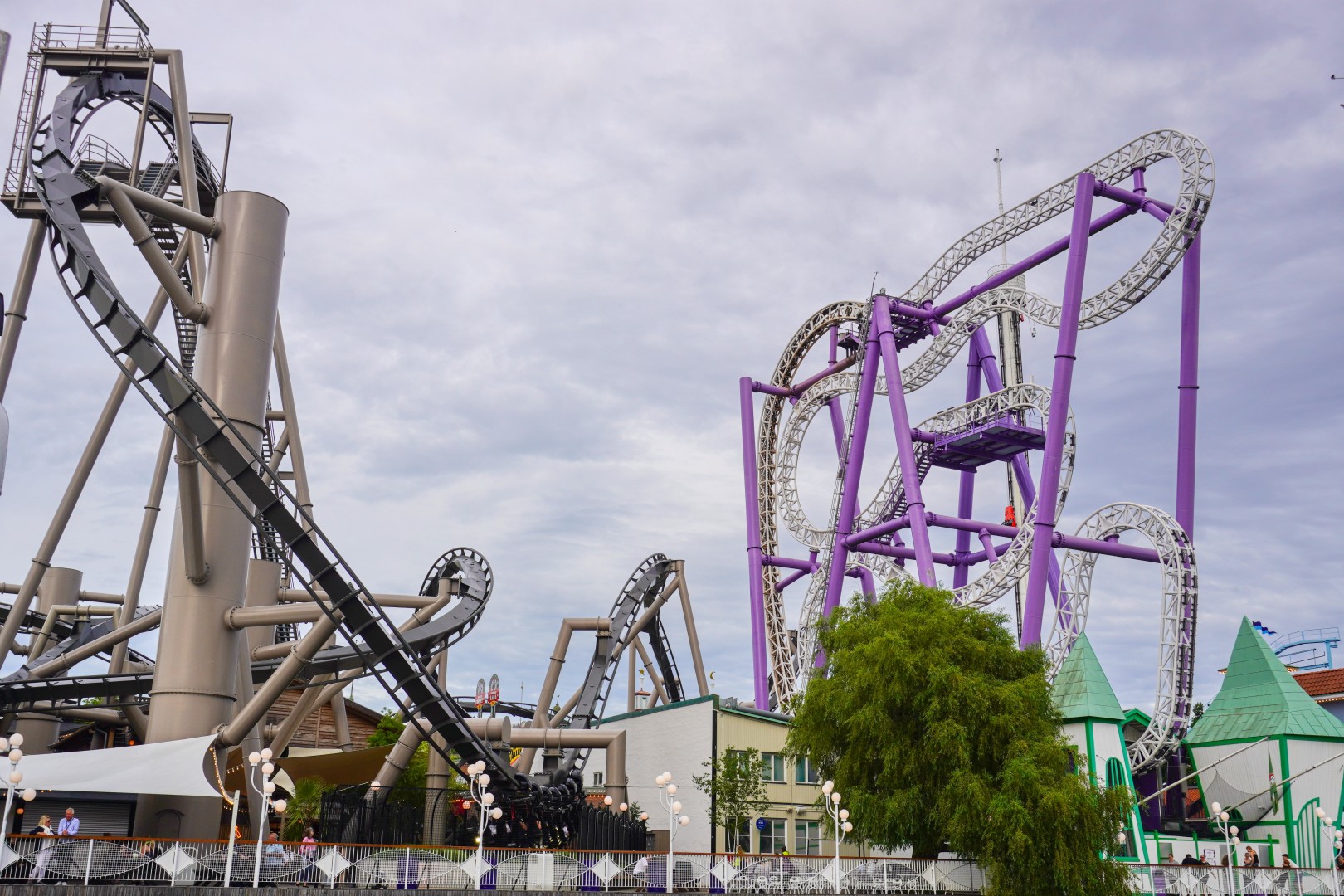
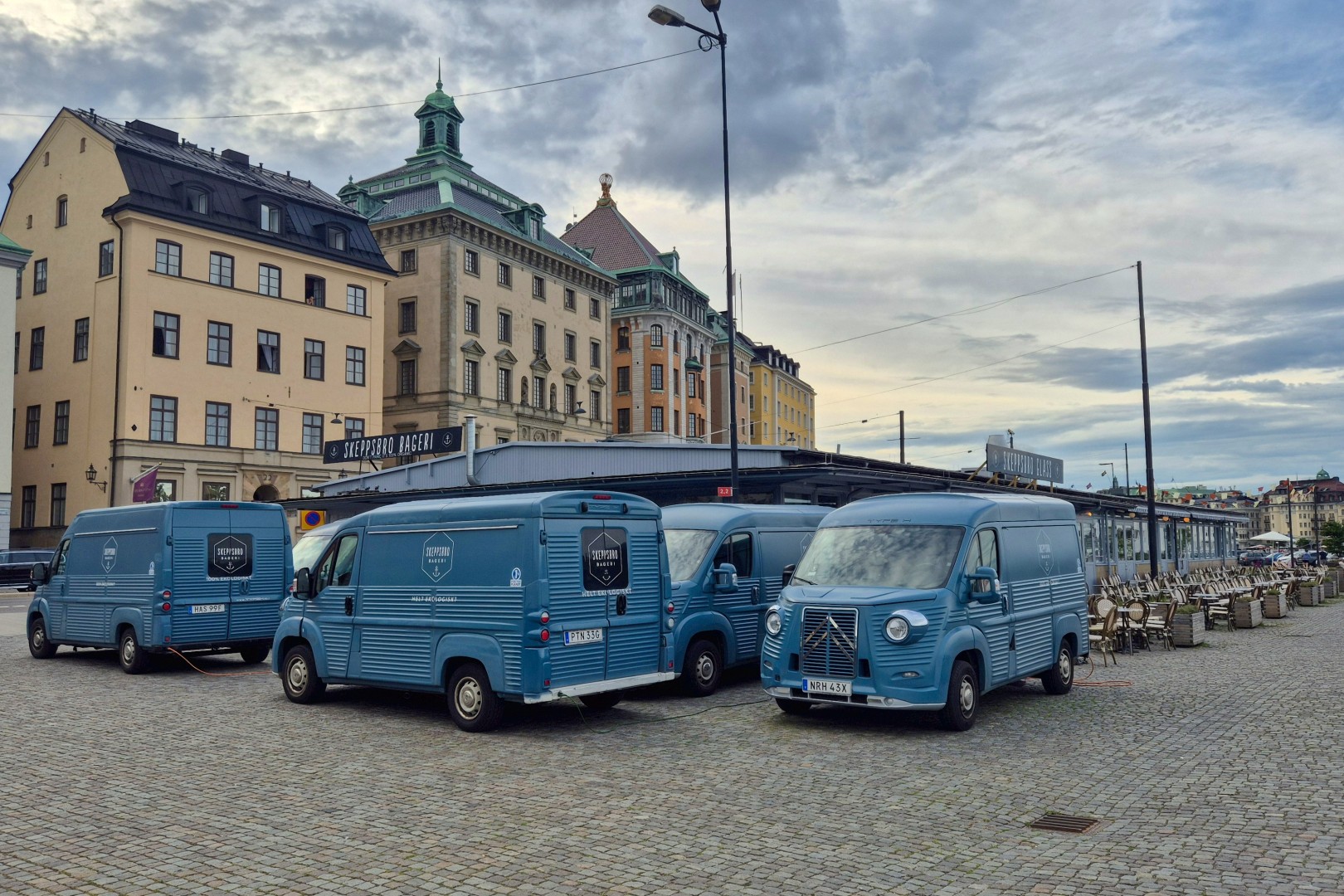
Discover Stockholm – where history, views and the archipelago meet
Our second day exploring Stockholm at our own pace also got off to a very relaxed start. After a leisurely breakfast, we set off for the city centre once again.
By now, we knew the route almost by heart. We took tram line 31 to Alvik, and from there continued on metro lines 17, 18 or 19 to T-Centralen, Stockholm’s central transport hub.
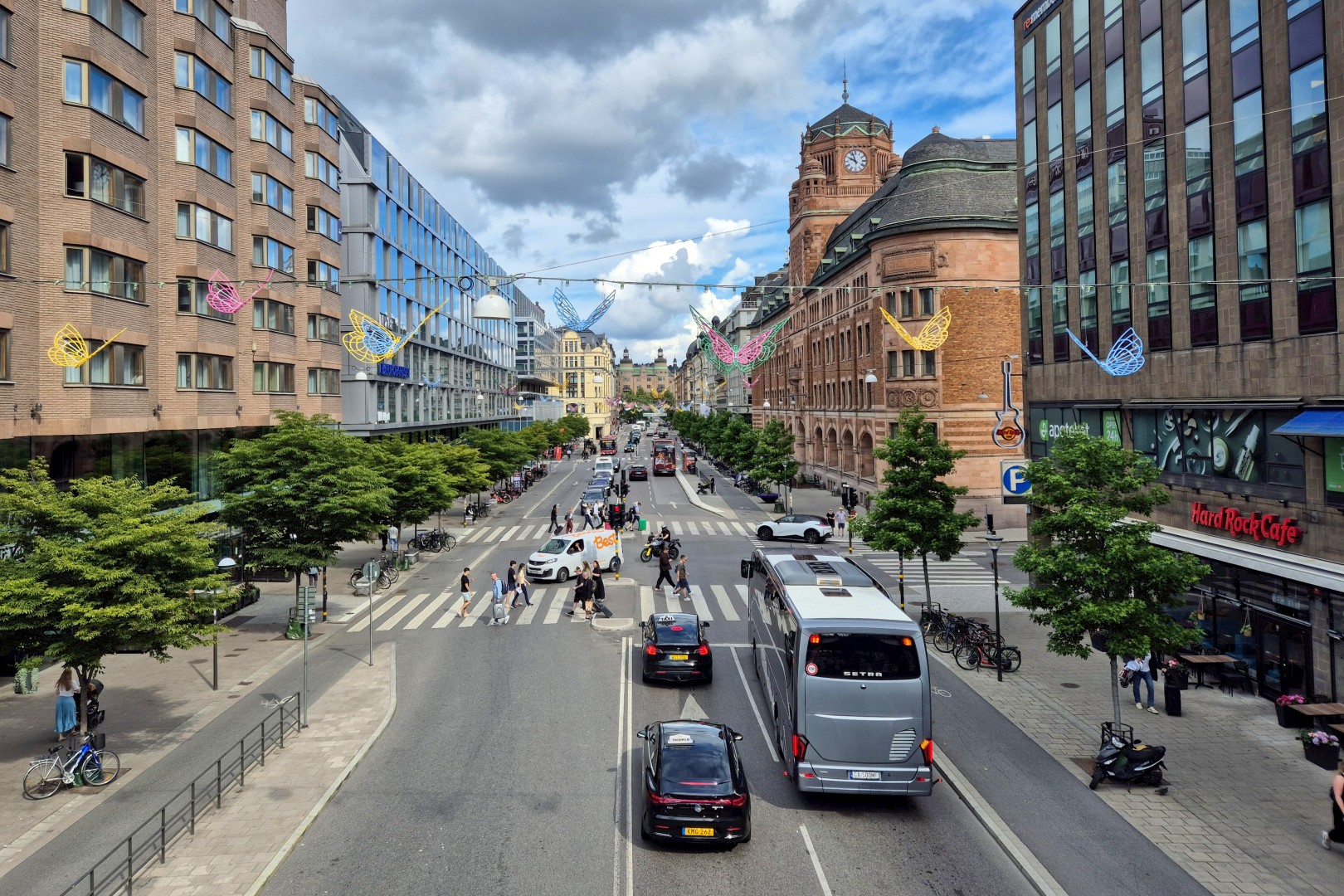
Today we wanted to explore the Norrmalm district and the southern part of the city centre in more detail. Our walk began on Drottninggatan, Stockholm’s most famous shopping street. Even in the morning, the place was already bustling with activity. Numerous shops, street cafés and small boutiques invited us to have a stroll.
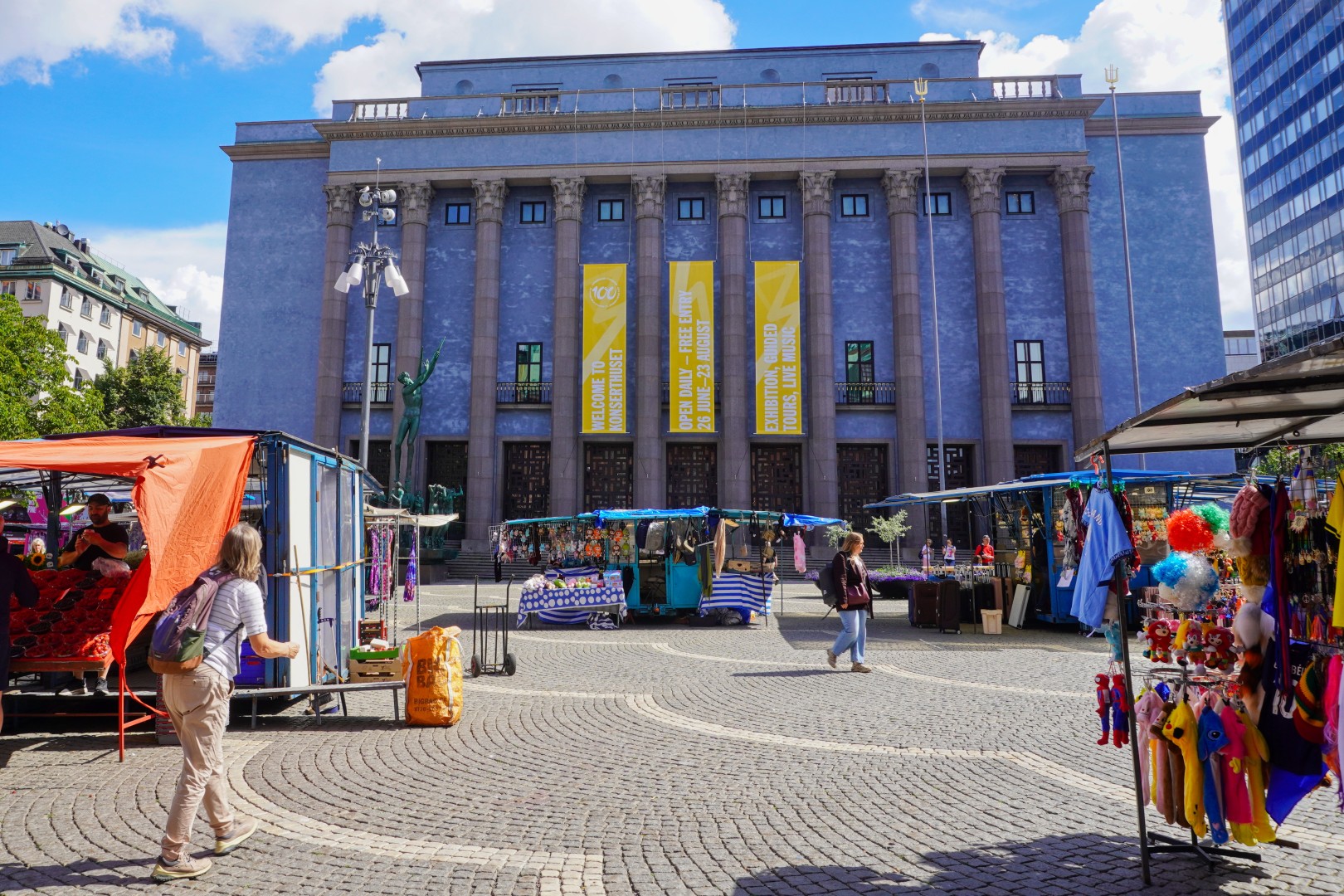
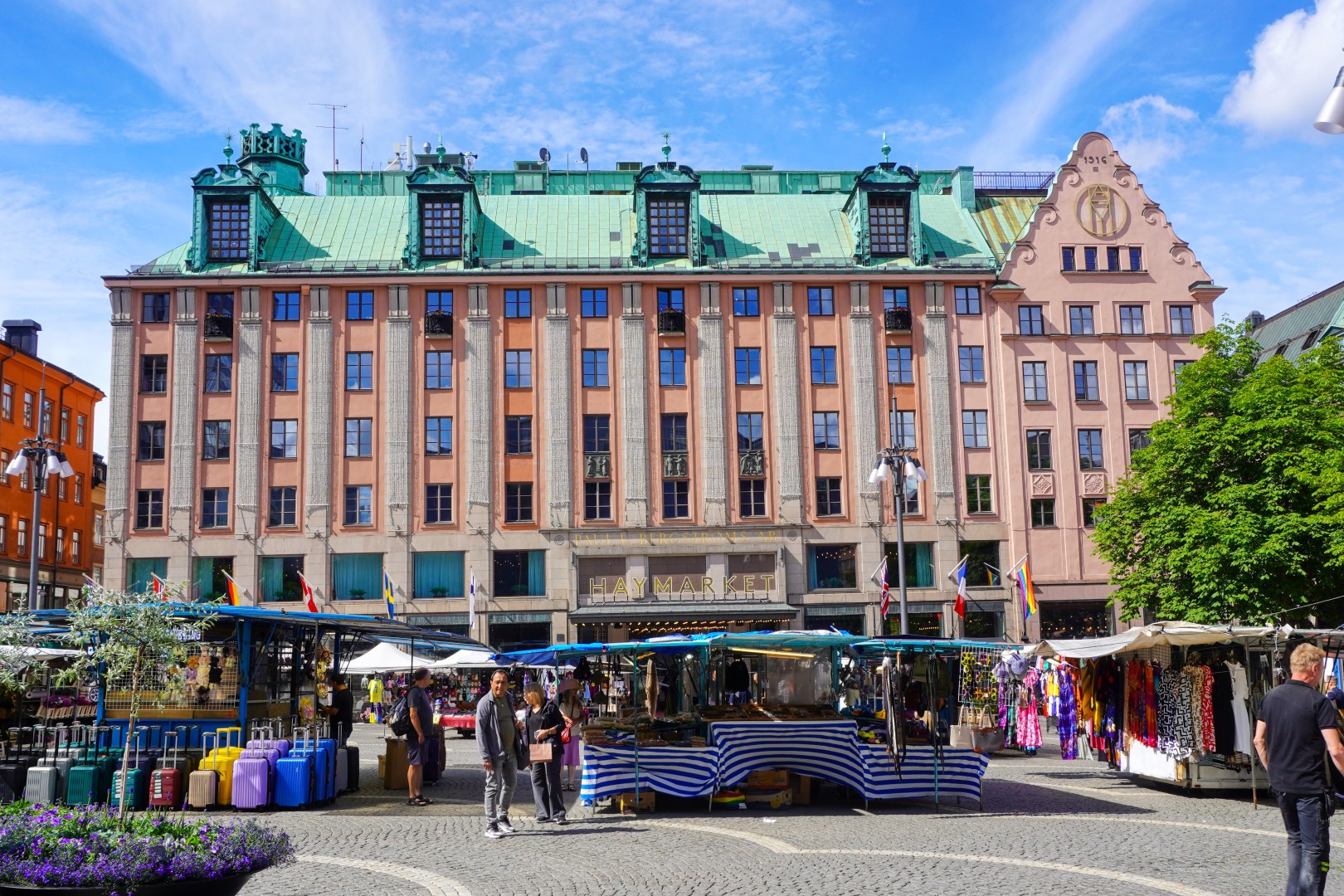
Just a few minutes later, we reached Hötorget, one of the city’s most famous squares. Particularly impressive here is the Konserthuset Stockholm, the concert hall where the Nobel Prizes for Physics, Chemistry, Medicine and Literature are awarded every year.
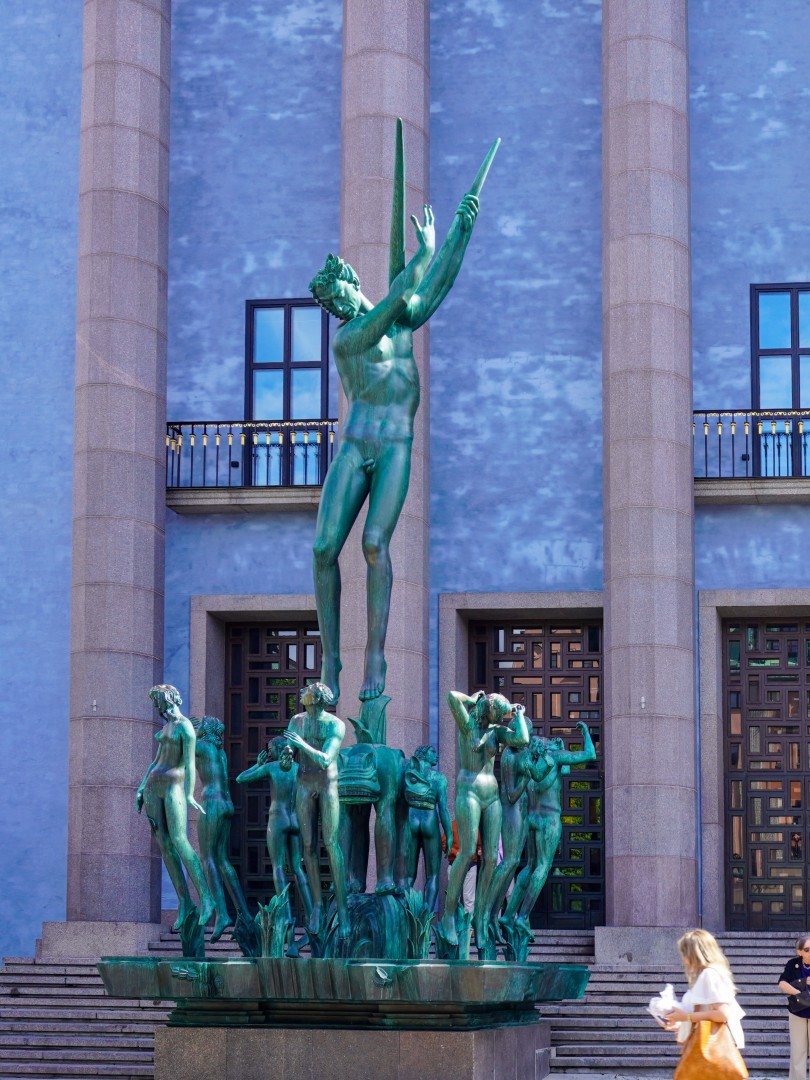
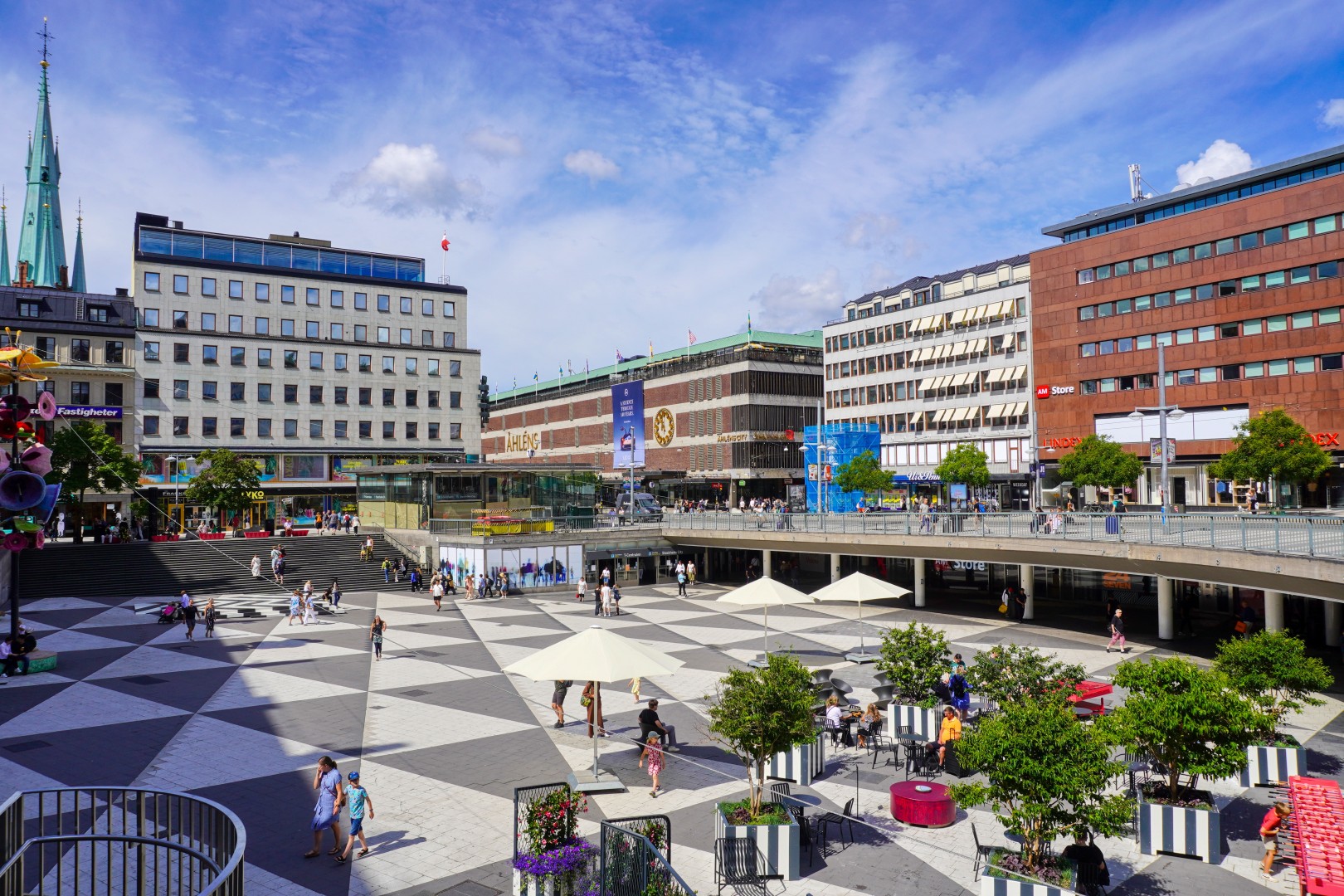
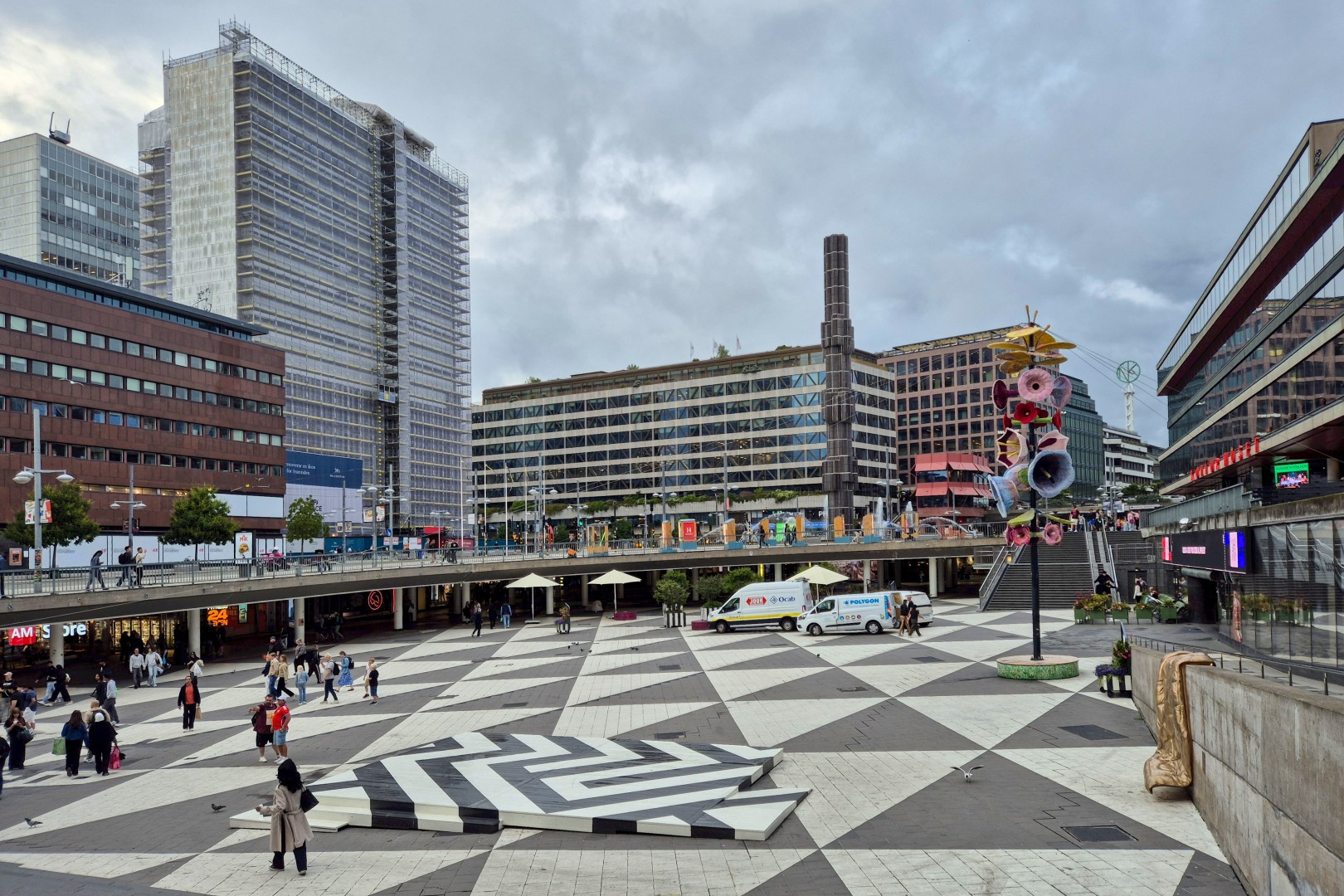
In front of the building, the monumental ‘Orpheus Group’ sculpture attracts everyone’s attention. These impressive bronze sculptures are among Stockholm’s most significant works of art. Our route then took us on to the Sergel Fountain and the immediately adjacent Sergels Torg, the modern centre of Stockholm. The striking glass stele in the centre of the square has long since become a landmark of the modern city.
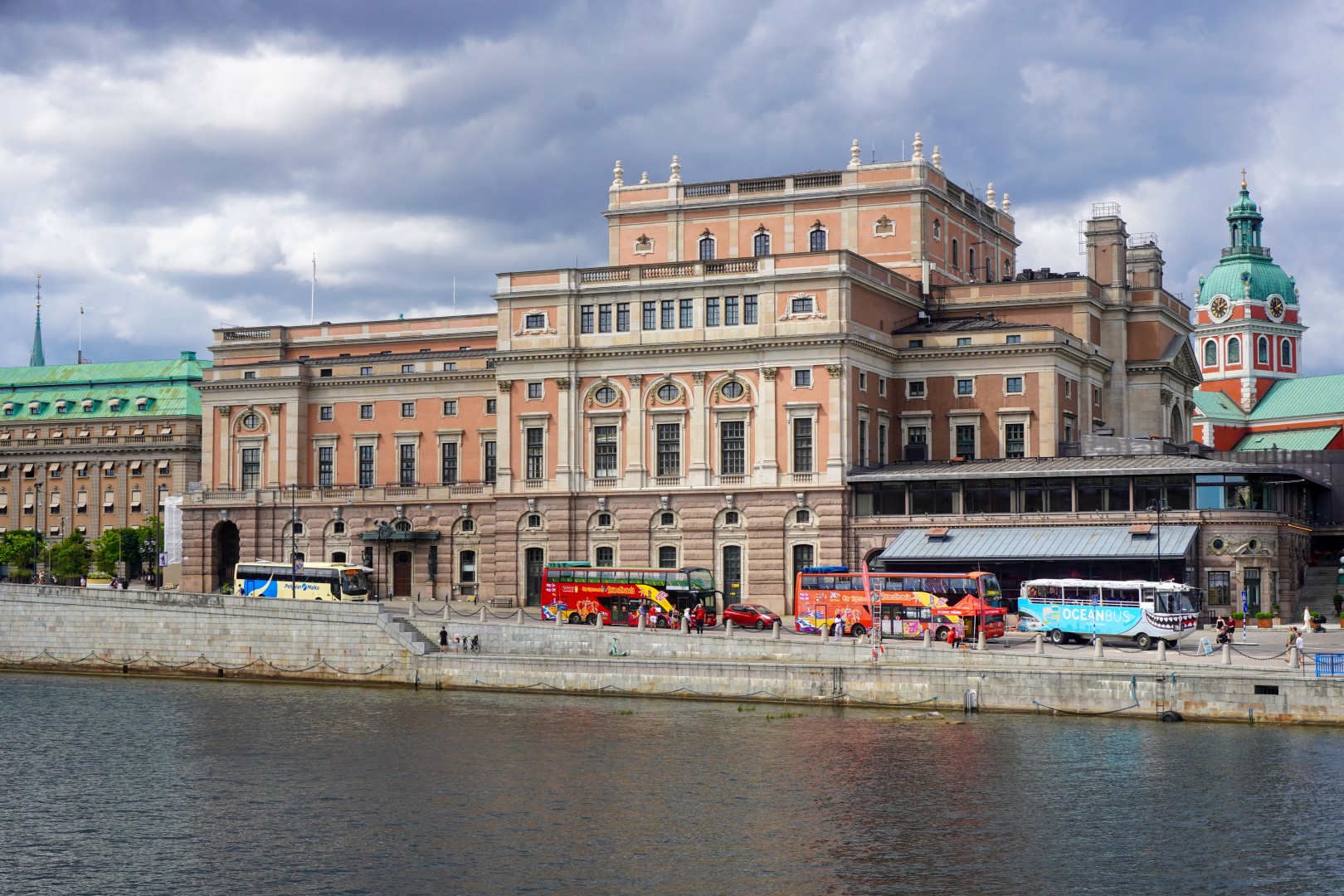
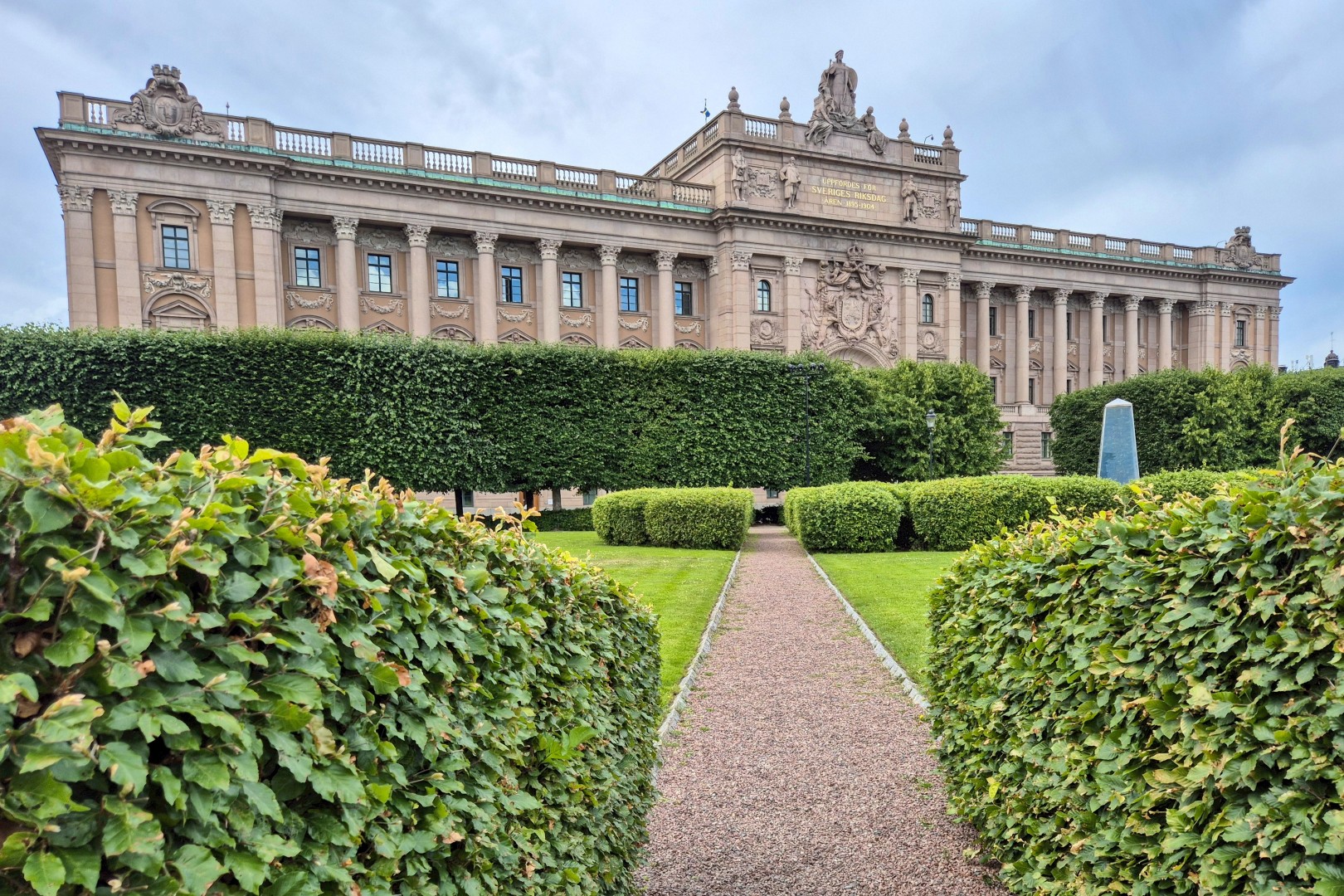
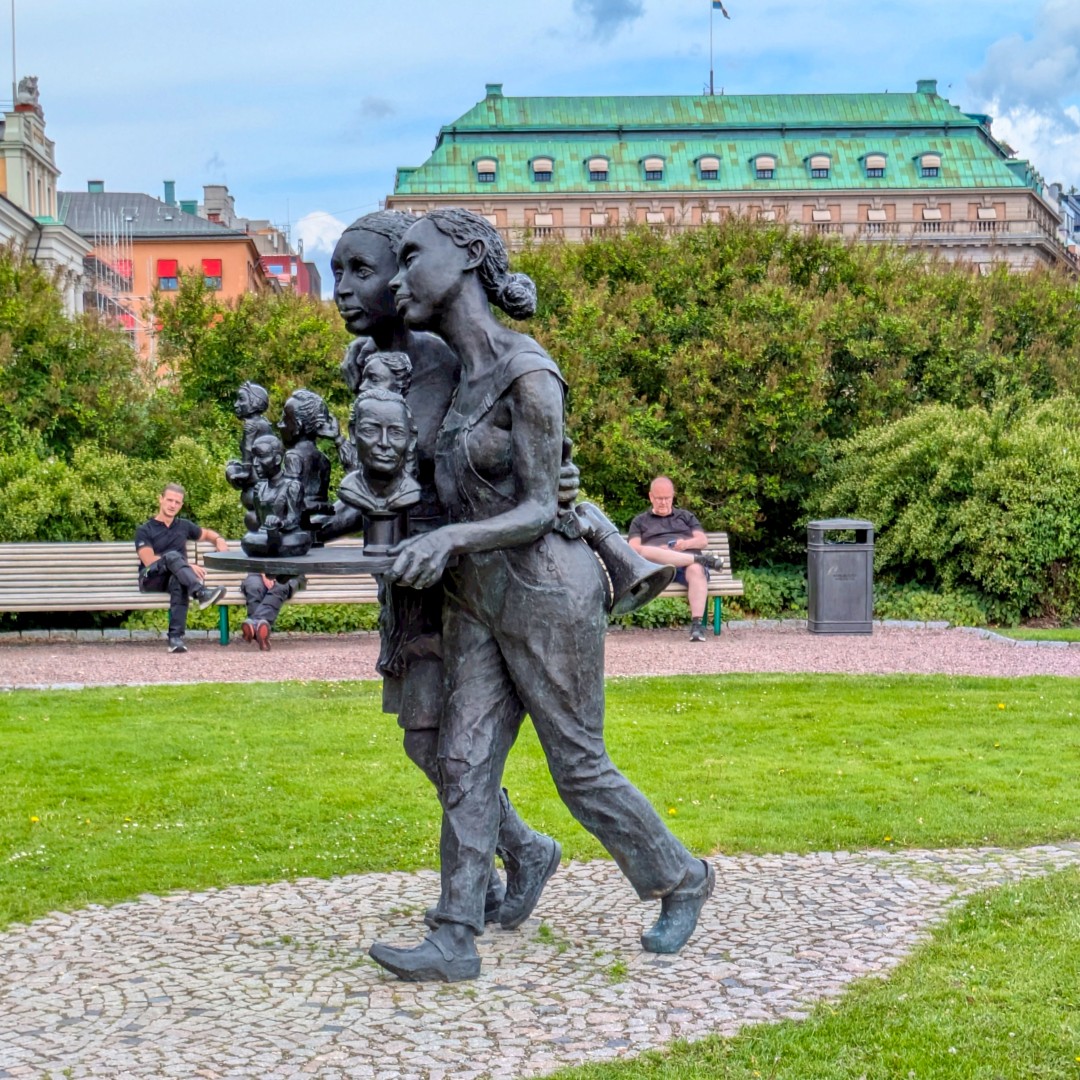
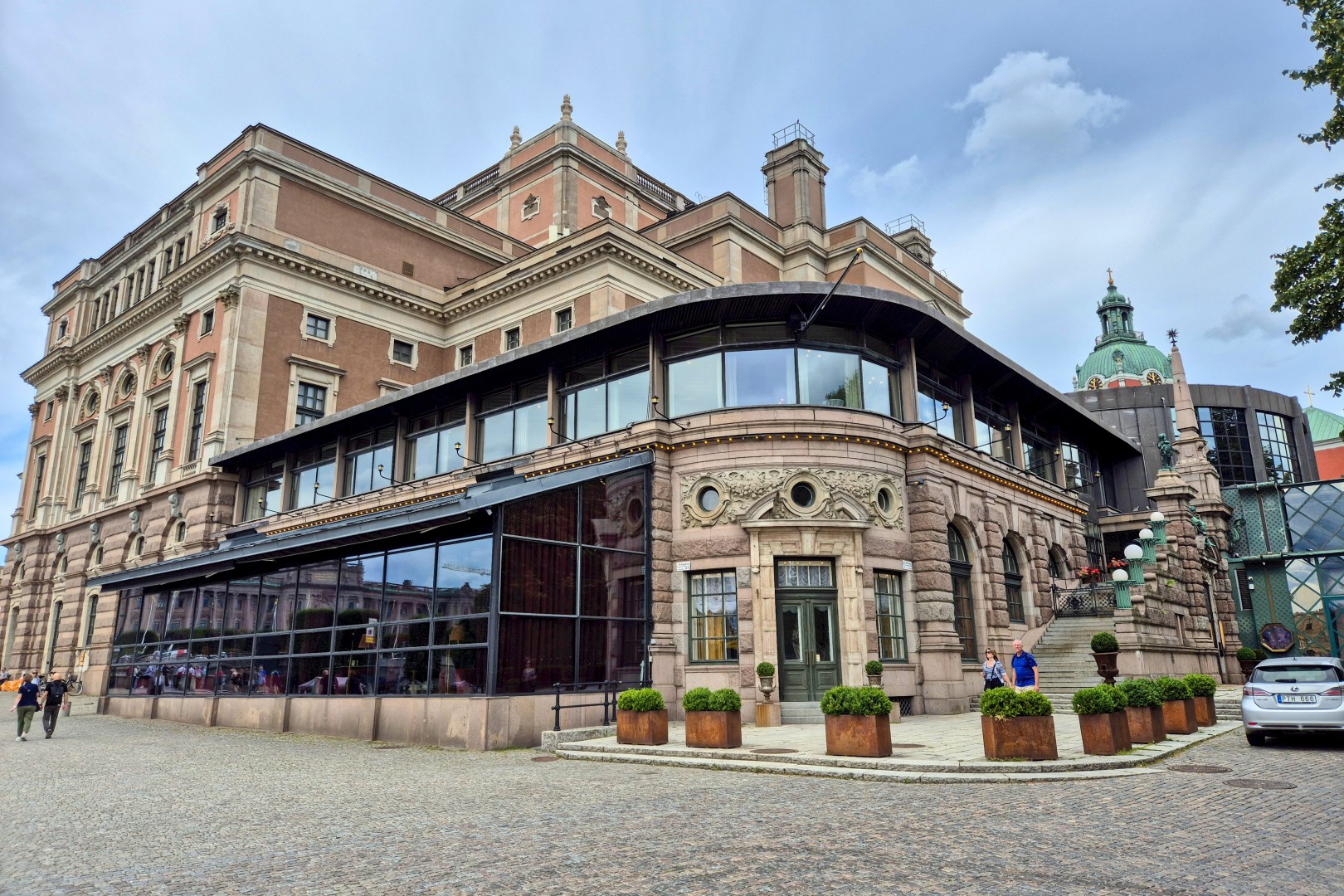
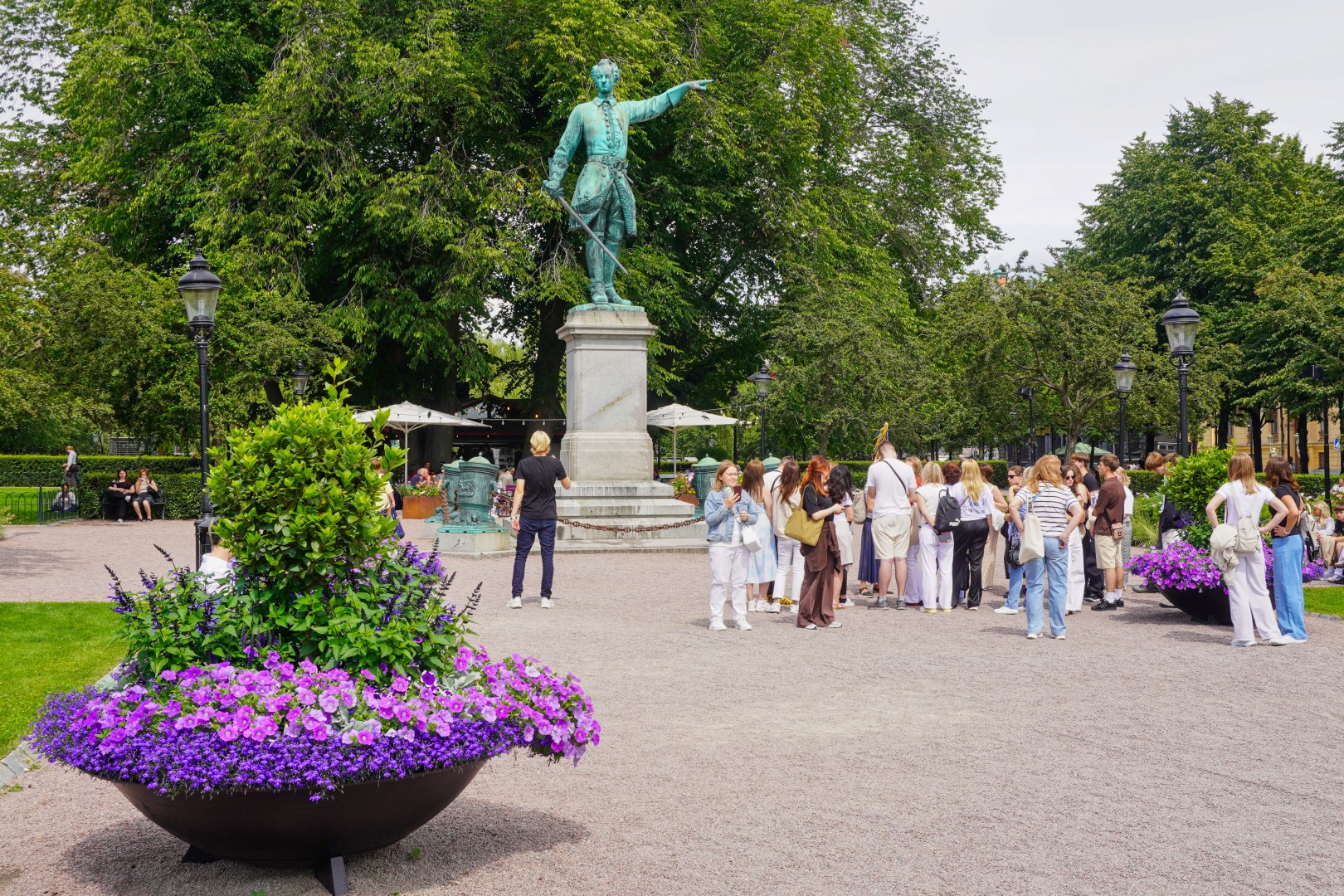
From here, we strolled on to the Riksdagshuset, the seat of the Swedish Parliament. The impressive façade alone, with its numerous sculptures and columns, conveys the high standing of Swedish democracy. Right next to it are the magnificent Royal Opera House and the beautiful Kungsträdgården, one of Stockholm’s most popular city parks.
After a short break, we changed our perspective. We took bus number 76 across to Södermalm, getting off at the Medborgarplatsen stop. The square forms the lively heart of the district and is surrounded by numerous cafés, restaurants and small shops.
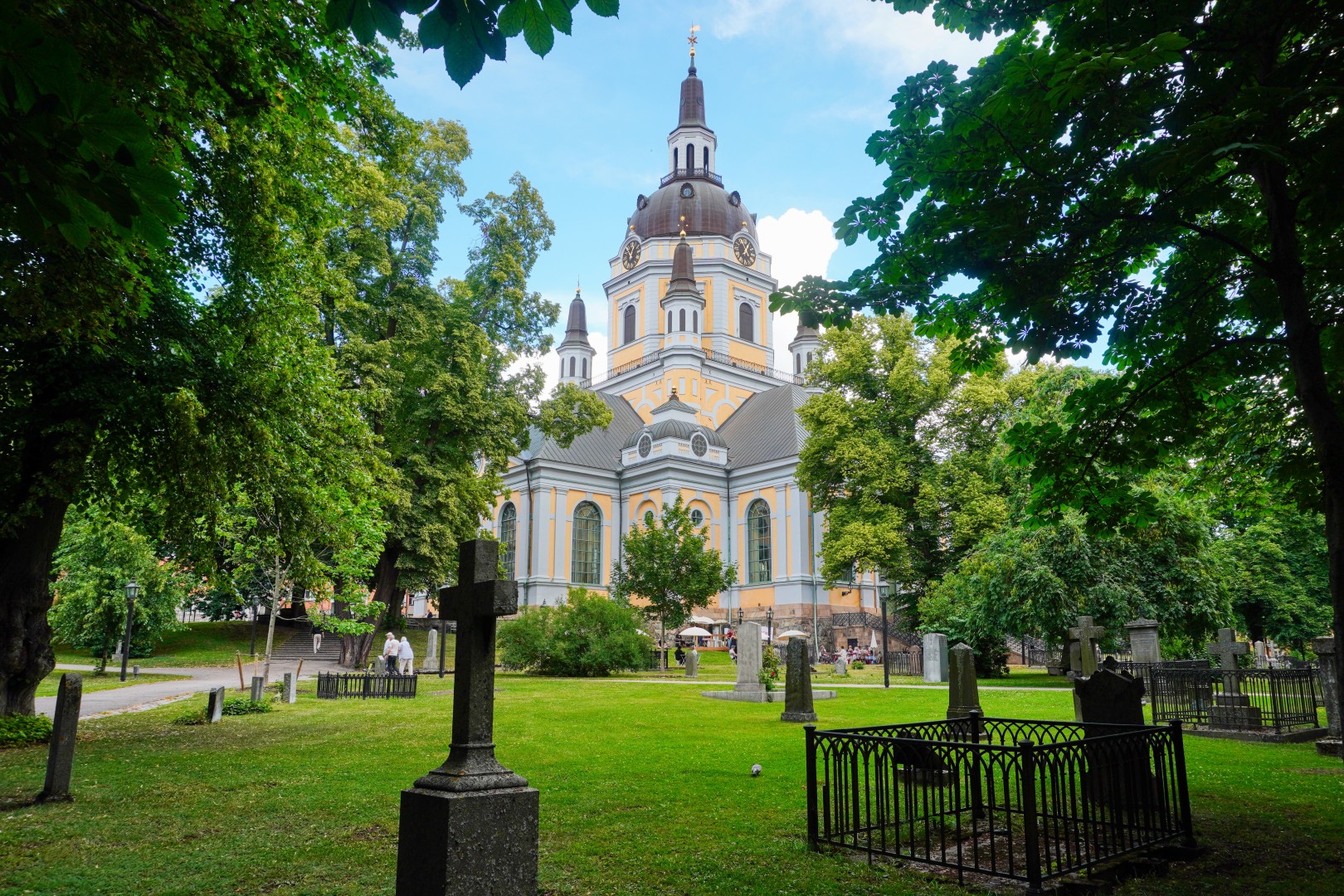
From there, we walked on to Katarina kyrka, whose striking tower is visible from afar. The church is one of Stockholm’s most beautiful Baroque churches and is surrounded by a historic cemetery where many famous figures have found their final resting place.
Not far away, we reached Cornelisparken. From here, we were treated to a magnificent view of the Old Town, Lake Mälaren and Stockholm’s many islands. Once again, it became impressively clear why Stockholm is considered one of Europe’s most beautiful capitals.
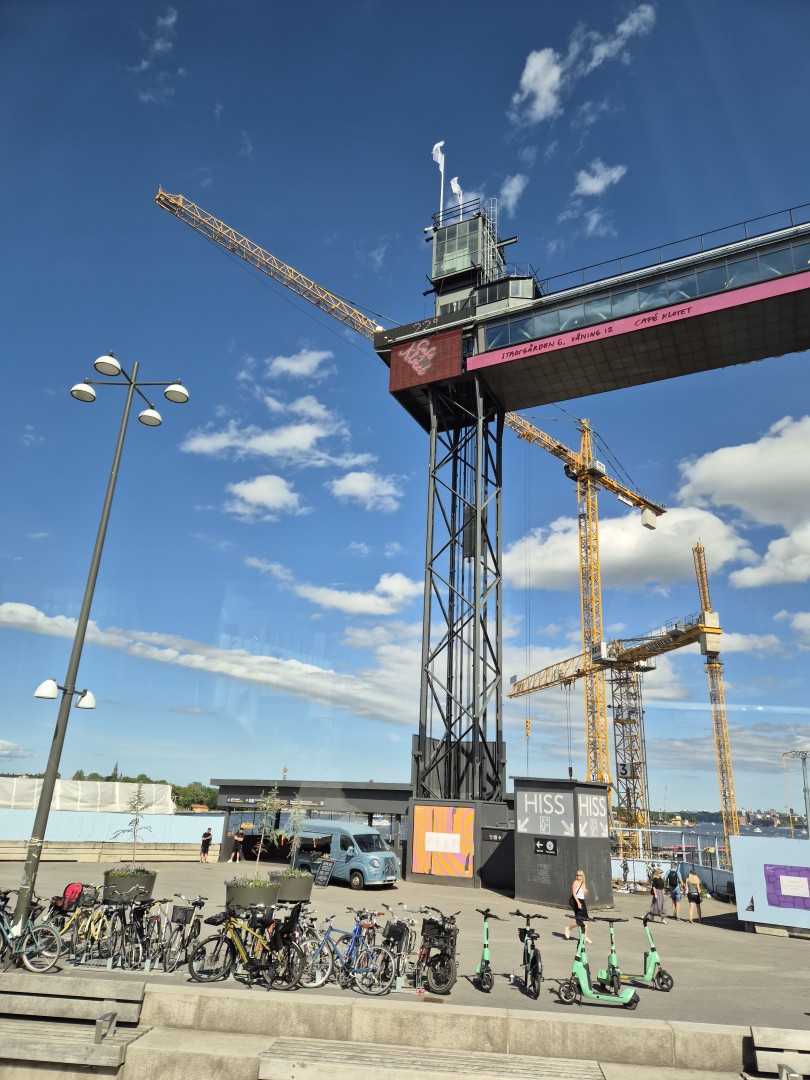
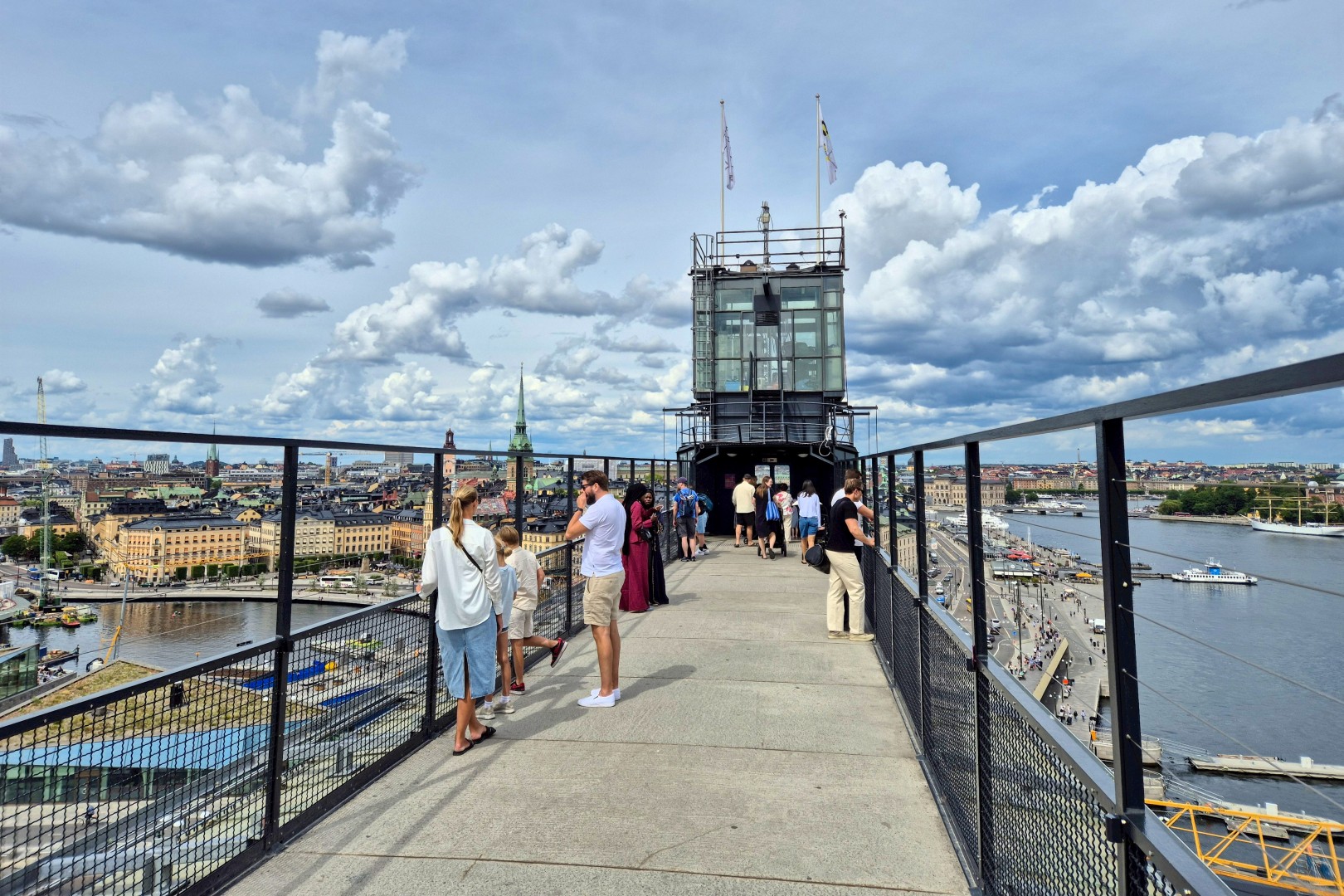
Another highlight was not long in coming. Naturally, a ride on the Katarina Lift was a must. This historic lift connects the lower-lying waterfront promenade with the higher streets of Södermalm. Once at the top, we were rewarded with a fantastic panoramic view over Gamla Stan, the harbour and the archipelago.
An absolute must for any visitor to Stockholm.
We then strolled back towards the harbour. Near the statue of Gustav III, we spontaneously bought two tickets for a sightseeing cruise on a Strömma ferry.
For around 45 euros, we set off from Strömkajen 2 on a roughly 70-minute tour of the archipelago.
The boat glided leisurely through Stockholm’s waterways, past historic buildings, magnificent villas, small islands and numerous marinas. The passage through the Djurgårdsbrunnskanalen in particular offered a whole new perspective on the Swedish capital.
On our return, we realised with a chuckle that many of these routes are also served by public ferries – and these were already included in our 3-day ticket. You never stop learning.
After taking in so many sights, we were slowly starting to feel peckish. At the shopping centre on Sergelgängen, we finally treated ourselves to what is probably Sweden’s most famous dish: köttbullar, the traditional Swedish meatballs. Served with mashed potatoes, lingonberries and cream sauce, they tasted absolutely delicious and are simply a must when visiting Stockholm.
In the late afternoon, we finally set off for home. This time, we chose a different route. We took metro line 10 to Sundbybergs Centrum. From there, bus number 113 took us to the Mariehällskyrkan stop. We took a leisurely stroll back to the hotel for the final stretch.
Our trusty Hauser coach was still parked outside the Best Western Plus Bromma. It almost looked as though it was already waiting for its next big tour.
After another eventful day, we rounded off the evening in a relaxed manner. Stockholm once again showed itself at its best. The mix of magnificent historic buildings, modern city life, the many waterways and the stunning viewpoints makes the Swedish capital a destination you’ll always be happy to visit again and again.
Another wonderful day drew to a close – and, sadly, the time to say goodbye was slowly approaching.
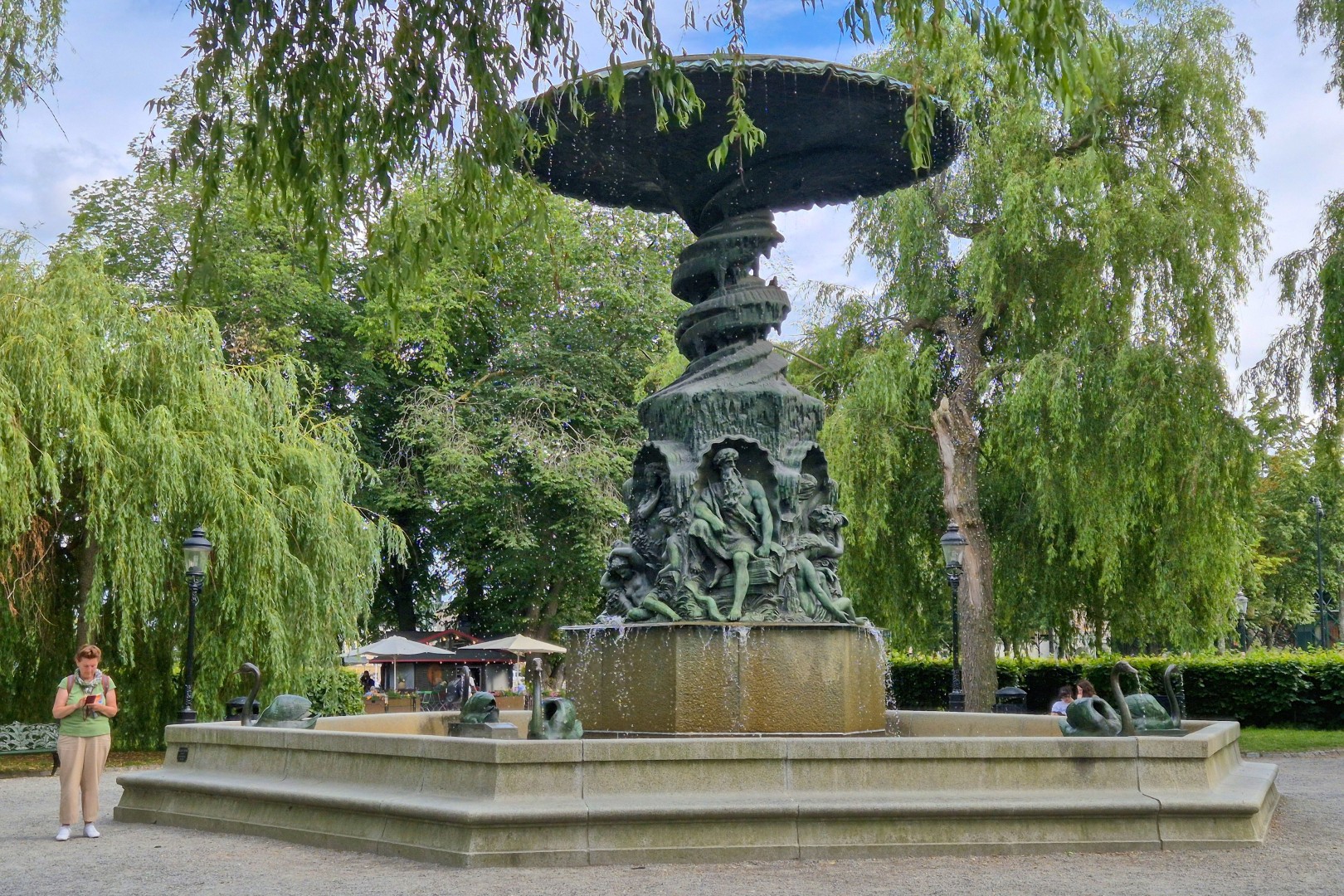
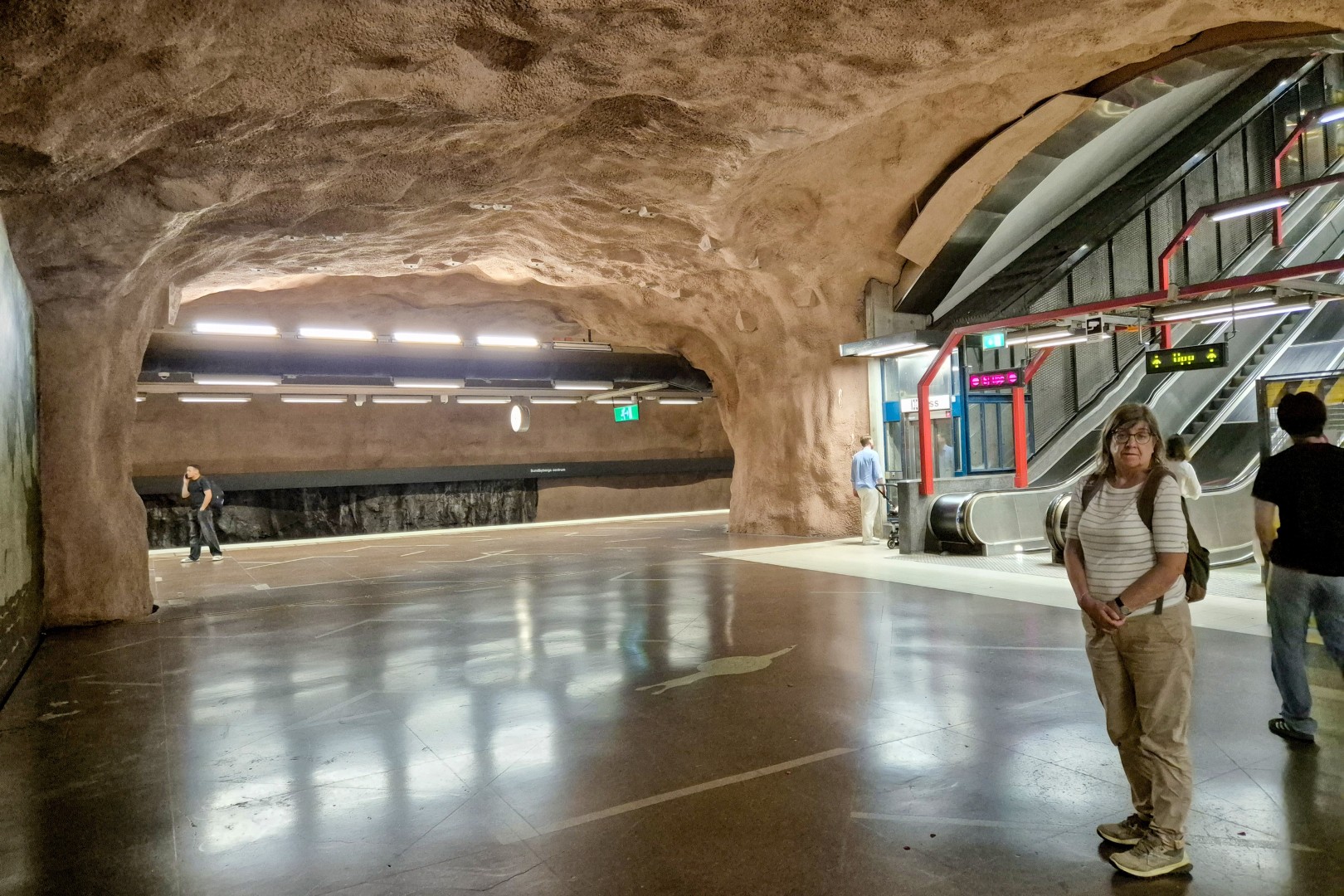
Saying goodbye to Stockholm with a real highlight
The last full day of our trip to Scandinavia had dawned. After almost two weeks full of unforgettable experiences, we wanted to enjoy the Swedish capital one last time at our own pace.
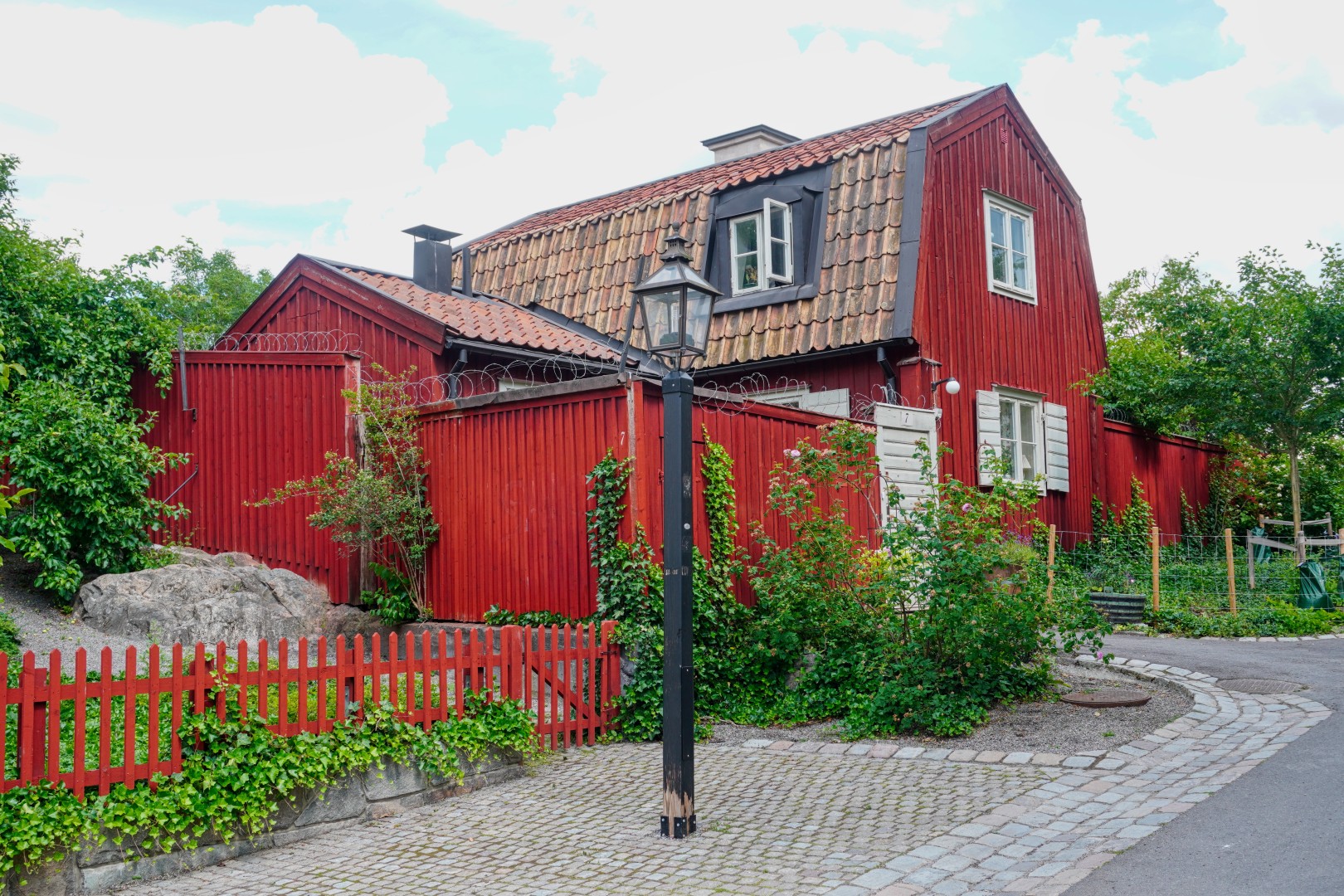
Our first stop took us back to Gamla Stan, Stockholm’s historic old town. Although we had already strolled through its winding alleys several times, we kept discovering new little squares, lovingly restored houses and hidden courtyards. That is precisely what gives this part of the city its special charm.
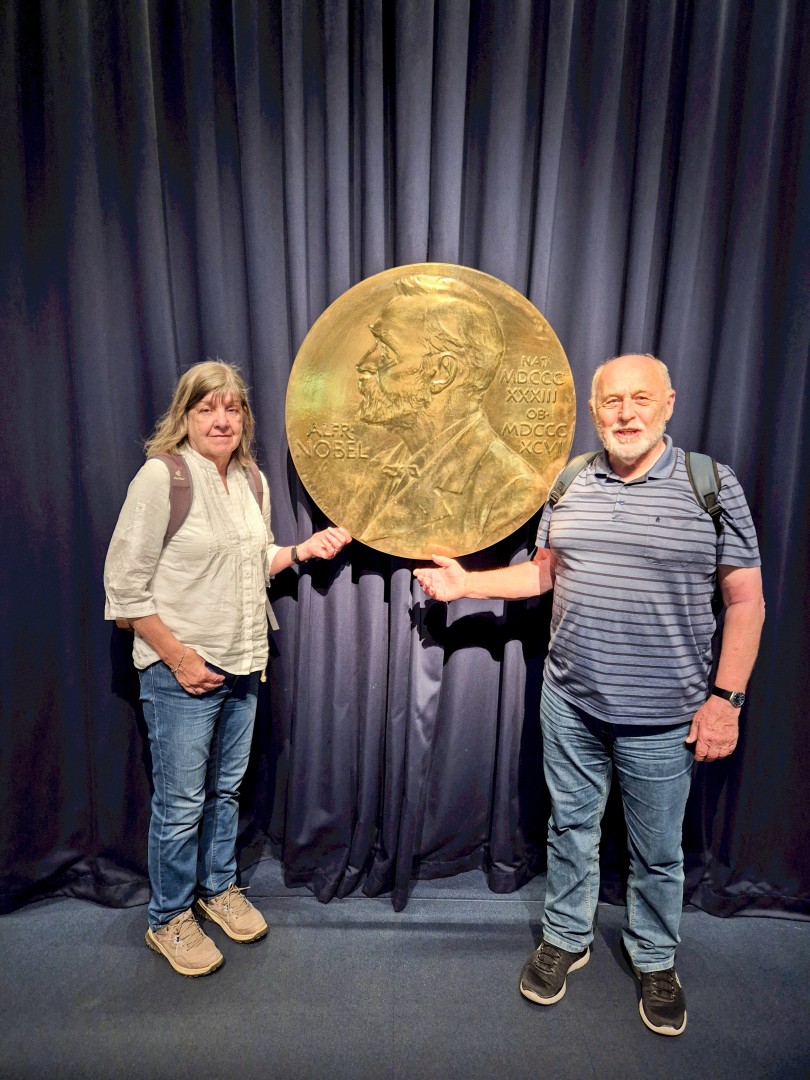
Today’s itinerary included a visit we’d deliberately put off until now – the Nobel Museum.
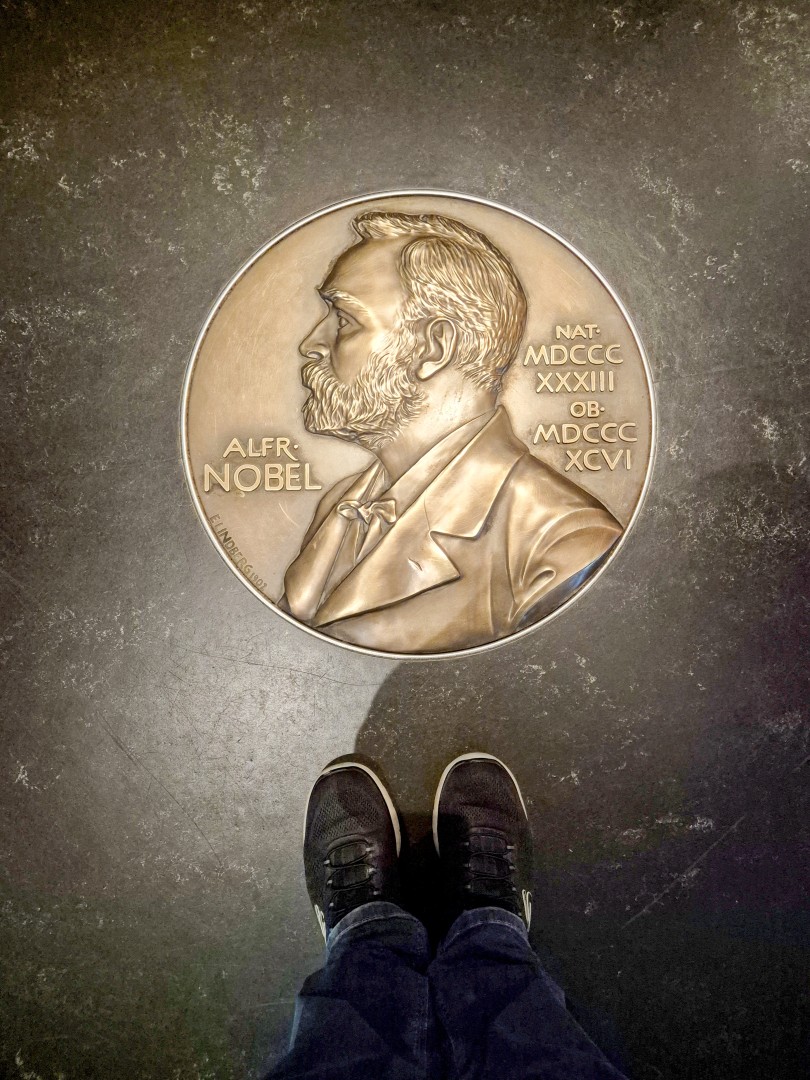
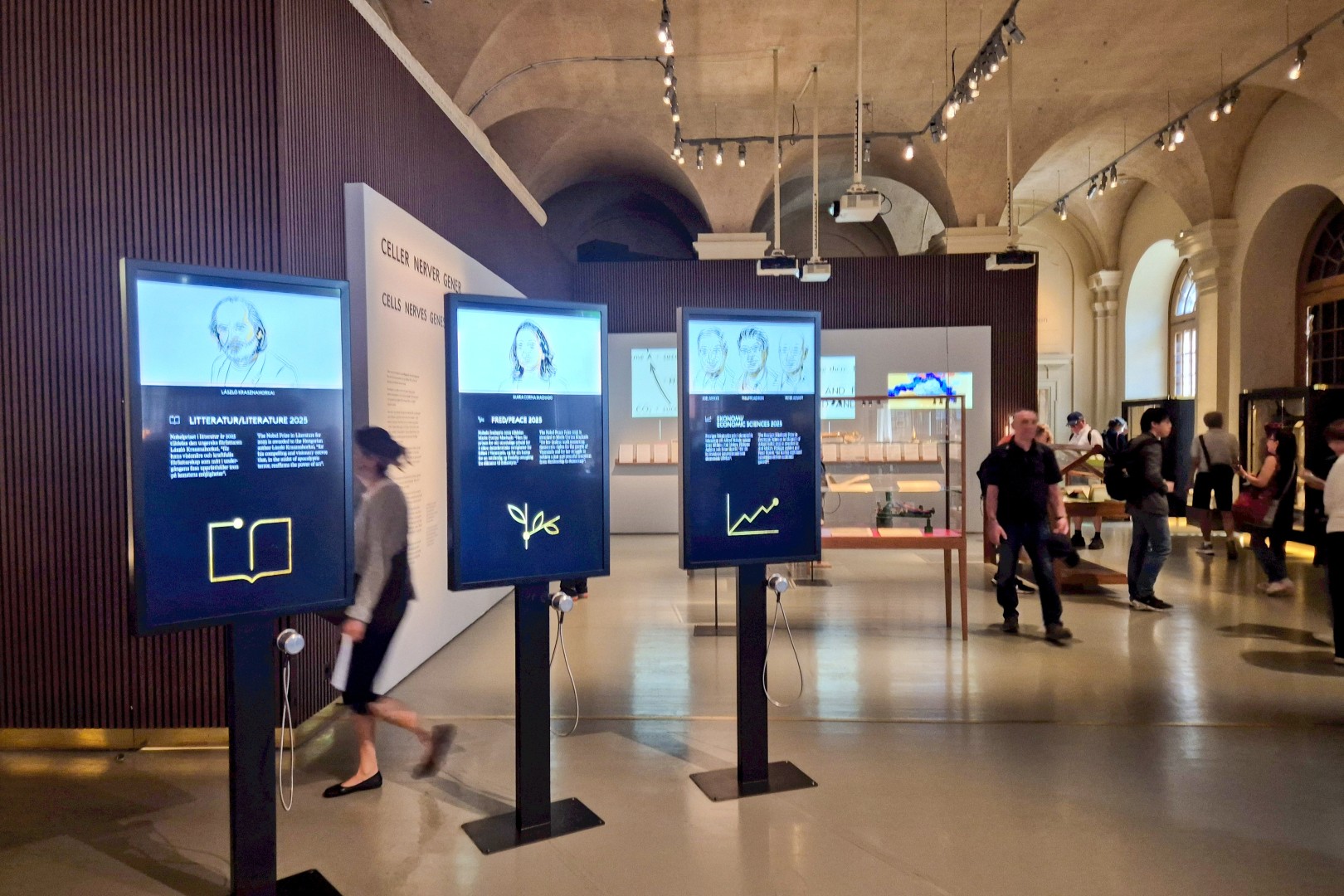
Situated right on the picturesque Stortorget, the museum tells the story of Alfred Nobel and the most significant scientists, writers and Nobel Peace Prize laureates of the past 120-plus years.
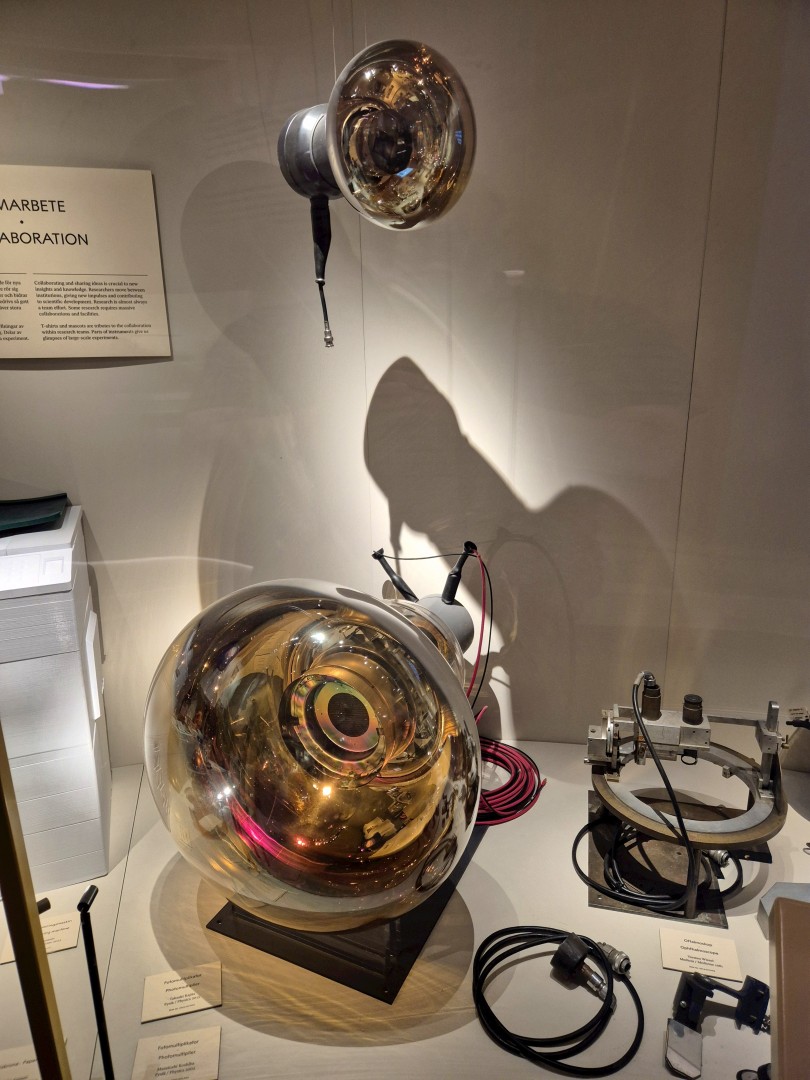
The numerous original exhibits, films and interactive displays were particularly impressive. The stories behind the Nobel Prizes and their laureates make a visit to the museum a fascinating experience – even for visitors who are not usually that interested in science.
Our verdict: anyone visiting Stockholm should not miss this museum.
After our visit to the museum, we wanted to experience Stockholm’s archipelago once more. From Karl XII torg, bus route 76 took us to the terminus at Ropsten in around 45 minutes. Right by the ferry terminal, we boarded ferry 80. What followed was one of the most beautiful boat trips of our entire stay in Stockholm. For around 90 minutes, the ferry took us through the sprawling archipelago of the Swedish capital. Passing modern residential areas, small marinas, green islands and stately villas, Stockholm revealed itself once again from a completely different perspective.
The best bit:
The entire journey was already included in our 3-day ticket for public transport.
Our personal tip is therefore quite clear:
Anyone visiting Stockholm should definitely make use of the public ferries. They often offer longer and more scenic journeys than many of the paid sightseeing boats – and are significantly cheaper.
Upon arrival at Nybroplan, Stockholm suddenly revealed its typically Nordic side. Within a few minutes, the sky clouded over and heavy rain set in.
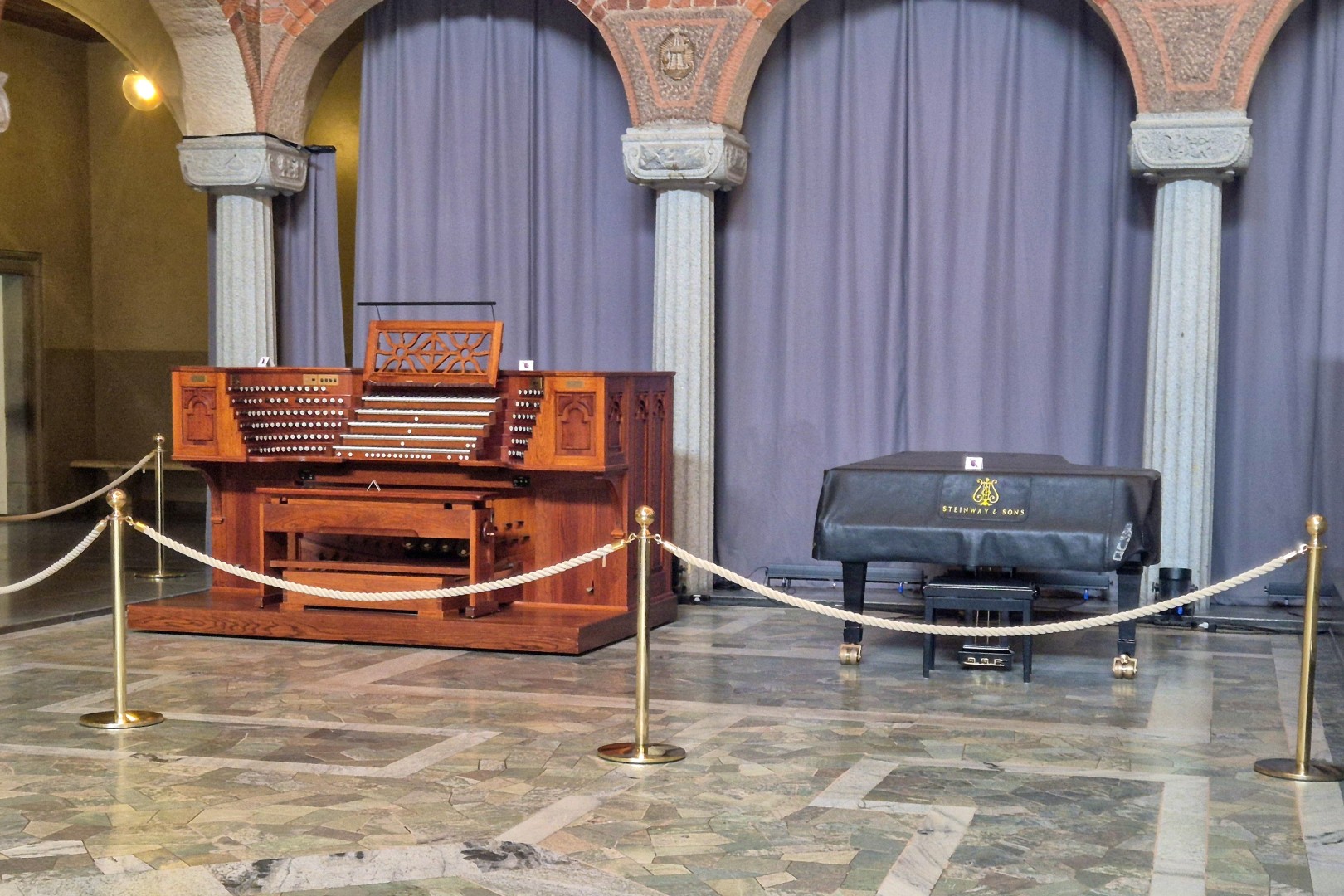
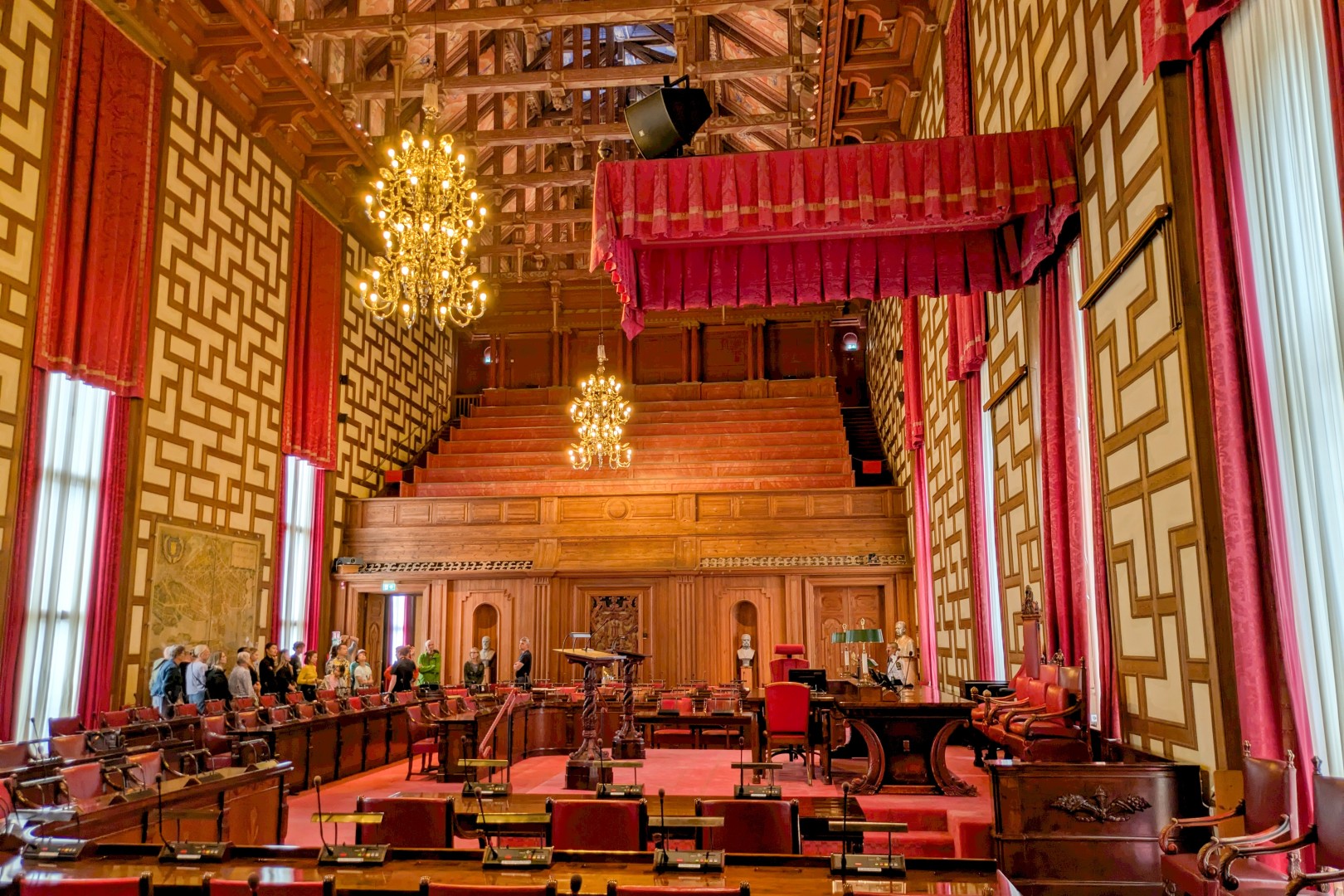
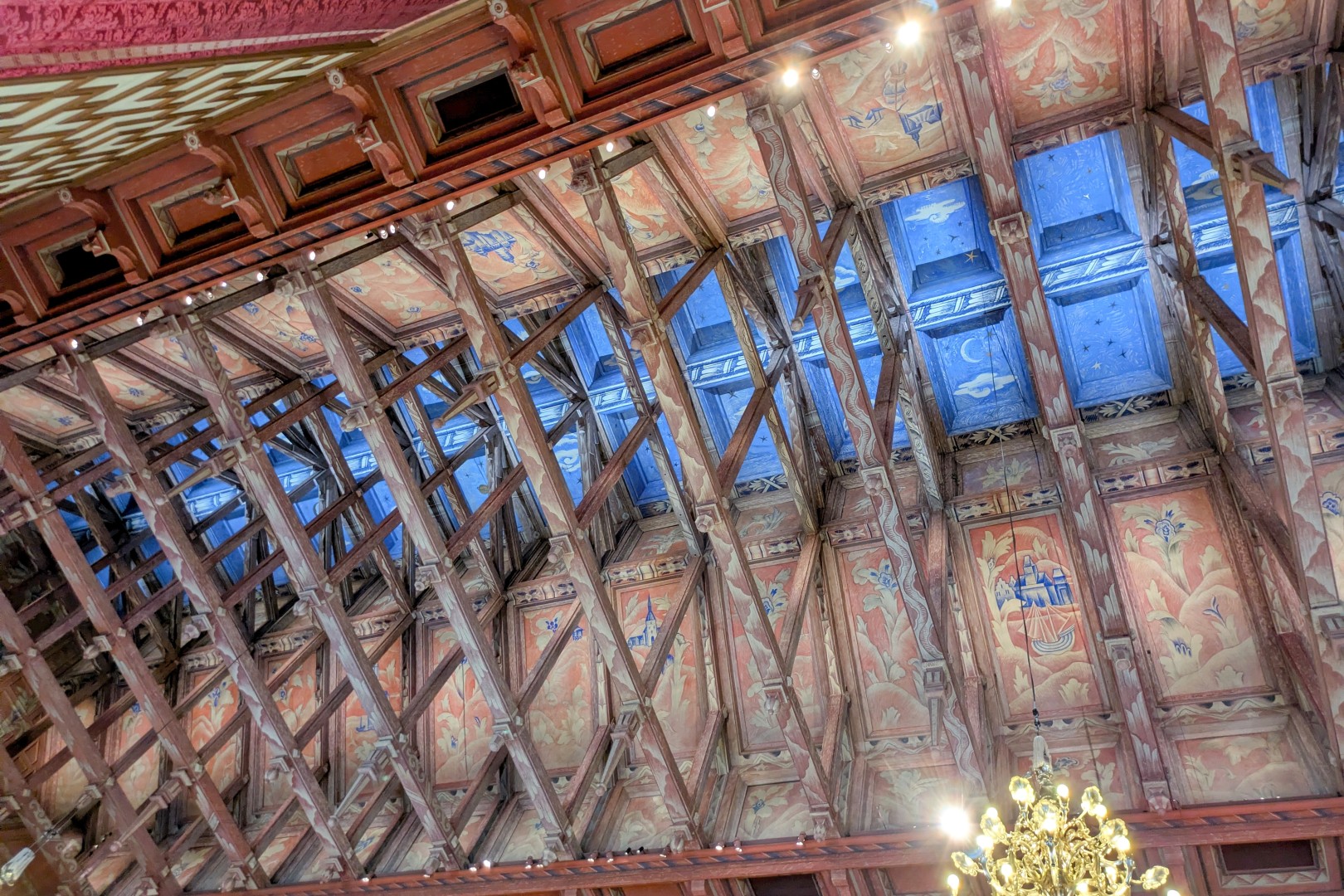
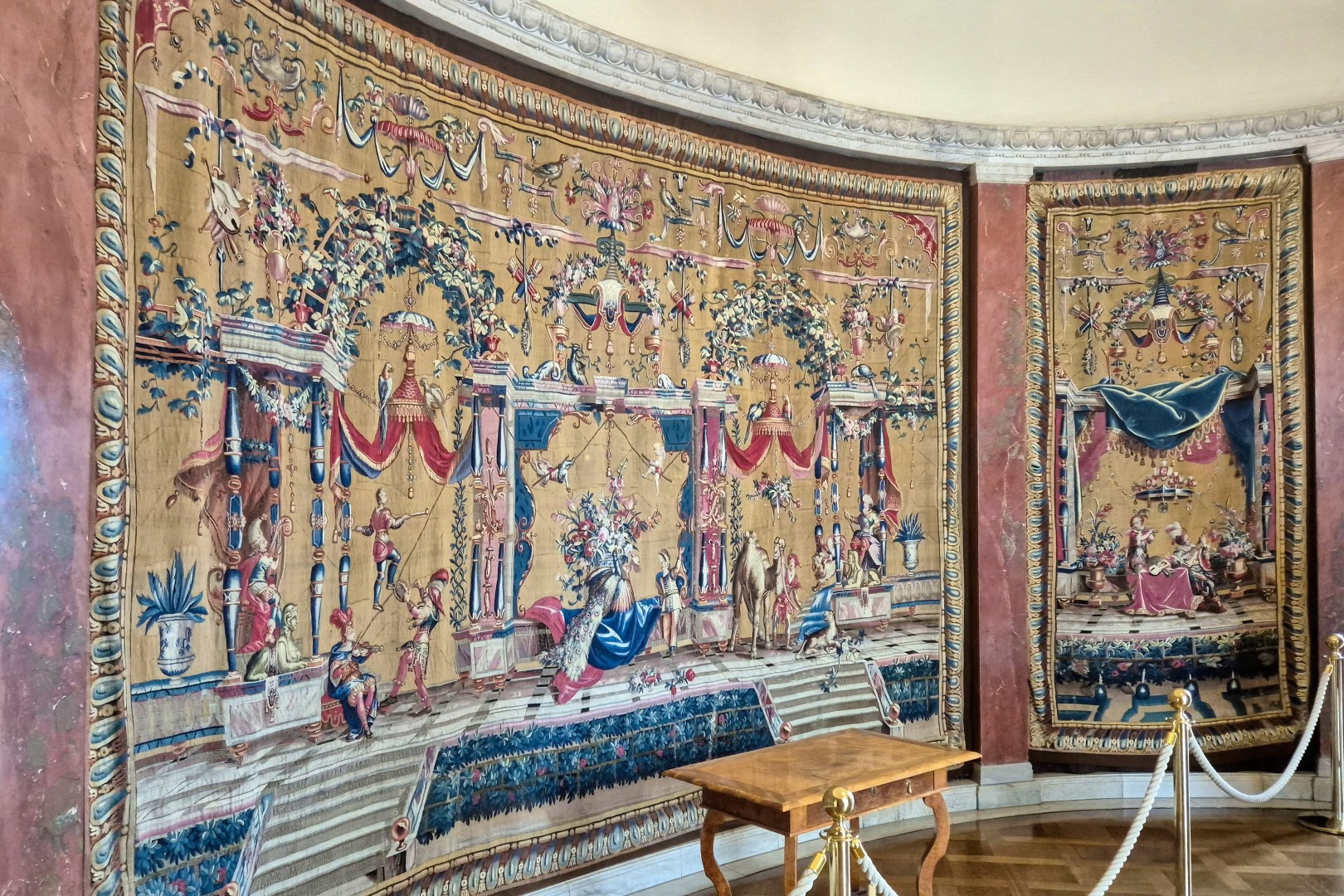
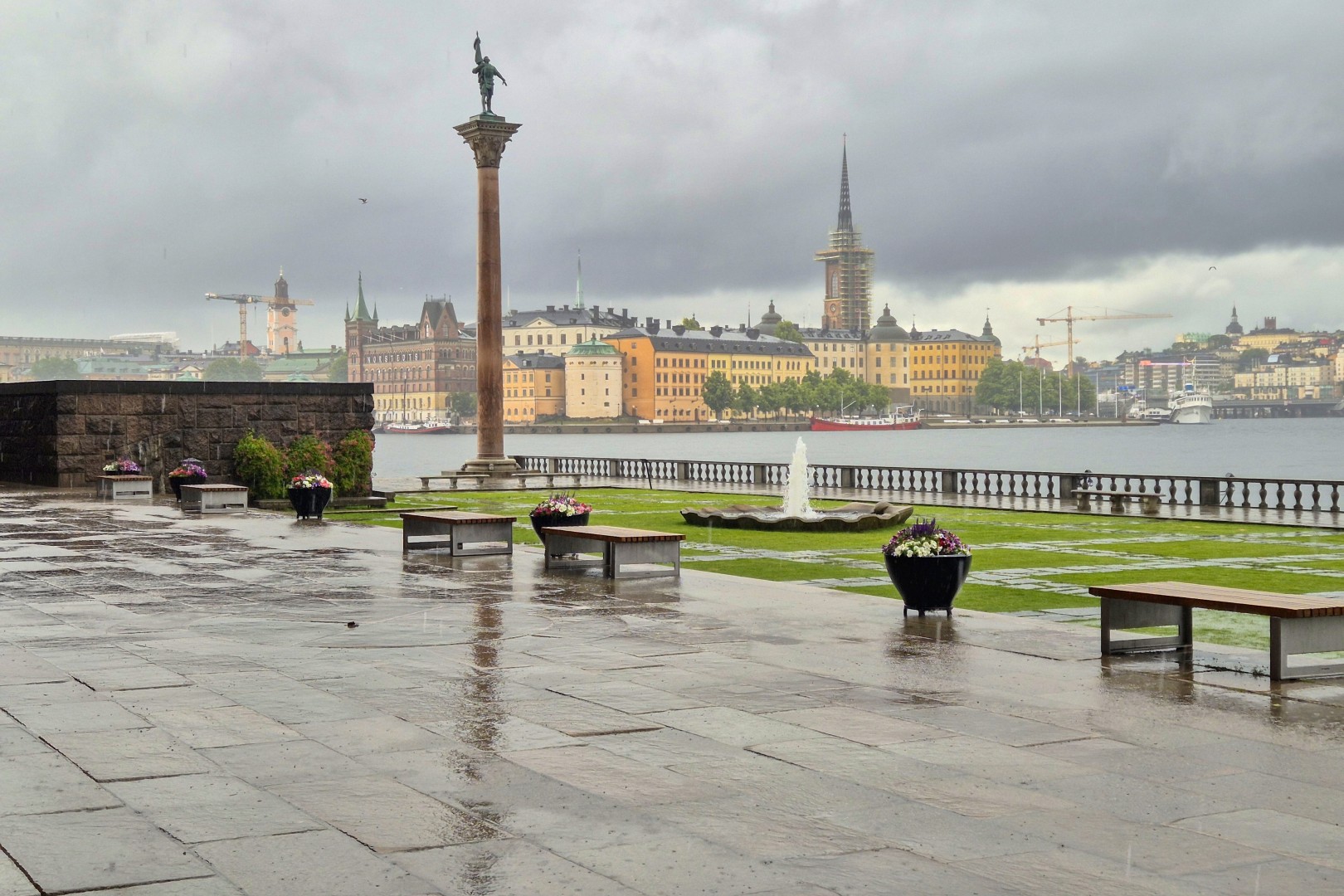
Our first port of call was therefore Stockholm City Hall (Stadshuset) – not just for the dry toilets, but above all in the hope of a last-minute guided tour.
And indeed, we were in luck. There were still places available on the next English-language tour.
A real stroke of luck.
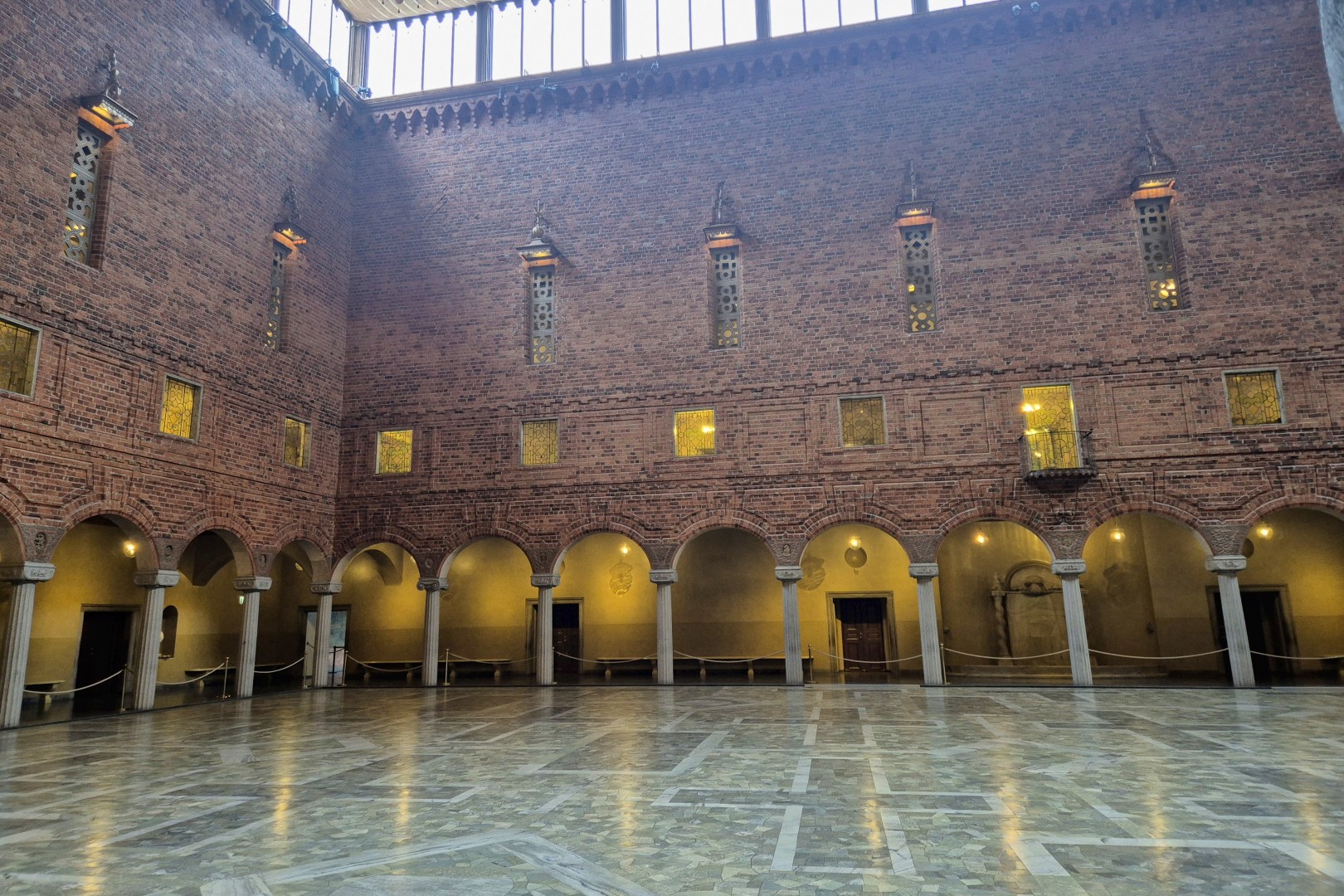
The tour began in the famous Blue Hall (Blå Hallen).
Although the name suggests otherwise, the walls are made of red brick. This is where the festive Nobel Banquet, attended by around 1,300 guests, takes place every year following the Nobel Prize ceremony. This hall alone exudes a very special atmosphere.
The real highlight of the tour, however, awaited us on the upper floor.
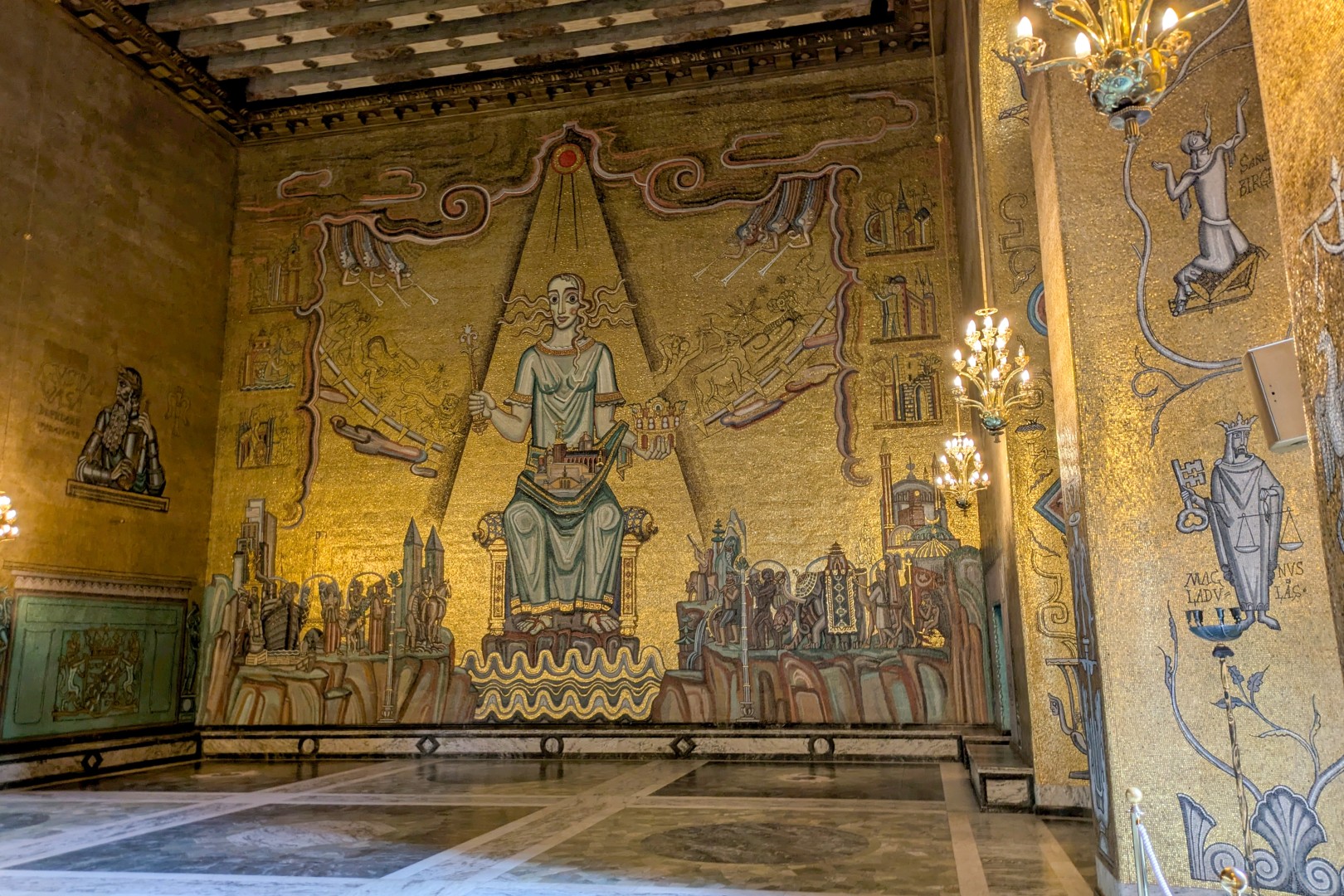
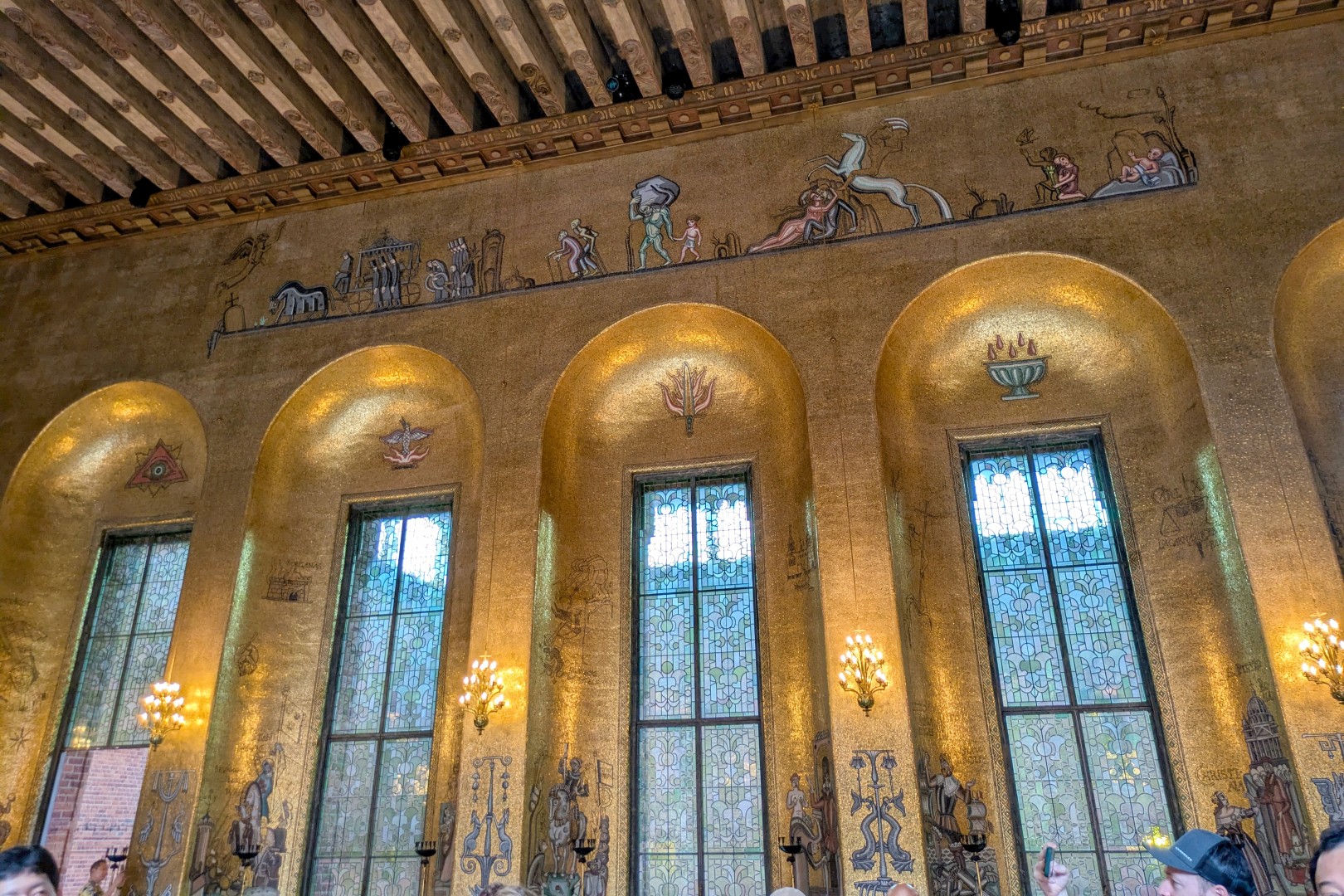
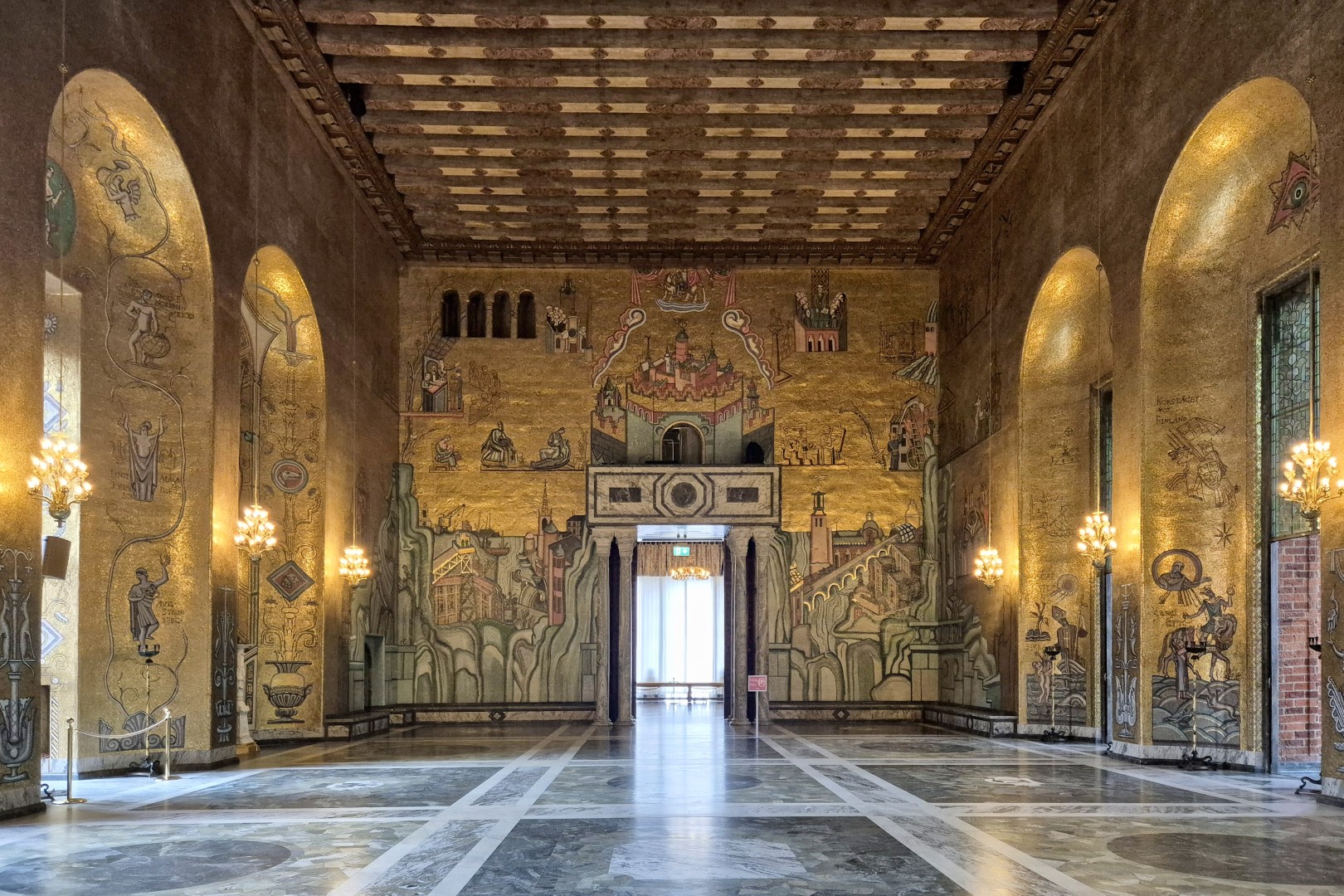
The Golden Hall (Gyllene Salen) literally took our breath away.
Over 18 million golden mosaic tiles adorn the walls and ceiling of this magnificent banquet hall. The light reflected off the golden surfaces, bathing the entire room in a warm glow. Hardly any visitor could tear their eyes away from this sight.
The guided tour, which lasted about an hour, cost around 10 euros per person and was worth every single cent.
A definite must for anyone visiting Stockholm.
When we left the City Hall, the weather had unfortunately not improved. Quite the opposite, in fact. It was now pouring with rain. Nevertheless, we decided to walk the rest of the way to Slussen station. Not a particularly good idea. On the way, we were caught in a proper downpour. Within a few minutes, we were soaking wet. But experiences like this are precisely what make a trip worthwhile. We took the unexpected downpour in our stride with a smile; after all, we’d been blessed with almost nothing but sunshine throughout our tour.
To round off the day, we stopped off at a cosy bistro in the historic Mäster Dyks Hus. Over a lovely dinner, we looked back on the past twelve days.
The North Cape. The midnight sun. Vesterålen. Lofoten. Endless fjords. Immense bridges. The Swedish forests. And finally, three wonderful days in Stockholm.
What a trip!
That evening, we headed back to our Best Western Plus Bromma Hotel one last time. It was slowly time to pack our suitcases. The next morning, our flight home to Germany was already due. With lots of new impressions, thousands of photos and unforgettable memories, the last day of our holiday came to an end.
Stockholm provided a wonderful finale to an extraordinary tour of the far north of Europe.
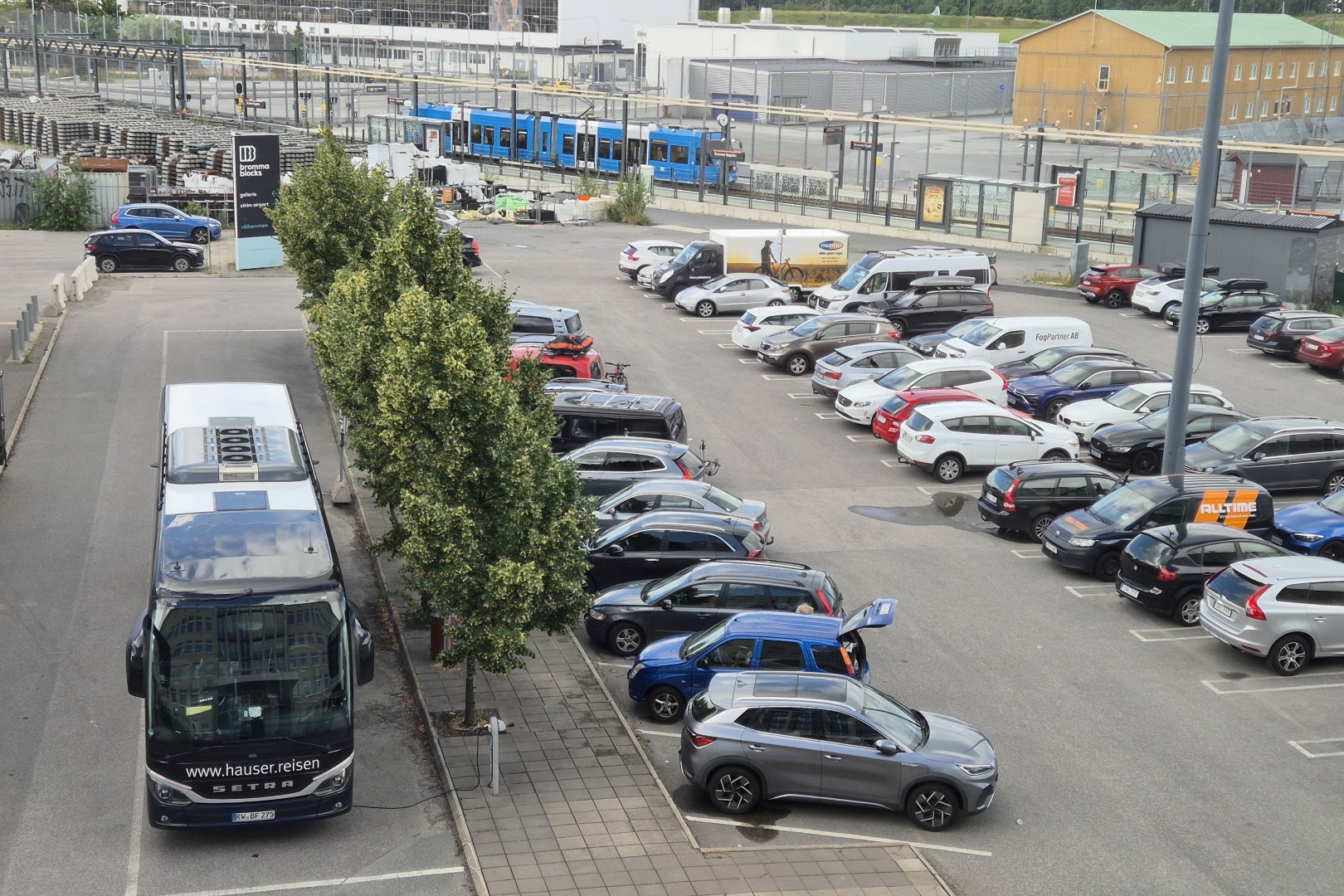
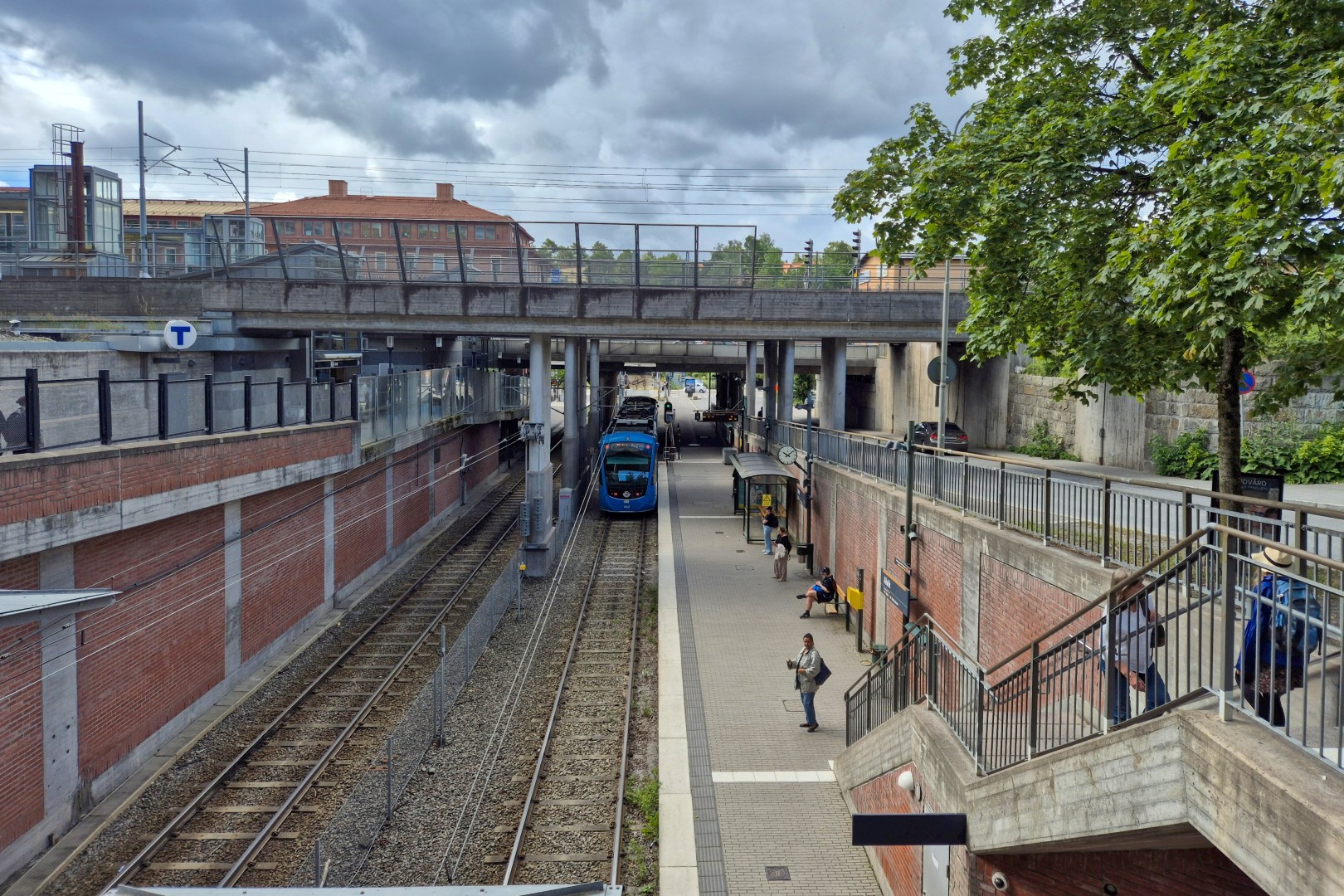
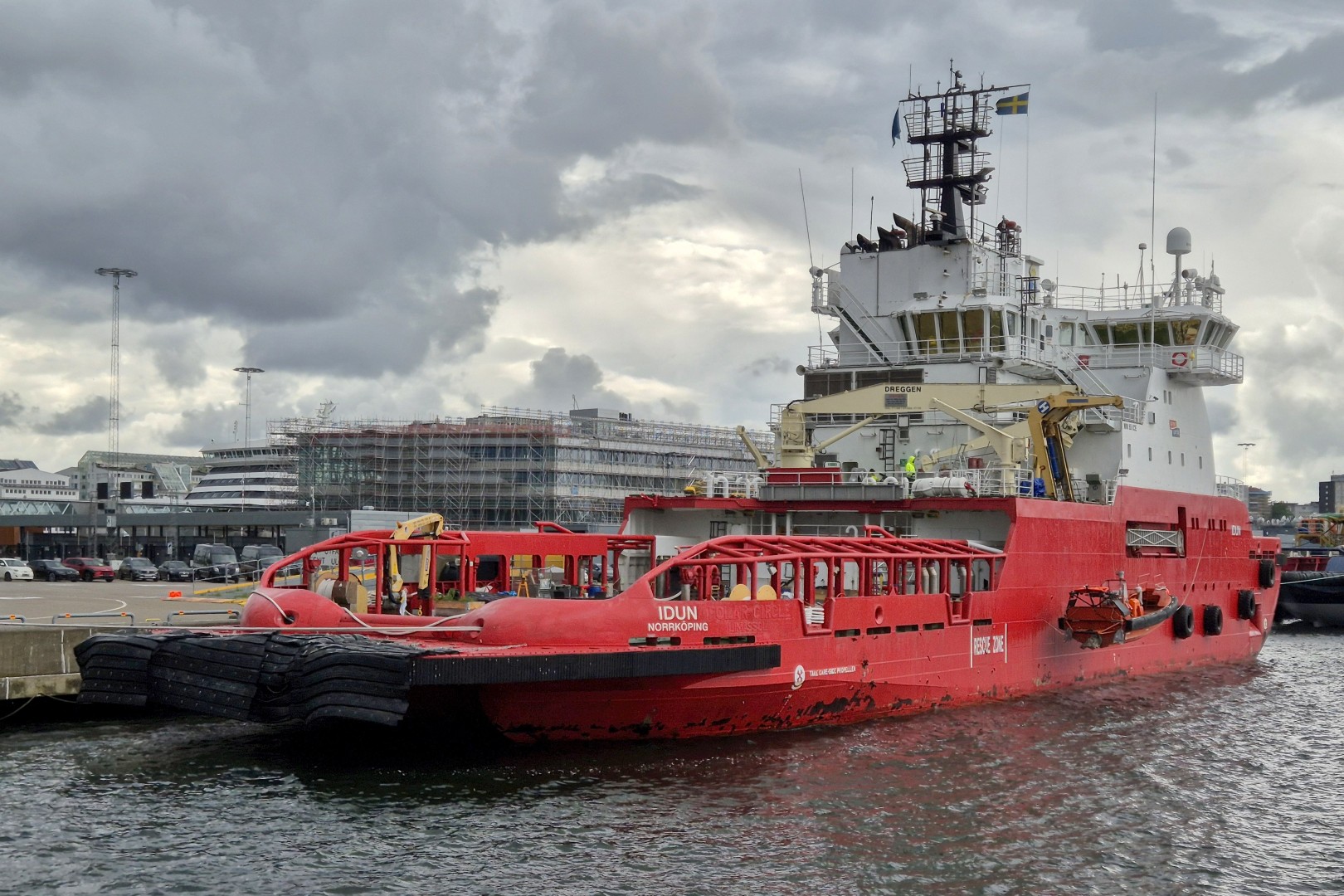
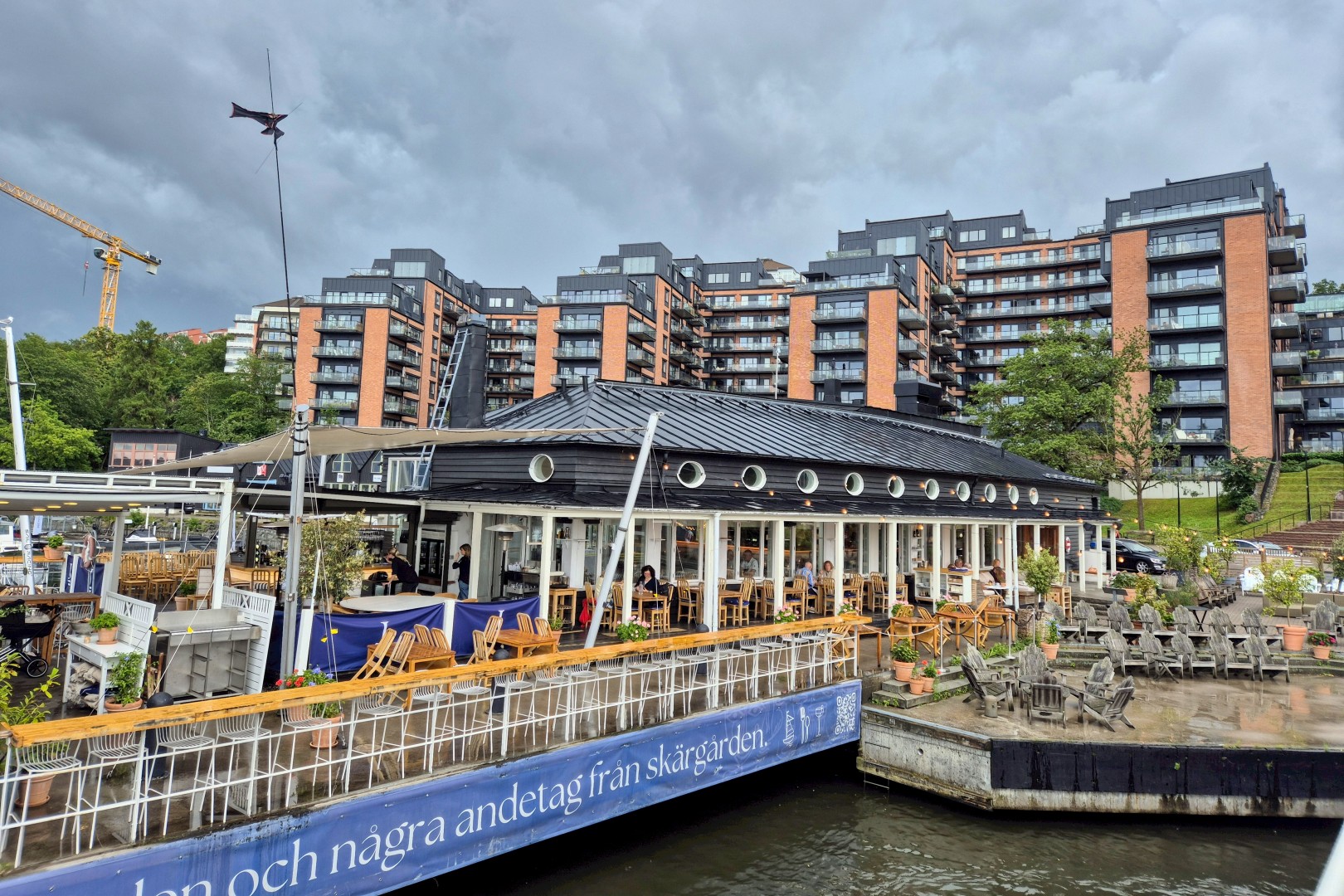
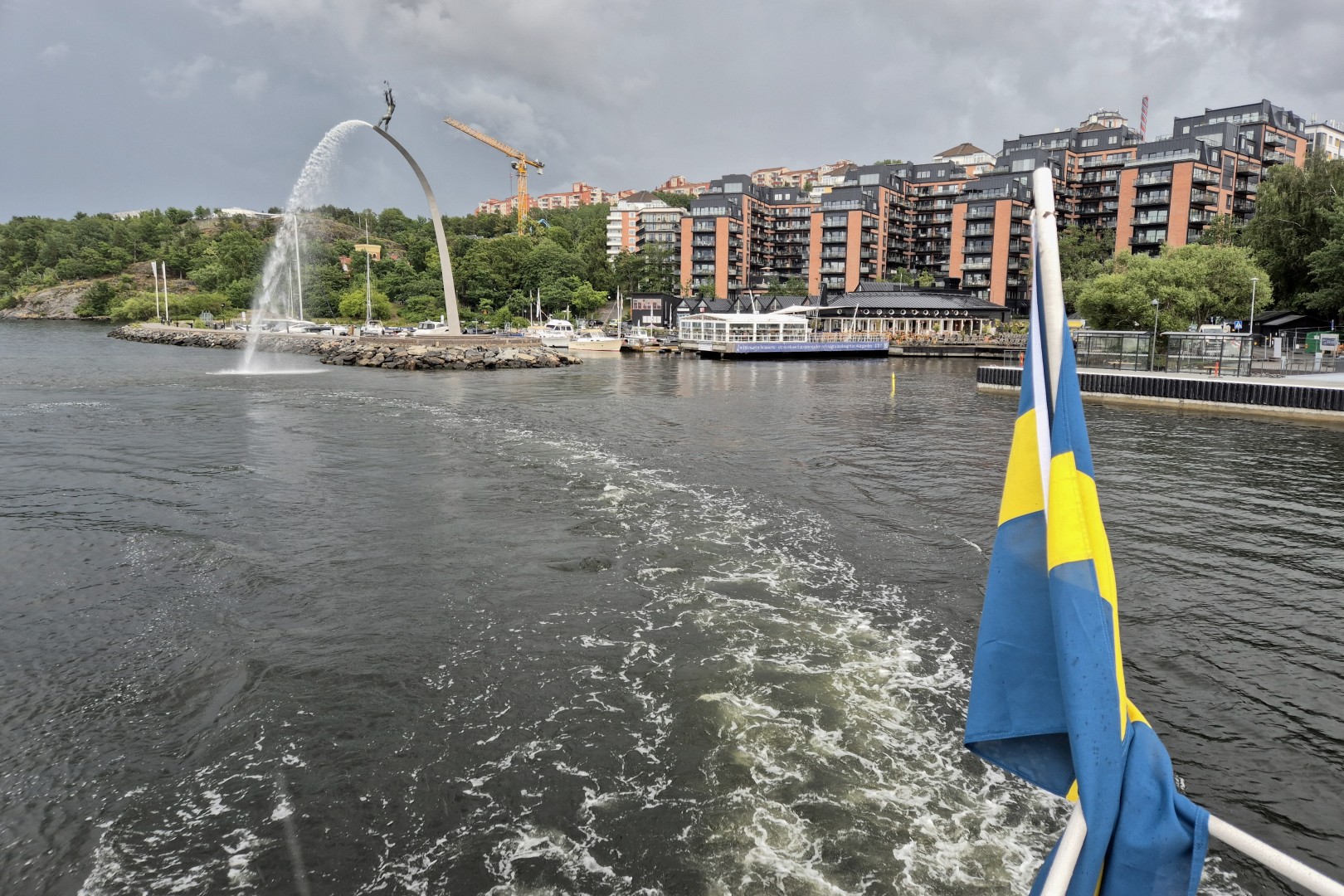
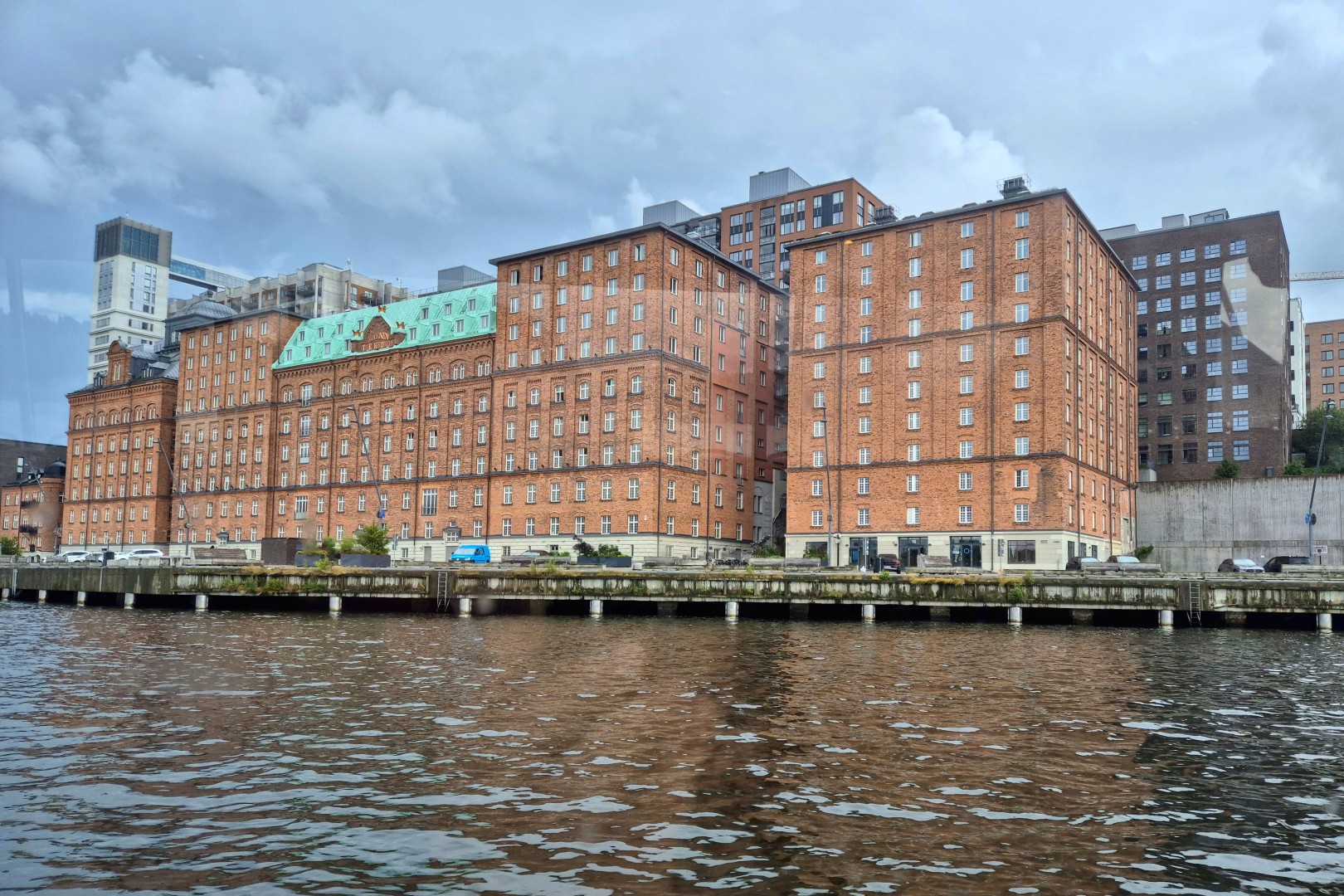
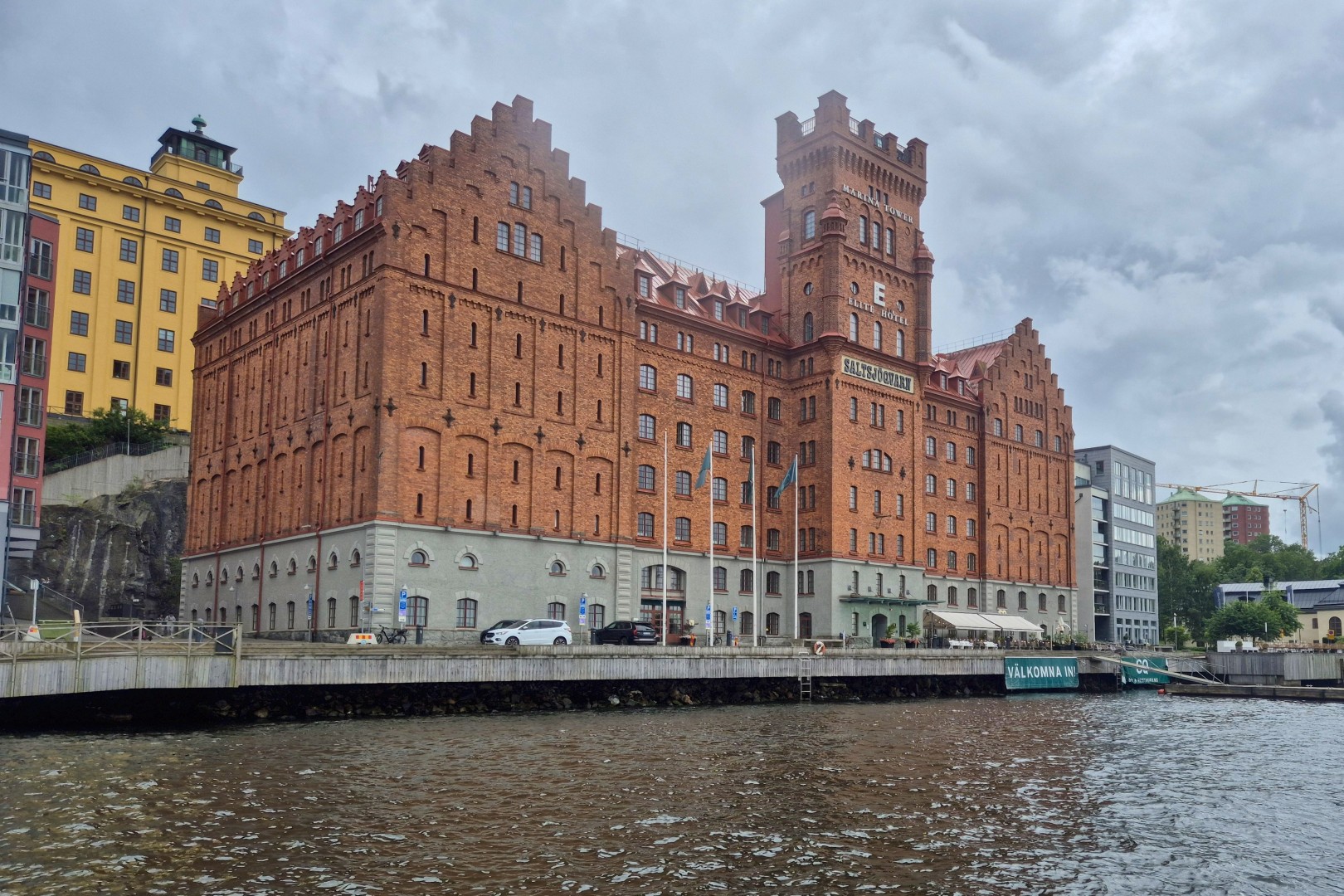
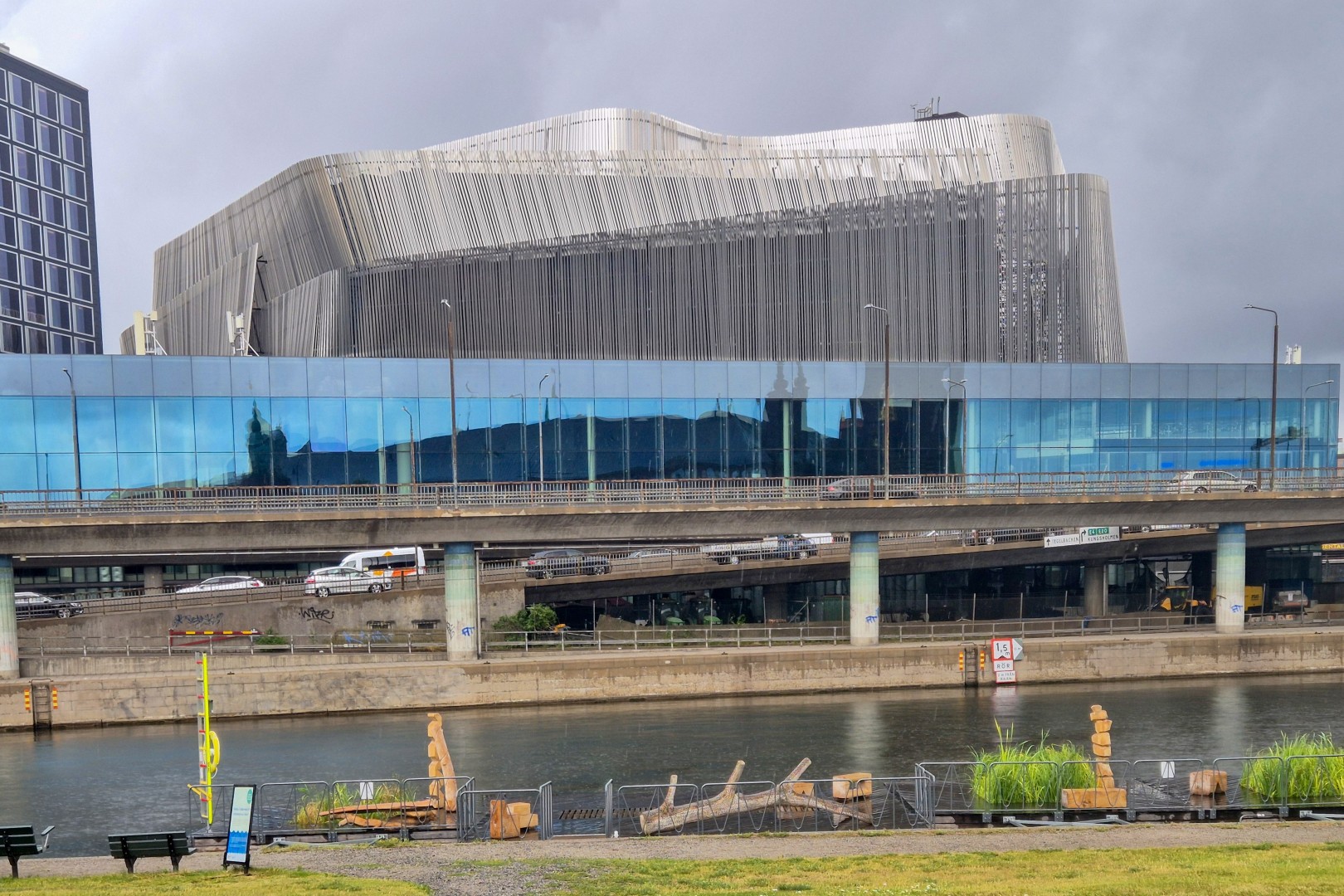
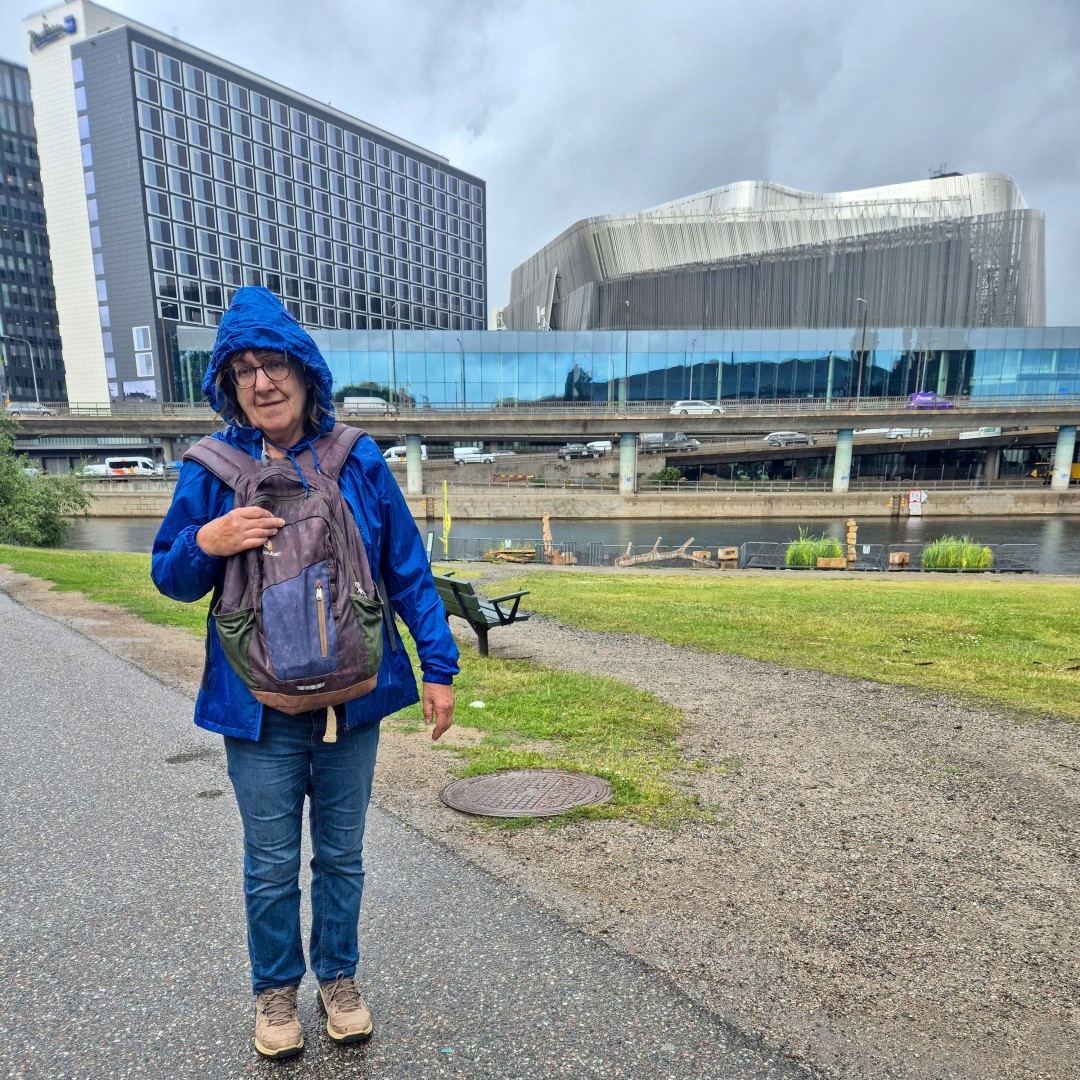
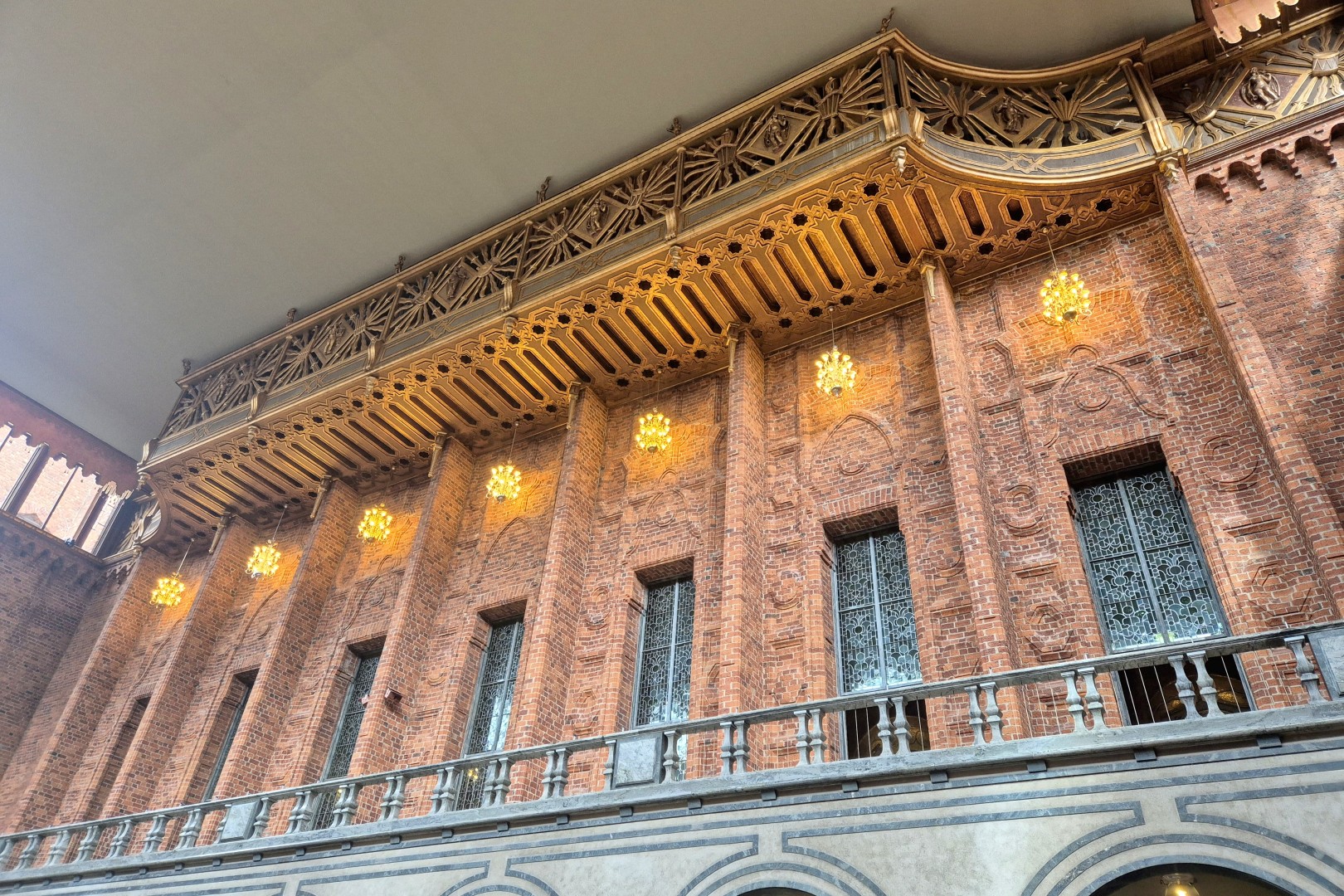
Journey home from Stockholm to Germany
Unfortunately, the time had come – the last day of our grand tour of the north. After almost two weeks full of unforgettable experiences, it was time to say goodbye to Sweden and Scandinavia. After breakfast, we packed our suitcases at a leisurely pace and set off for the airport.
We took a taxi to Stockholm Arlanda Airport, Terminal 5, for a fixed fare of 720 Swedish kronor. The journey was quick and comfortable, so we arrived at the airport in good time.
Thanks to the modern self-check-in machines, our boarding passes were printed out quickly and our luggage checked in. The security check was also surprisingly straightforward, leaving us plenty of time to explore the airport at our leisure and enjoy a light snack.
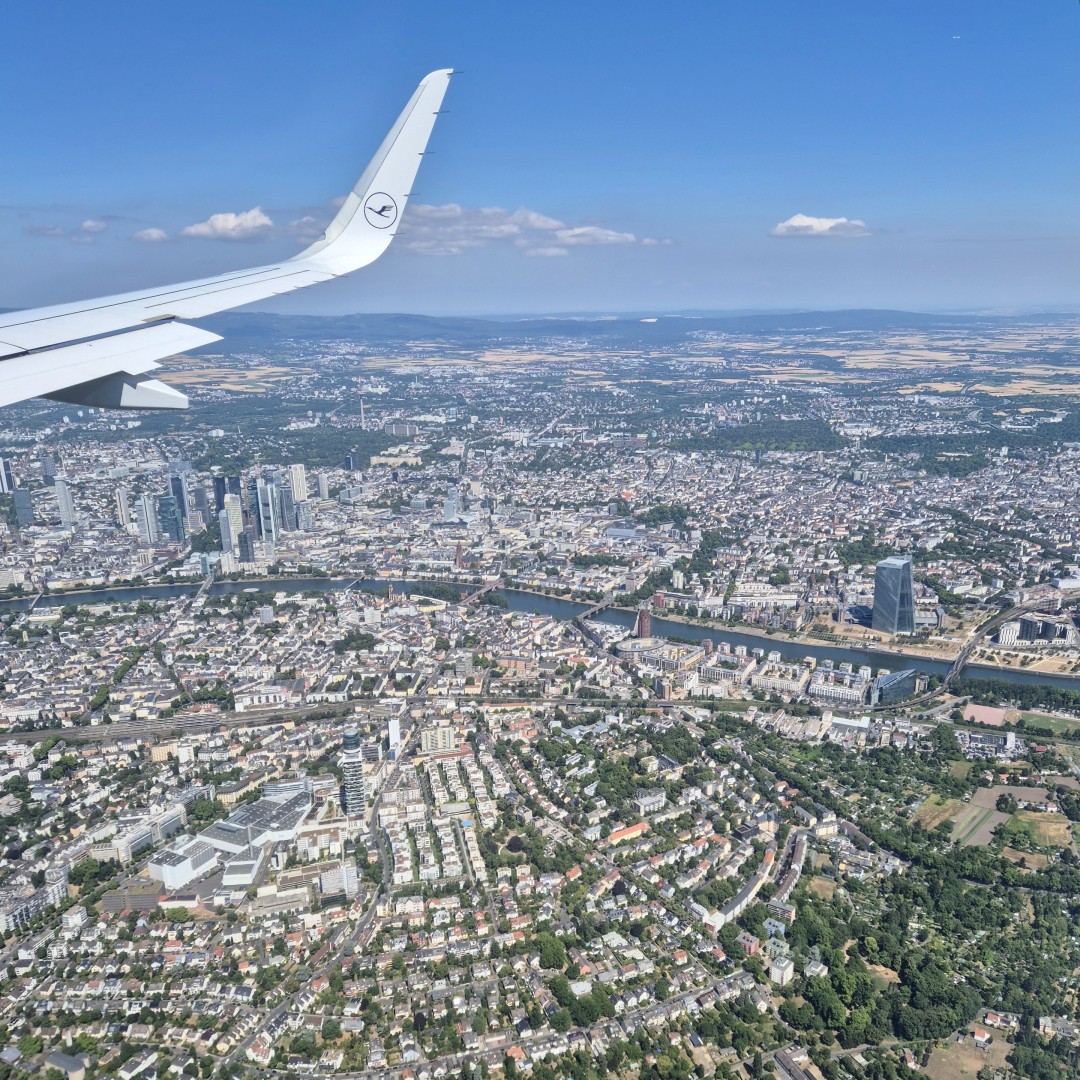
Our Lufthansa flight took off on time at 7.50 pm, heading for Frankfurt. The weather was kind to us one last time. Under a cloudless sky, shortly after take-off we were treated to stunning views of the archipelago off Stockholm, before the landscape slowly disappeared beneath the wings. The flight was exceptionally smooth and comfortable. This left us plenty of time to look back on the past few days of our trip.
The North Cape. The midnight sun. The impressive landscapes of northern Norway. The Vesterålen. The stunning Lofoten. Countless fjords, bridges and waterfalls. And finally, three wonderful days in Stockholm.
A trip full of highlights that will surely remain in our memories for a long time to come. After landing on schedule in Frankfurt, we made our way to the Deutsche Bahn without much delay. With only a slight delay, the train reliably took us back towards Stuttgart. Whilst changing trains, we even had time for a quick glance at the massive construction site of the Stuttgart 21 project, which is now taking on an increasingly distinct shape. Finally, we arrived back home.
This marked the end of an extraordinary round trip through Sweden, Finland and Norway.

Our conclusion
The 13-day tour of the North Cape, Vesterålen, Lofoten and Stockholm was undoubtedly one of the most impressive trips we have ever had the pleasure of taking.
The weather could hardly have been better. Apart from our final day in Stockholm, we were treated to almost nothing but sunshine – even at the North Cape, we were able to experience the midnight sun in near-perfect conditions. It was an experience that even locals don’t get to enjoy all that often.
Stunning natural scenery, countless fjords, spectacular bridges, endless forests, charming towns and many little encounters made this trip something truly special.
A big thank you also goes to the Hauser travel team, including Werner Trensch and Wansa, who organised the entire tour superbly and repeatedly created special moments with little surprises – such as the Norwegian picnics.
We returned home with several thousand photos, lots of new impressions and unforgettable memories.
Our verdict in a nutshell:
The far north of Europe is one of the most fascinating travel destinations of all – and this round trip was worth every single kilometre.
Thank you very much, Scandinavia – we’ll definitely be back!
Brief overview of the trip
Flight with Eurowings from Stuttgart to Stockholm Arlanda; return flight with Lufthansa from Stockholm to Frankfurt. We travelled from Frankfurt to the North Cape with the Hauser coach and the Hauser team – Werner and Wansa Trensch – and returned to Stockholm via the Vårdalen and the Lofoten Islands. In Stockholm, the three of us extended our stay for three days on our own.
Three highlights:
North Cape: Midnight Sun
Lofoten: Henningsvær, Leknes, Reine
Stockholm: The Royal Palace, the Nobel Prize Museum, the Opera House, and much more
Summary
Die Reise buchten wir direkt bei Hauser-Reisen, die Verlängerung in Stockholm bei Lufthansa und Booking.Com! Beratung bei Hauser-Reisen war in Ordnung! Durchgeführt wurde die Reise von Hauser. Das Hauser-Trensch war exzellent.
Nach 13 Tagen und über ca. 2.600 km Flug mit Eurowings/Lufthansa, ca. 4.600 km mit dem Hauser-Bus, ca. 450 km mit Tram, U-Bahn, S-Bahn, Fähre und ICE und viele km zu Fuß sind wir wieder zu Hause angekommen!
Insgesamt war es ein schöner und sehr erlebnisreicher Urlaub.
Wir lernten die Gastfreundschaft in fremden Ländern wieder einmal schätzen.
Die Reisegestaltung durch Hauser-Reisen war gut gelöst. Die Hotels war ordentlich.
Eurowings: Die Airline kann man bedenkenlos weiterempfehlen.
Lufthansa: Die Airline kann man bedenkenlos weiterempfehlen.
Öffentlicher Nahverkehr in Stockholm: Günstig und eigentlich keine Verspätungen.
Zugfahrt mit Deutscher Bahn: Wer Herausforderungen liebt fährt Deutsche Bahn! Ein Erlebnis allemal.
Hauser-Bus: Premiumbus mit gutem Komfort, Bordservice und perfekt für tägliche lange Strecken.
Places and major sights:
Hier alle aufzuzählen würde den Rahmen sprengen. Muss jeder für sich erfahren.
We booked the trip directly with Hauser-Reisen, and the extension in Stockholm with Lufthansa and Booking.com! The advice we received from Hauser-Reisen was fine! The trip was organised by Hauser. The Hauser-Trench was excellent.
After 13 days and a journey covering around 2,600 km by air with Eurowings/Lufthansa, around 4,600 km on the Hauser coach, around 450 km by tram, underground, S-Bahn, ferry and ICE, and many kilometres on foot, we’ve arrived back home!
All in all, it was a lovely and very eventful holiday.
Once again, we came to appreciate the hospitality in foreign countries.
The itinerary organised by Hauser-Reisen was well put together. The hotels were decent.
Eurowings: We can recommend this airline without hesitation.
Lufthansa: We can recommend this airline without hesitation.
Public transport in Stockholm: Affordable and, for the most part, no delays.
Train journey with Deutsche Bahn: If you love a challenge, take Deutsche Bahn! It’s certainly an experience.
Hauser coach: A premium coach offering good comfort and on-board service, and perfect for long daily journeys.
Places and major sights:
To list them all here would go beyond the scope of this review. Everyone has to experience them for themselves.
Accommodation:
The hotels we chose were fine in terms of facilities, location and comfort. Three or four stars.
Goodbye – Auf Wiedersehen
Hej då (Swedish)
Näkemiin (Finnish)
Farvel (Norwegian)